Some of the most striking artworks in history, from Leonardo da Vinci’s Vitruvian Man to the Parthenon, share an underlying mathematical principle: the golden ratio in art.
This simple proportion has quietly influenced the way humans perceive beauty for centuries, and it’s more accessible than many artists realize.
In this blog, you’ll learn clear, step-by-step techniques for using the golden ratio in your own artwork, with no advanced math skills required.
What is the Golden Ratio?
The golden ratio in art is a mathematical proportion represented by the Greek letter φ (Phi) and expressed as approximately 1:1.618.
It occurs when the relationship between two parts is the same as the relationship between the larger part and the whole.
Mathematically, this relationship is written as: (a + b) / a = a / b = 1.618. When these proportions are maintained, they yield the constant value 1.618, known as Phi.
In art, the golden ratio is used as a composition tool to determine the placement, size, and spacing of elements. Many artists apply this proportion to create artwork with stronger structure and visual balance.
How to Apply the Golden Ratio in Your Artwork?
The golden ratio can help artists create stronger compositions by improving subject placement and visual flow. If you’re creating a drawing, painting, or digital illustration, these steps can help you apply your work effectively.
Step 1: Create a Basic Composition Sketch
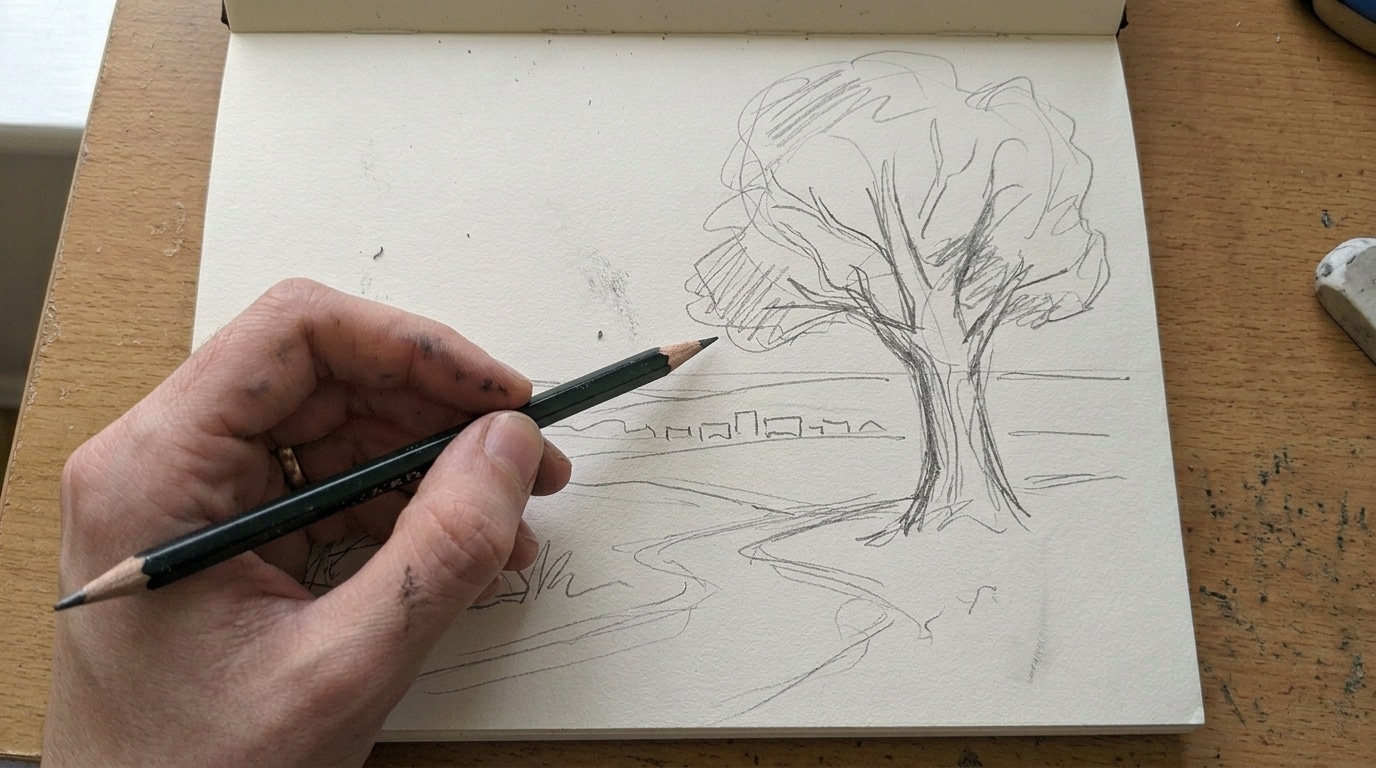
Start with a rough sketch that outlines your main subject and supporting elements. Focus on the overall layout before making any adjustments to proportions.
At this stage, the goal is simply to establish the foundation of your composition.
Step 2: Define the Main Focal Point
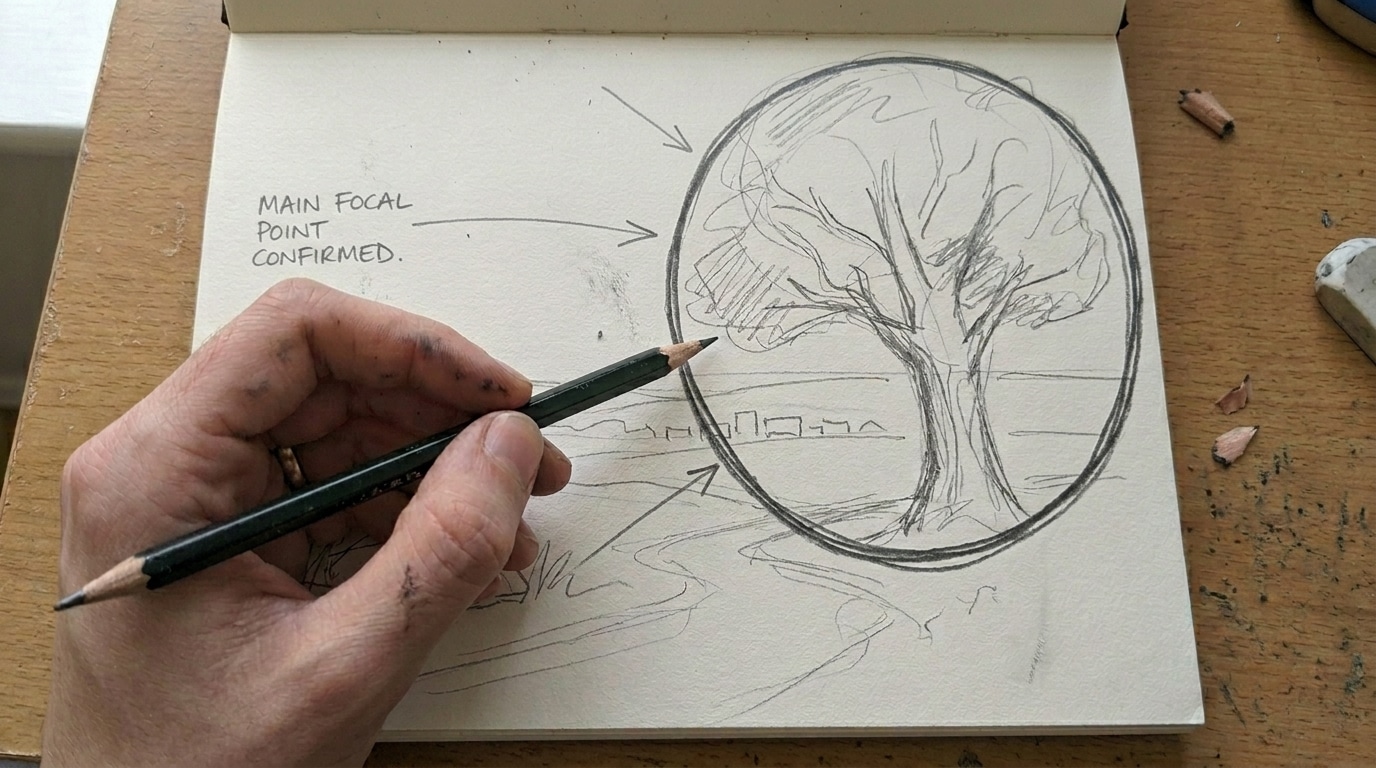 Decide where you want the viewer’s attention to go first. This focal point will become the anchor for the rest of your composition. Having a clear focal point makes it easier to organize the remaining elements.
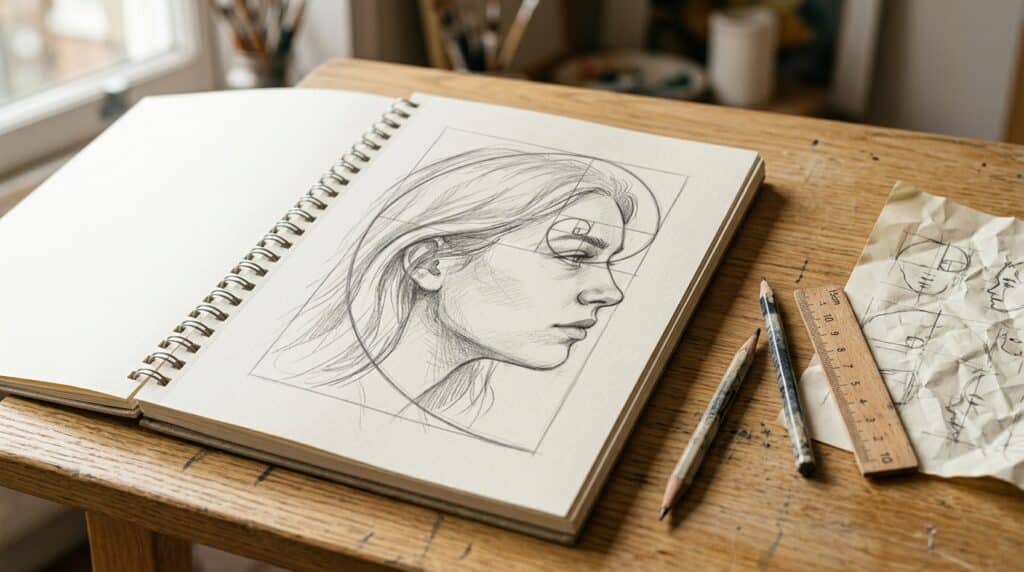
Step 3: Apply a Golden Spiral or Phi Grid
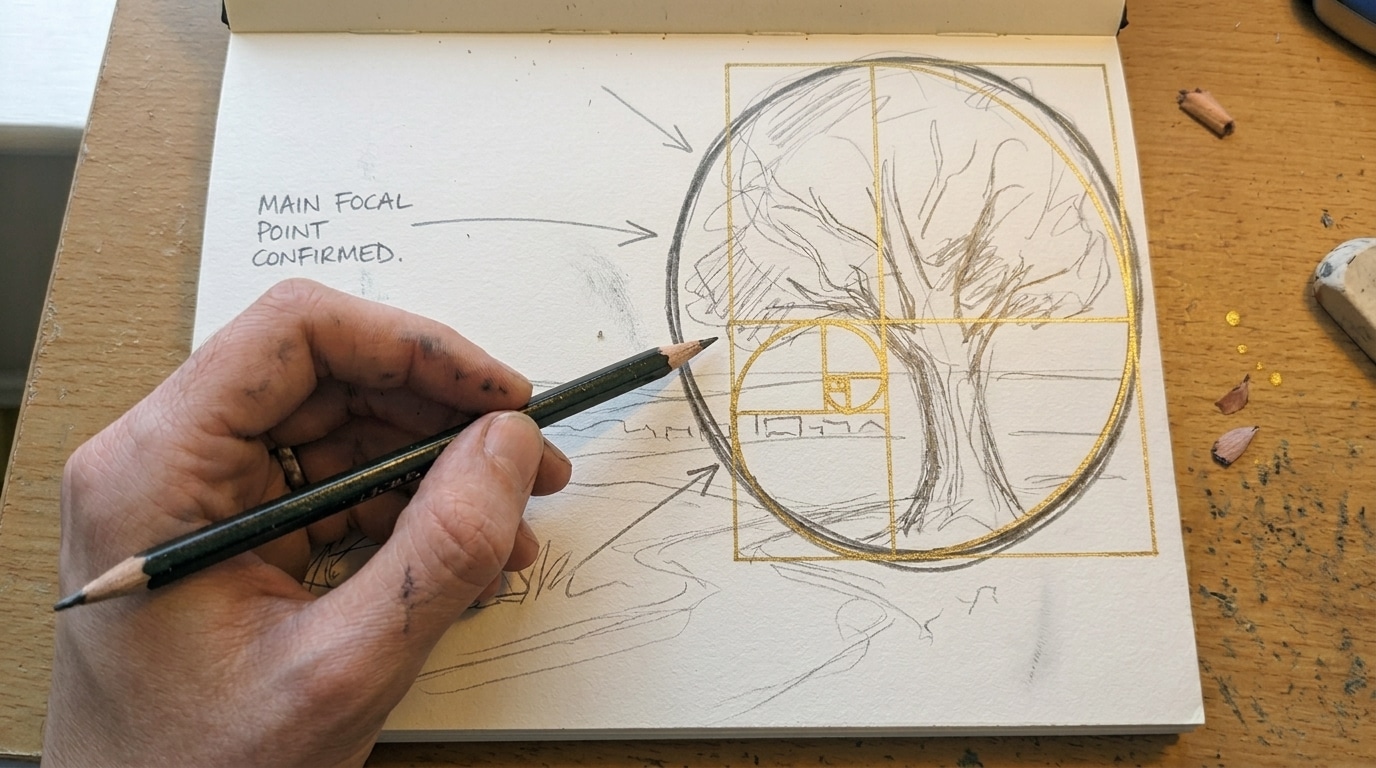
Place a golden ratio guide over your sketch and align the focal point near a key intersection or the center of the spiral.
This helps establish a clear visual structure. Use the guide as a reference rather than a strict placement rule.
Linear perspective in art explains how focal points and converging lines work together to direct the viewer’s eye, which is exactly what the golden spiral builds on.
Step 4: Arrange Supporting Elements
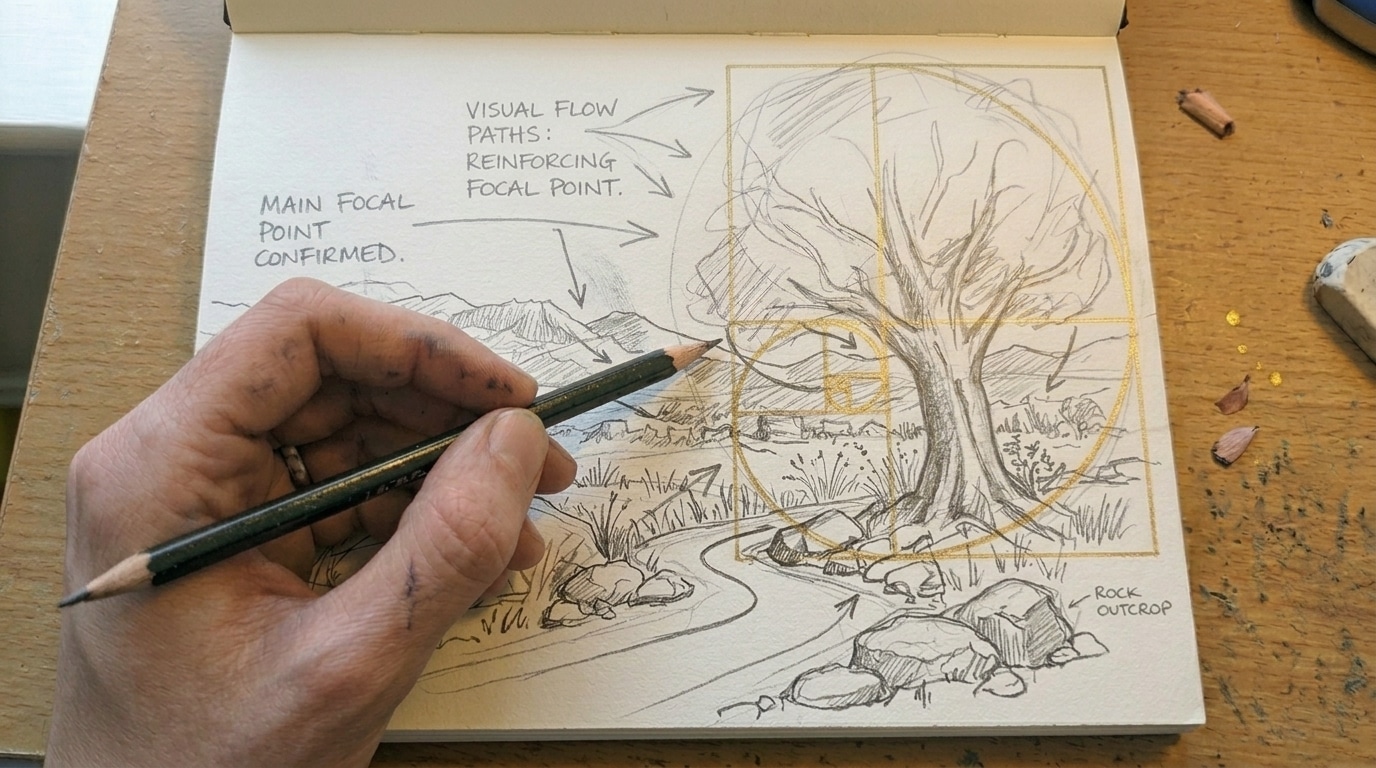
Position secondary subjects, background details, and leading lines around the focal point. Their placement should help direct attention through the artwork rather than away from it.
Aim to create a clear relationship between the primary and secondary elements
Step 5: Refine and Review the Composition
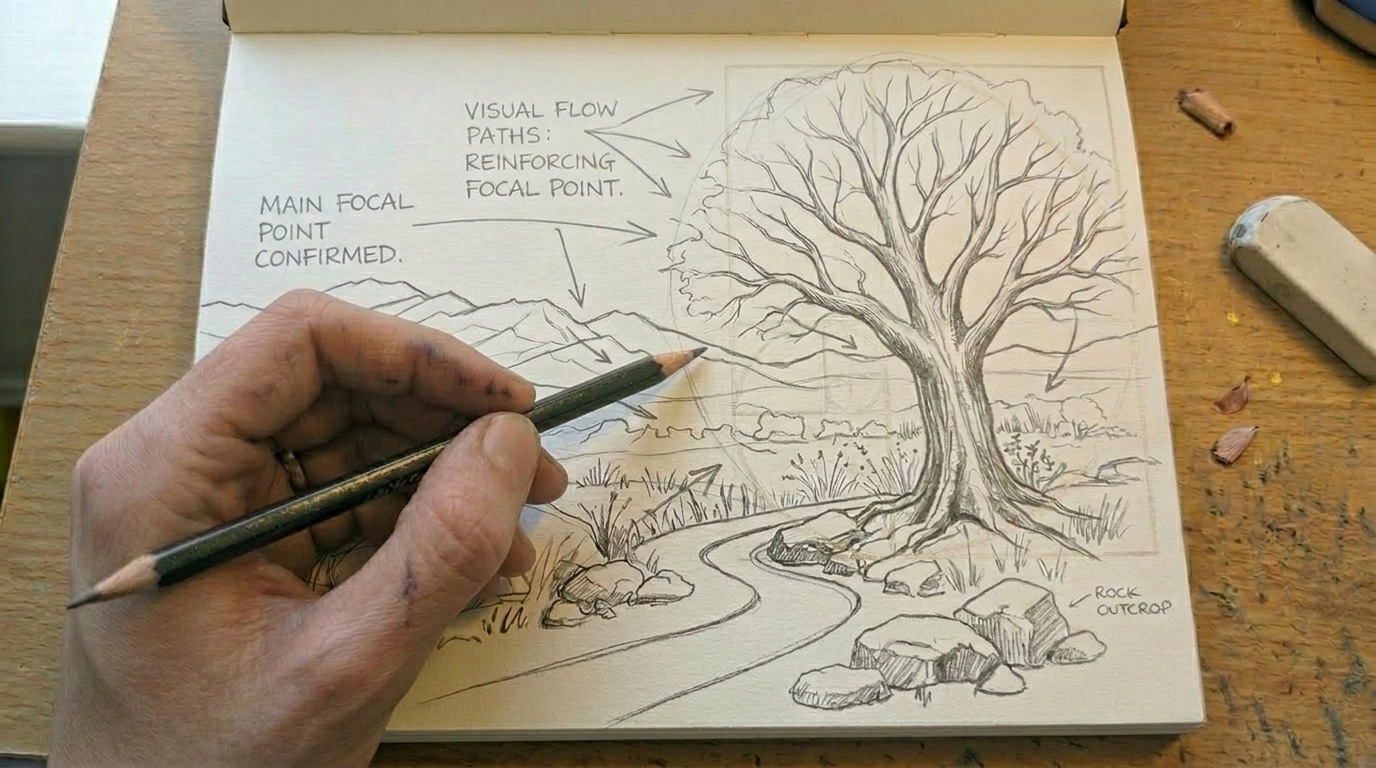
Adjust the size, spacing, and placement of elements as needed. Finally, check how the eye moves across the artwork and make any changes that improve the overall balance of the composition.
The Golden Ratio Tools Artists Use to Build Better Compositions
While the golden ratio can be applied through observation and practice, many artists rely on visual guides to make the process easier.
1. The Golden Rectangle: The Golden Rectangle is a rectangle whose sides follow the golden ratio of approximately 1:1.618.
2. The Golden Spiral: The Golden Spiral is created by drawing a curve through a series of squares inside a Golden Rectangle. The spiral gradually expands outward while maintaining the golden ratio.
3. The Phi Grid: The Phi Grid is similar to the rule of thirds but is based on the golden ratio rather than equal divisions.
4. Golden Ratio Calculator: A Golden Ratio Calculator helps artists determine proportional measurements based on the 1:1.618 ratio.
5. Golden Ratio Overlay Templates: Golden Ratio Overlay Templates provide ready-made guides that can be placed over sketches, paintings, or digital artwork.
Famous Artworks Often Associated With the Golden Ratio
The golden ratio in art is often linked to some of history’s most well-known artworks, largely because it offers a sense of balance, proportion, and visual harmony that feels natural to the eye.
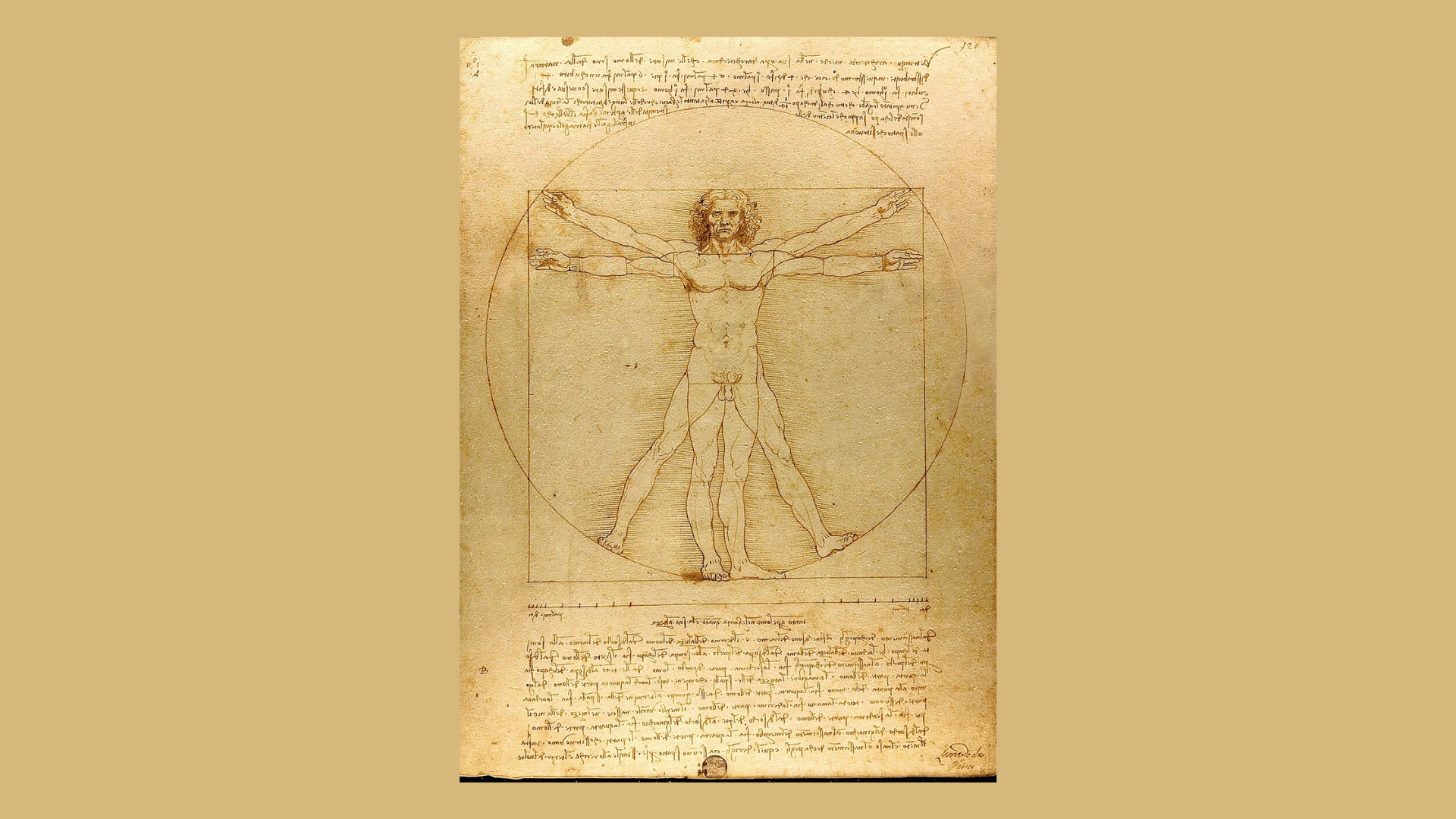
1. Leonardo da Vinci’s Works
Source: wikipedia.org
Leonardo da Vinci is frequently associated with the golden ratio in art because of his interest in mathematics, proportion, and anatomy.
Art historians often point to works such as the Vitruvian Man and The Last Supper, in which balanced proportions and geometric relationships play a significant role in the composition.
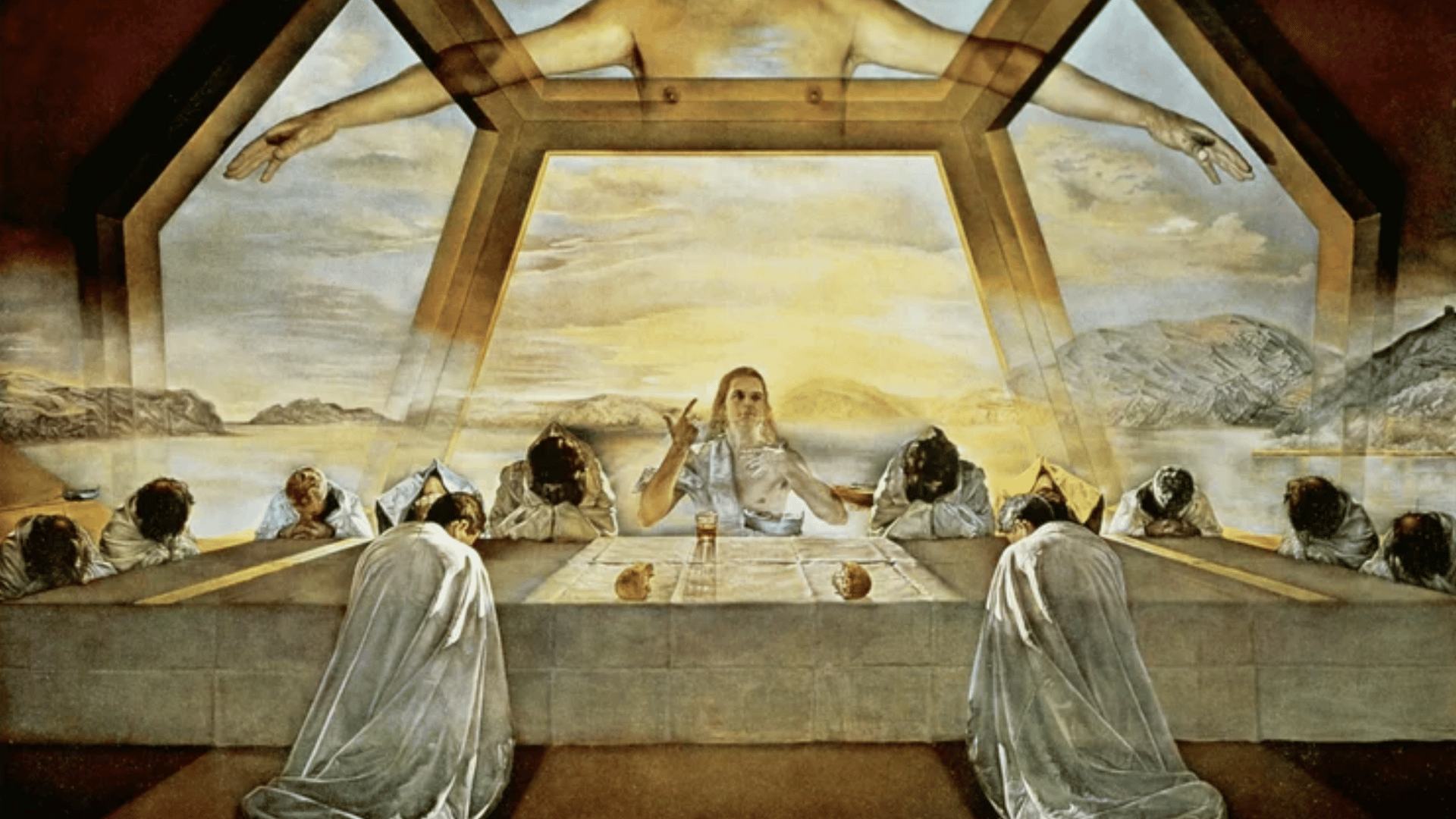
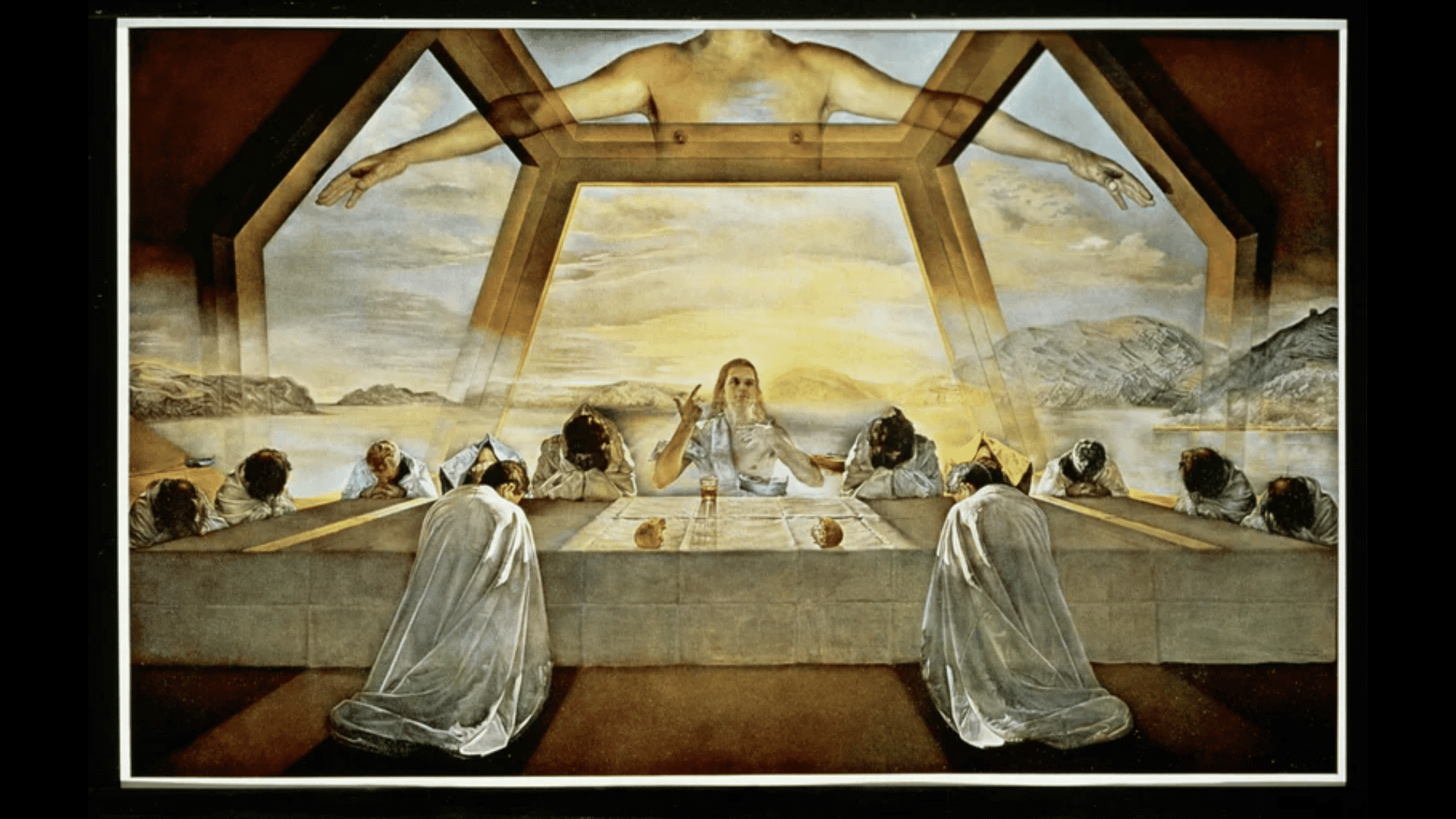
2. Salvador Dalí’s Use of Sacred Geometry
Source: artsy.net
Salvador Dalí intentionally incorporated mathematical concepts into several of his paintings.
In The Sacrament of the Last Supper, he used a golden rectangle as part of the composition, demonstrating how geometric proportions can contribute to the structure of an artwork.
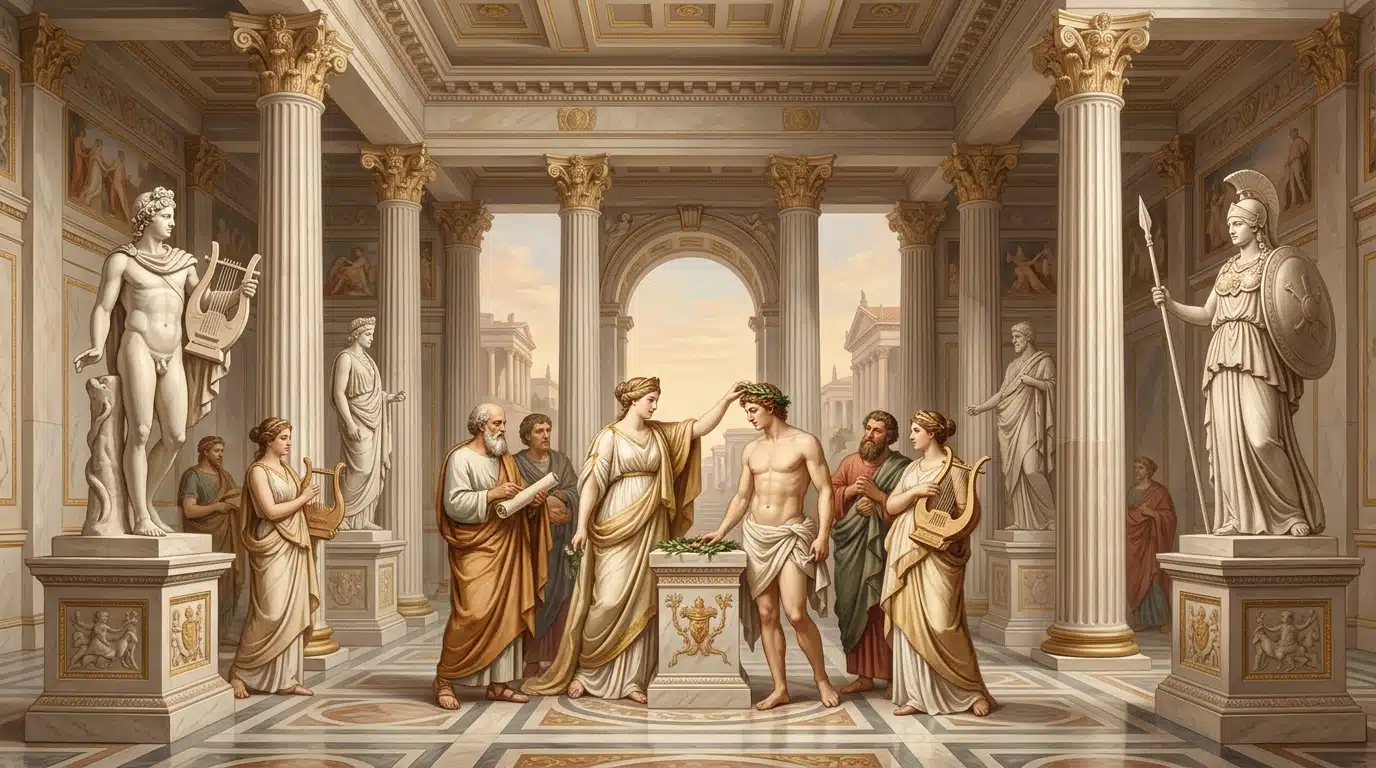
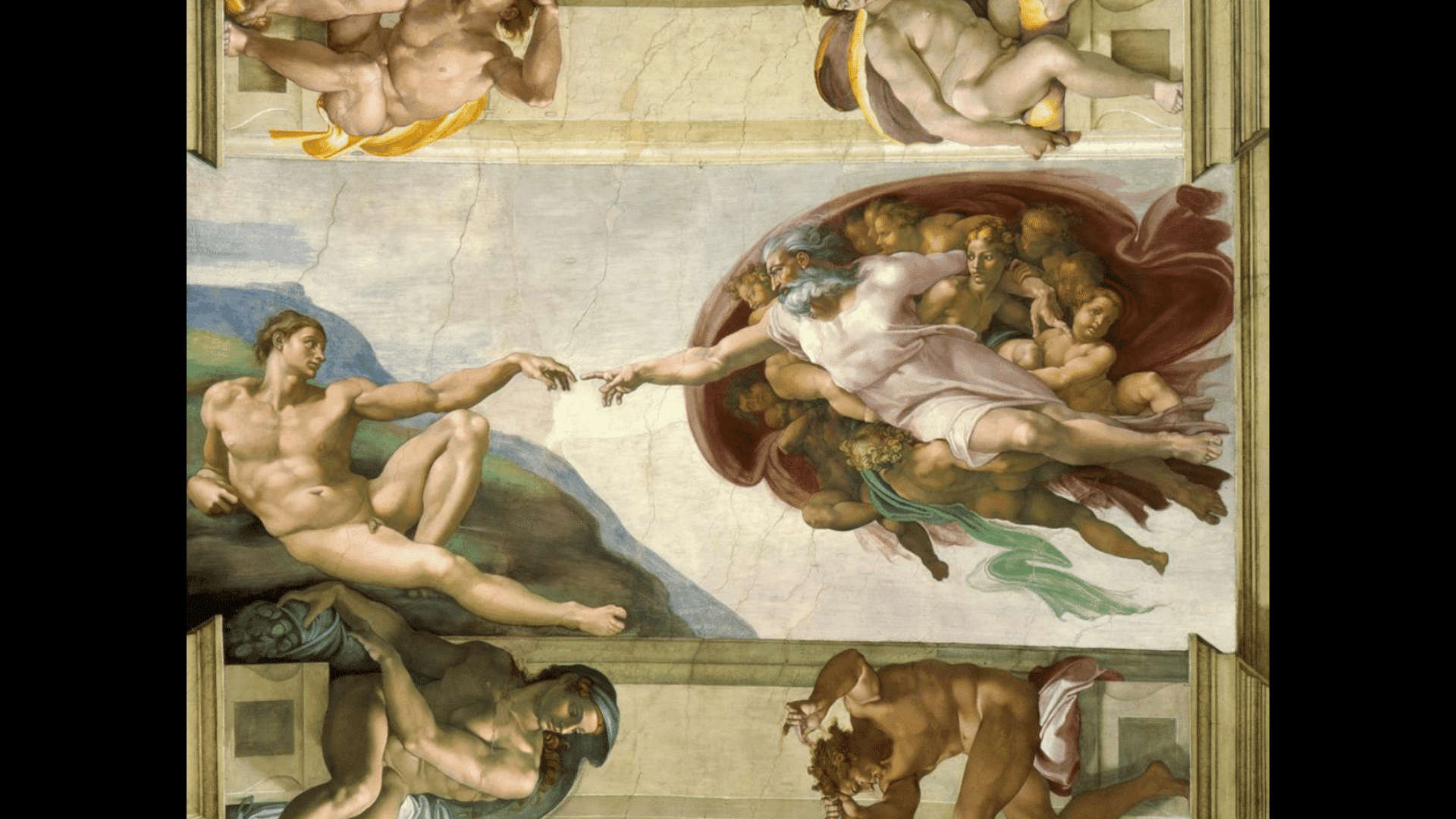
3. Renaissance Art and Classical Proportions
Source: finearttutorials.com
Many Renaissance artists placed a strong emphasis on proportion, symmetry, and geometric structure.
By studying mathematics alongside art, they developed composition techniques that helped create a sense of order and visual balance, many of which continue to influence artists today.
Golden Ratio Vs Rule of Thirds: Which Composition Method Works Better
Both the golden ratio and the rule of thirds are popular composition techniques used to create balanced and visually appealing artwork.
| Features | Rule of Thirds | Golden Ratio |
| Definition | Divides an image into nine equal sections using two horizontal and two vertical lines. | A composition method based on the mathematical ratio of approximately 1:1.618. |
| Complexity | Simpler to learn and apply, making it popular among beginners. | More detailed and requires an understanding of golden spirals, rectangles, or Phi grids. |
| Subject Placement | Places focal points at the intersections of the grid lines. | Places focal points along golden ratio intersections or within a golden spiral |
| Visual Effect | Creates clear and well-structured compositions with minimal effort. | Creates compositions that feel balanced and naturally connected. |
| When to Use It | When you need a fast and reliable composition framework. | When you want greater control over composition and visual flow. |
Practical Exercises to Master the Golden Ratio
Like any composition technique, the golden ratio in art becomes easier to use with practice. The more you use it, the more naturally it can guide balance, placement, and visual flow.
- Create a Simple Golden Ratio Sketch: Use a Phi Grid or Golden Spiral to place your main subject.
- Recreate a Famous Artwork: Study a known composition and sketch its basic golden ratio structure.
- Apply a Golden Spiral Overlay: Place the spiral over your artwork to check balance and flow.
- Compare Two Compositions: Create one artwork with the rule of thirds and another with the golden ratio.
- Place the Focal Point Carefully: Position the main subject near a golden ratio point for stronger impact.
- Use the Ratio in Layout Design: Arrange shapes, objects, or figures using golden ratio spacing.
- Practice with Thumbnails: Make quick, small sketches to test different golden ratio compositions.
Conclusion
The golden ratio in art is more than a mathematical formula; it’s a time-tested framework that artists have relied on to create work that feels naturally balanced and visually compelling.
From famous masterpieces to everyday compositions, this proportion quietly shapes what the human eye finds beautiful.
Pick up your sketchbook, set up your canvas, and let that 1:1.618 guide your next piece. You might surprise yourself.