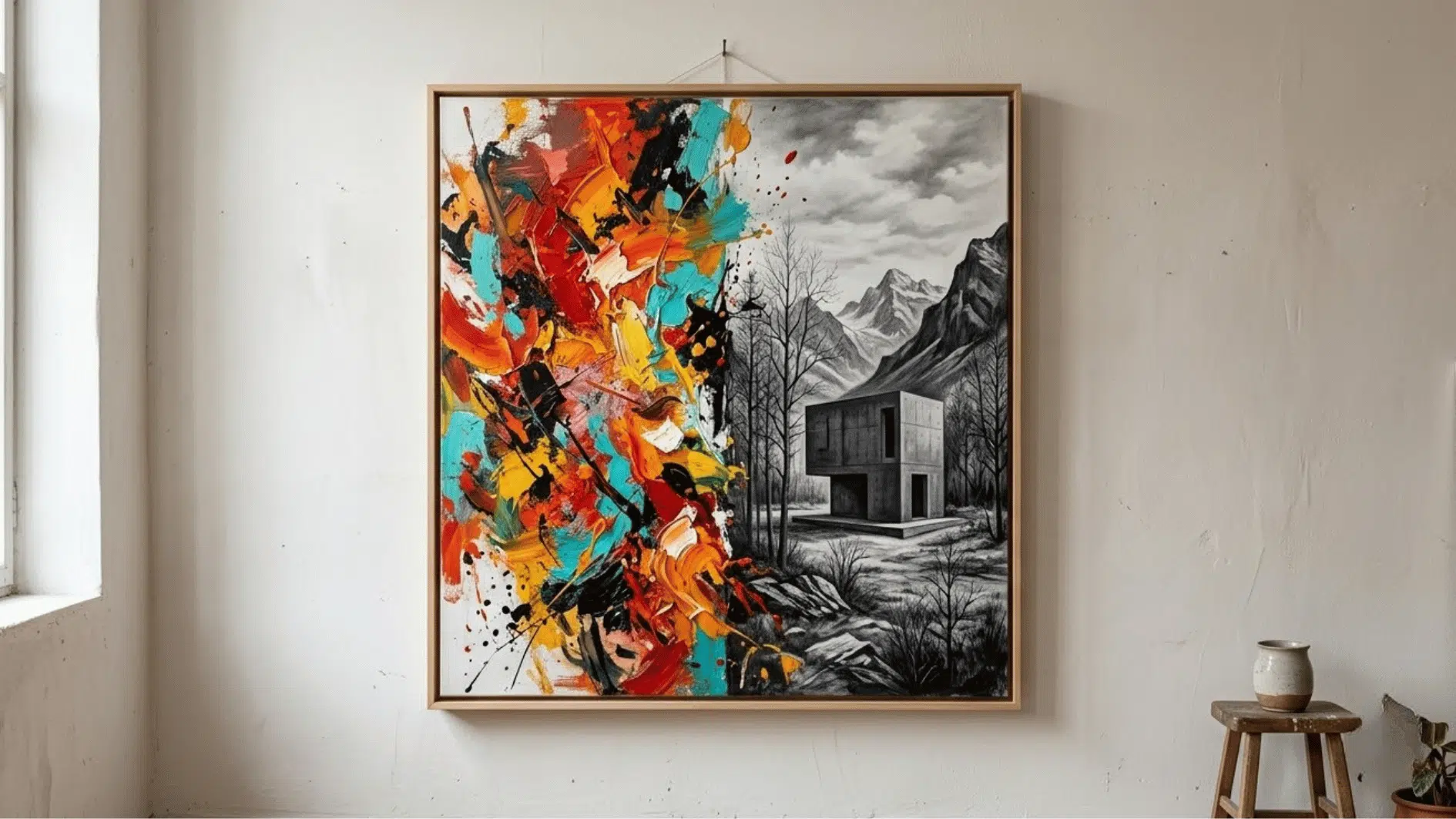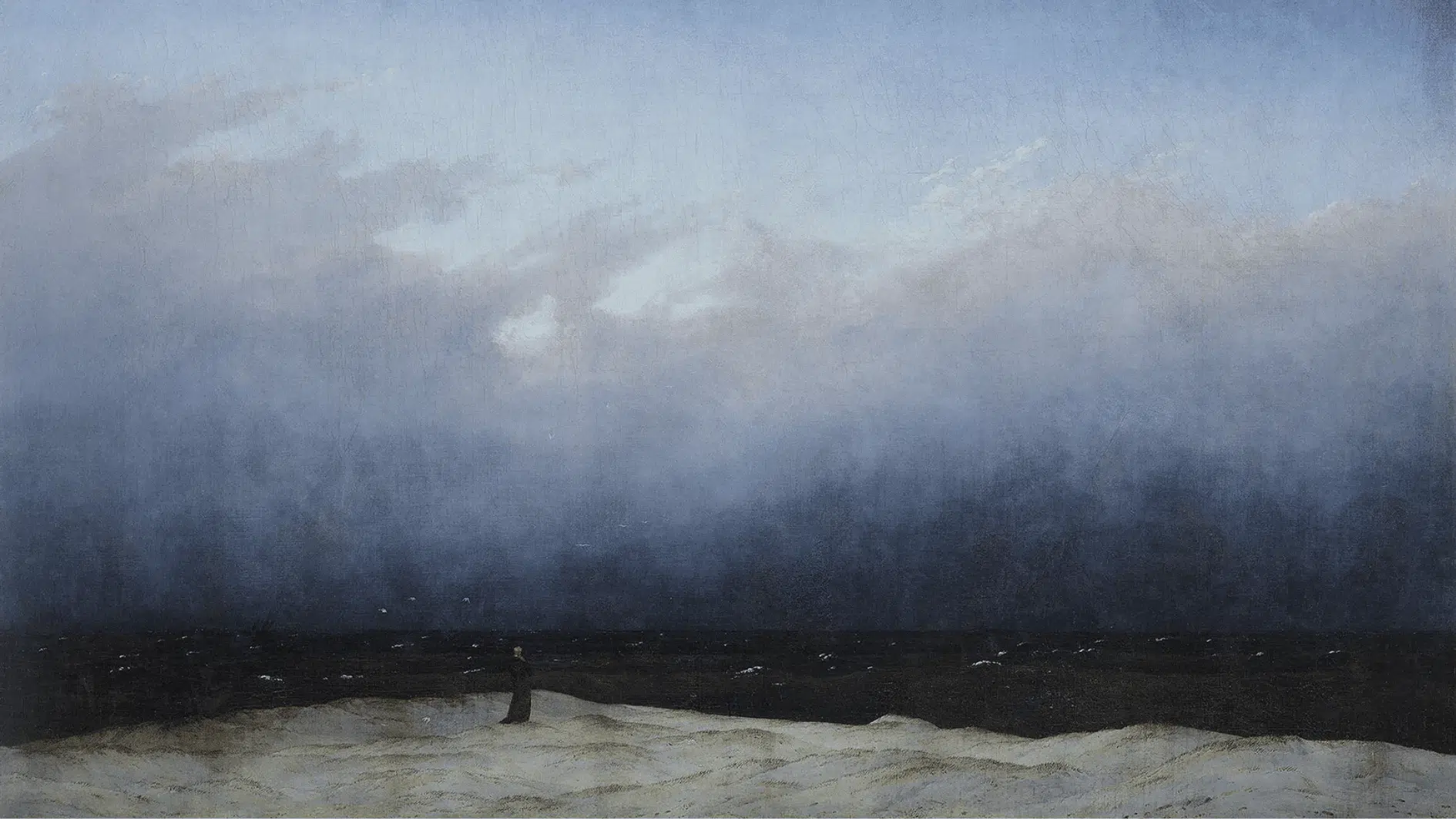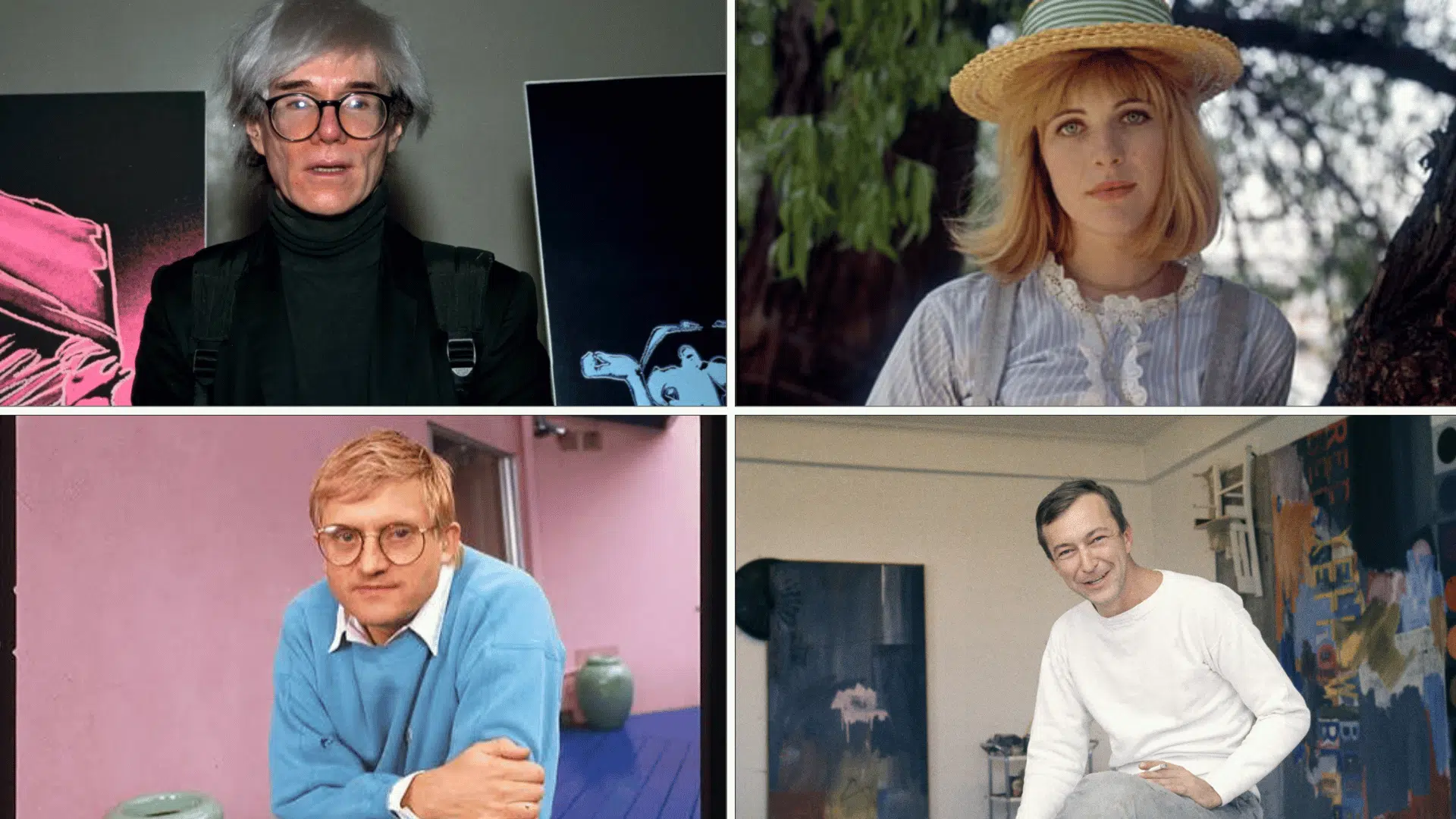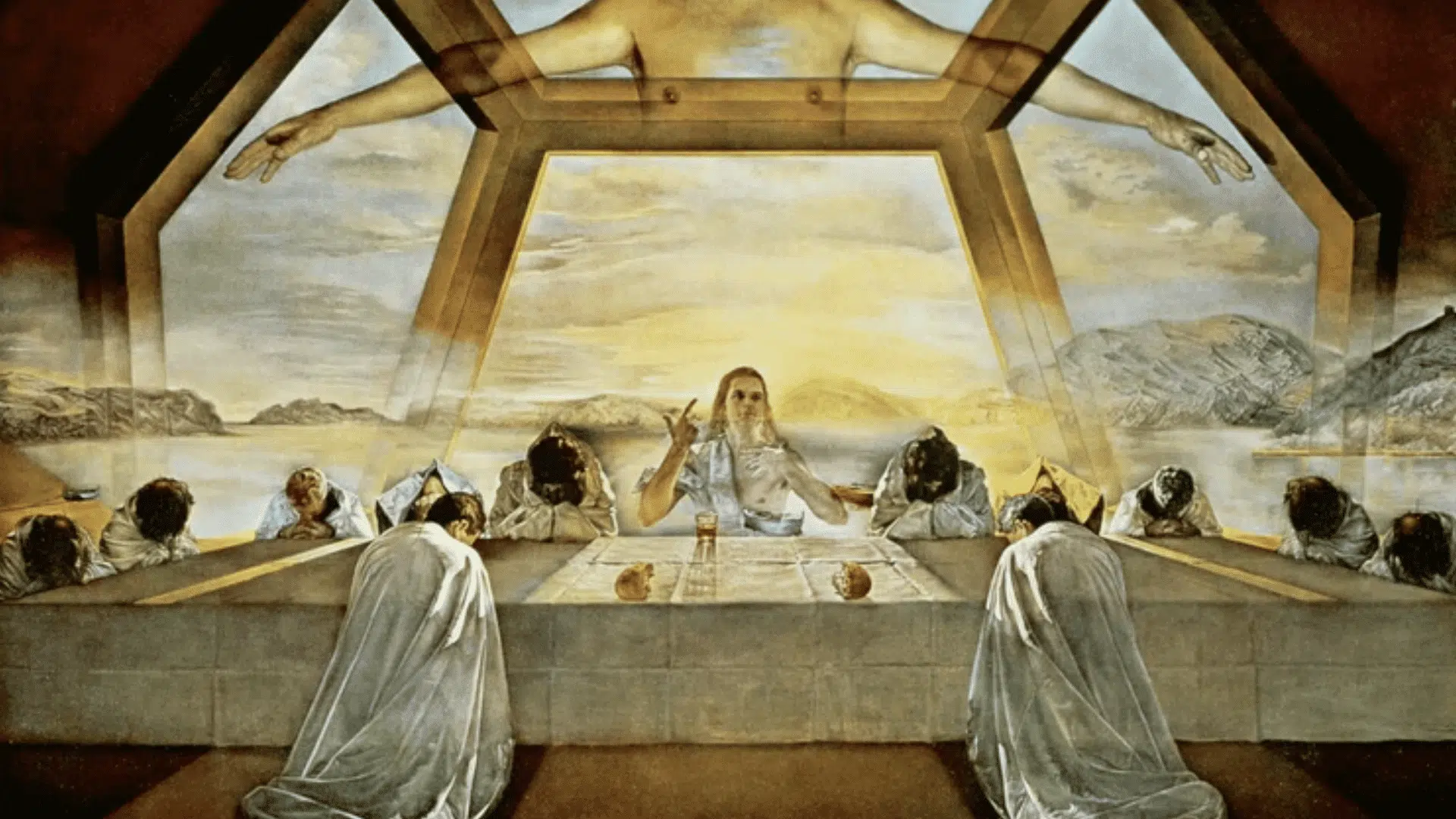
Think modern art is just random shapes and strange colors? Modern art examples can feel confusing when you first see them, especially if no one explains why they matter.
You may look at a famous work and wonder what makes it important. That can make museum visits feel more like guessing than learning.
The problem is not the art itself. It is often the way it is presented. Short labels and quick searches can leave out the meaning behind a work.
Without that context, it is easy to judge the art too fast and miss why it earned a place in major collections.
If you want the bigger picture first, the artists who reshaped modern art is a good starting point before diving into individual works.
What is Modern Art?
Modern art refers to artwork made during a period of major change in style and ideas. It is usually linked to the late 1800s through the mid-1900s.
Artists began moving away from the strict rules of traditional painting and sculpture. Instead of copying real life closely, they used new shapes, colors, materials, and ways of showing subjects.
Traditional art often focused on realistic scenes, history, religion, or portraits. Modern art gave artists more freedom in how they expressed ideas.
Contemporary art is different. It generally refers to art made from the late 1900s to the present day.
Modern and Contemporary Painting Examples from Famous Collections
These modern art paintings show how artists changed painting across different periods and styles. Each entry includes the artist, year, collection, medium, and a short reason the work holds an important place in art history.
1. Nighthawks
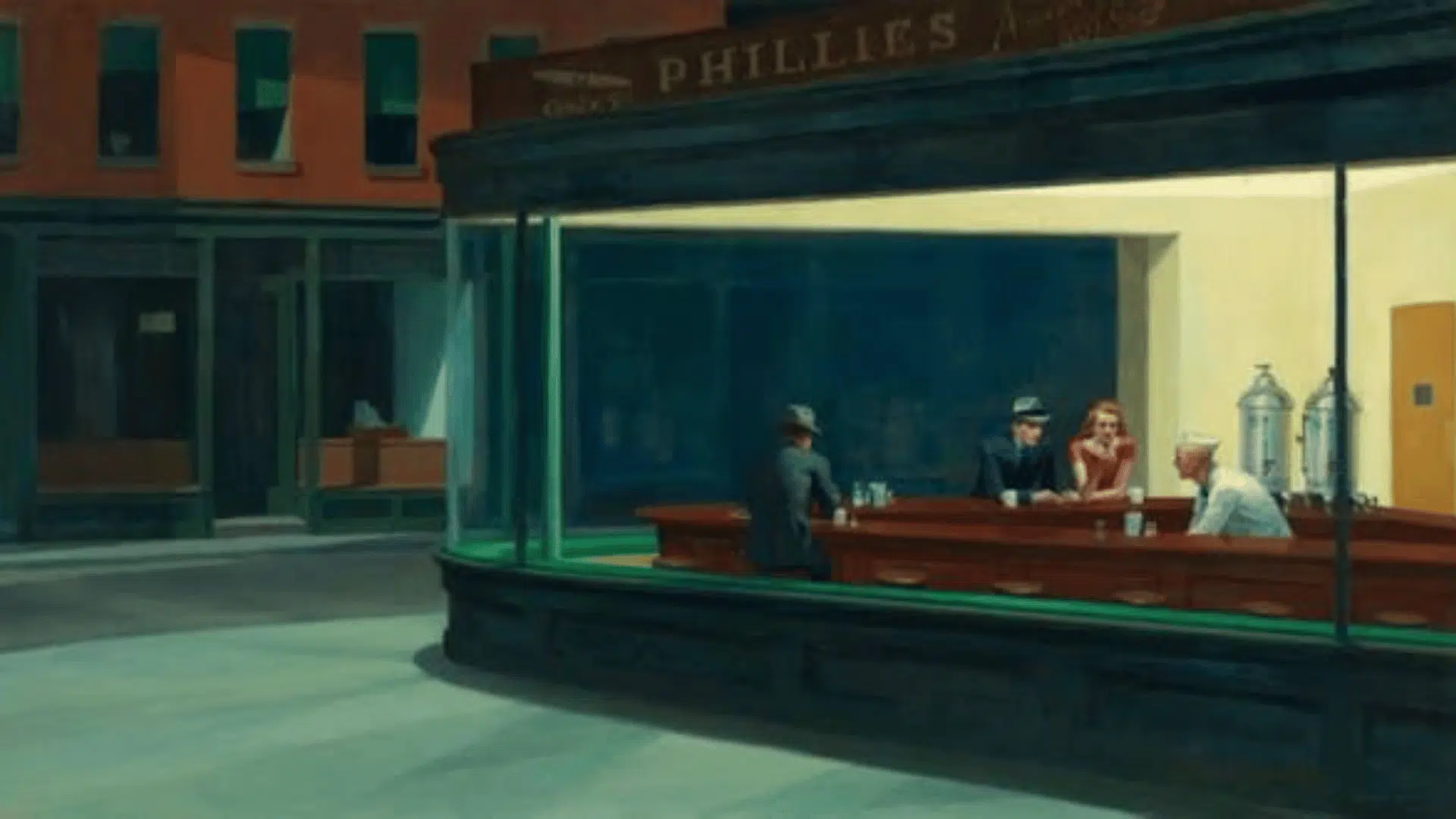
Source: The Art Institute of Chicago
Four people sit inside a brightly lit diner while the street outside remains empty and dark. The wide glass window exposes the scene, yet the figures still seem distant from one another.
- Artist: Edward Hopper
- Year: 1942
- Collection: Art Institute of Chicago
- Medium: Oil on canvas
- Why it matters: Hopper turned an ordinary late-night setting into a quiet study of loneliness and city life.
2. Impression, Sunrise
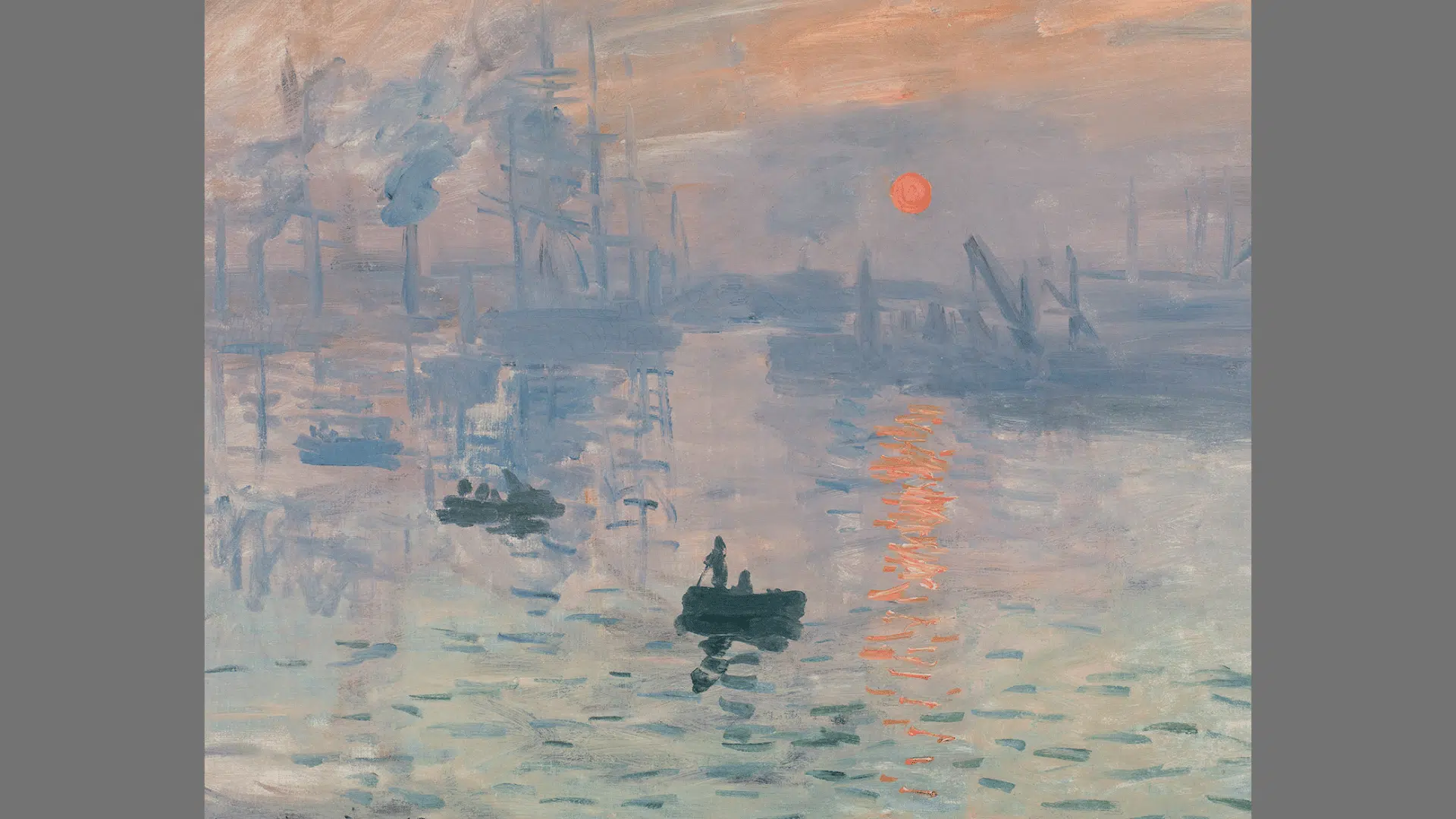
Source: Musée Marmottan Monet
Soft strokes show the harbor of Le Havre under a hazy morning sky. Boats and buildings fade into the mist while a small orange sun stands out against the cool water.
- Artist: Claude Monet
- Year: 1872
- Collection: Musée Marmottan Monet, Paris
- Medium: Oil on canvas
- Why it matters: The work helped give Impressionism its name and showed that changing light could matter more than sharp detail; you can trace it across Monet’s most famous paintings from the same period.
3. A Sunday on La Grande Jatte, 1884
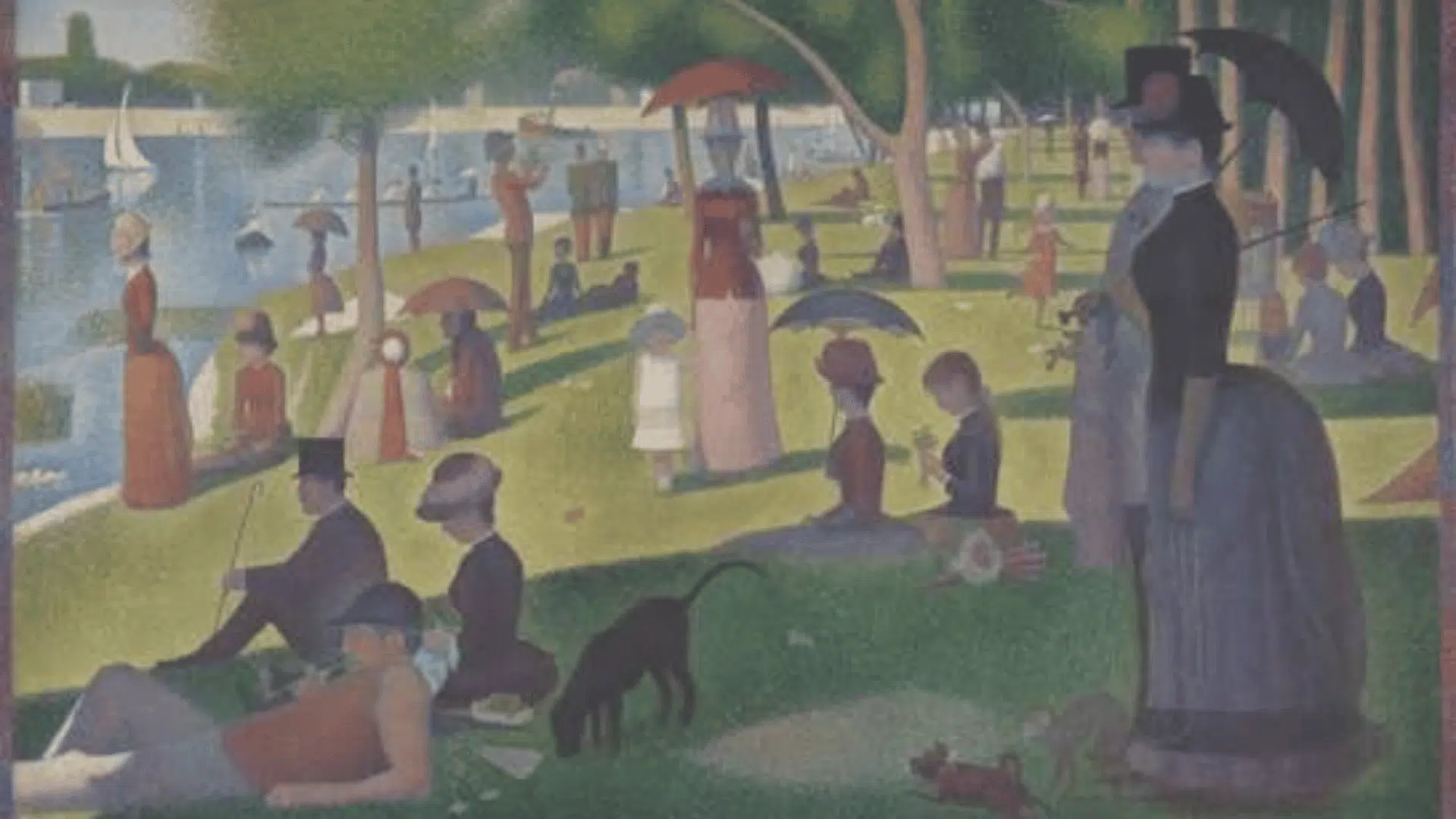
Source: Art Institute of Chicago
People relax beside the Seine on a calm afternoon. Seurat built the scene with thousands of tiny marks of color that blend together when viewed from farther away.
- Artist: Georges Seurat
- Year: 1884 to 1886, with the border added in 1888 to 1889
- Collection: Art Institute of Chicago
- Medium: Oil on canvas
- Why it matters: Seurat used color theory and careful placement of dots to create a new way of painting modern city life.
4. The Starry Night
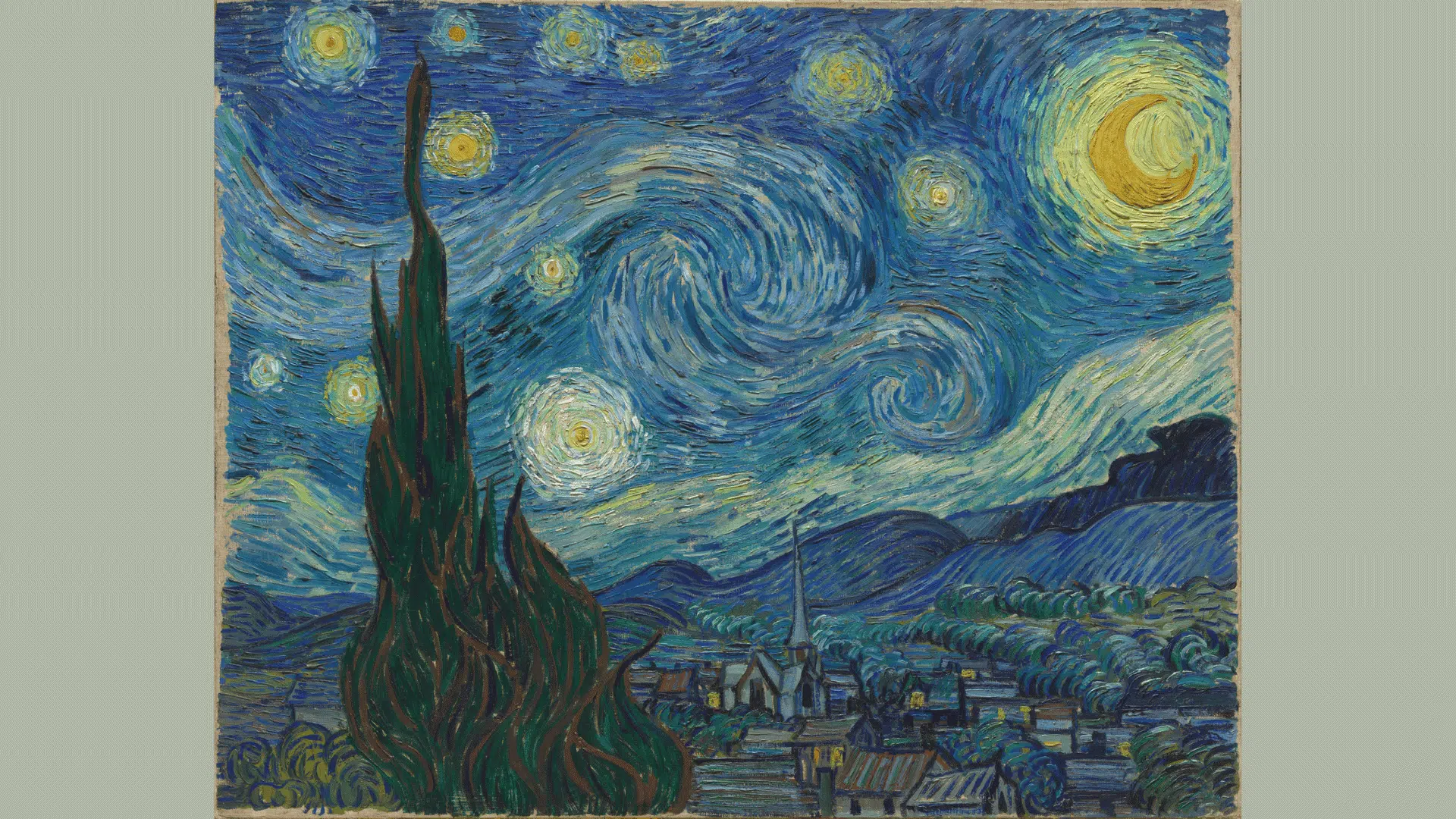
Source: Museum of Modern Art
A restless night sky rolls above a small village as stars and a bright moon glow overhead. Van Gogh changed the natural scene through curved lines, strong color, and heavy brushwork.
- Artist: Vincent van Gogh
- Year: 1889
- Collection: Museum of Modern Art, New York
- Medium: Oil on canvas
- Why it matters: The painting shows how an artist could reshape a real place to express emotion rather than copy exactly what was seen.
5. The Scream
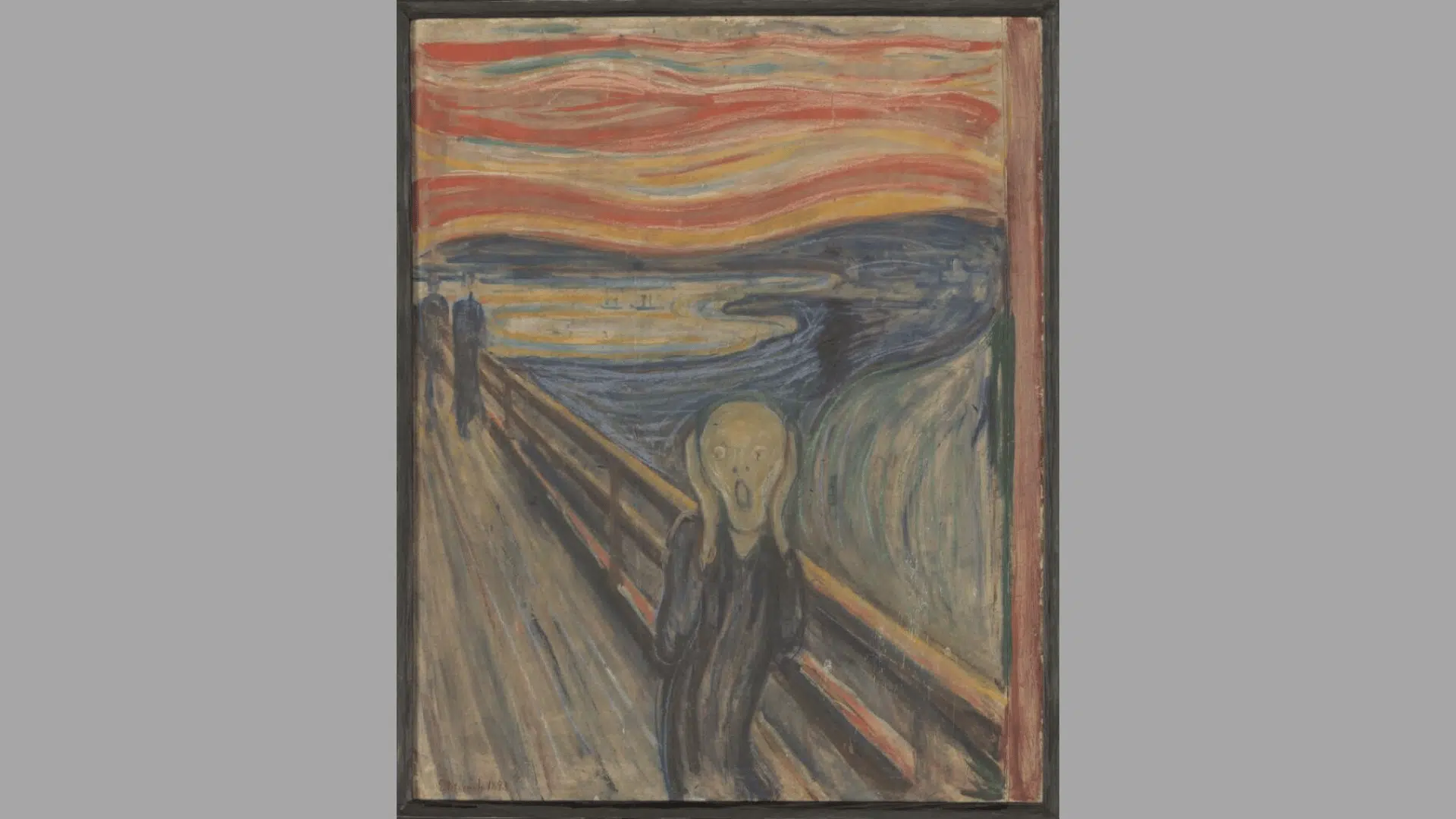
Source: Nasjonalmuseet
A figure grips its head while the sky and landscape bend into flowing bands around it. Two distant people keep walking, making the fear in the foreground feel even more personal.
- Artist: Edvard Munch
- Year: 1893
- Collection: National Museum of Art, Architecture and Design, Oslo
- Medium: Tempera and grease crayon on cardboard
- Why it matters: Munch used distorted form and color to make anxiety itself feel like the main subject.
6. Les Demoiselles d’Avignon
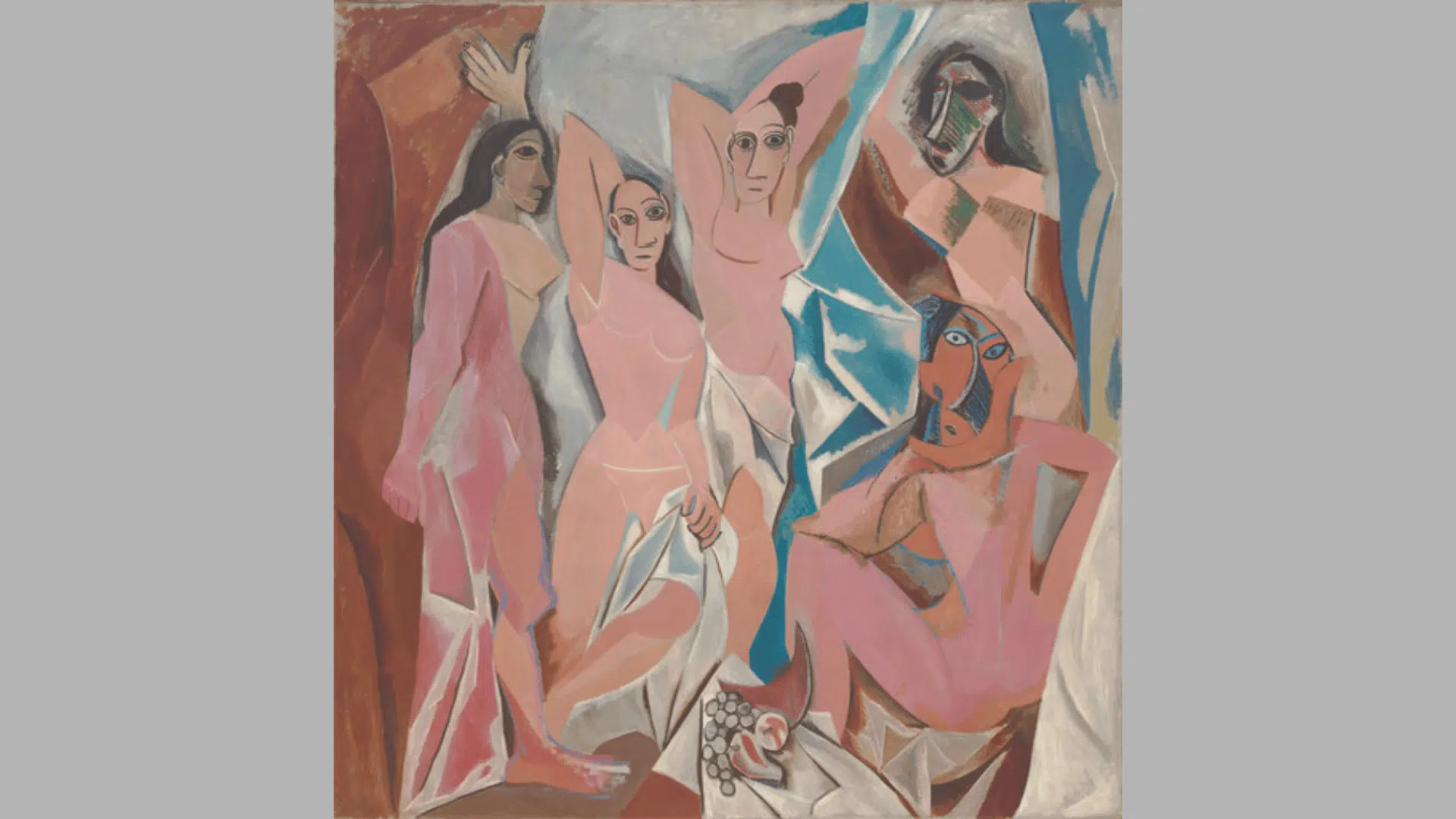
Source: Museum of Modern Art
Five figures face the viewer inside a tight and sharply divided space. Their bodies appear broken into hard shapes rather than modeled realistically.
- Artist: Pablo Picasso
- Year: 1907
- Collection: Museum of Modern Art, New York
- Medium: Oil on canvas
- Why it matters: Picasso challenged traditional perspective and helped open the way for Cubism, a shift you can see fully play out in these famous Cubist paintings that followed.
7. The Kiss
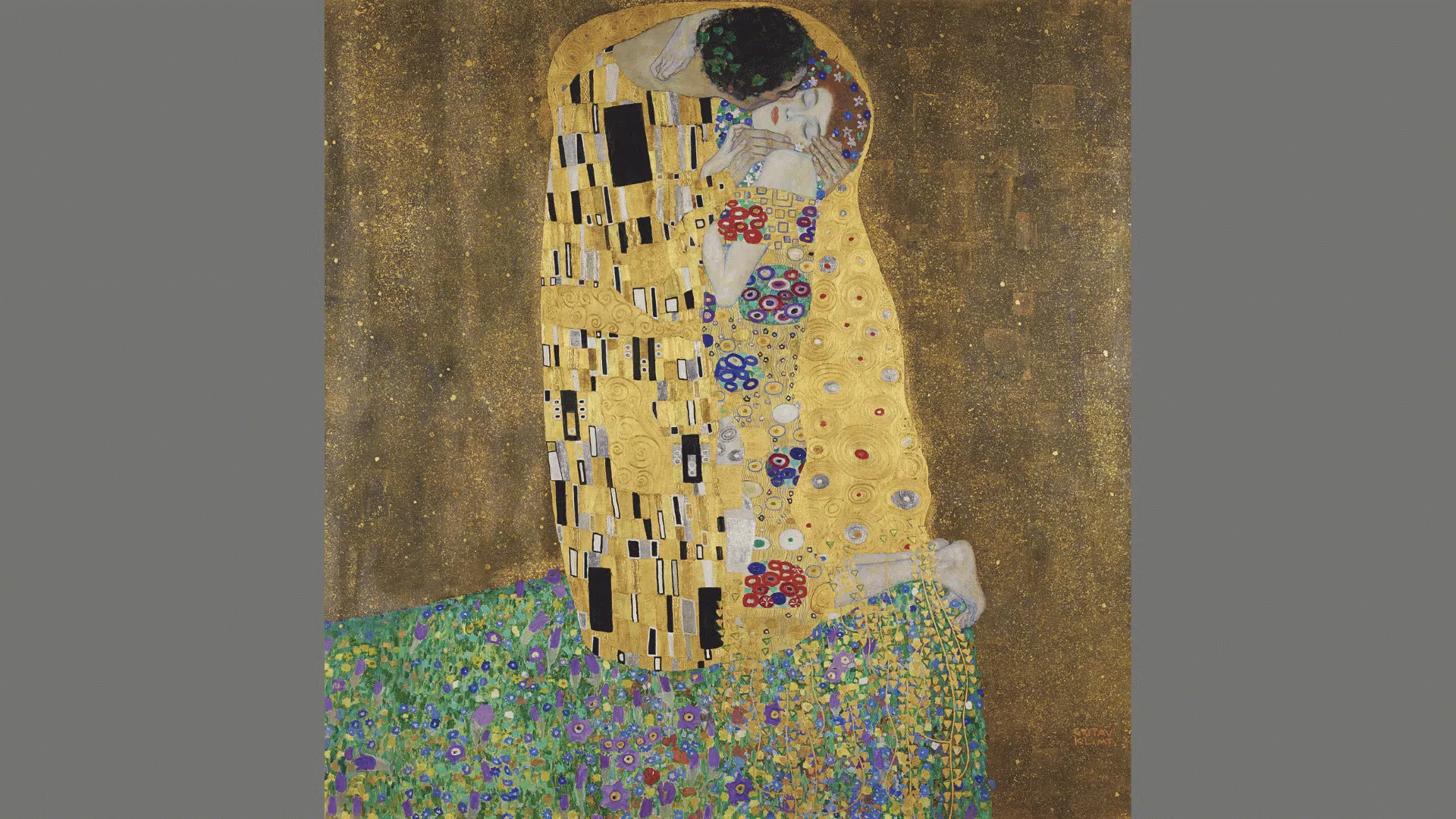
Source: Belvedere
Two people hold each other inside a field filled with gold, flowers, circles, and geometric patterns. Their bodies seem to merge with the richly decorated surface around them.
- Artist: Gustav Klimt
- Year: 1908 to 1909
- Collection: Belvedere, Vienna
- Medium: Oil and gold leaf on canvas
- Why it matters: Klimt combined human closeness with bold pattern and gold to create a new approach to portraiture and decoration.
8. The Red Studio
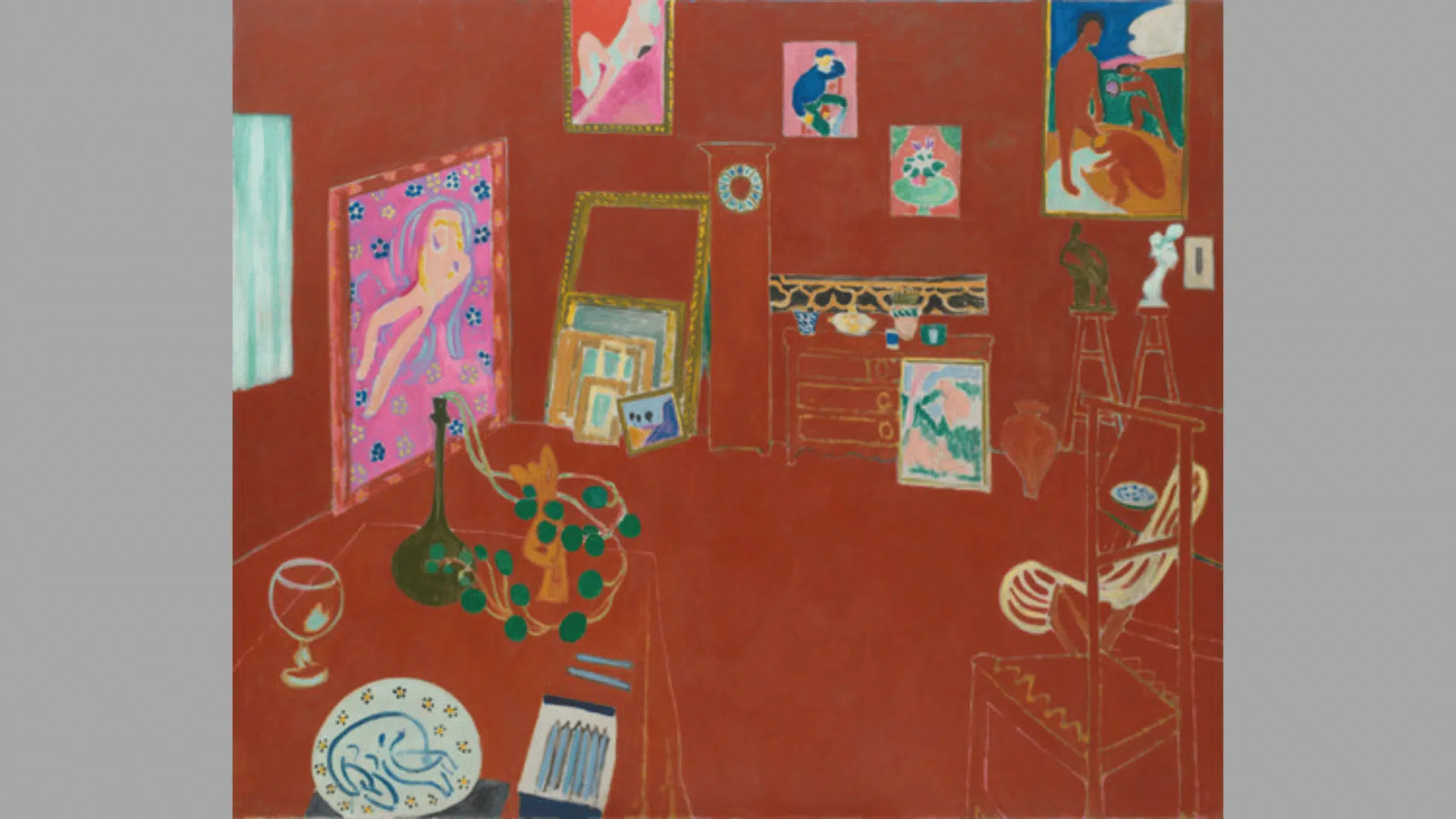
Source: Museum of Modern Art
A strong red field covers almost the entire room, leaving furniture and walls marked by thin outlines. Paintings and objects keep their own colors, which makes them stand apart from the red space.
- Artist: Henri Matisse
- Year: 1911
- Collection: Museum of Modern Art, New York
- Medium: Oil on canvas
- Why it matters: Matisse used color as the main structure of the room instead of treating it as simple decoration.
9. Composition 8
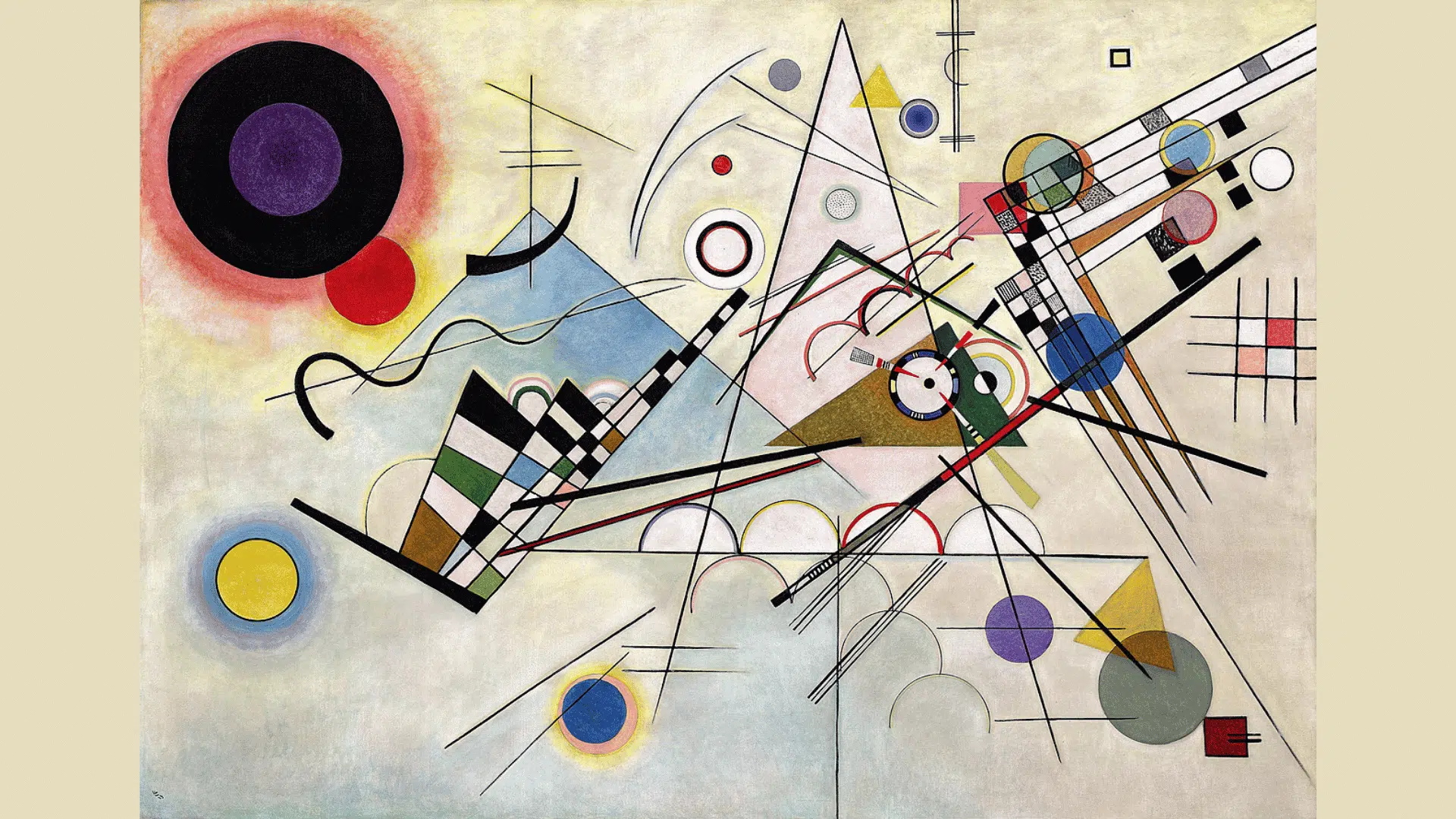
Source: Guggenheim
Circles, lines, grids, arcs, and triangles spread across a pale background. Nothing represents a clear object or place, yet the arrangement creates rhythm and movement.
- Artist: Vasily Kandinsky
- Year: 1923
- Collection: Solomon R. Guggenheim Museum, New York
- Medium: Oil on canvas
- Why it matters: Kandinsky showed that shape, line, and color could carry meaning without showing a recognizable subject.
10. Black Iris
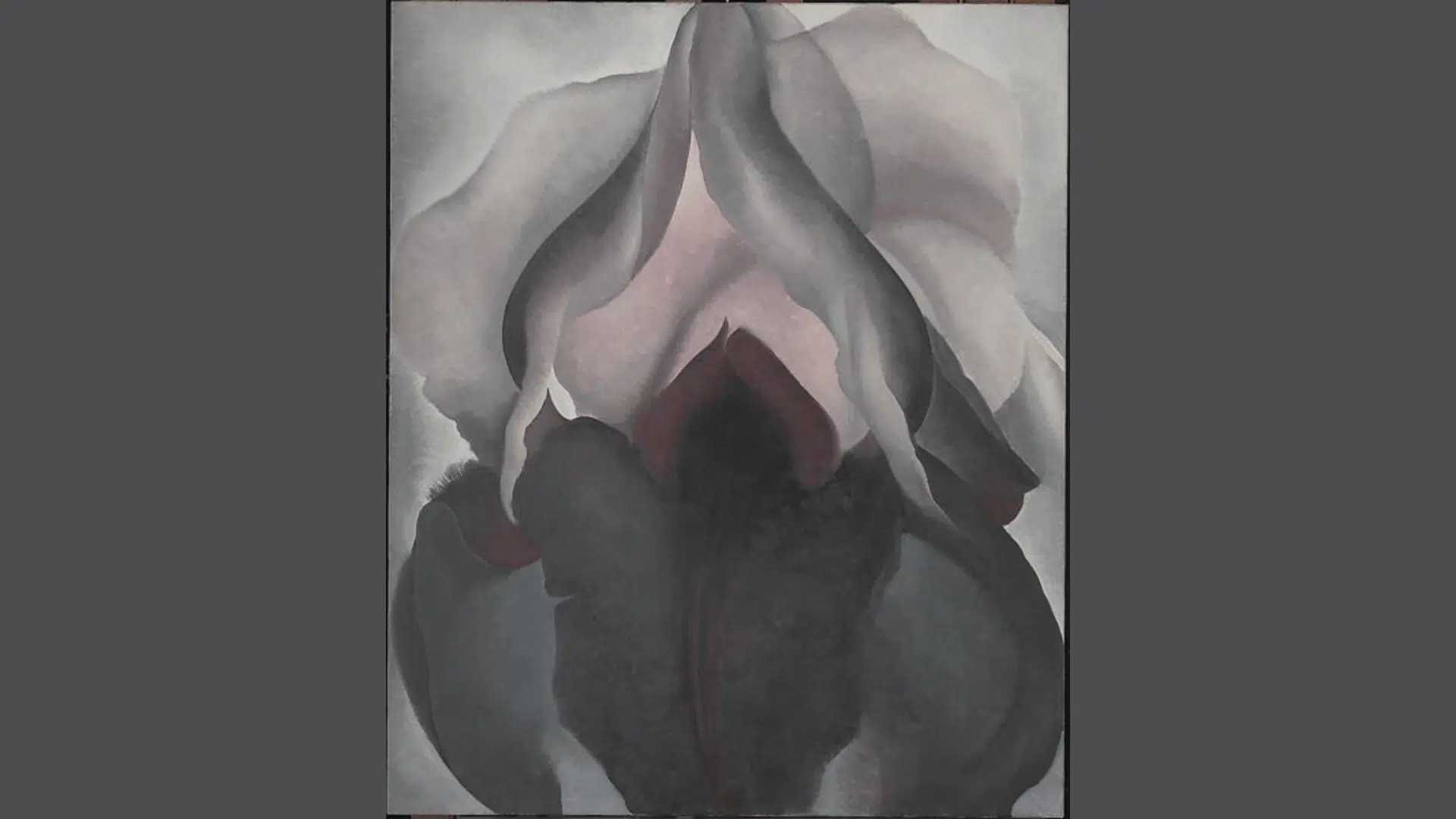
Source: The Metropolitan Museum of Art
O’Keeffe enlarges an iris until its petals nearly fill the canvas. The close view turns a familiar flower into a study of curves, shadows, and changing tones.
- Artist: Georgia O’Keeffe
- Year: 1926
- Collection: Metropolitan Museum of Art, New York
- Medium: Oil on canvas
- Why it matters: The unusual scale encouraged viewers to notice small forms and details that might normally be overlooked.
11. The Persistence of Memory
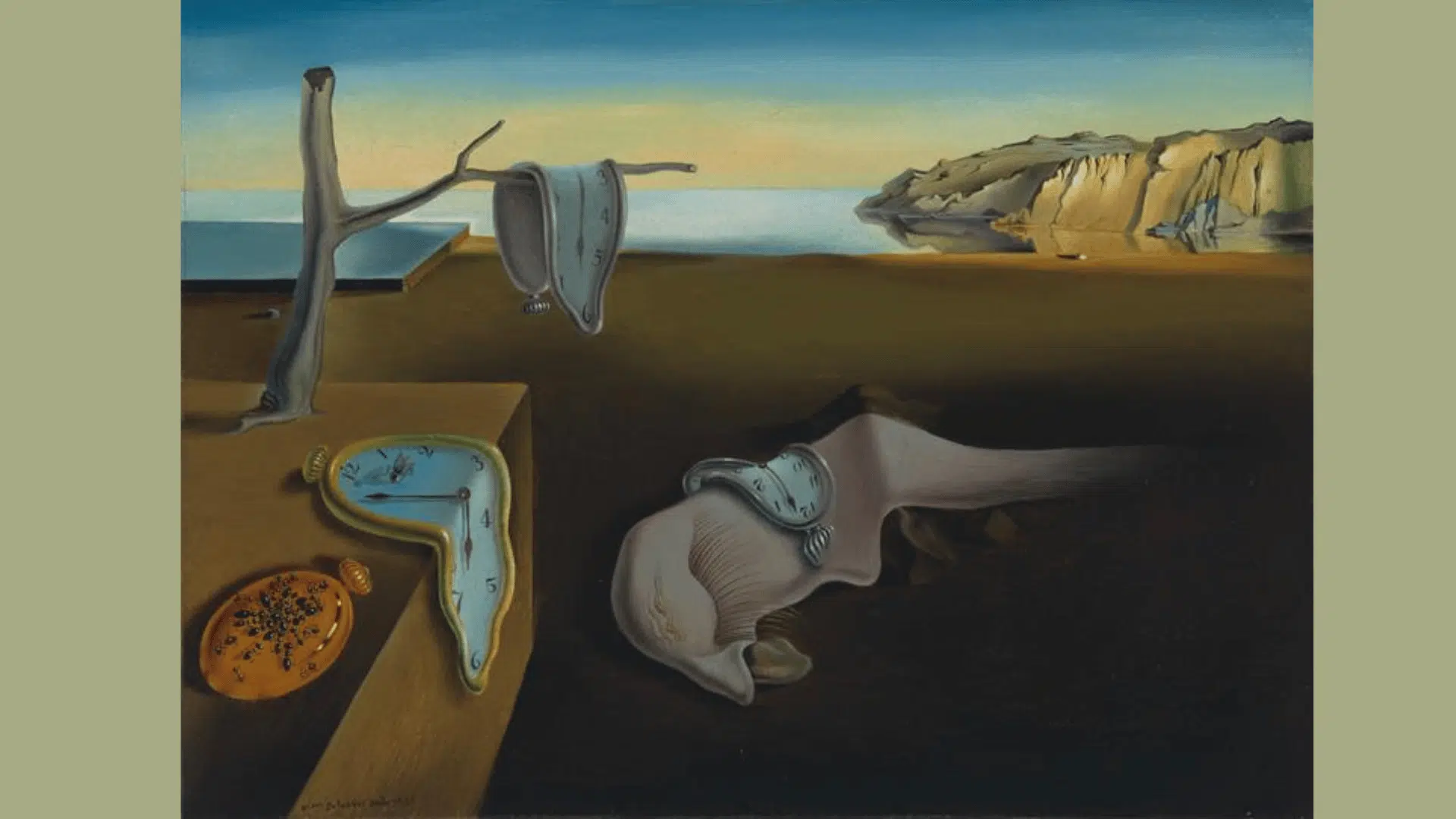
Source: Museum of Modern Art
Soft watches bend and hang across a strange, quiet landscape. Dalí paints the impossible scene with sharp detail, giving the dreamlike setting an oddly believable quality.
- Artist: Salvador Dalí
- Year: 1931
- Collection: Museum of Modern Art, New York
- Medium: Oil on canvas
- Why it matters: The work became closely linked with Surrealism because it places impossible objects inside a carefully painted setting.
12. Guernica
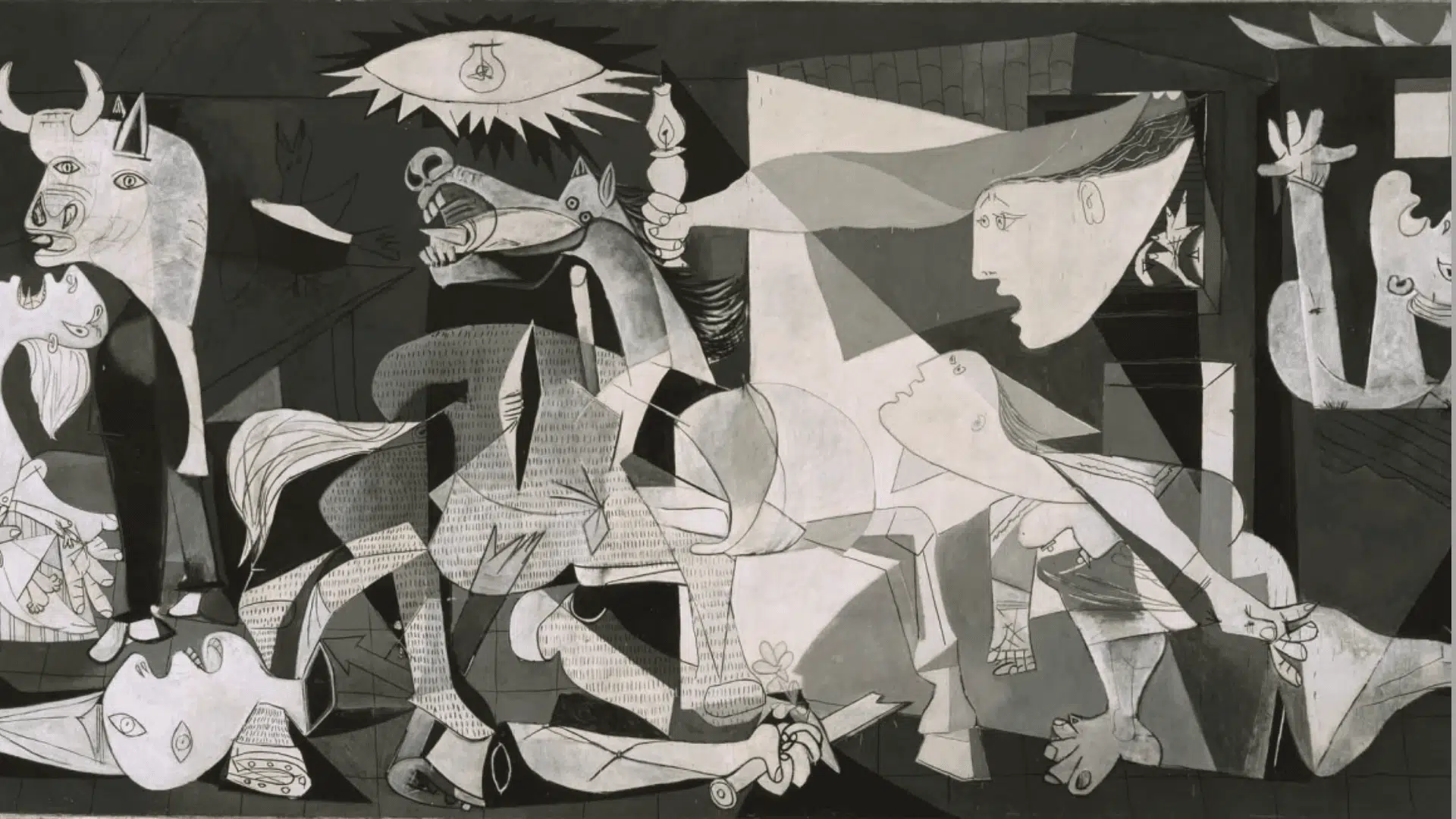
Source: Museo Reina Sofía
A wounded horse, bull, grieving mother, fallen soldier, and terrified figures fill a crowded black, white, and gray scene. Broken shapes and sharp expressions create a strong sense of fear and disorder.
- Artist: Pablo Picasso
- Year: 1937
- Collection: Museo Nacional Centro de Arte Reina Sofía, Madrid
- Medium: Oil on canvas
- Why it matters: Picasso responded to the bombing of Gernika with a large anti-war work centered on civilian pain and loss.
13. Self-Portrait with Cropped Hair
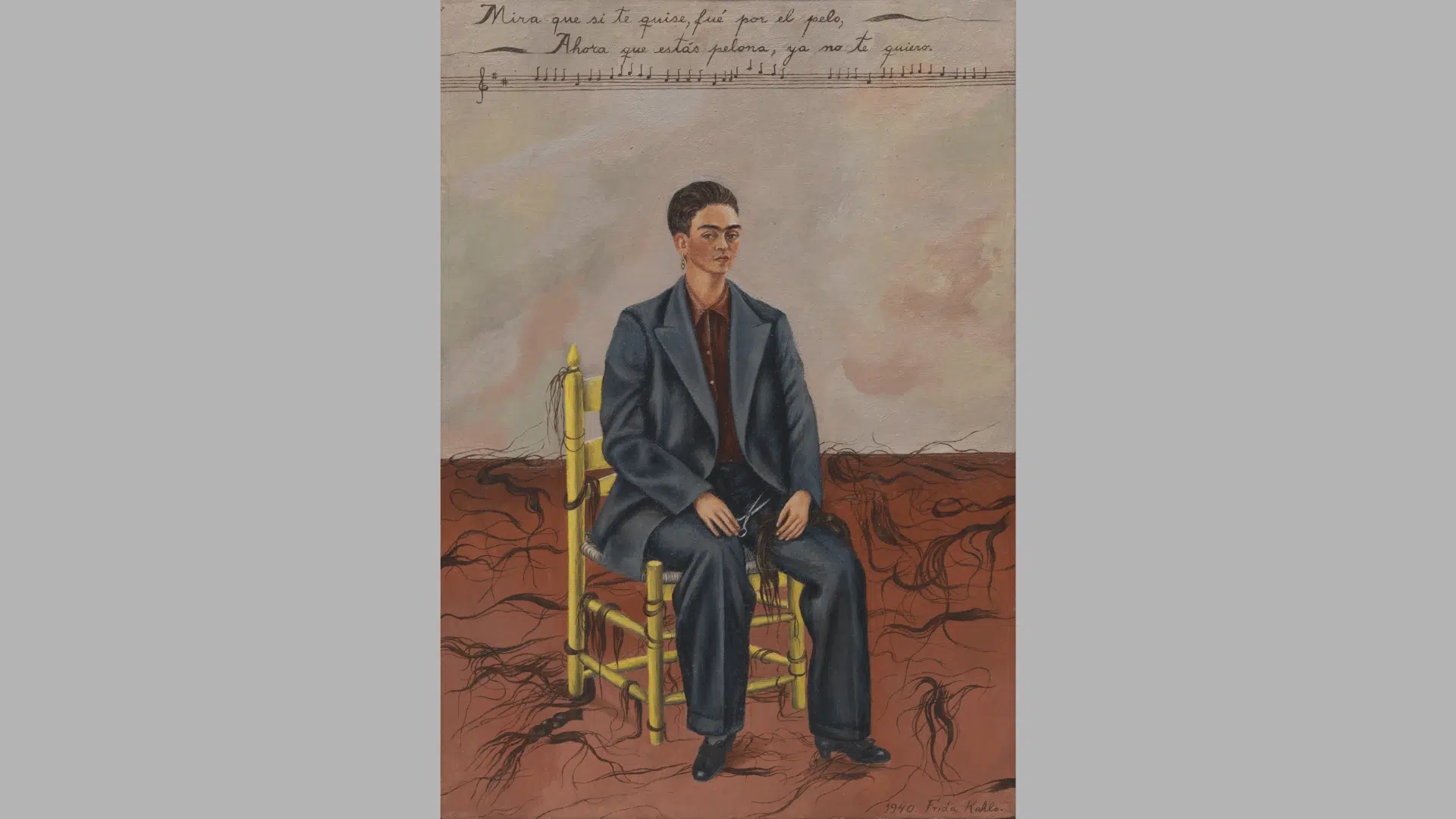
Source: Museum of Modern Art
Kahlo sits in an oversized suit while pieces of cut hair cover the floor. She holds scissors in one hand, turning clothing and hair into signs of personal change.
- Artist: Frida Kahlo
- Year: 1940
- Collection: Museum of Modern Art, New York
- Medium: Oil on canvas
- Why it matters: The self-portrait uses appearance and gesture to address independence, gender, and identity after a major change in Kahlo’s life.
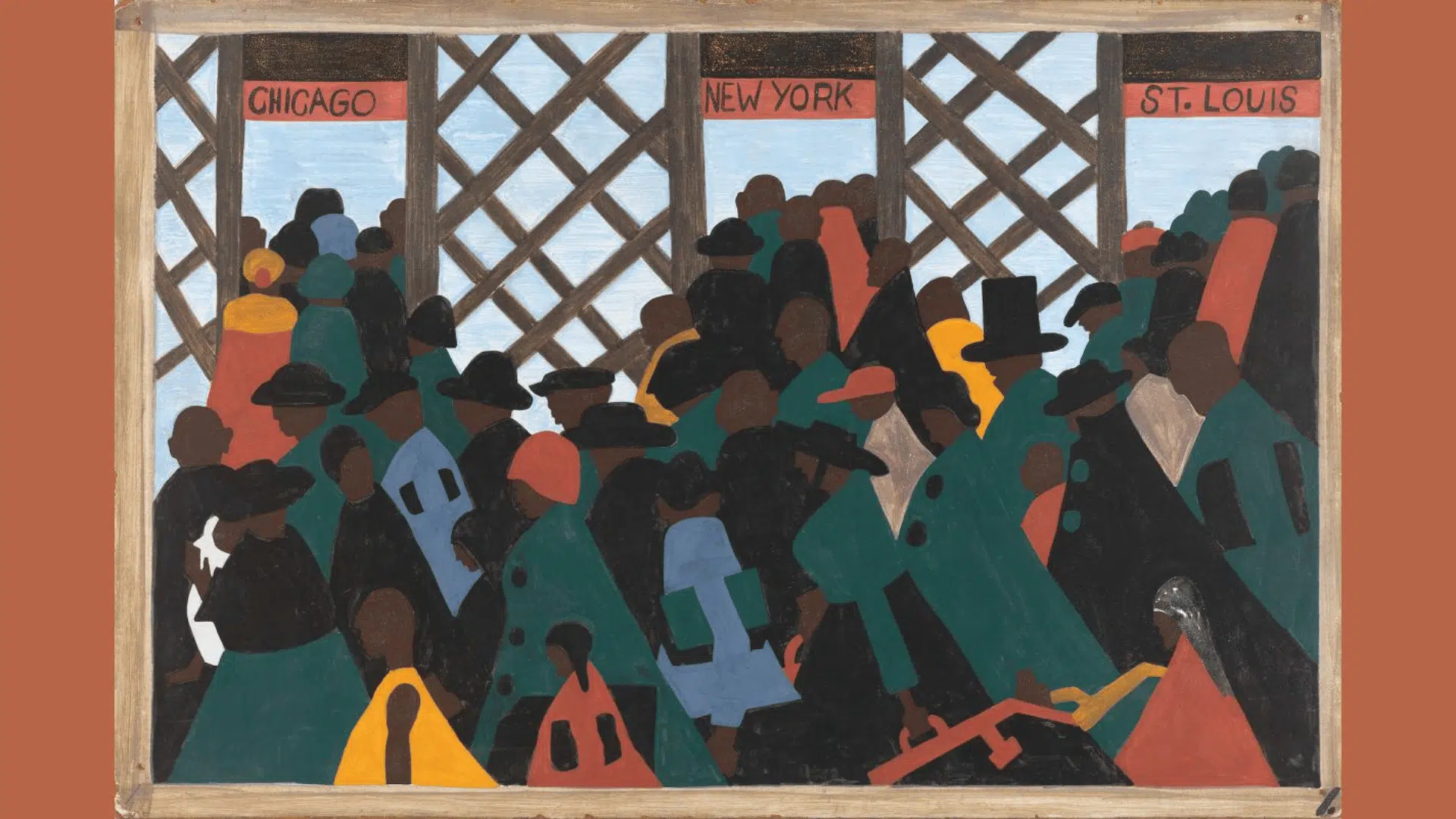
14. The Migration Series, Panel No. 1
Source: The Phillips Collection
Groups of travelers move toward ticket windows marked Chicago, New York, and St. Louis. Repeated hats, coats, bags, and steps make the movement feel shared rather than individual.
- Artist: Jacob Lawrence
- Year: 1940 to 1941
- Collection: The Phillips Collection, Washington, DC
- Medium: Casein tempera on hardboard
- Why it matters: The first panel begins Lawrence’s 60-part account of the Great Migration through clear shapes and direct storytelling.
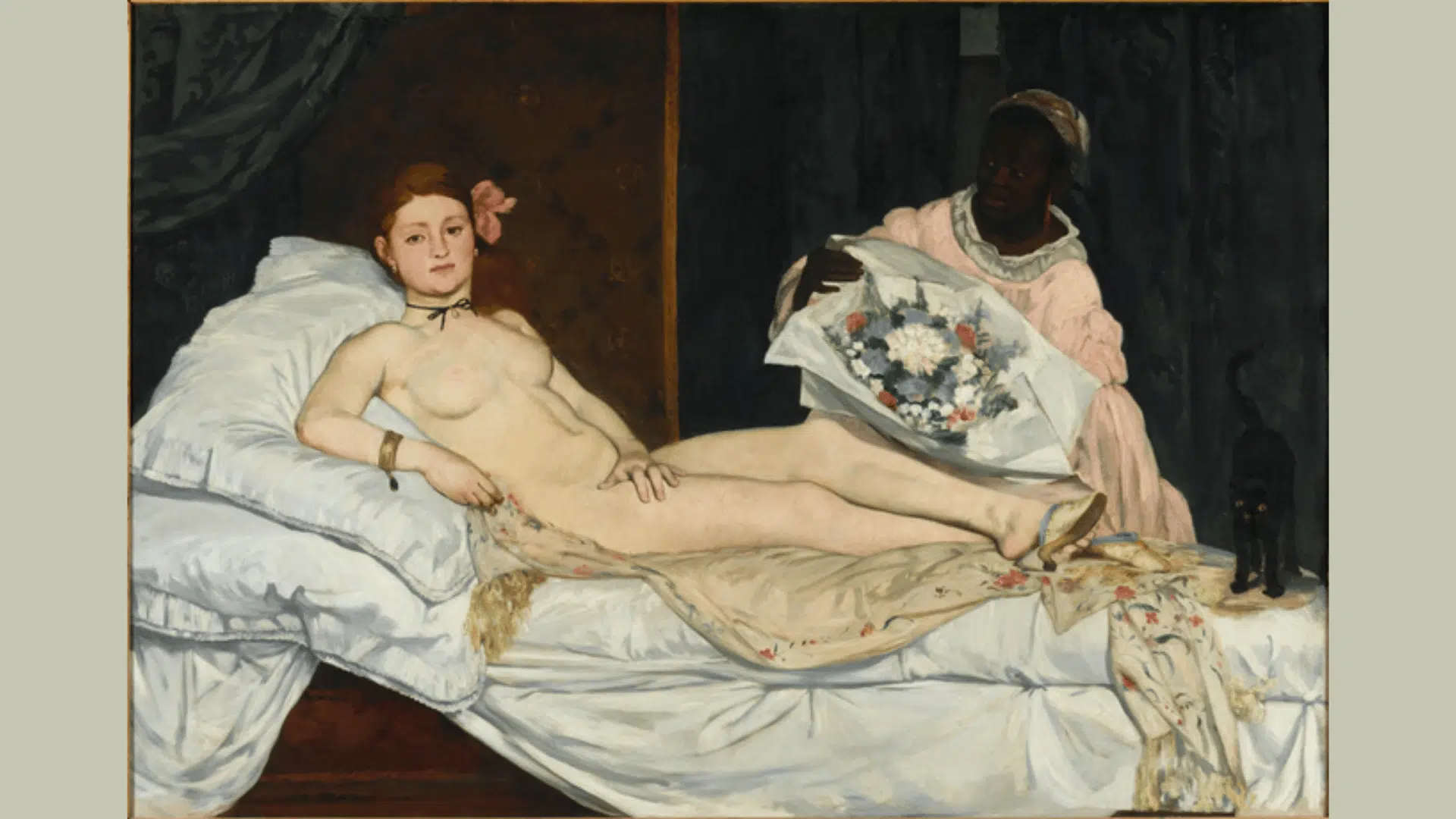
15. Olympia
Source: Musée d’Orsay
A woman lies on a bed and looks straight toward the viewer while a servant brings flowers. Manet borrowed a familiar pose from older art but placed it firmly in nineteenth-century Paris.
- Artist: Édouard Manet
- Year: 1863
- Collection: Musée d’Orsay, Paris
- Medium: Oil on canvas
- Why it matters: Its direct gaze, flat paint, and modern subject challenged the polished standards expected by academic audiences.
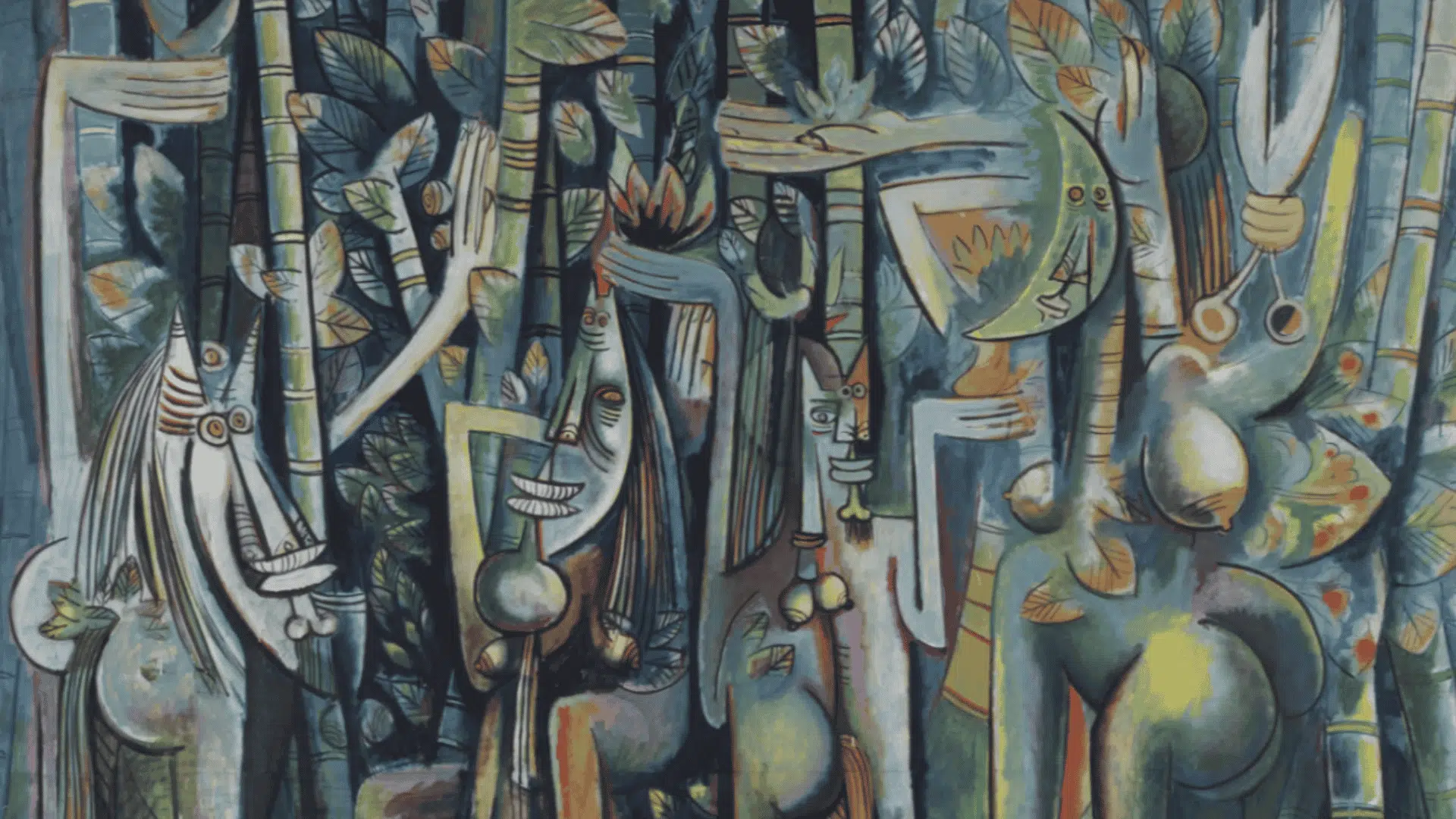
16. The Jungle
Source: smarthistory
Tall figures stand among sugarcane, leaves, fruit, and pointed forms. Their mask-like faces and stretched bodies mix human, plant, and spiritual features within one crowded scene.
- Artist: Wifredo Lam
- Year: 1942 to 1943
- Collection: Museum of Modern Art, New York
- Medium: Oil and charcoal on paper mounted on canvas
- Why it matters: Lam brought Afro-Caribbean culture and Cuba’s colonial history into a modern painting style shaped by several artistic traditions.
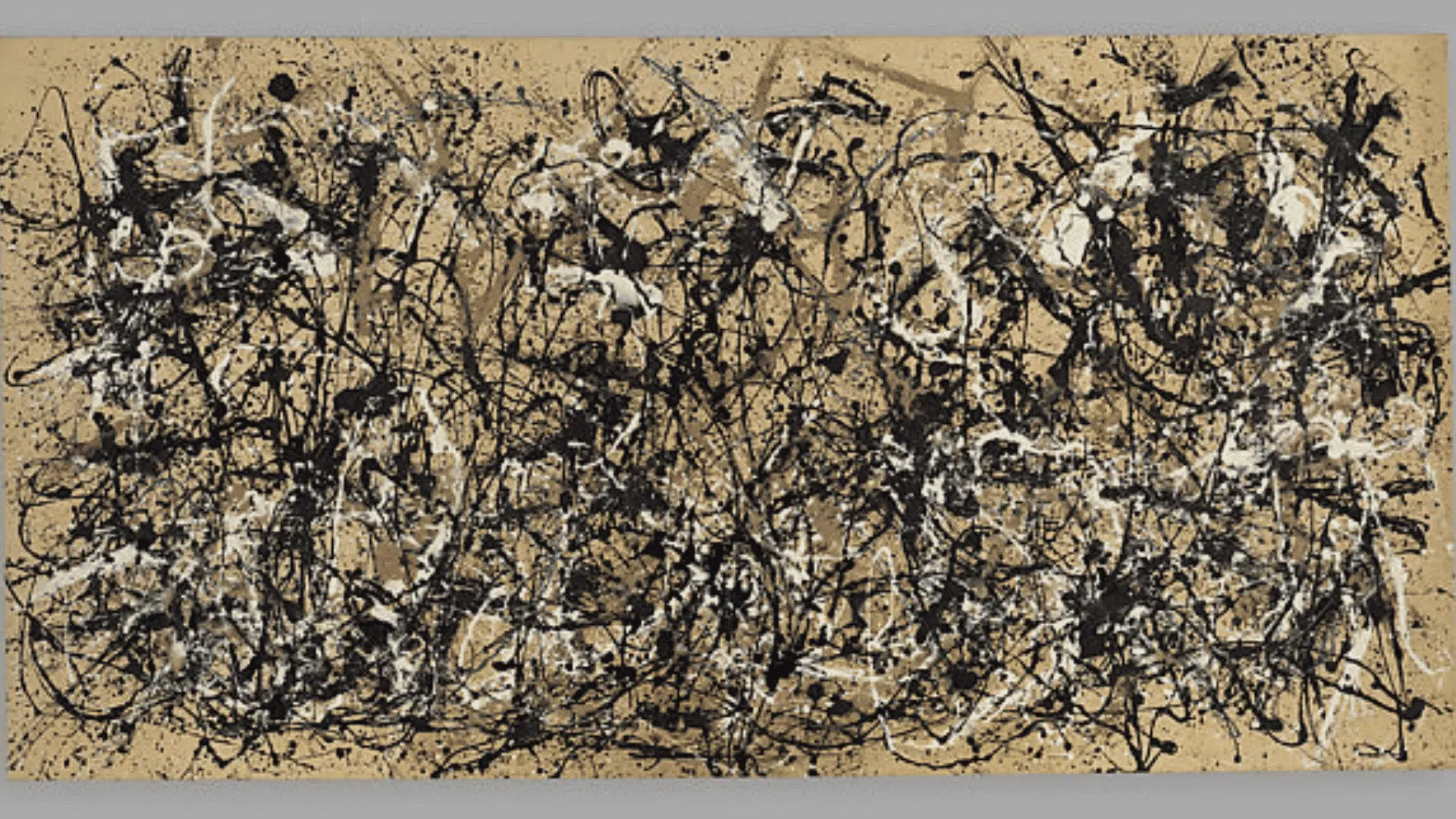
17. Autumn Rhythm: Number 30
Source: The Metropolitan Museum of Art
Lines of black, white, brown, and blue-green paint spread across a canvas more than 17 feet wide. Dripped and poured layers cover the surface without creating one main subject.
- Artist: Jackson Pollock
- Year: 1950
- Collection: Metropolitan Museum of Art, New York
- Medium: Oil-modified alkyd resin on canvas
- Why it matters: Pollock made the physical act of pouring and moving paint central to the finished work.
18. No. 14, 1960
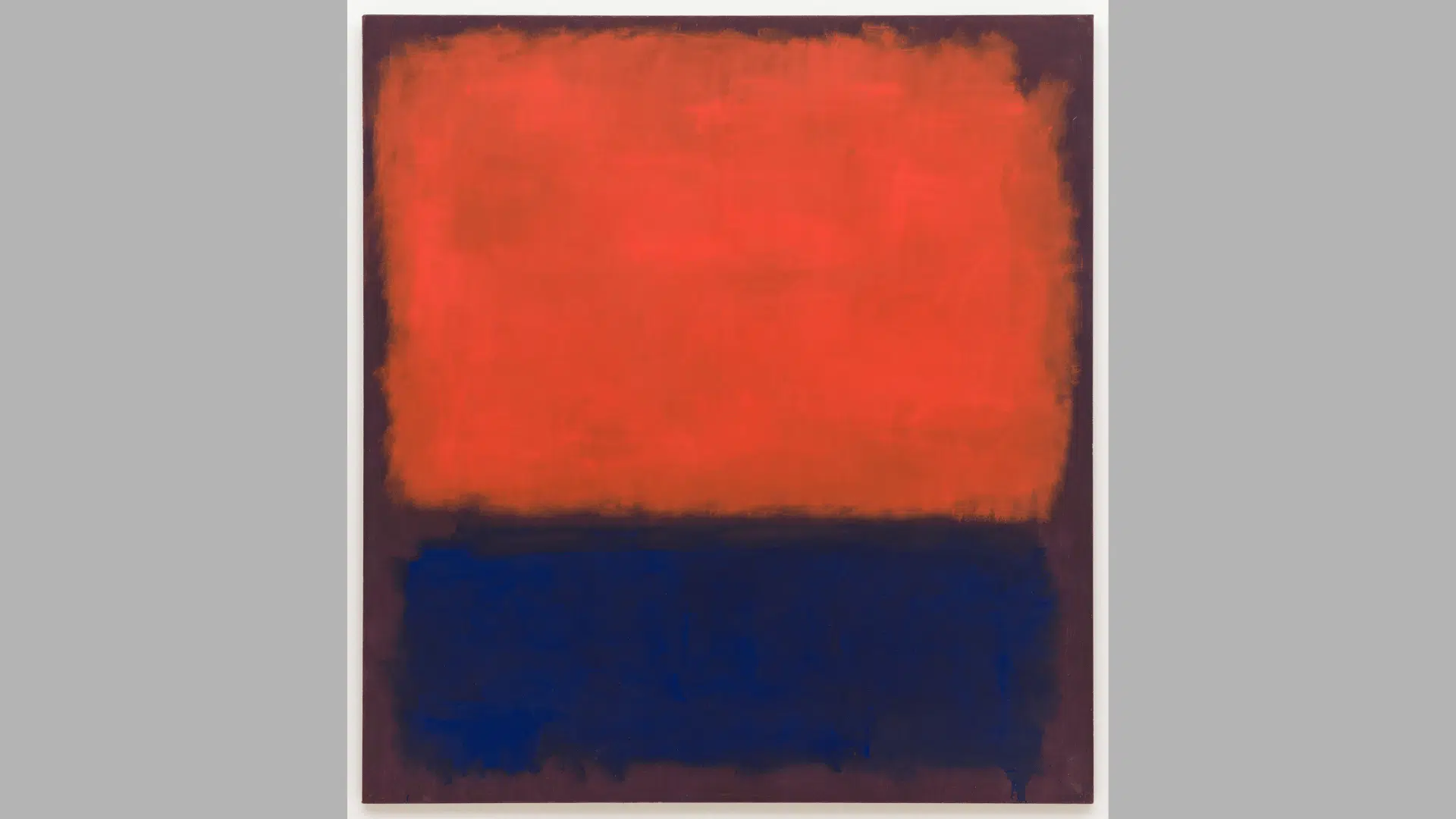
Source: SFMOMA
A large orange area sits above a dark blue block against a muted purple ground. Soft edges make the forms seem to float rather than sit firmly on the surface.
- Artist: Mark Rothko
- Year: 1960
- Collection: San Francisco Museum of Modern Art
- Medium: Oil on canvas
- Why it matters: Rothko reduced painting to large areas of color so mood and feeling could become the main experience.
19. Marilyn Diptych
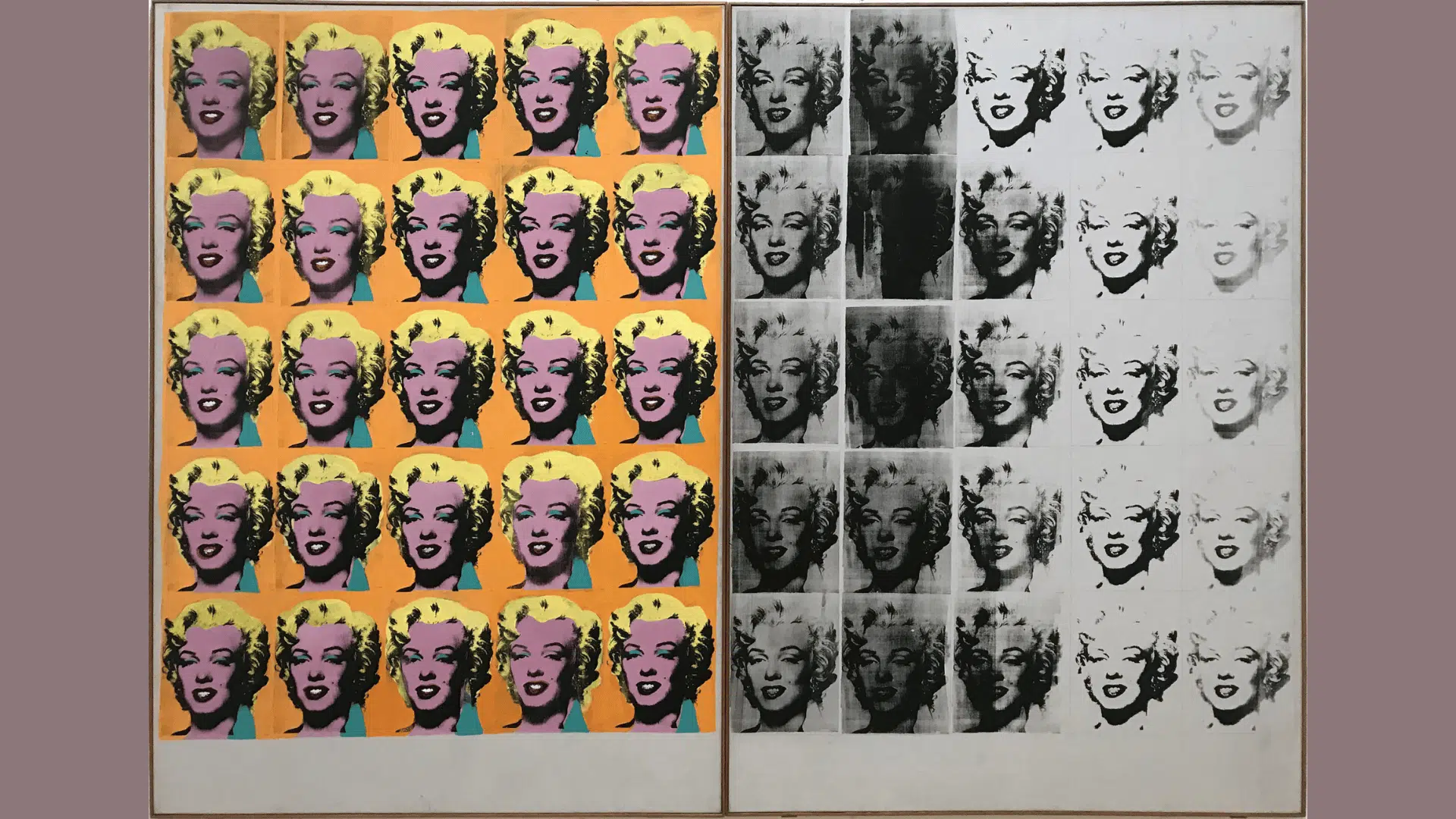
Source: smarthistory
Fifty repeated images of Marilyn Monroe stretch across two large panels. Bright color fills one side, while the black-and-white faces on the other slowly fade away.
- Artist: Andy Warhol
- Year: 1962
- Collection: Tate, London
- Medium: Acrylic paint on canvas
- Why it matters: Warhol connected celebrity culture with mass production while also showing how fame can fade after death, one of the boldest moments in pop art history.
20. American People Series #20: Die
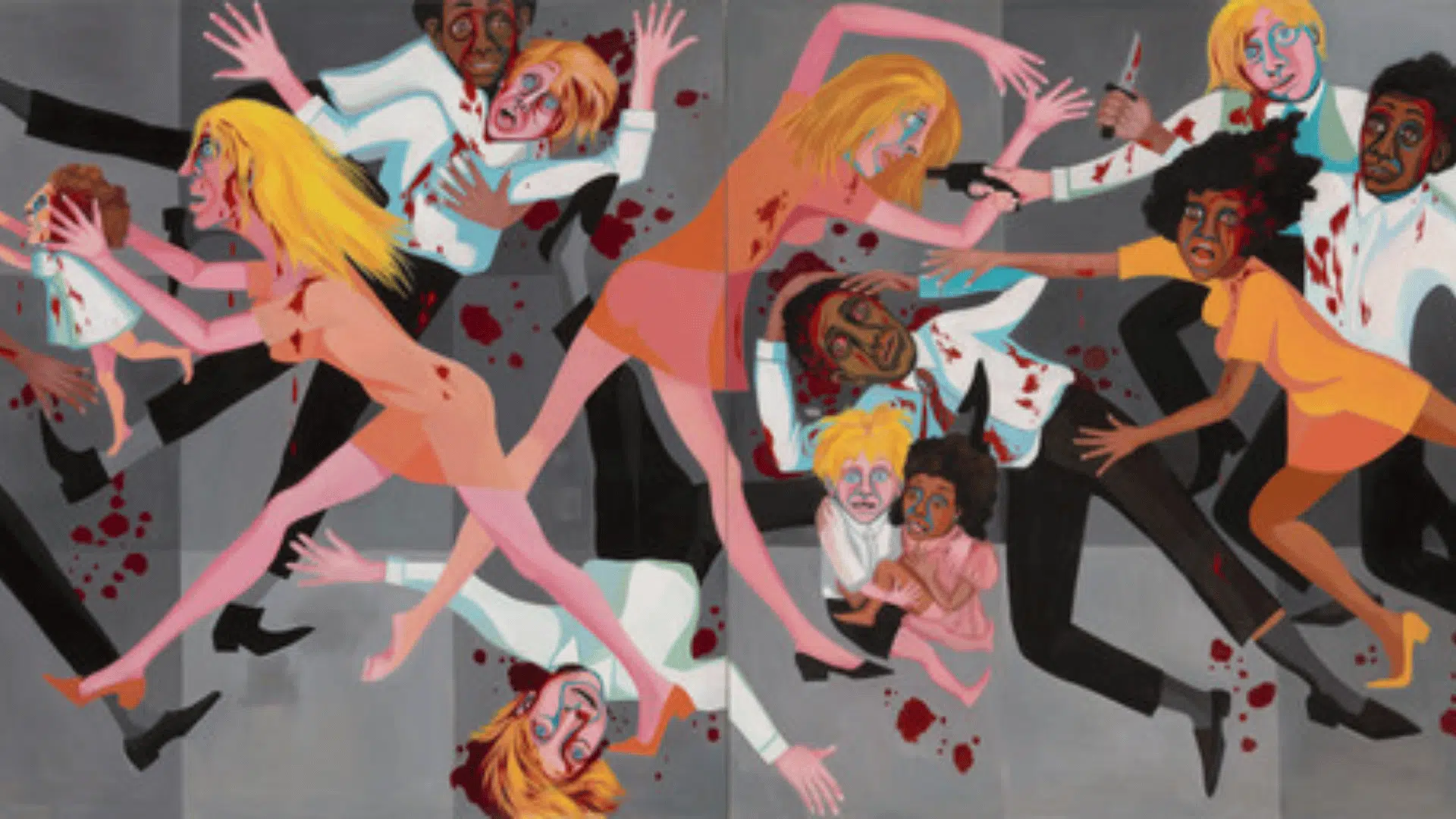
Source: Museum of Modern Art
Men and women in formal clothes fight, fall, and stumble across two panels. Near the center, two children hold each other as blood cuts across the ordered gray background.
- Artist: Faith Ringgold
- Year: 1967
- Collection: Museum of Modern Art, New York
- Medium: Oil on canvas, two panels
- Why it matters: Ringgold used a large painted scene to address racial violence and social tension in the United States.
21. A Bigger Splash
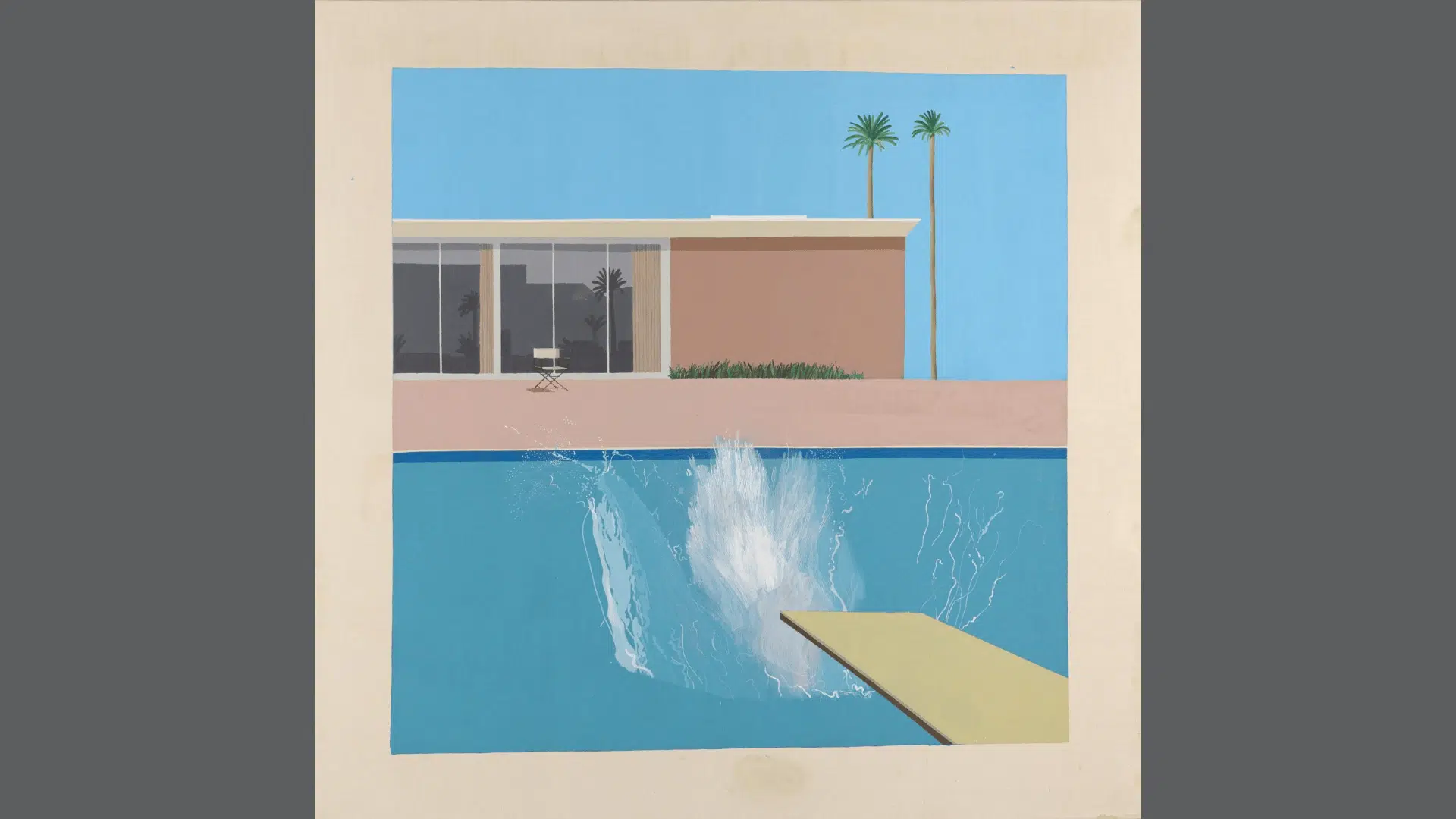
Source: Tate
A white splash breaks the calm surface of a swimming pool beside a flat-roofed California house. The person who entered the water cannot be seen, leaving only the brief splash behind.
- Artist: David Hockney
- Year: 1967
- Collection: Tate, London
- Medium: Acrylic paint on canvas
- Why it matters: Hockney placed a split-second action against a still setting, creating tension between movement and calm.
22. Untitled
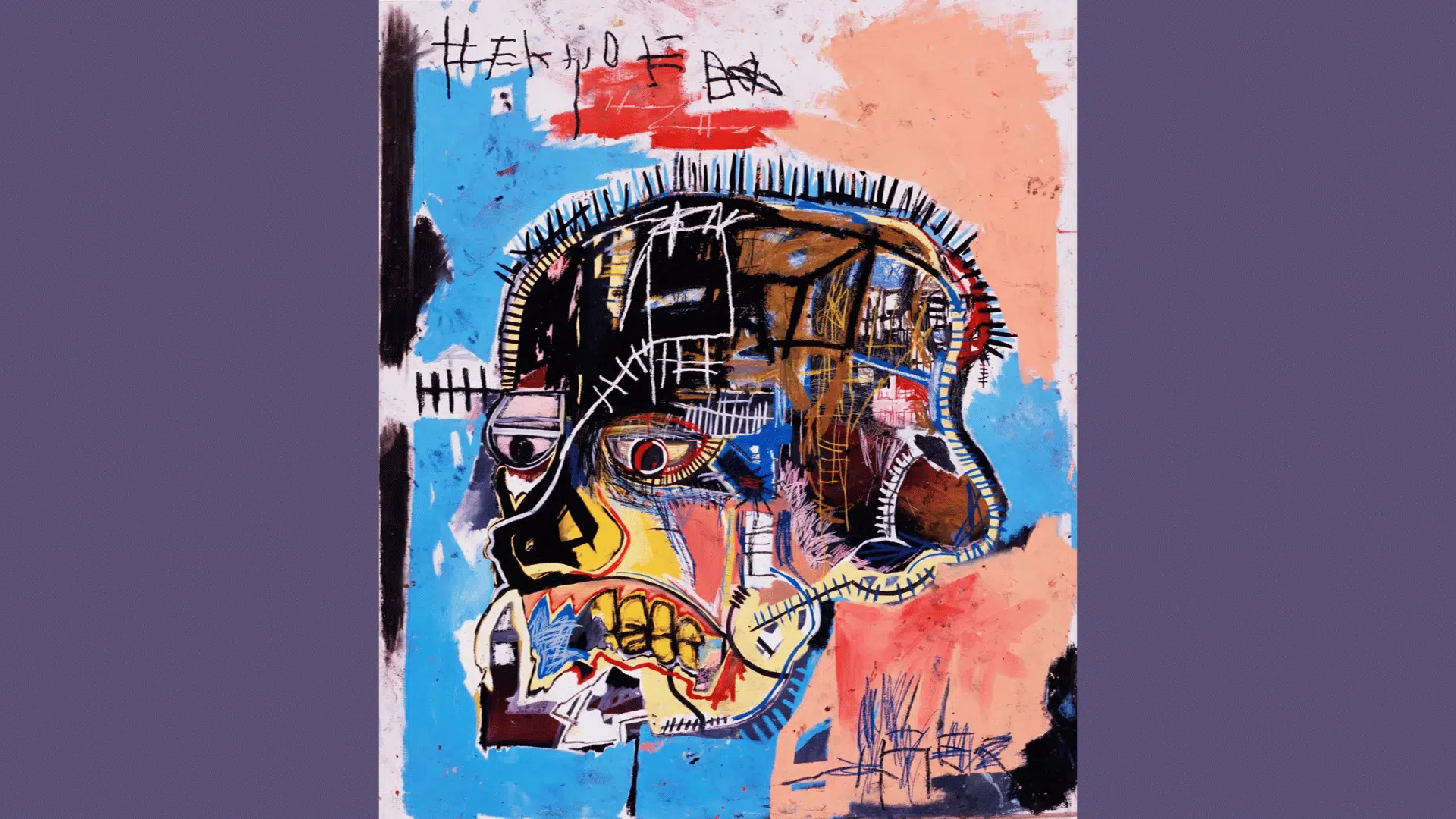
Source: The Broad
A large skull-like head fills the canvas with exposed teeth, dark eyes, scratched marks, and strong areas of color. The face feels both human and skeletal, giving it an unsettled presence.
- Artist: Jean-Michel Basquiat
- Year: 1981
- Collection: The Broad, Los Angeles
- Medium: Acrylic and oil stick on canvas
- Why it matters: Basquiat mixed anatomy, drawing, symbols, and street culture to address identity and the pressures of modern city life.
23. 727
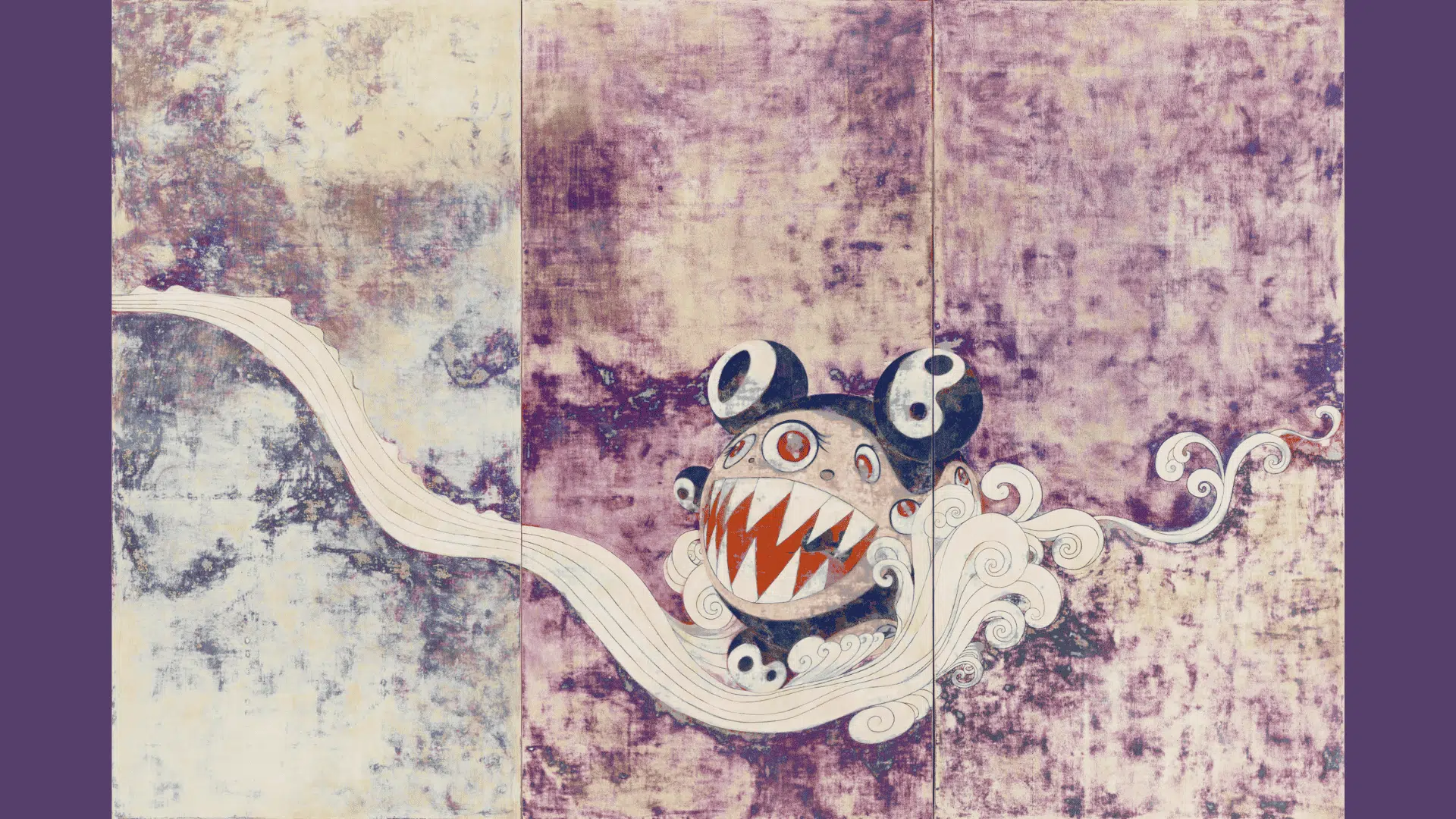
Source: Museum of Modern Art
Murakami’s sharp-toothed Mr. DOB moves across three panels above a curling wave. Cartoon forms sit beside references to older Japanese art, bringing two very different traditions together.
- Artist: Takashi Murakami
- Year: 1996
- Collection: Museum of Modern Art, New York
- Medium: Acrylic on canvas mounted on board, three panels
- Why it matters: The work challenges the usual separation between museum art, anime, manga, commercial characters, and Japanese art history.
24. Empirical Construction, Istanbul
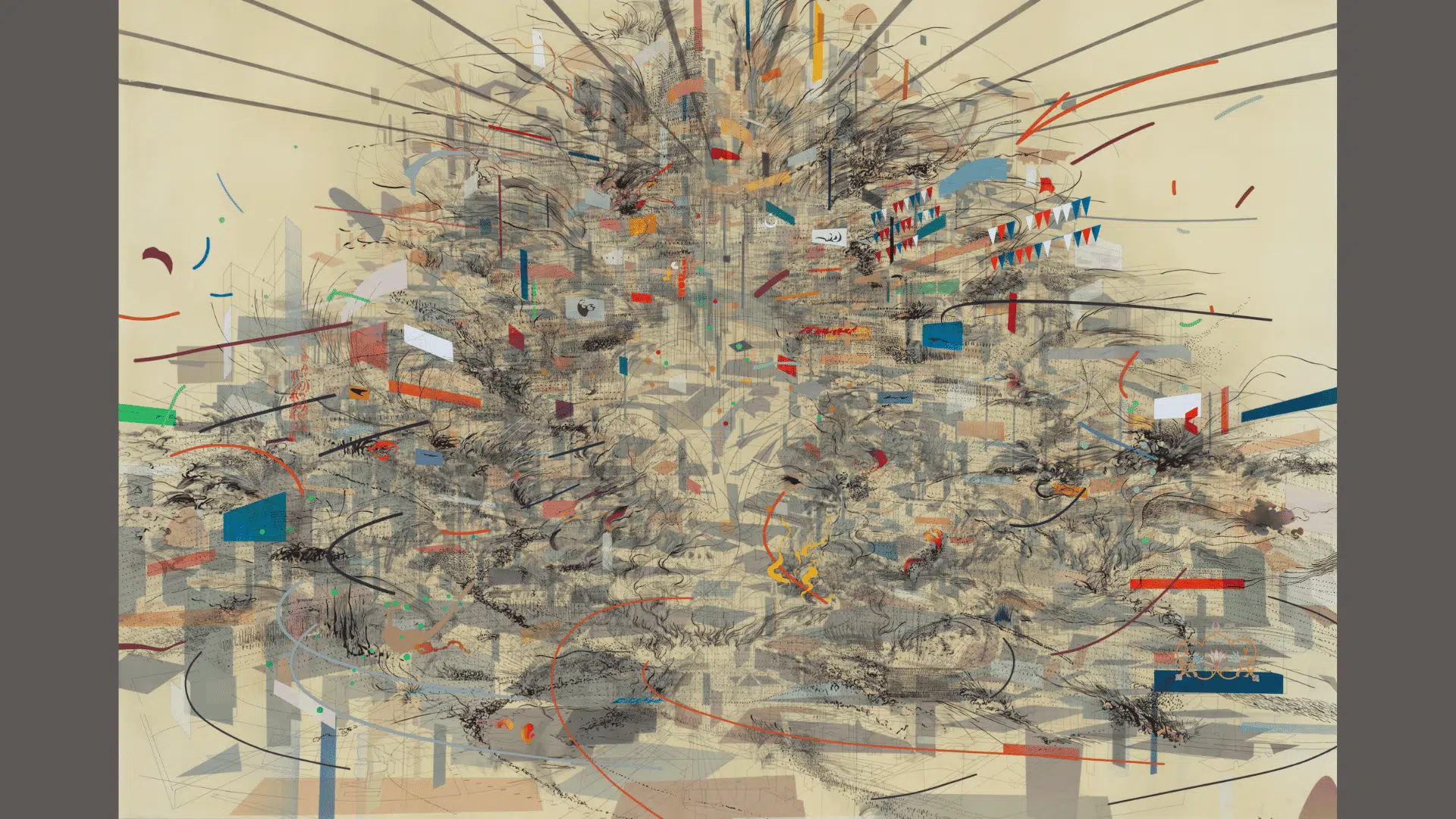
Source: Museum of Modern Art
Lines, flags, signs, curves, and architectural marks spread across a wide canvas. The Hagia Sophia appears near the center, but the surrounding city seems layered and constantly in motion.
- Artist: Julie Mehretu
- Year: 2003
- Collection: Museum of Modern Art, New York
- Medium: Acrylic and ink on canvas
- Why it matters: Mehretu uses layers of drawing and paint to show how history, architecture, migration, and city life can overlap in one place.
25. Michelle LaVaughn Robinson Obama
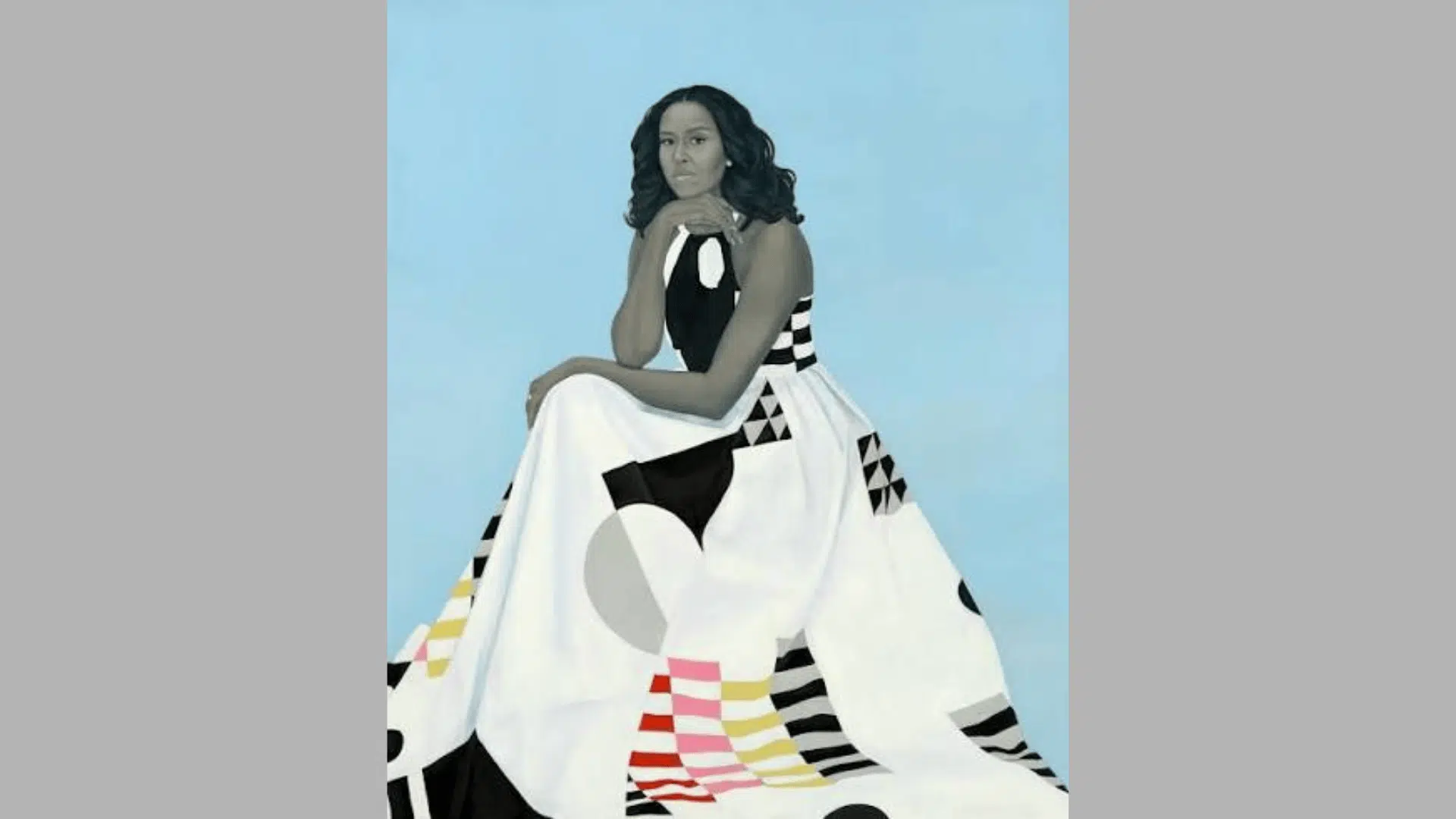
Source: National Portrait Gallery
Michelle Obama sits against a pale blue background wearing a flowing geometric dress. Her grayscale skin draws more attention to expression, posture, clothing, and shape.
- Artist: Amy Sherald
- Year: 2018
- Collection: Smithsonian’s National Portrait Gallery, Washington, DC
- Medium: Oil on linen
- Why it matters: Sherald brought her distinct portrait style to an official national commission while placing a Black woman at the center of American public portraiture.
How Museums Connect Modern Art to Its Time and Culture
Museum collections add context to modern art by connecting individual works with broader changes in style, culture, history, and artistic thinking.
Related artists and movements
Museums place works near pieces from similar artists or movements, helping readers see shared ideas, methods, subjects, and influences within the same period.
Changes in style
Seeing works from different decades together makes shifts in color, form, subject matter, materials, and technique easier to notice across modern art history.
Historical background
Museum records often explain the time, place, events, and social conditions around an artwork, clarifying the artist’s choices.
Cultural context
Collections can show how politics, daily life, technology, identity, and public attitudes shaped art, helping each work feel connected to its original setting.
Modern and contemporary comparison
Viewing both periods in one collection makes differences in themes, materials, scale, and artistic methods easier to compare without treating them as the same.
Conclusion
Modern art can feel easier to understand once its bigger meaning becomes clear. It is not only about unusual forms or bold choices.
It also reflects changing ideas about people, society, and creative freedom. Looking at modern art examples can help you see how artists responded to their time in personal and original ways.
Some works may feel familiar, while others may challenge your first reaction.
That difference is part of what keeps modern art worth studying. In the end, its value comes from how each work adds another voice to the story of art.
Frequently Asked Questions
Why Do Some Modern Artworks Have Simple or Unusual Titles?
Some artists use short titles so viewers focus more on the work itself. Others choose numbers, dates, or abstract names to avoid giving one fixed meaning.
Can Photography Be Considered Modern Art?
Yes. Photography became an important art form as artists began using cameras for more than documentation. They used framing, light, timing, and unusual viewpoints to express ideas.
How Do Museums Protect Modern Artworks from Damage?
Museums control light, temperature, humidity, and handling conditions. Some works also need special storage or conservation methods because paint, paper, fabric, and other materials age differently.