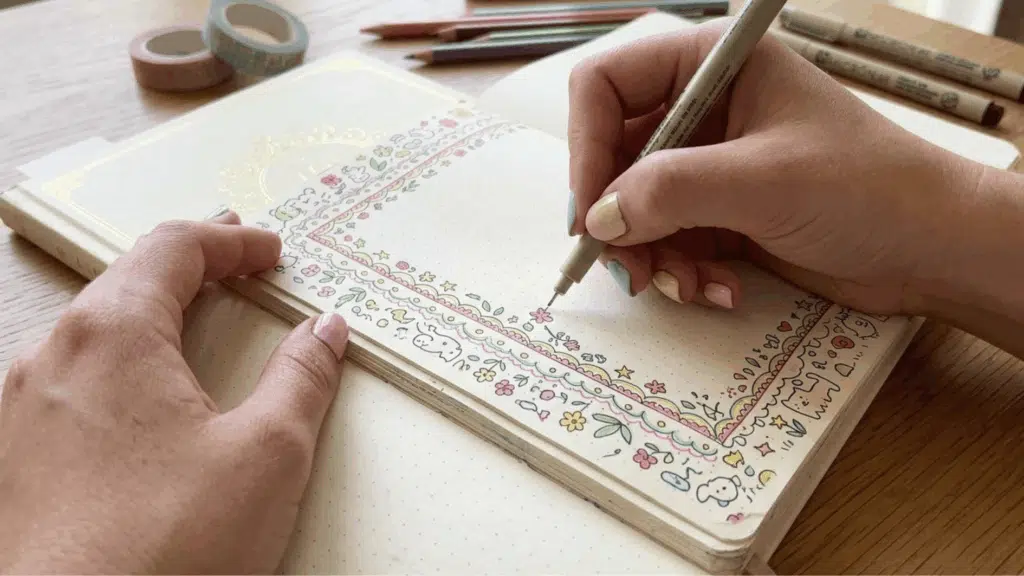
A visual journal combines images, colors, words, and collected materials to record thoughts, memories, and everyday experiences.
You can use doodles, photos, paint, ticket stubs, magazine cutouts, or short written notes to create each page. You do not need advanced art skills or expensive supplies to begin.
These visual journal ideas include simple projects for different moods, schedules, and skill levels, helping you turn a blank notebook into something personal and creative.
What Is Visual Journaling and Why Try It?
Visual journaling records thoughts, memories, emotions, and experiences through images and words. Pages may include doodles, sketches, photos, collage pieces, hand lettering, and short notes.
There are no strict rules, so each page can be simple, detailed, neat, or messy. People use it for reflection, creative practice, memory keeping, and personal expression.
- Relieves stress: Drawing, coloring, and arranging images can provide a calm break from a busy day.
- Keeps memories: Photos, sketches, and notes preserve everyday moments that may otherwise be forgotten.
- Builds creative confidence: Regular practice makes trying new colors, materials, and layouts feel more natural.
- Supports self-expression: Images, textures, symbols, and words can communicate thoughts that are hard to explain.
- Tracks personal changes: Looking through older pages can show how ideas, feelings, and interests have changed.
- Fits any schedule: A page can take an hour, while a quick sketch or note may take only a few minutes.
Visual Journal Ideas for Creative Pages
These visual journal ideas include drawing, collage, painting, memory keeping, and simple mixed-media techniques. Each idea includes the basic materials and short steps needed to create the page.
1. Gratitude Grid
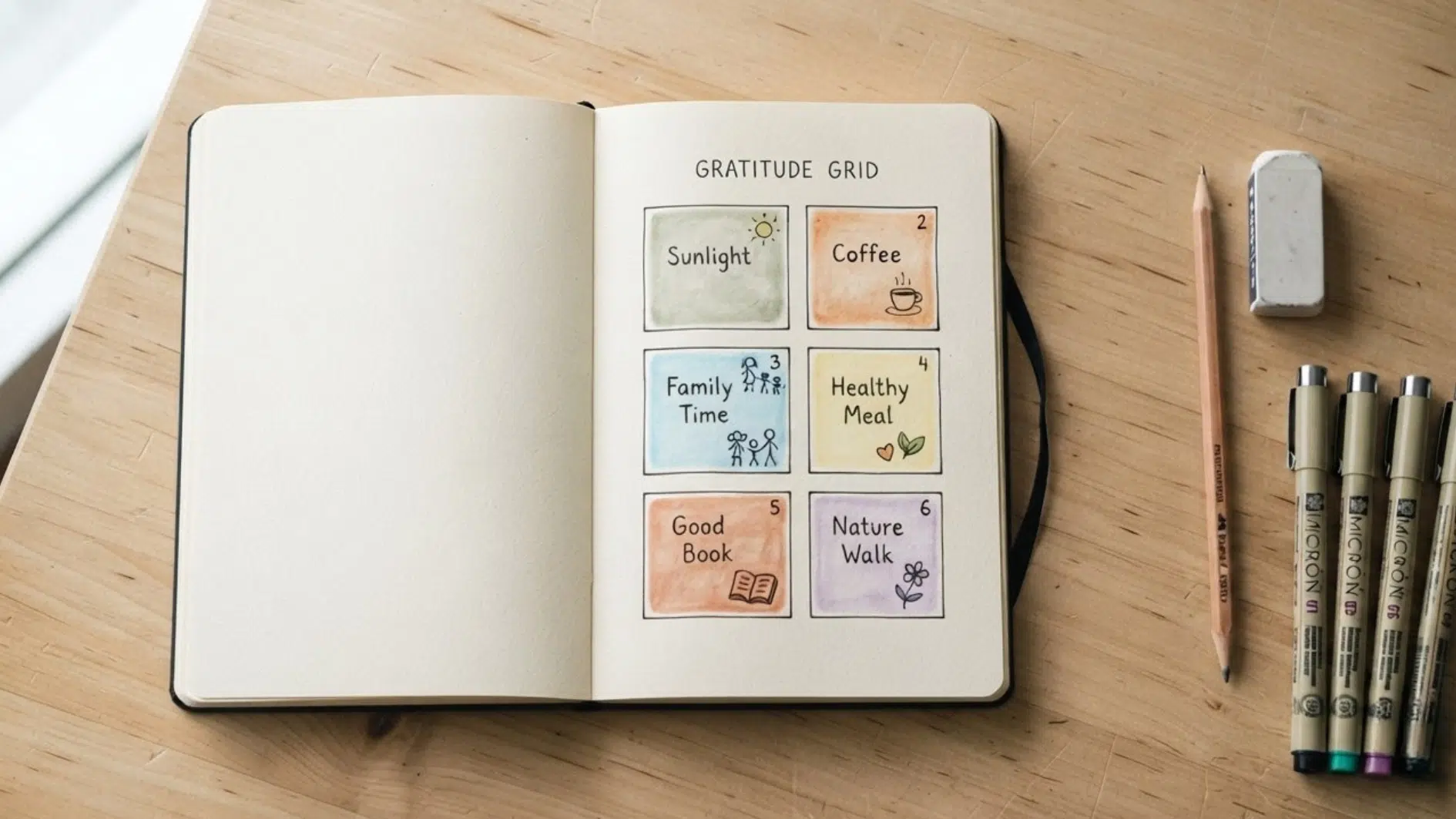
A gratitude grid divides the page into small sections, with each box showing one person, moment, place, or object you appreciated that week. It is a simple option when you want to reflect without writing a long entry.
Materials Required: A ruler, a pencil, an eraser, and three or four colored fine-tip pens.
How to make it:
- Draw six to nine small boxes across the page using a ruler.
- Write one thing you’re grateful for in each box.
- Add a tiny doodle or color to each square.
2. Pressed Flower Page
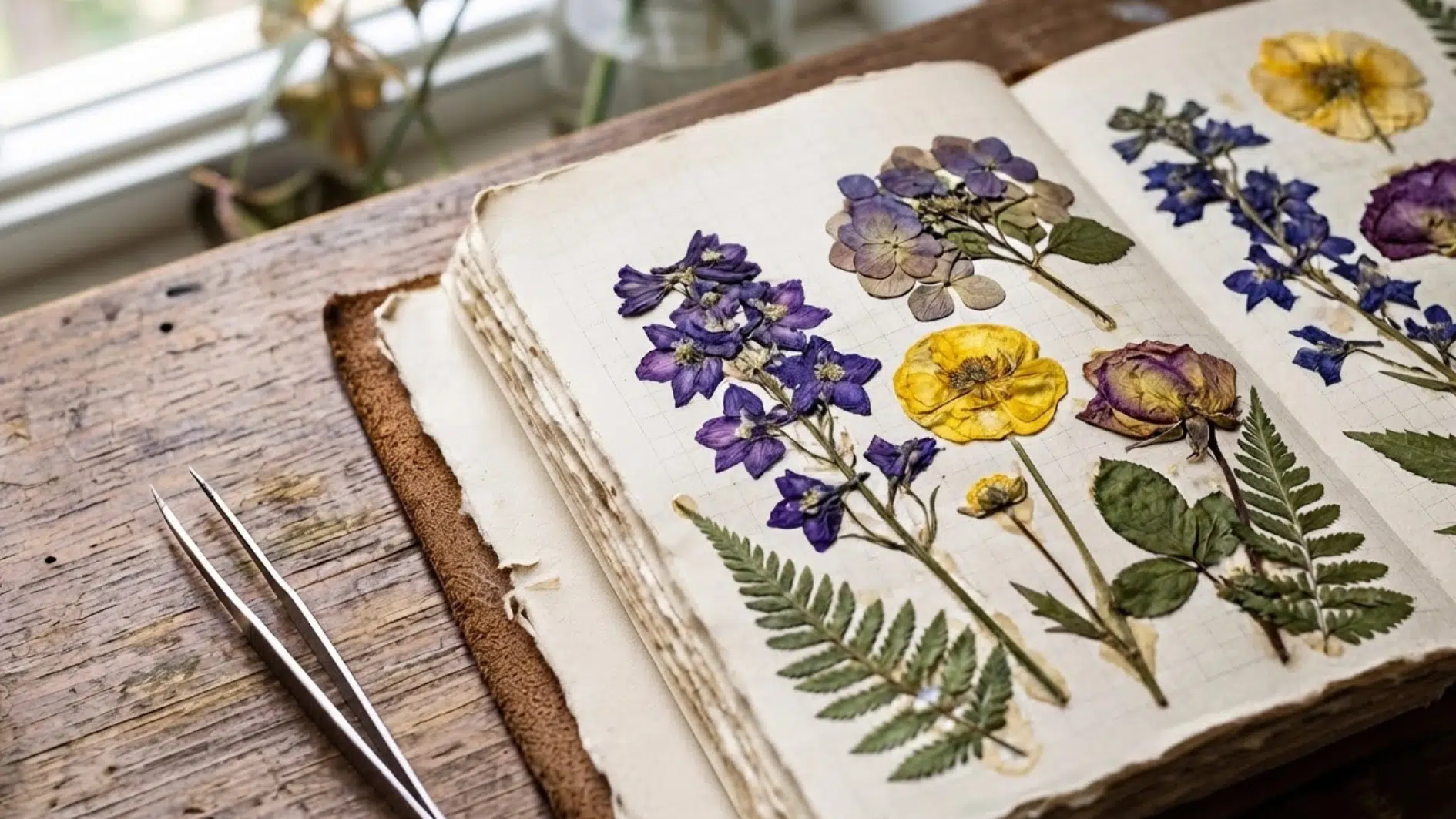
Pressed flowers and leaves add natural color and texture to a journal page. This idea works especially well after a garden visit, nature walk, or seasonal outdoor trip.
Materials Required: Three to five dried flowers or leaves, plain paper for pressing, a heavy book, tweezers, and a glue stick.
How to make it:
- Place the flowers between two sheets of plain paper inside a heavy book and leave them until fully dry.
- Arrange the dried pieces on your page.
- Glue each one down gently and let it dry flat.
- Make sure the flowers are fully dry before gluing them to prevent moisture or page damage.
3. Watercolor Wash Background
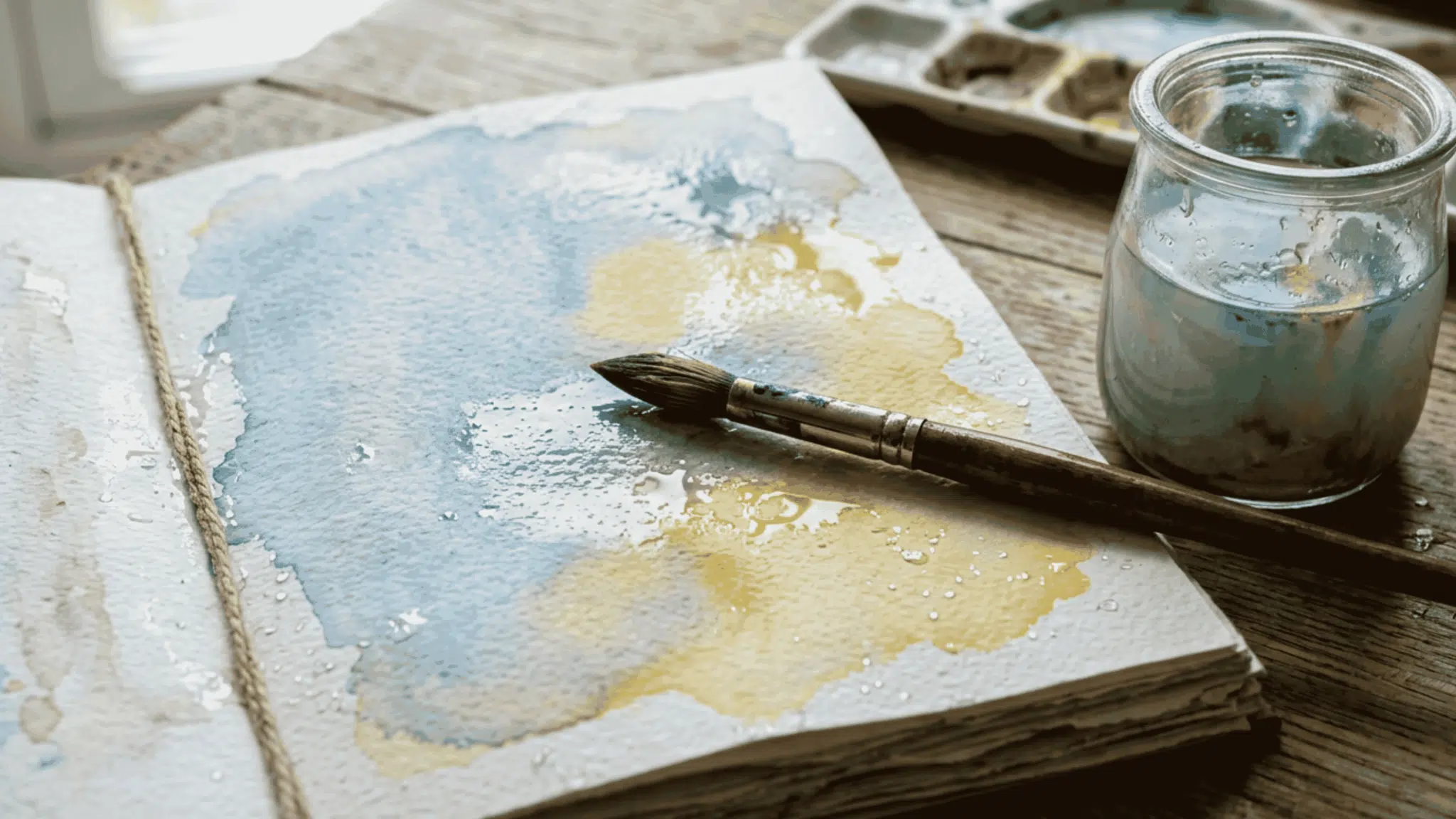
A simple watercolor wash gives any page a soft, colorful base before you add writing or doodles. It’s a calming way to start a journal session, even with a beginner’s paint set.
Materials Required: A small watercolor set, a round brush, a water cup, a paper towel, and a journal with thicker paper.
How to make it:
- Wet the brush and load it with one or two colors.
- Brush the color lightly across the page, allowing the edges to blend while the paper is still damp.
- Let it dry fully before writing on top.
4. Washi Tape Border Page
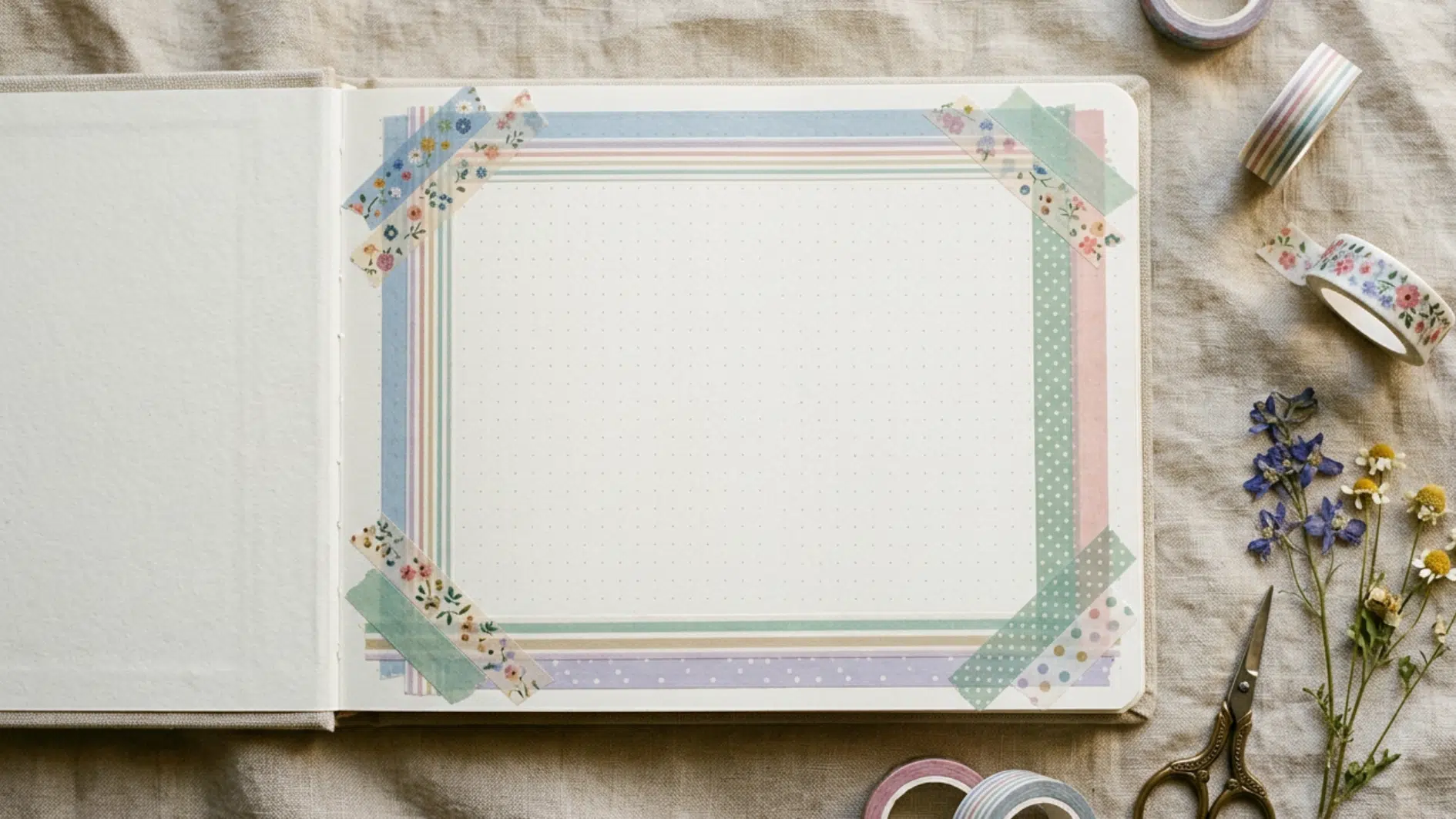
Washi tape adds color, pattern, and structure to a plain journal page without requiring paint or drawing. This idea is fast and forgiving, since tape peels off if you don’t like the placement.
Materials Required: Two or three rolls of washi tape, scissors, and a ruler for keeping the border straight.
How to make it:
- Cut short strips of tape in different patterns.
- Frame the page edges or a photo with the strips.
- Trim any overhang with scissors.
5. Instant Photo Memory Corner
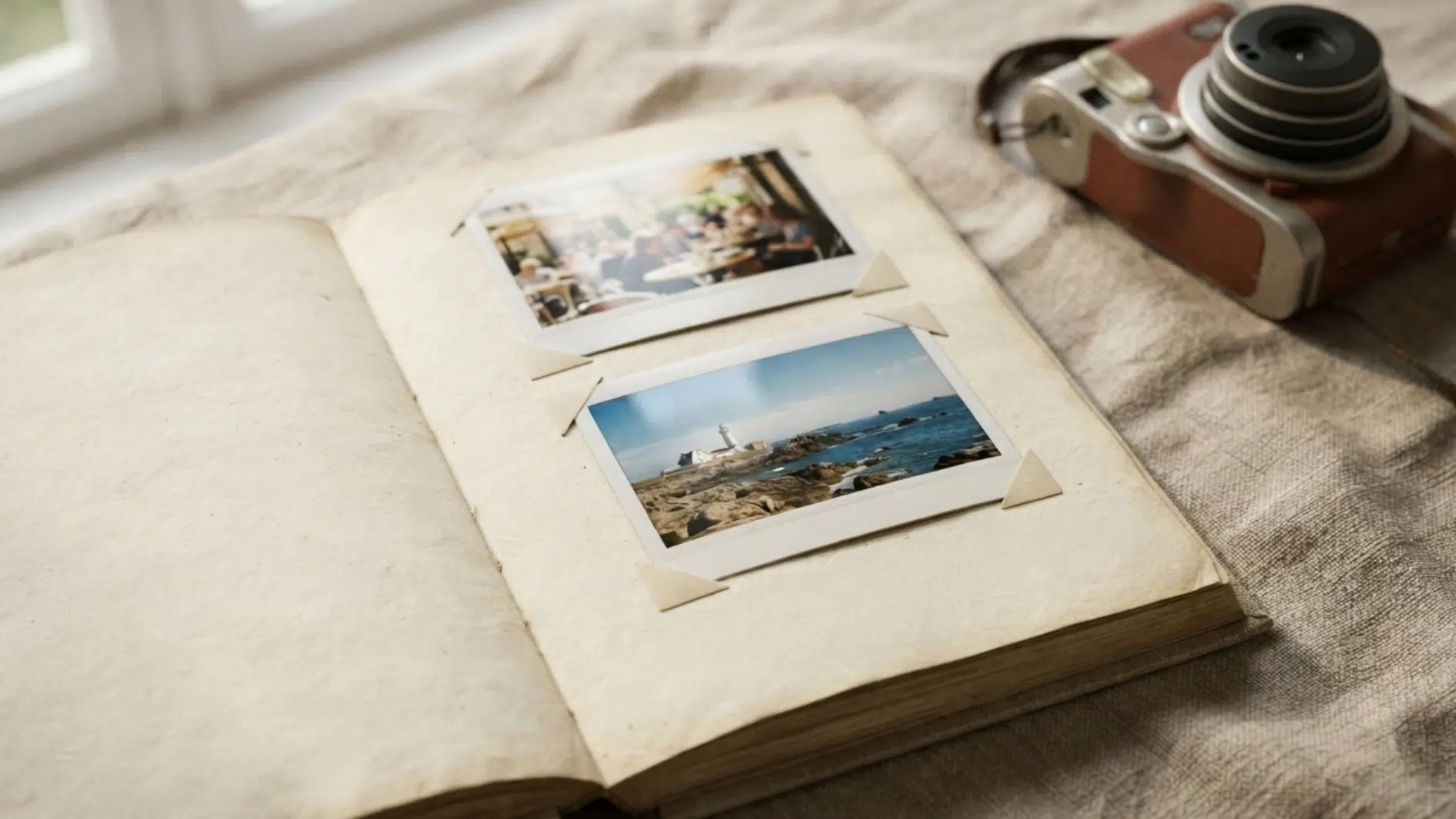
Instant photos or small printed pictures can create a focused memory section on a journal page. This idea works well for capturing a specific day, trip, or small moment you want to remember.
Materials Required: Two or three instant or printed photos, photo corners or double-sided tape, scissors, and a pen for captions.
How to make it:
- Choose 2-3 photos that share a theme or day.
- Attach them using photo corners or small pieces of tape.
- Add a short caption under each photo.
6. Hand-Lettered Quote Page
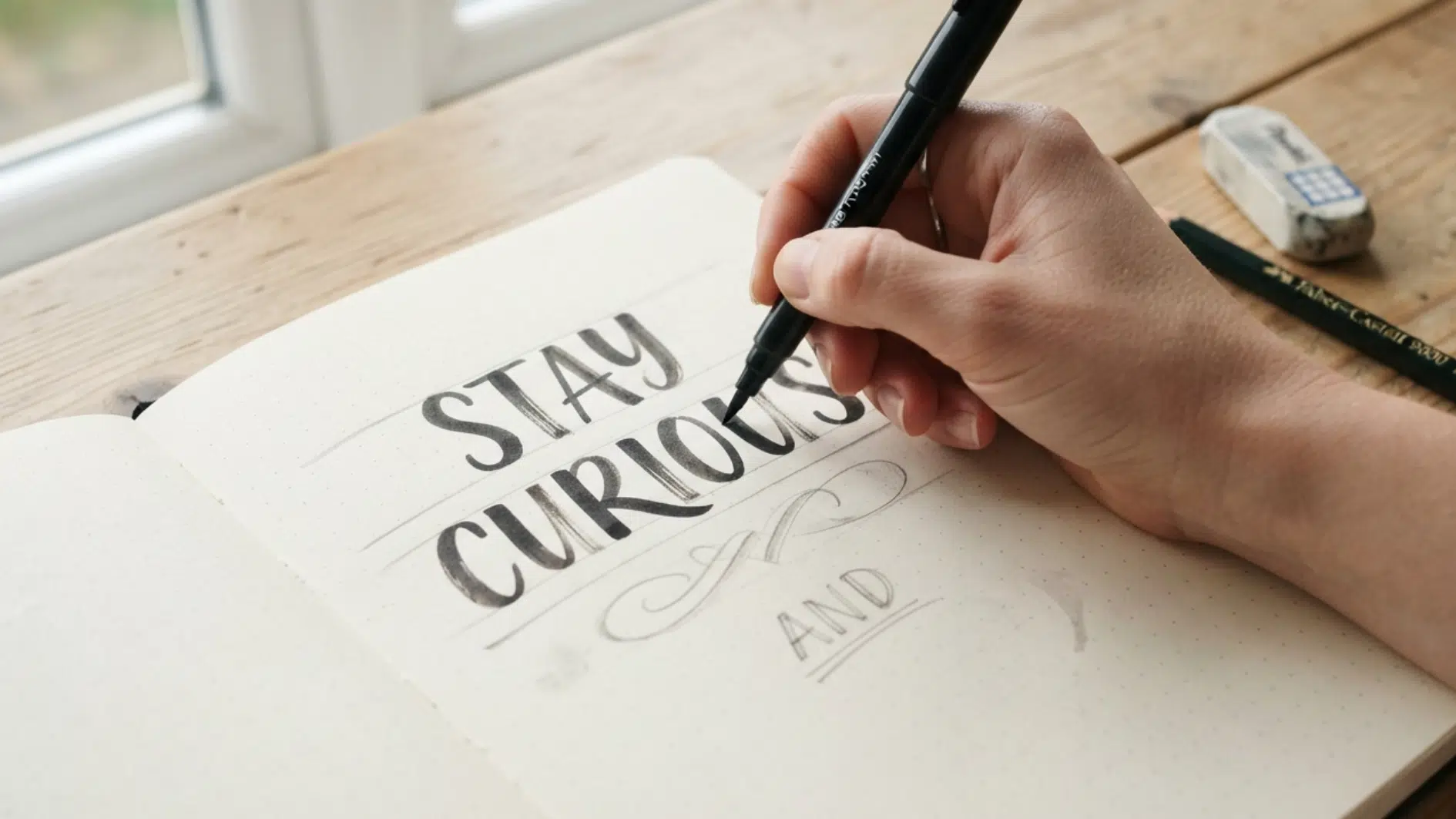
A hand-lettered quote page turns a favorite line into the main artwork on the page.
This idea works well for journaling prompts, personal mottos, or lines from a book you’re currently reading, and borrowing a few creative hand-lettering styles can make the quote itself feel like the centerpiece.
Materials Required: A pencil, an eraser, a brush pen or marker, a ruler, and one or two colored pens for decoration.
How to make it:
- Lightly sketch the quote in pencil first.
- Trace over it with a brush pen or marker.
- Erase pencil marks once the ink is fully dry.
7. Doodle Border Frame
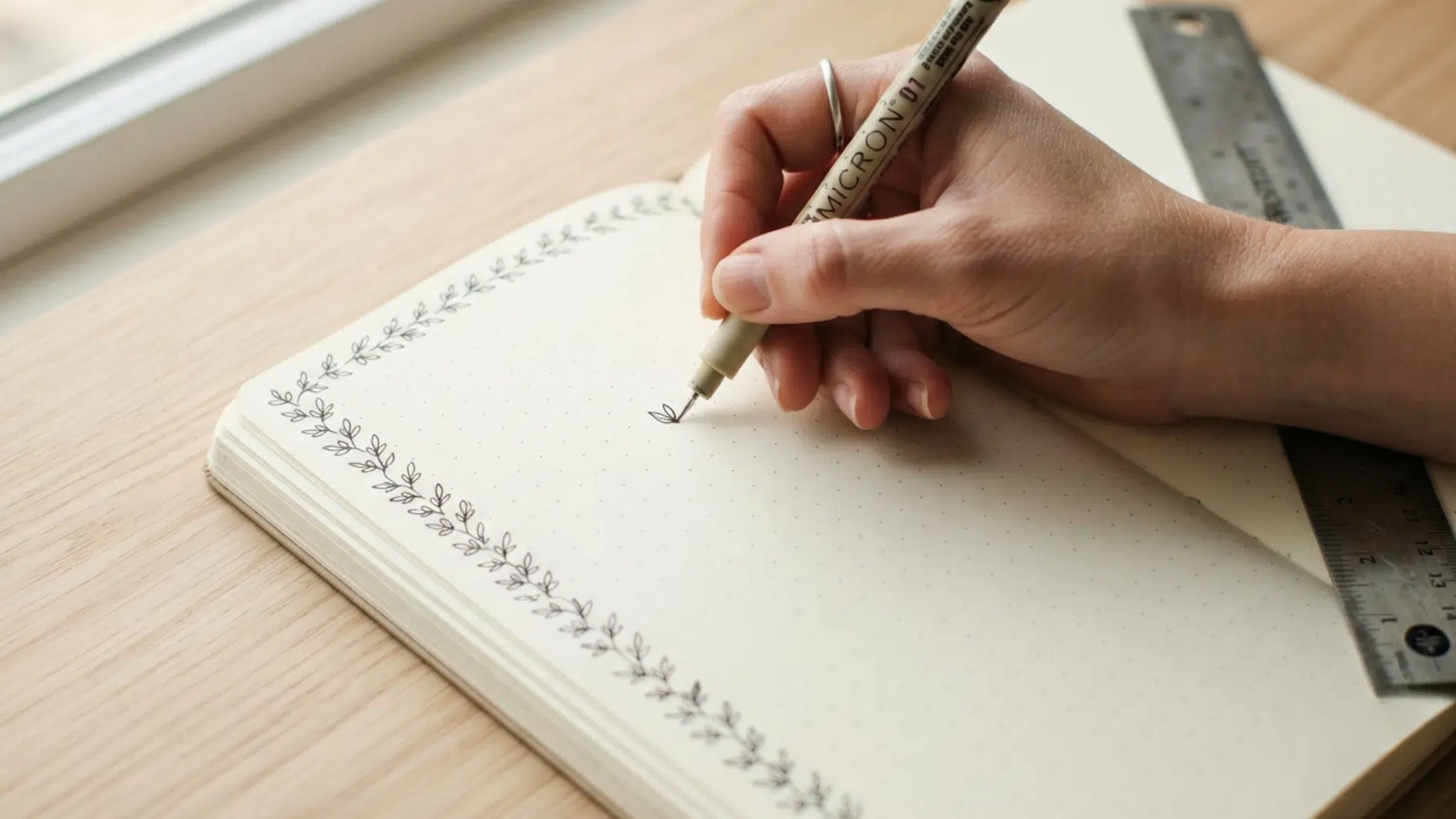
A doodle border frames the edge of a page with small repeated shapes like leaves, stars, or waves.
This idea is great for beginners since simple shapes repeated in a row already look intentional, and a few doodle ideas for beginners can help you pick a shape to start with.
Materials Required: A fine-tip pen, a pencil, an eraser, and a ruler if you want evenly spaced borders.
How to make it:
- Choose one simple shape to repeat.
- Draw it in a line around the edge of the page.
- Fill the center with writing or a photo.
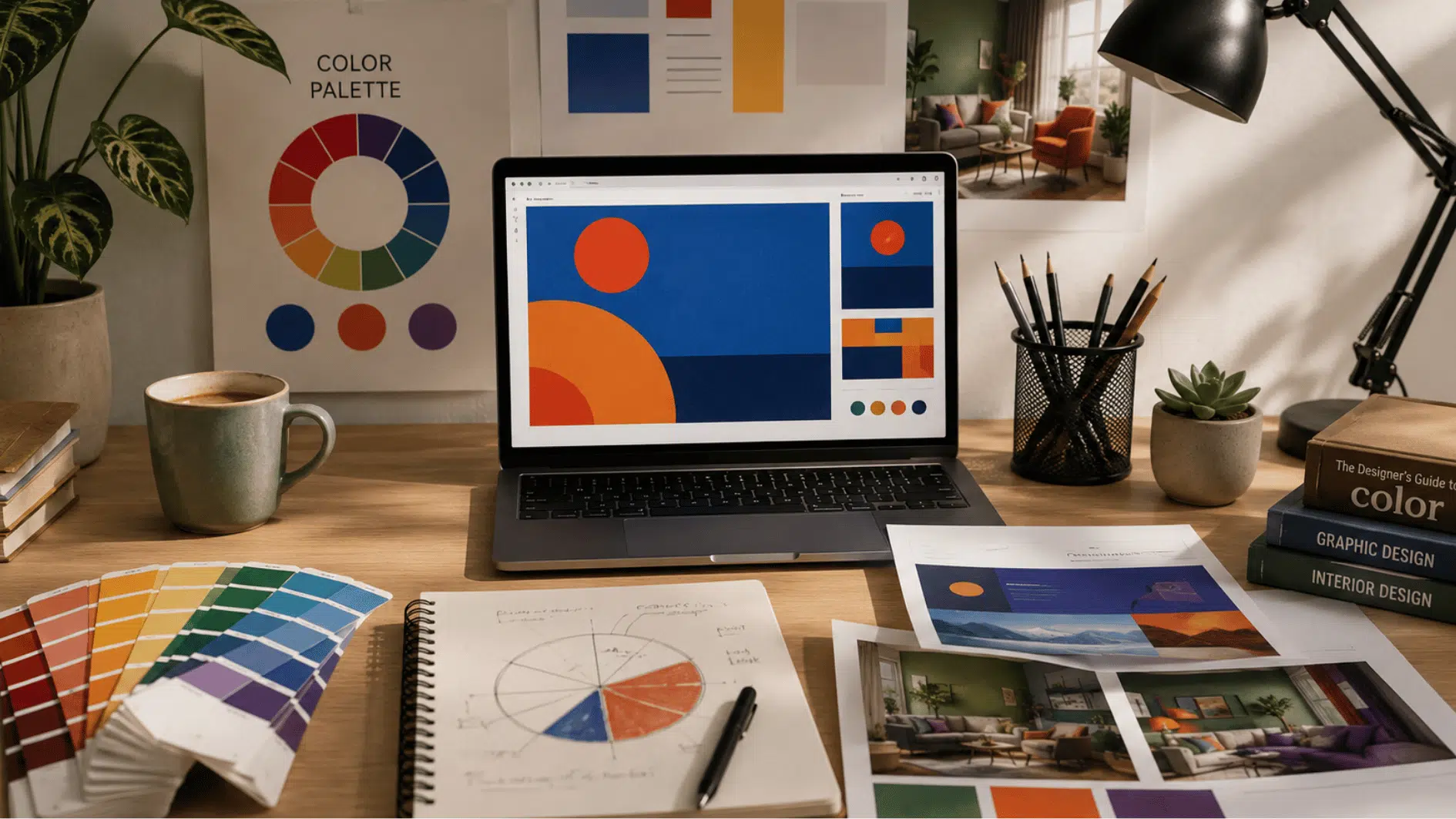
8. Color Palette Page
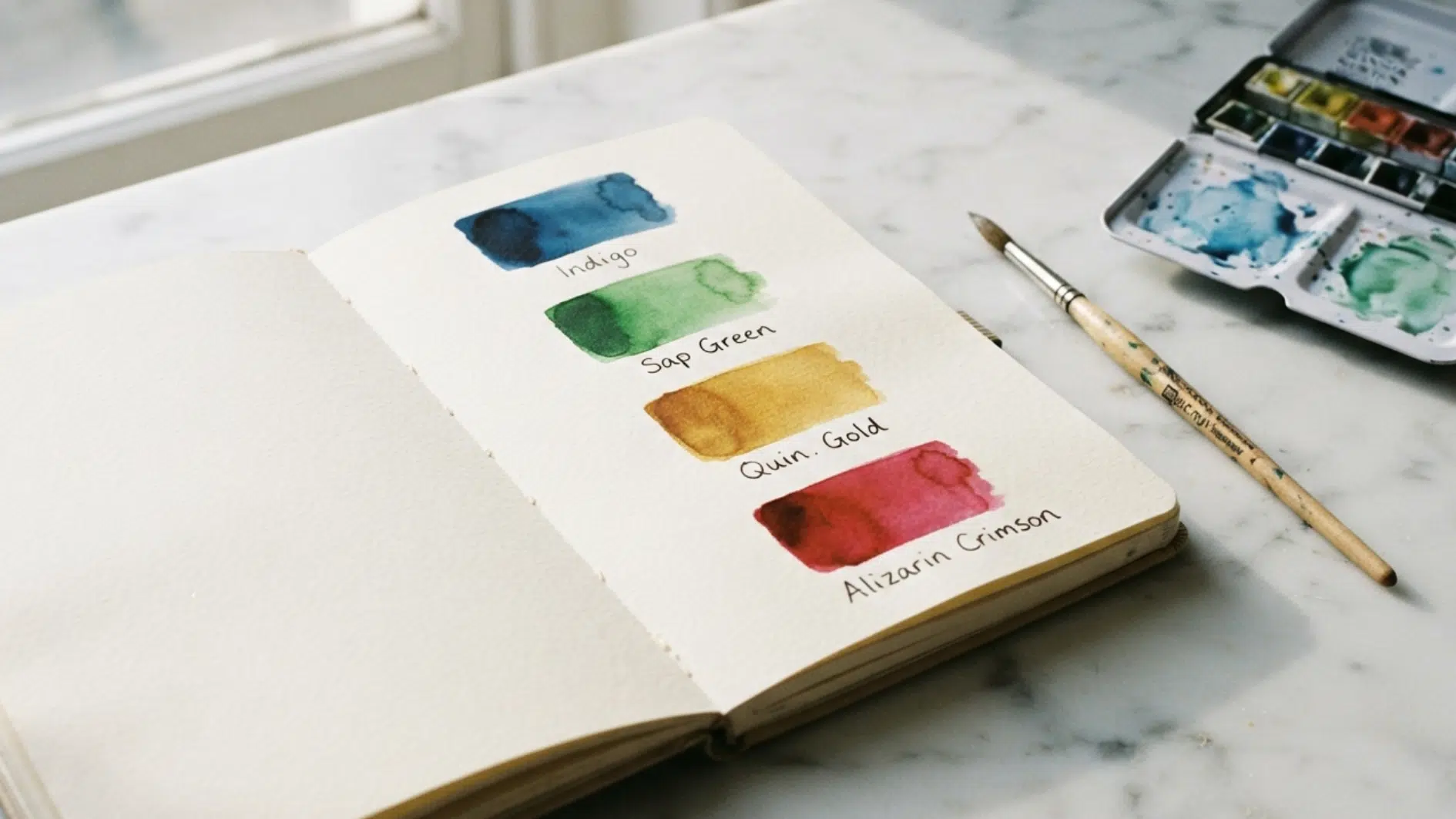
This idea records a color scheme you love, pulled from things like a sunset, an outfit, or a room.
It’s a quick page that also helps you plan colors for future journal spreads, and understanding primary and secondary colors first makes the blending far more intuitive.
Materials Required: Four to six markers, colored pencils, paint swatches, or paper scraps, plus a pen for labeling each shade.
How to make it:
- Pick 4-6 colors from something that inspired you.
- Paint or color small blocks for each shade.
- Label each block with its color name or mood.
9. Visual Habit Garden
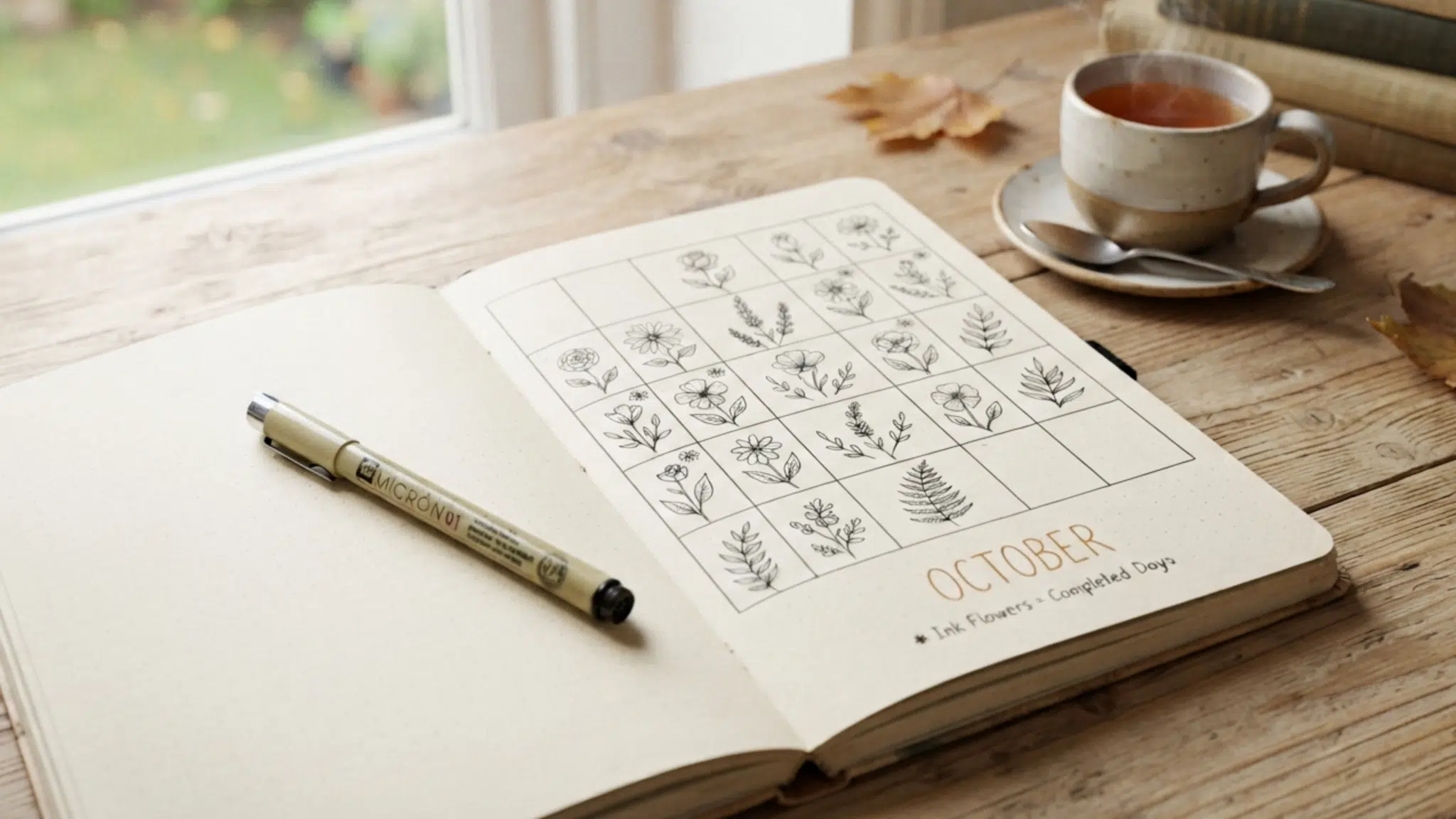 A visual habit garden turns completed habits into leaves, flowers, stars, or other small symbols. As the month continues, the tracker develops into a finished illustration.
Materials Required: A pencil, a fine-tip pen, three or four colored markers, and a ruler for planning the page.
How to make it:
- Choose one to three habits to track.
- Assign a leaf, flower, star, or symbol to each habit.
- Add the symbol whenever you complete the habit.
10. Recipe Card Collage
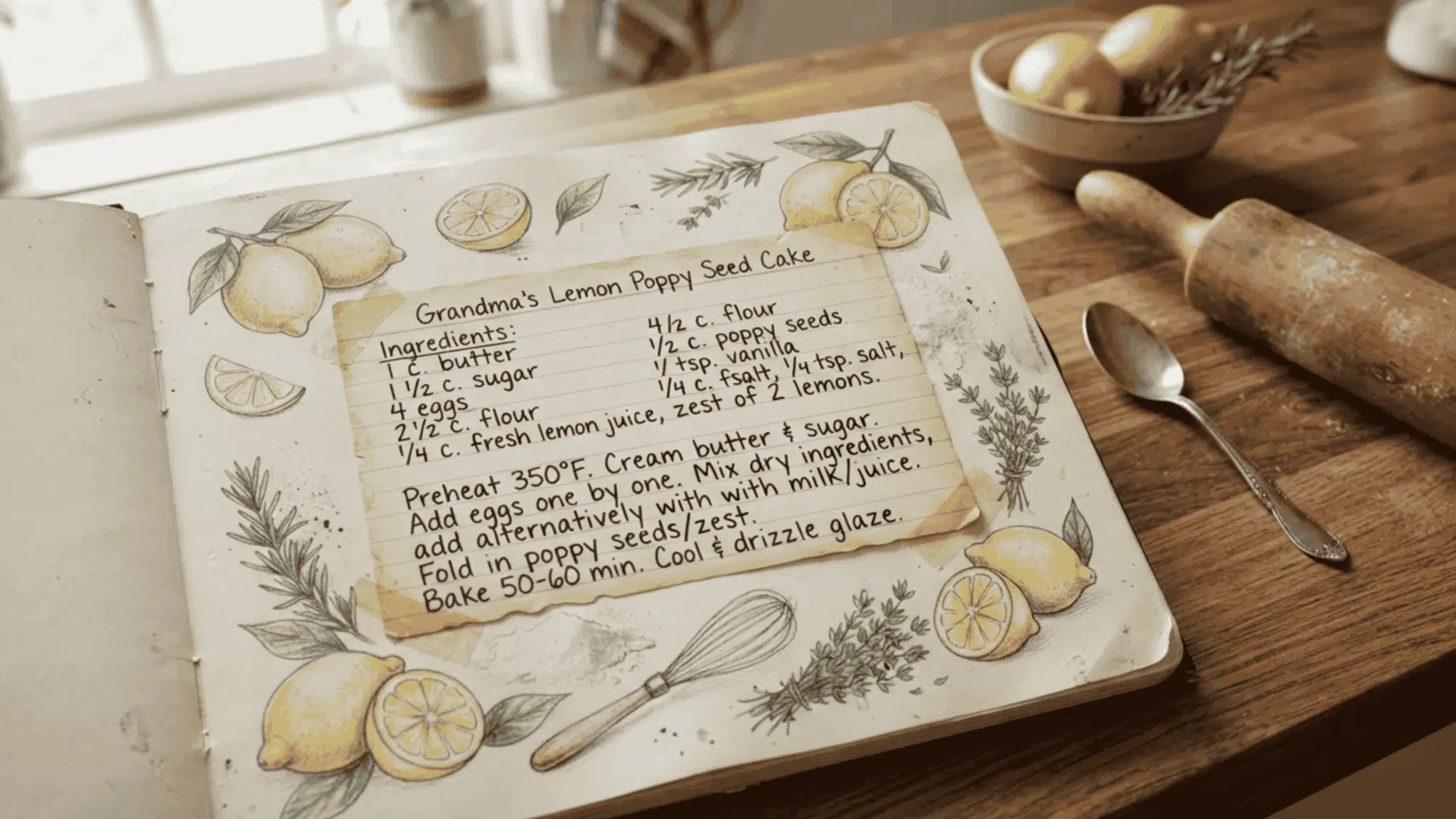
A recipe collage page mixes a handwritten family recipe with small drawings of ingredients or the finished dish. It works well for family recipes, seasonal dishes, favorite desserts, or meals connected to a meaningful memory.
Materials Required: A handwritten or printed recipe, a glue stick, scissors, colored pencils, and a fine-tip pen.
How to make it:
- Write or glue the recipe onto the page.
- Sketch a few key ingredients around the border.
- Add color to make the sketches pop.
11. Mini Comic Strip
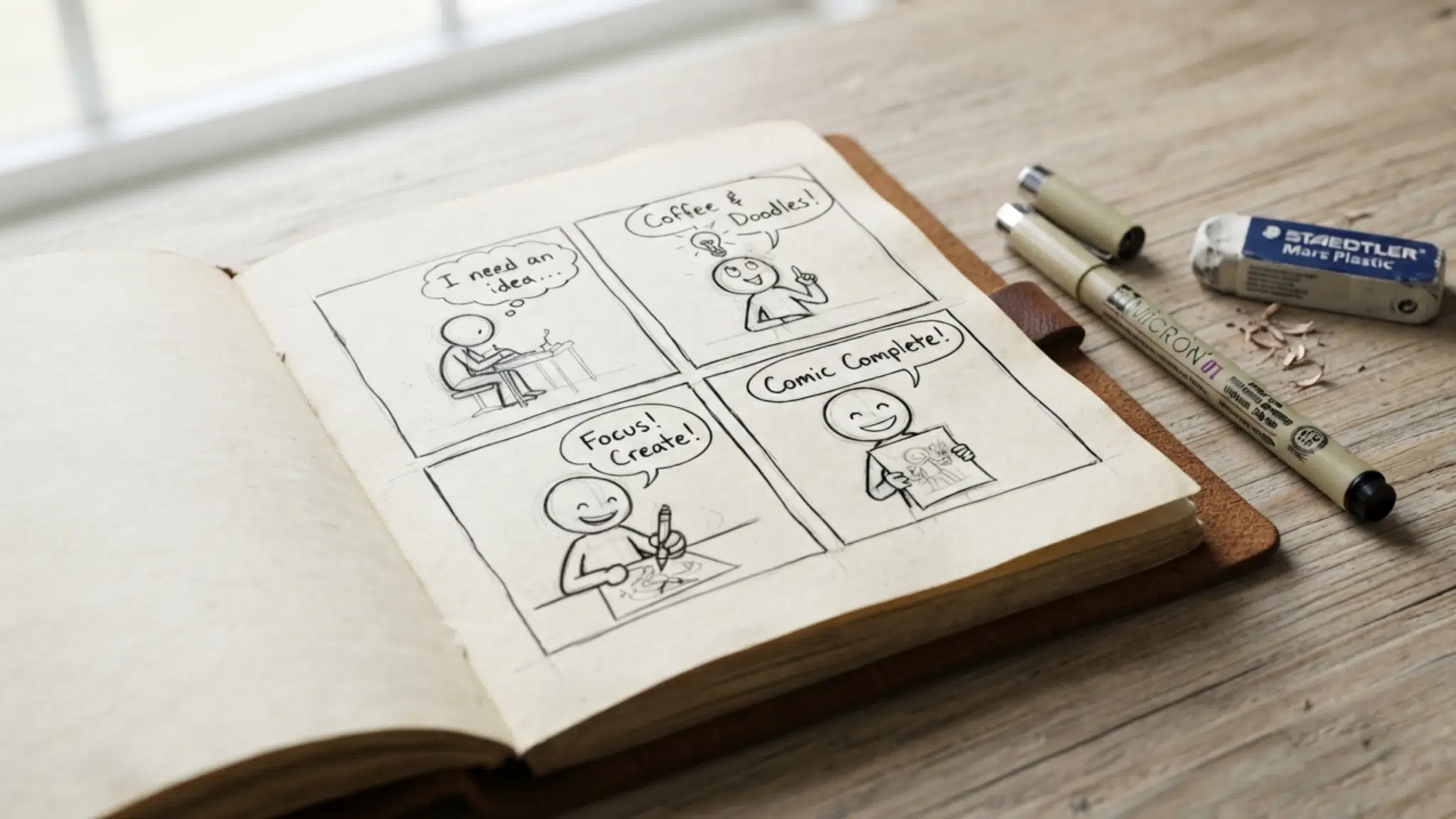 A mini comic strip turns a small event from your day into a 3-4 panel drawing with speech bubbles. This idea is playful and works well when you want to journal without full sentences.
Materials Required: A ruler, a pencil, an eraser, a fine-tip pen, and colored pencils or markers.
How to make it:
- Draw 3-4 small boxes across the page.
- Sketch simple figures showing your event step by step.
- Add short speech bubbles or captions.
12. Nature Walk Sketch
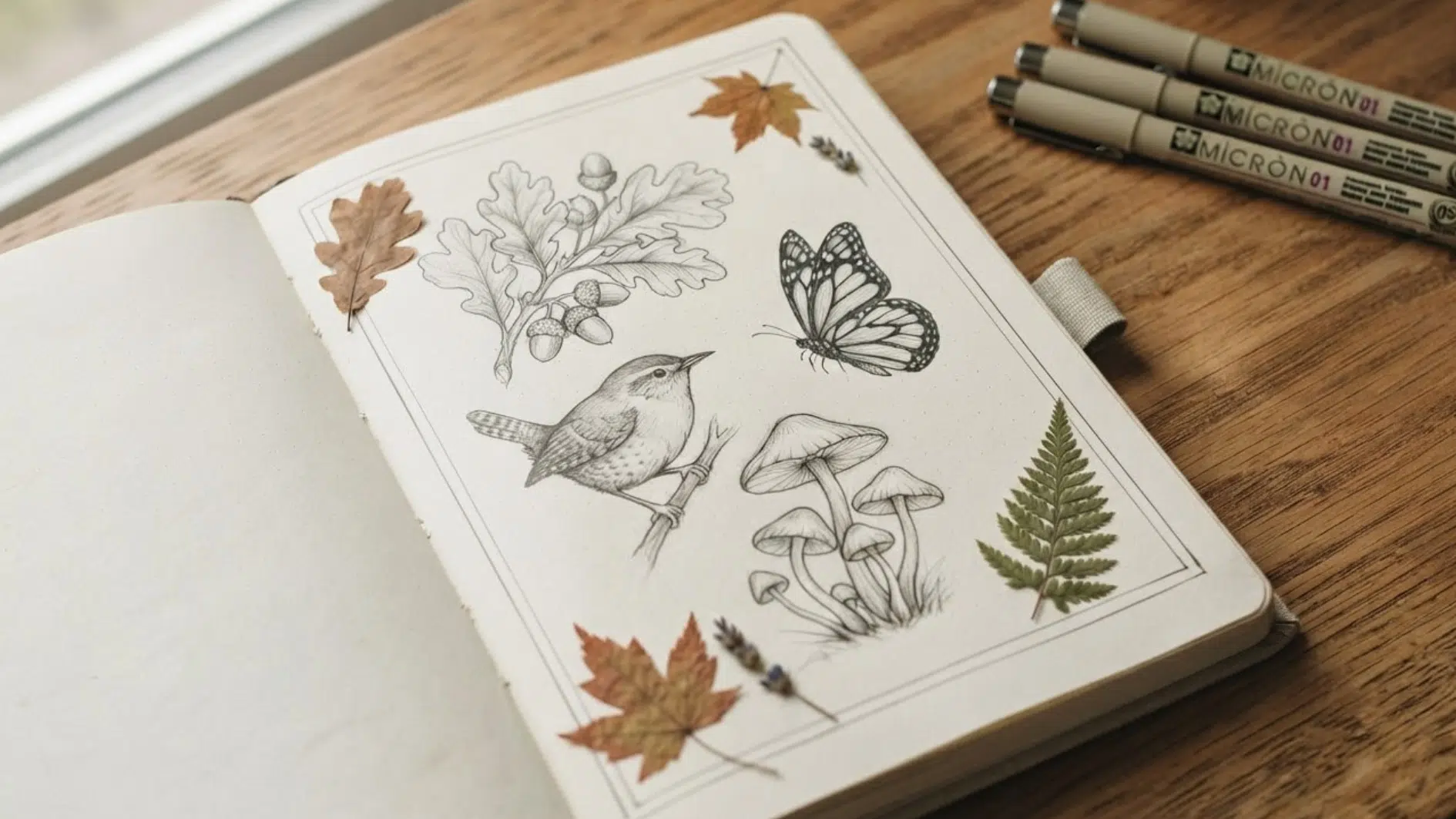
A nature sketch page records leaves, rocks, flowers, insects, birds, or landscape details noticed during an outdoor walk.
Quick outline sketches work fine, since the goal is memory, not perfect detail, and trying one of these different drawing style options can loosen up a rushed sketch.
Materials Required: A sketch pencil, an eraser, a fine-tip pen, and colored pencils for adding natural details.
How to make it:
- Choose 1-2 items you noticed on your walk.
- Sketch their outline lightly in pencil.
- Trace with pen and add short notes about the walk.
13. Magazine Cutout Collage
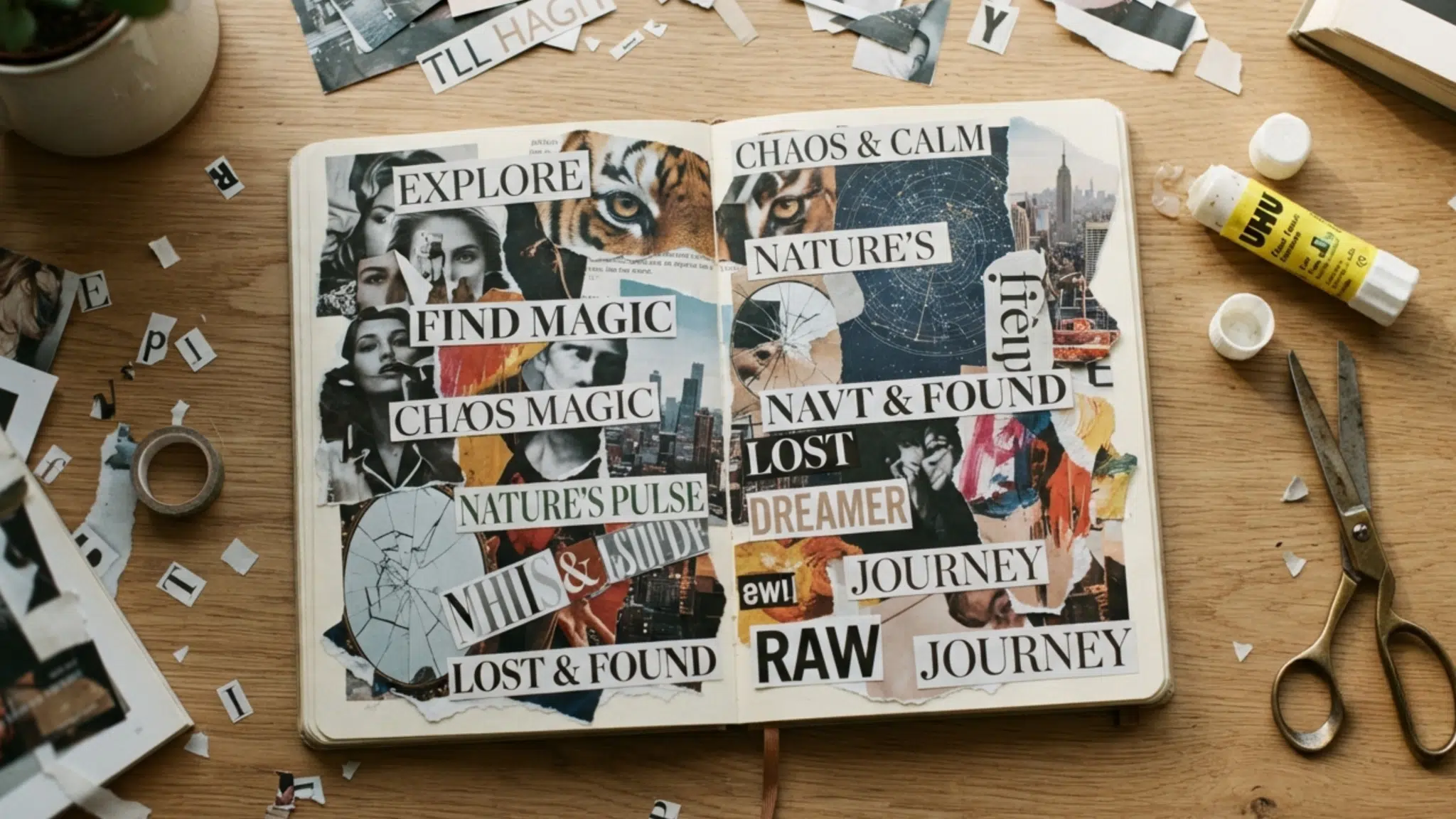
Old magazines, catalogs, or newspapers become raw material for a collage that reflects your current interests or goals. This is an easy, low-cost idea since most homes already have paper to recycle.
Materials Required: Old magazines or catalogs, scissors, a glue stick, and a pencil for planning the arrangement.
How to make it:
- Flip through magazines and cut out images or words that stand out.
- Arrange the pieces on the page before gluing.
- Glue everything down and let it dry flat.
14. Book Review Page
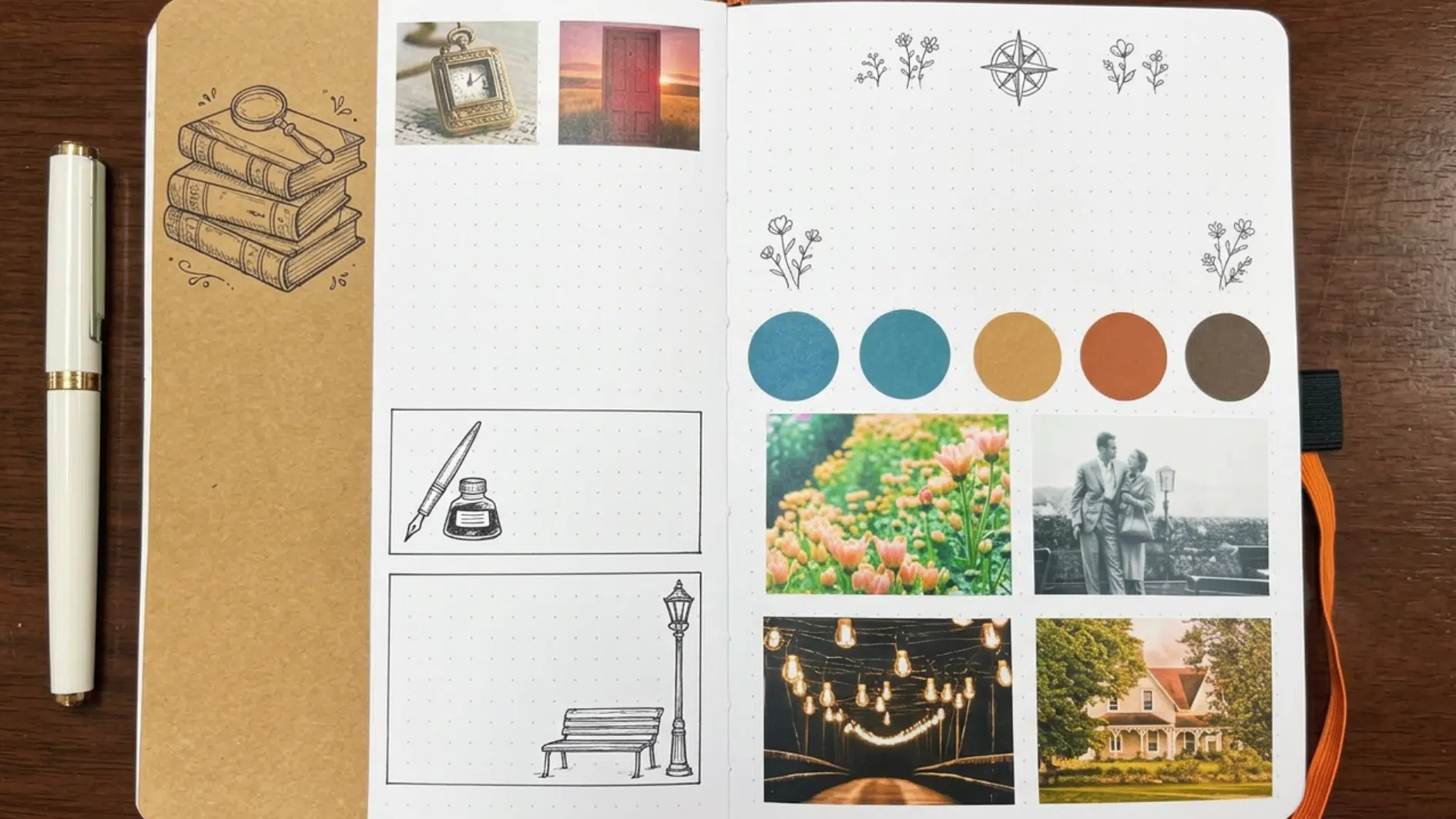
A book review page pairs a small sketch of the cover with a few personal notes on what you thought. It’s a simple way to track your reading list throughout the year.
Materials Required: A pencil, a fine-tip pen, four or five colored pencils, and a ruler for organizing the layout.
How to make it:
- Sketch a simple version of the book cover.
- Add the title, author, and star rating below it.
- Write 2-3 sentences on your favorite part.
15. One-Object Study
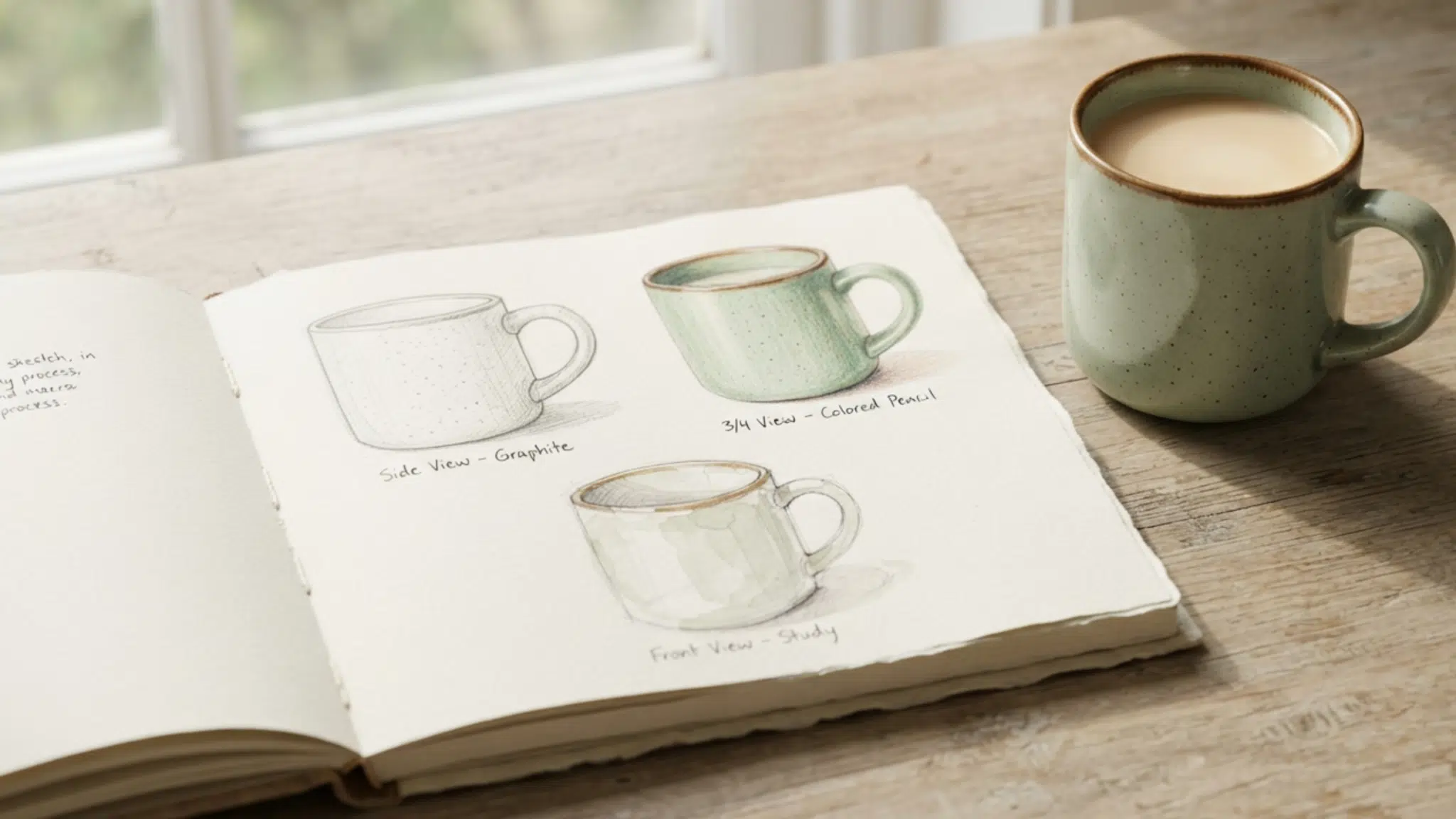 Choose one everyday object and draw it several times using different angles, colors, or styles. This helps you notice small details without needing to create a full scene.
Materials Required: A pencil, fine-tip pen, and colored pencils.
How to make it:
- Choose an object such as a mug, key, shoe, or plant.
- Draw it three or four times from different angles.
- Change the colors, lines, or style in each version.
16. Bucket List Page
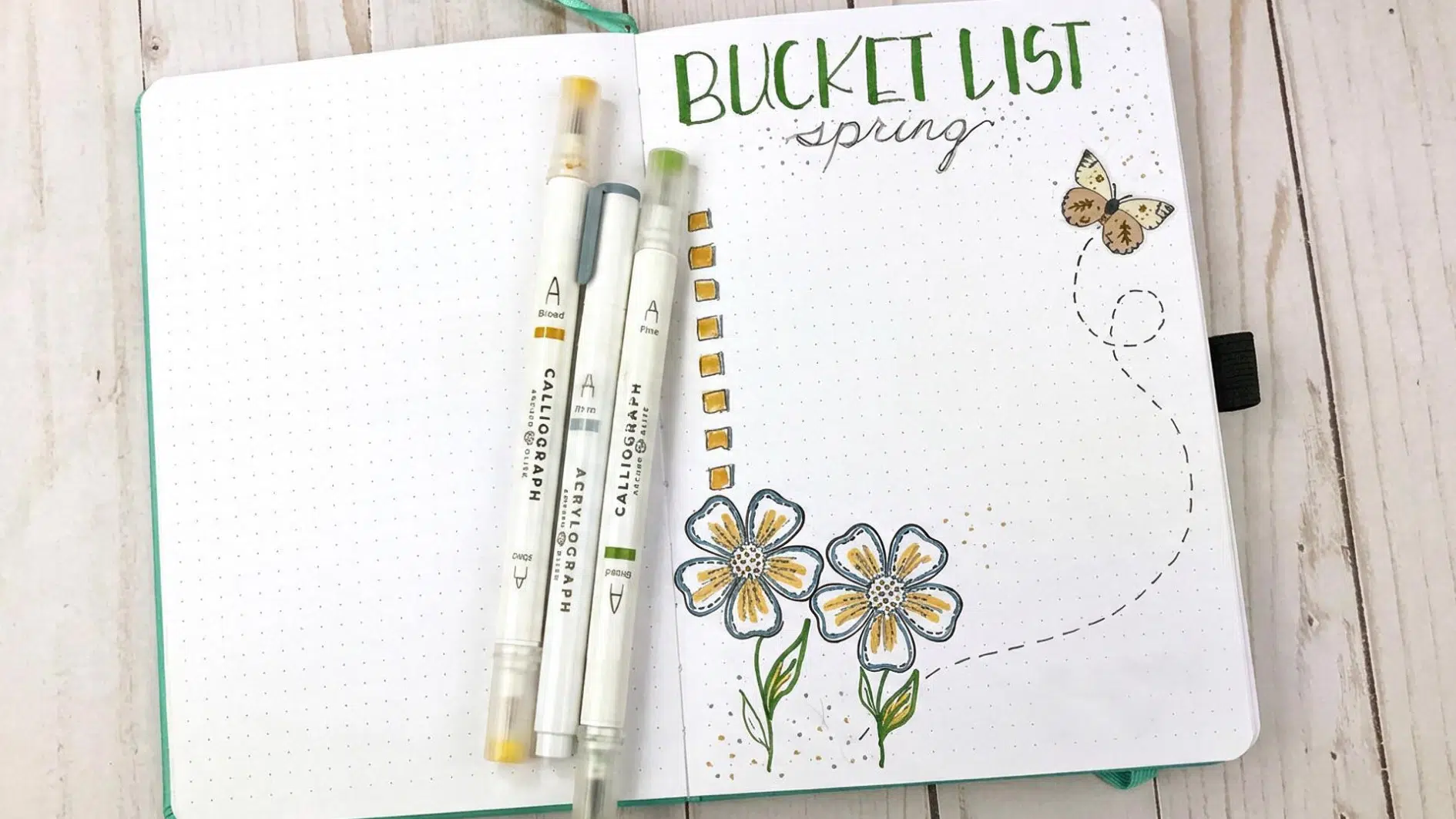
A bucket list page mixes drawings and short notes about places or goals you want to reach that year. Images and symbols make each goal easier to recognize when you return to the page later.
Materials Required: A pencil, four or five colored pens, small stickers if preferred, and a ruler for dividing the page.
How to make it:
- List 5-10 goals down the page.
- Add a small icon or doodle beside each one.
- Check off or color in each goal as you complete it.
17. Self-Portrait Sketch
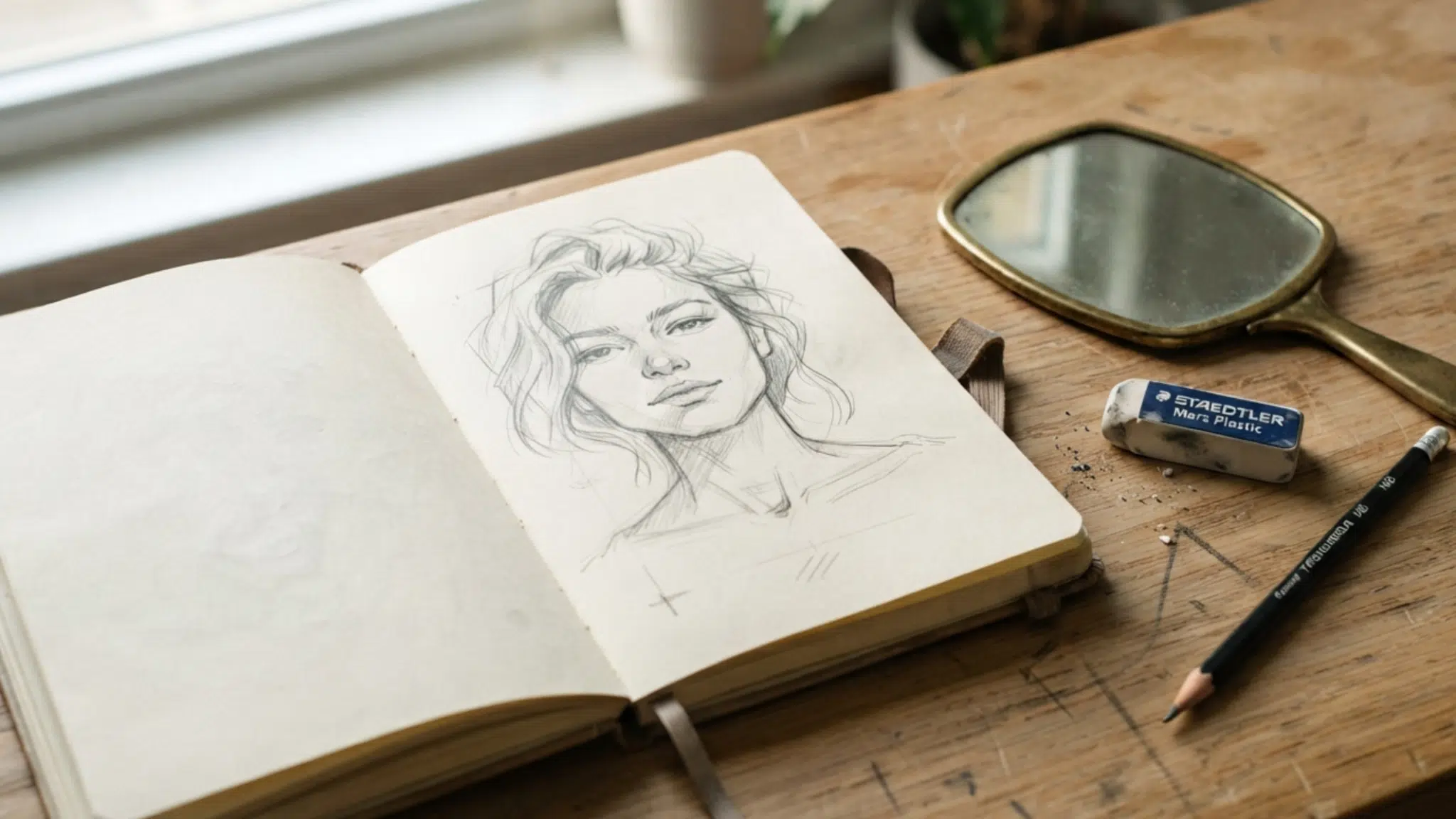
A simple self-portrait, even a rough one, captures how you see yourself at a specific point in time.
This page doesn’t need to look realistic since the goal is honest expression, not accuracy, and a look through these self-portrait art ideas can open up a few unusual angles to try.
Materials Required: A mirror or reference photo, a sketch pencil, an eraser, and three or four colored pencils.
How to make it:
- Sketch a loose outline of your face or expression.
- Add color to show your current mood.
- Write a short note about how you’re feeling that day.
18. Map Pin Page
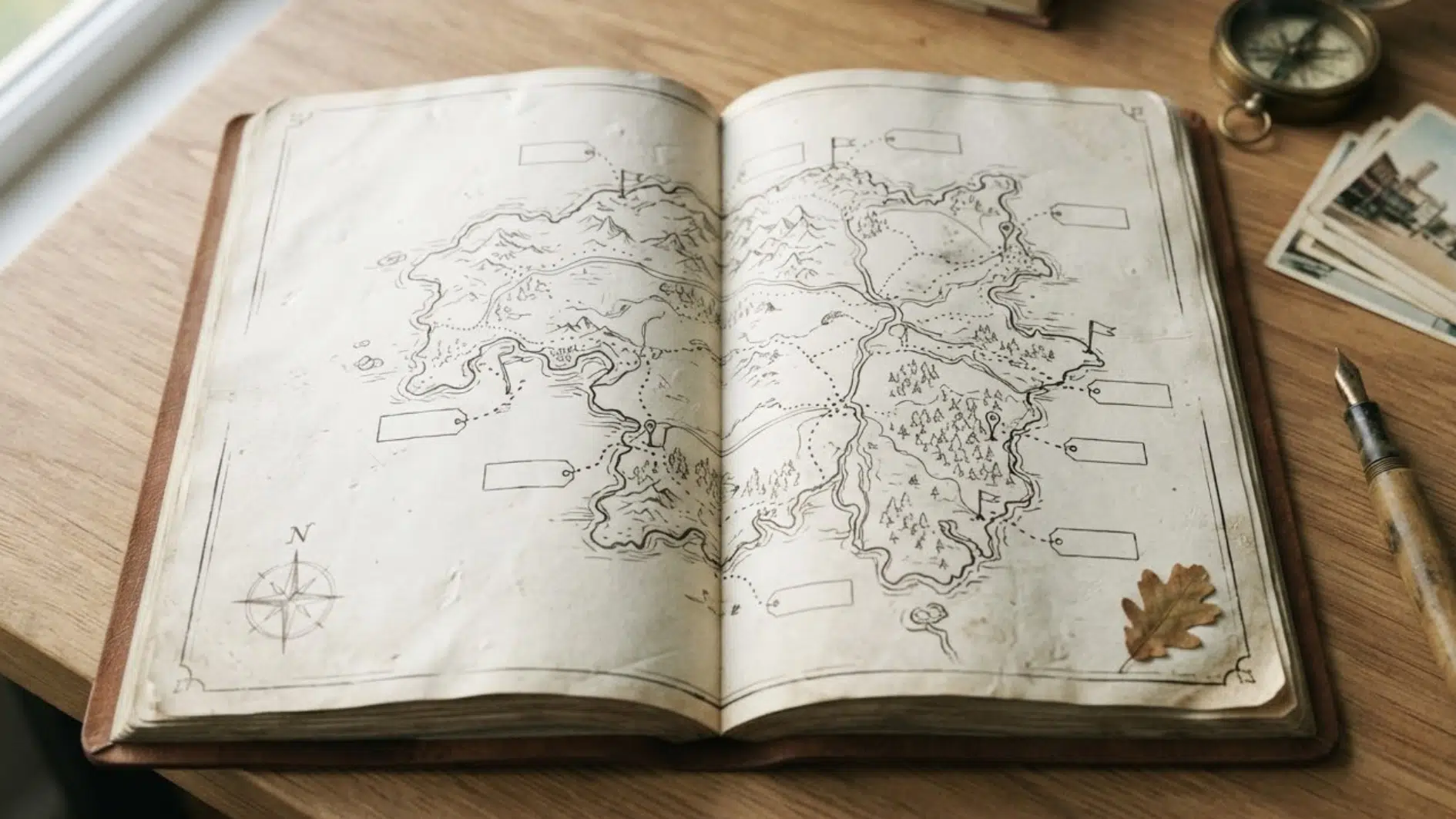
A map page marks cities, states, countries, parks, or landmarks you have visited or hope to visit, using a hand-drawn or printed map outline. Small pins or dots make it easy to track progress over time.
Materials Required: A printed or hand-drawn map, a glue stick, a fine-tip pen, and small dot stickers or colored markers.
How to make it:
- Glue or draw a simple map outline on the page.
- Mark each visited place with a dot or sticker.
- Add a short note beside each location.
19. Music-Inspired Page
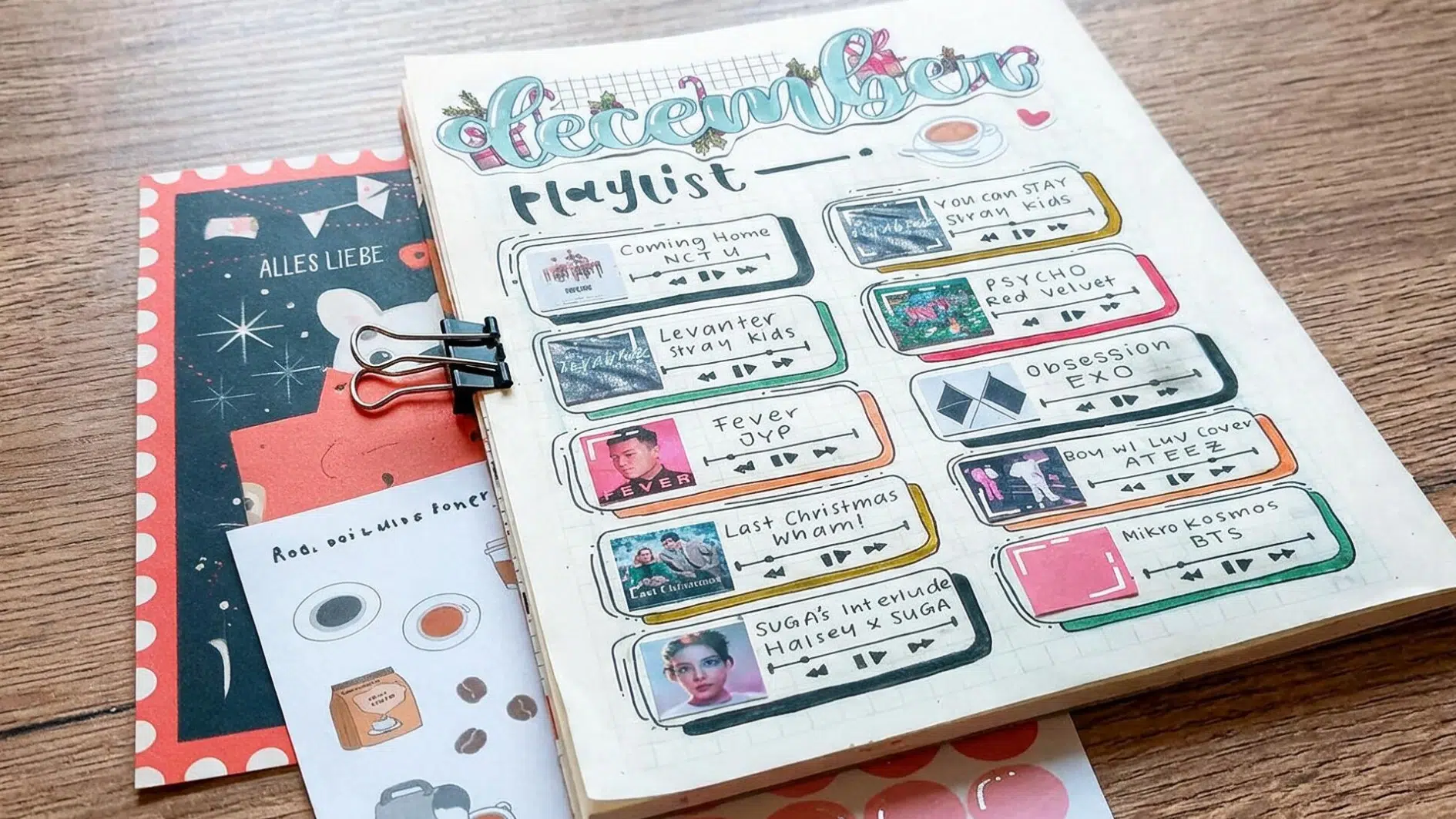
A music-inspired page combines colors, patterns, drawings, and personal notes that reflect the mood of a favorite song. This idea works well when a specific song has been stuck in your head all week.
Materials Required: A fine-tip pen, three or four colored pencils or markers, headphones, and optional paper scraps for collage.
How to make it:
- Write the song title, a short personal reaction, or a few original words inspired by the music.
- Add drawings or colors that match its feeling.
- Note why the song matters to you right now.
20. Coffee Stain Background
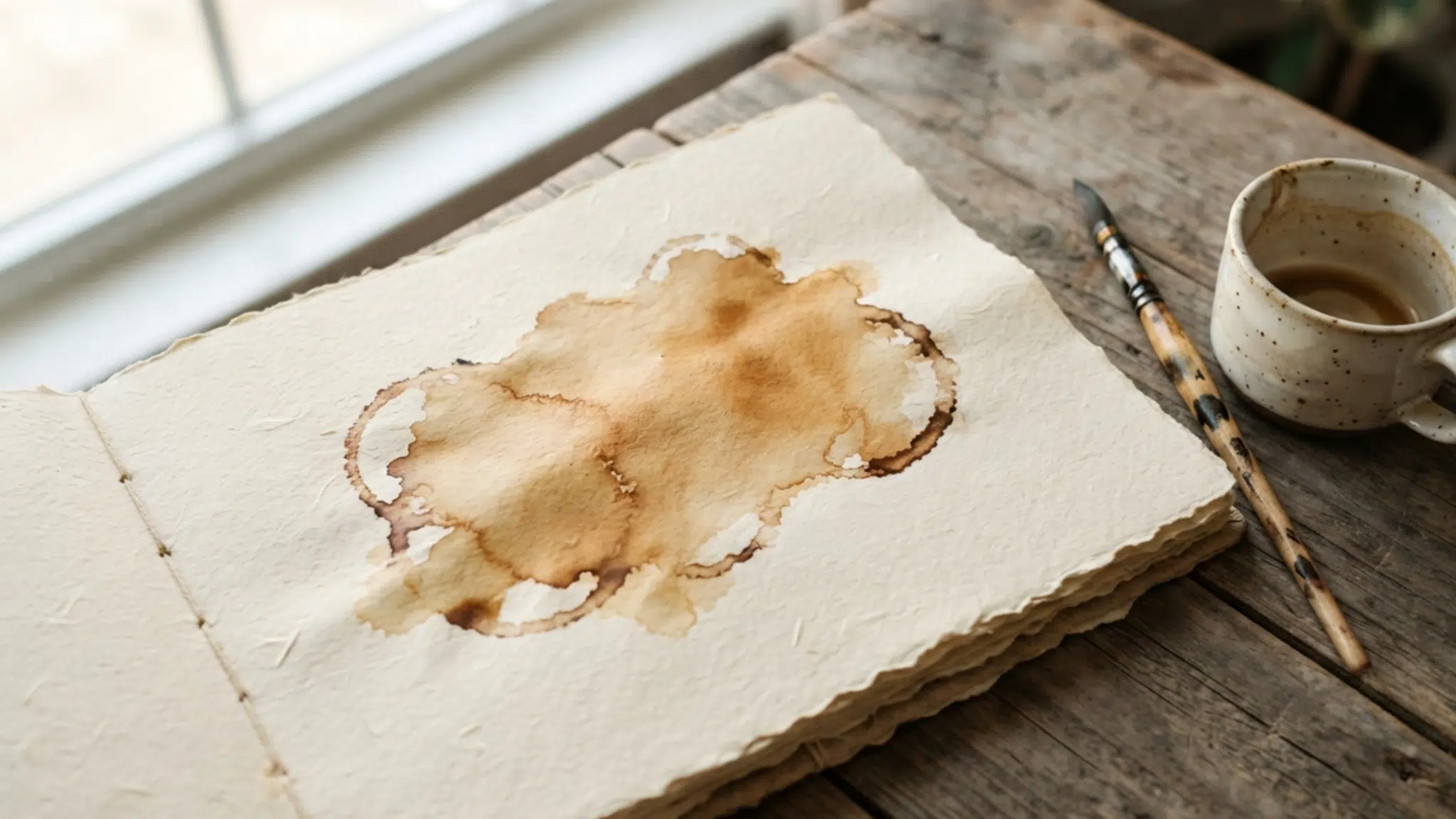
A coffee stain background gives pages a warm, aged look using just leftover coffee and a brush. This simple technique gives the page a warm, aged texture before you add writing, drawings, or collage pieces.
Materials Required: Two or three tablespoons of cooled coffee, a small paintbrush, paper towels, and scrap paper to protect the next page.
How to make it:
- Dip the brush in coffee and dab it across the page.
- Blot with a paper towel for texture.
- Let the page dry fully before writing on it.
21. Fingerprint Art Page
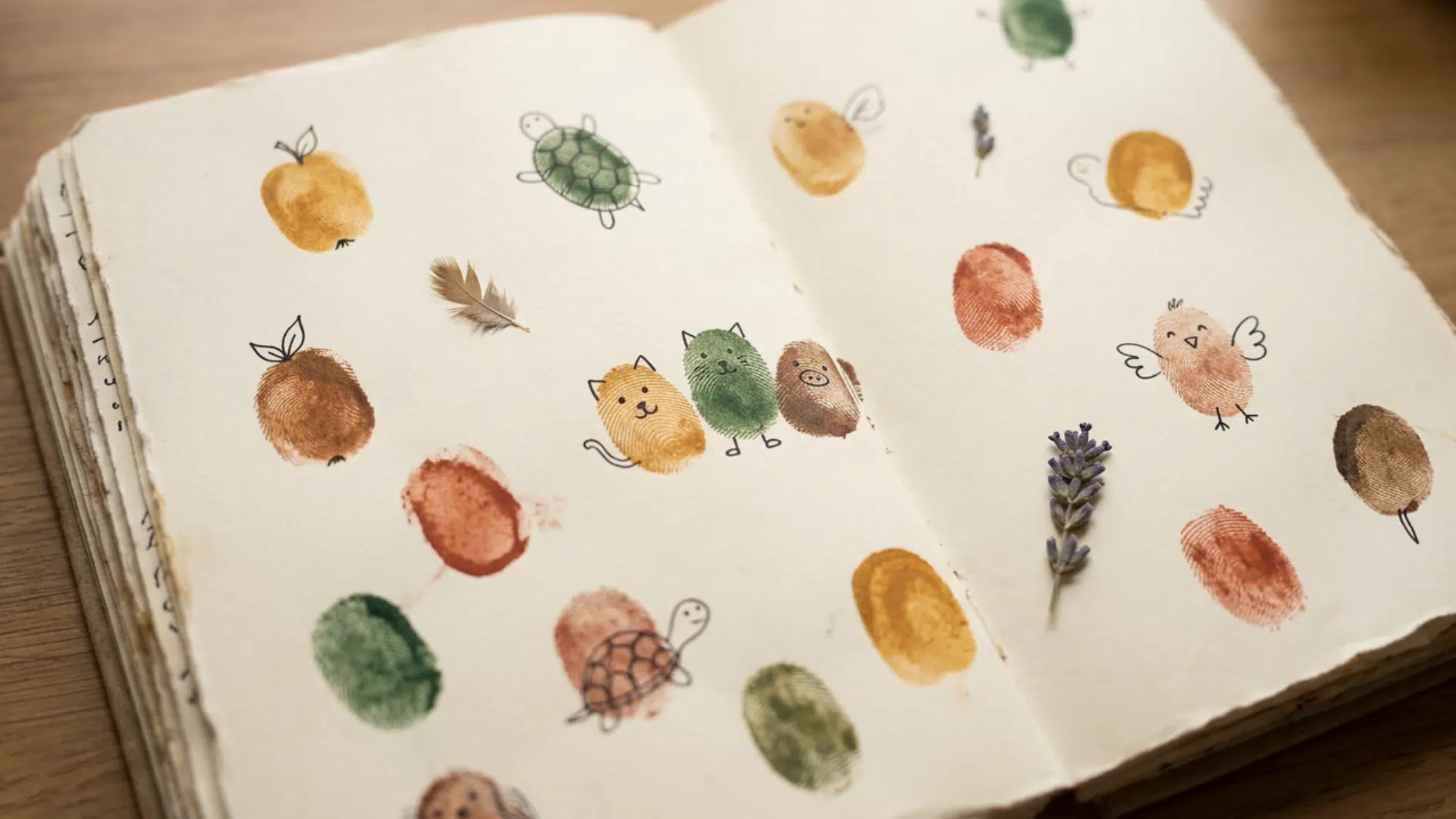
Fingerprint art turns simple ink prints into tiny characters like bugs, flowers, or faces with a few added lines. It’s an easy, low-skill idea that still results in a fun, personal page.
Materials Required: A washable ink pad, a fine-tip pen, wet wipes or a damp cloth, and colored pencils if desired.
How to make it:
- Press fingertips onto the ink pad, then onto the page.
- Let prints dry for a minute.
- Add small pen details to turn each print into a shape.
22. Monthly Reflection Spread
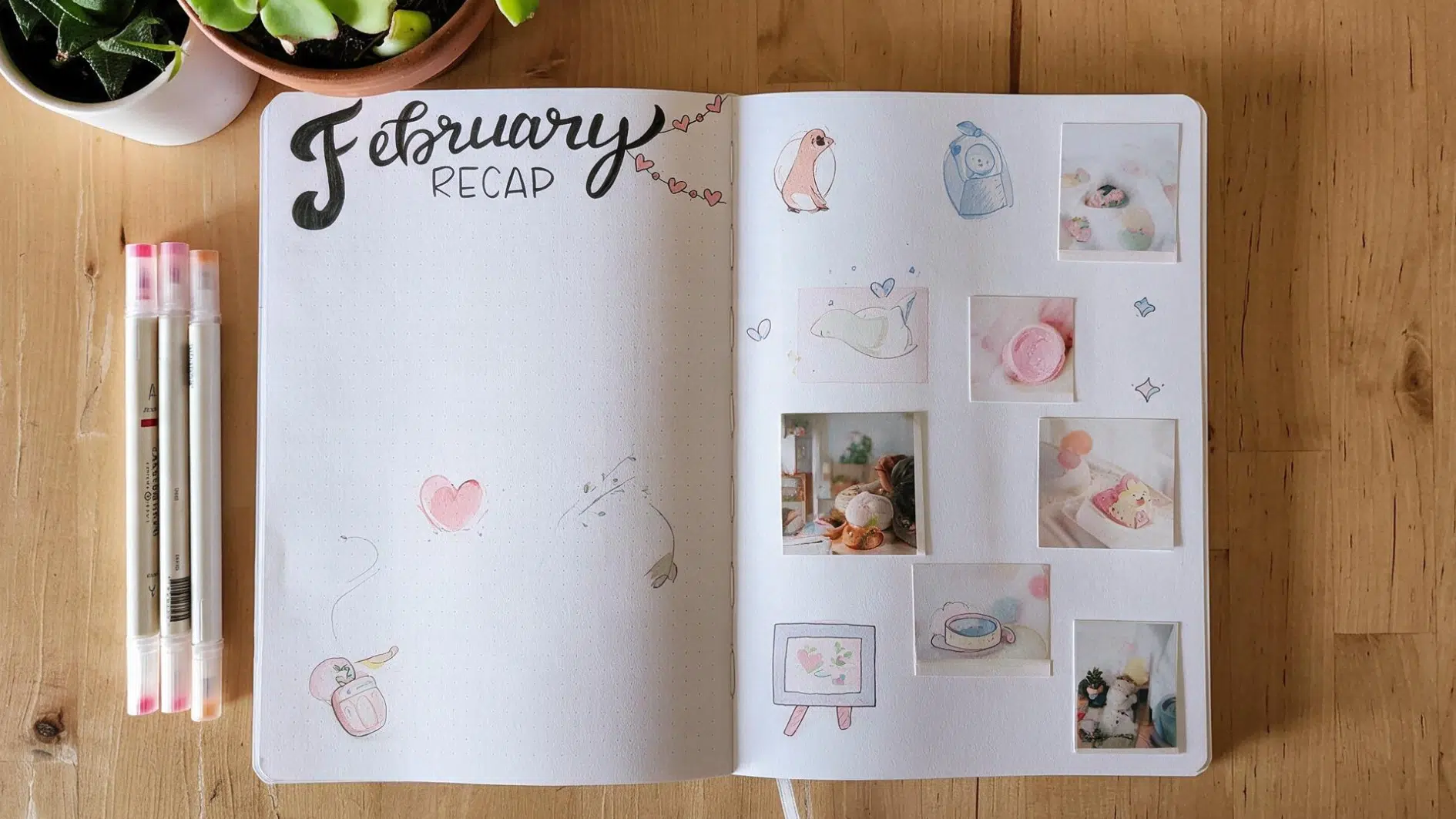
A reflection spread sums up a full month using a mix of small drawings, stickers, and short notes. It works well as a closing page before starting a fresh month in your journal.
Materials Required: Four or five colored pens, a ruler, small photos or stickers, and a glue stick.
How to make it:
- List 3-5 highlights from the month.
- Add a small drawing or photo for each one.
- Note one goal for the month ahead.
23. Vision Board Page
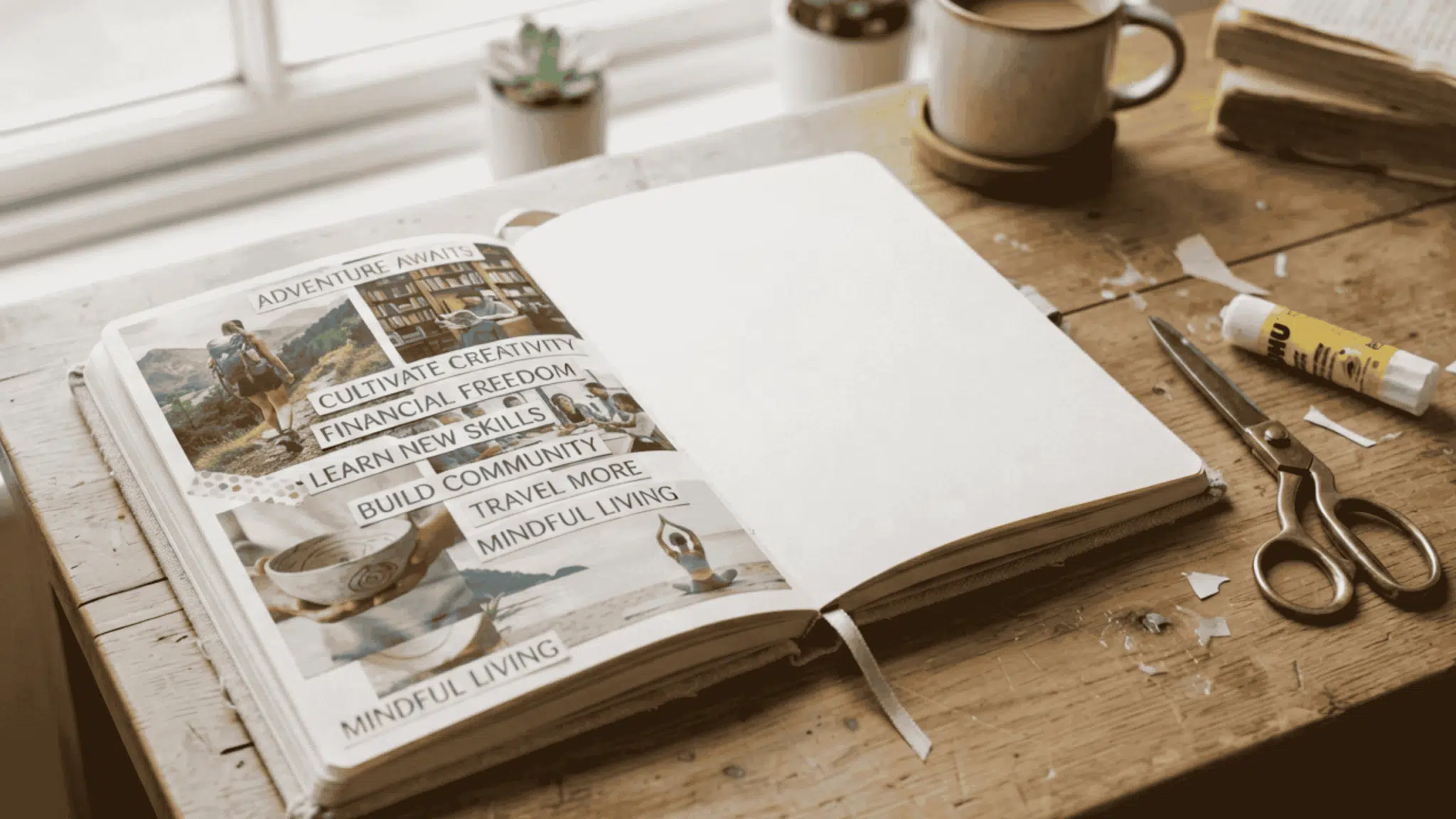
A vision board page collects images and words that represent goals you’re working toward this year. You can update the page when your priorities, interests, or goals change.
Materials Required: Five to eight magazine cutouts or printed images, scissors, a glue stick, and a fine-tip pen for adding goals or captions.
How to make it:
- Gather images and words that match your current goals.
- Arrange them on the page before gluing.
- Glue everything down and review the page monthly.
How to Choose a Visual Journal Idea
With so many ideas to pick from, it helps to match your page to what you actually need in the moment, whether that’s a calm break or a quick creative outlet.
- When you want to relax: Try a watercolor wash, doodle border, color palette, pressed flower page, or fingerprint design.
- When you want to preserve a memory: Choose a photo corner, travel collage, recipe page, nature sketch, map page, or monthly reflection.
- When you want to learn about your feelings: Create a weather mood tracker, self-portrait, gratitude grid, music-inspired page, or abstract color spread.
- When you only have five minutes: Add one doodle, one photograph, a short caption, a color sample, or a small object sketch.
The Bottom Line
Visual journaling can be as simple as adding a small drawing, photograph, color sample, or paper keepsake to a notebook.
The goal is not to create perfect artwork but to record ideas and experiences in a form that feels personal.
Start with one visual journal idea that matches your mood or available time. As you experiment with collage, paint, sketches, and written notes, your pages will gradually develop a style of their own.
Frequently Asked Questions
Do I Need to Be Good at Drawing to Start a Visual Journal?
No. Stickers, tape, photos, and simple shapes work just as well as fine art skills for a meaningful page.
How Often Should I Add to My Visual Journal?
A few minutes daily or two to three times weekly builds a steady habit without feeling like a chore.
What’s the Difference Between a Visual Journal and A Scrapbook?
A visual journal mixes personal reflection with art, while a scrapbook mainly preserves photos and keepsakes without daily writing.