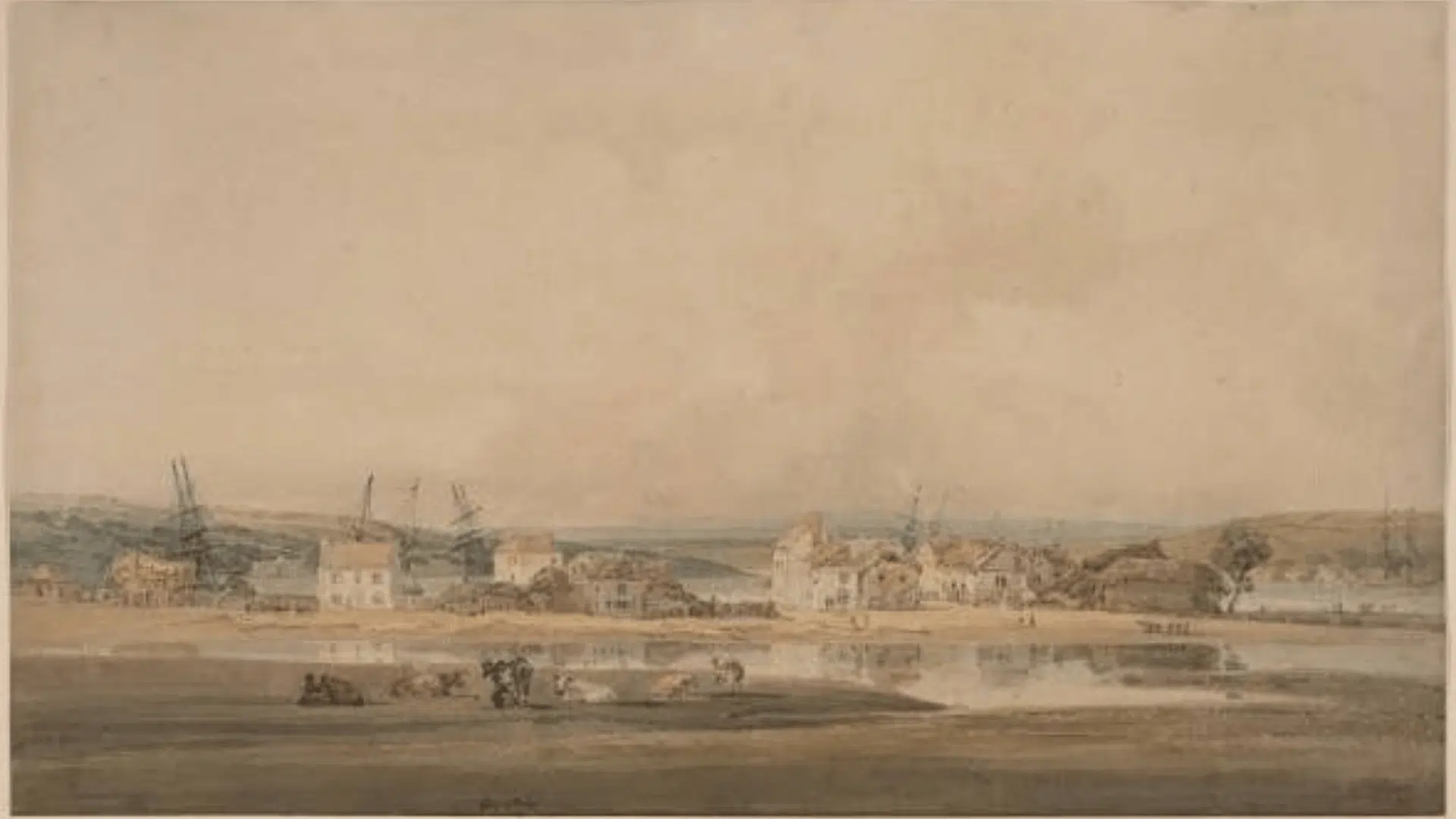
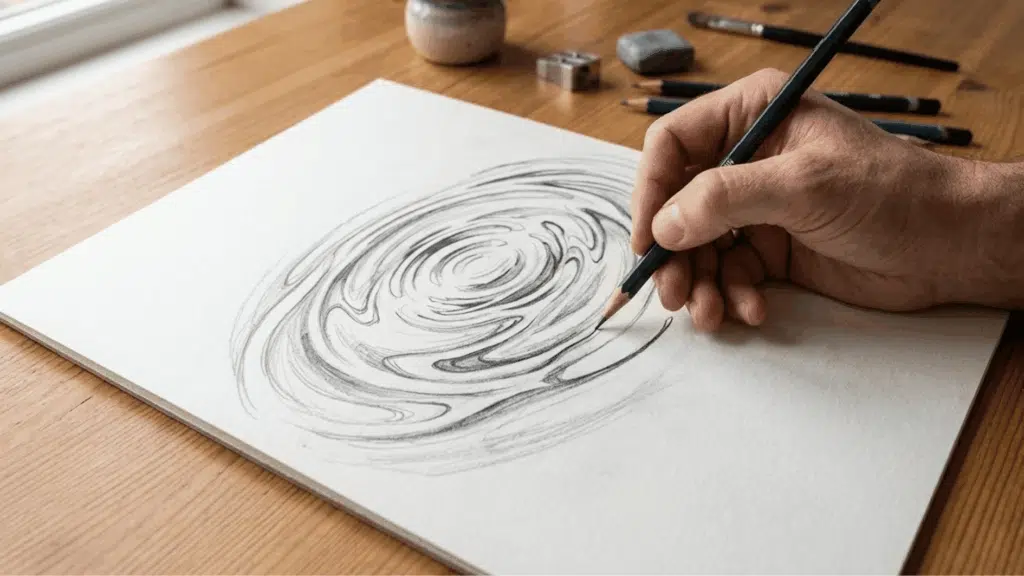
Water moves, catches light, and shifts shape with every ripple. That is exactly why it trips up so many artists. But convincing water on paper does not need perfect detail.
A handful of visual elements repeat across every water form, and once you can spot them, drawing water gets a lot less overwhelming.
This blog breaks water into four forms: calm surfaces and ripples, ocean waves, reflections, and single droplets. Each section covers clear steps, the right tools, and tips for beginners and intermediate artists.
Work through one form at a time in short, focused sessions. That is how the marks that read as water start to feel natural under your hand.
Before You Draw: What Do You Need to Know
Those repeating elements are highlights, shadows, ripples, reflections, wave shape, and droplet placement. Here is what each one does.
Highlights show up where light hits the surface directly, often as small bright spots on waves or droplets. Shadows sit on the opposite side, giving water a sense of depth, the same logic behind value in art.
Ripples carry the movement and energy across the surface, while reflections tie nearby objects to the water itself.
Distance also changes how reflections behave. Objects right at the water’s edge reflect sharply and clearly.
Objects higher up reflect with less intensity and more distortion, which comes down to the same depth and distance principles that shape any landscape drawing.
Core Techniques for Drawing Water
Core techniques for drawing water focus on mastering ripples, waves, reflections, and droplets. These elements help create depth, movement, and realism in water surfaces.
1. Ripples
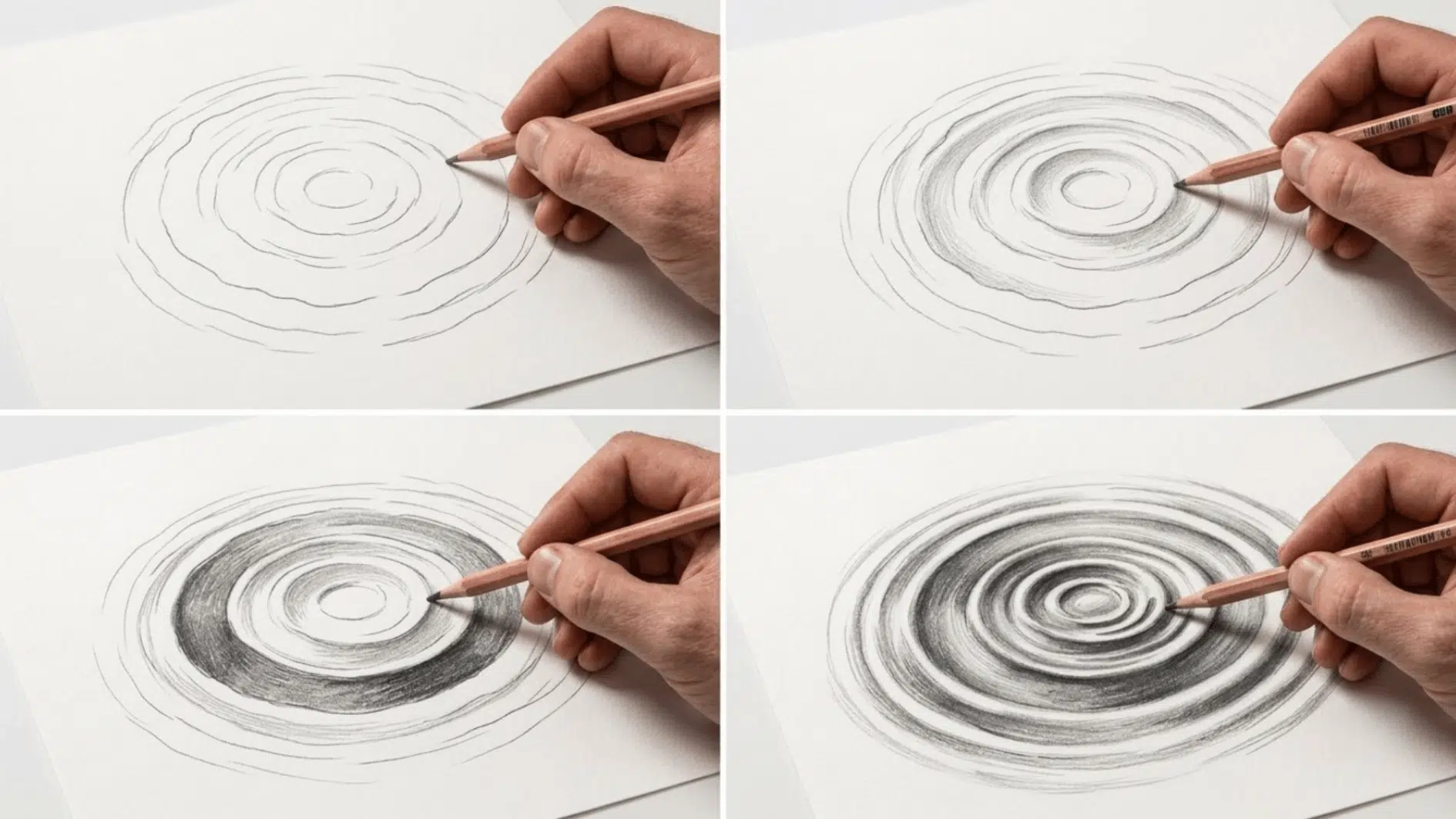
Ripples are circular waves that spread outward when an object disturbs the surface of water. They create patterns of light and shadow, showing movement and depth in the water.
How you space those curved line work elements determines whether they read as still or active.
Steps:
- Draw simple wavy lines to outline the water surface and indicate the wave crests.
- Add light shading along the crests to give the illusion of depth and reflected light.
- Apply darker shading in the troughs to create more dimension.
- Blend the shading to refine the texture and make the waves look smooth and natural
2. Waves
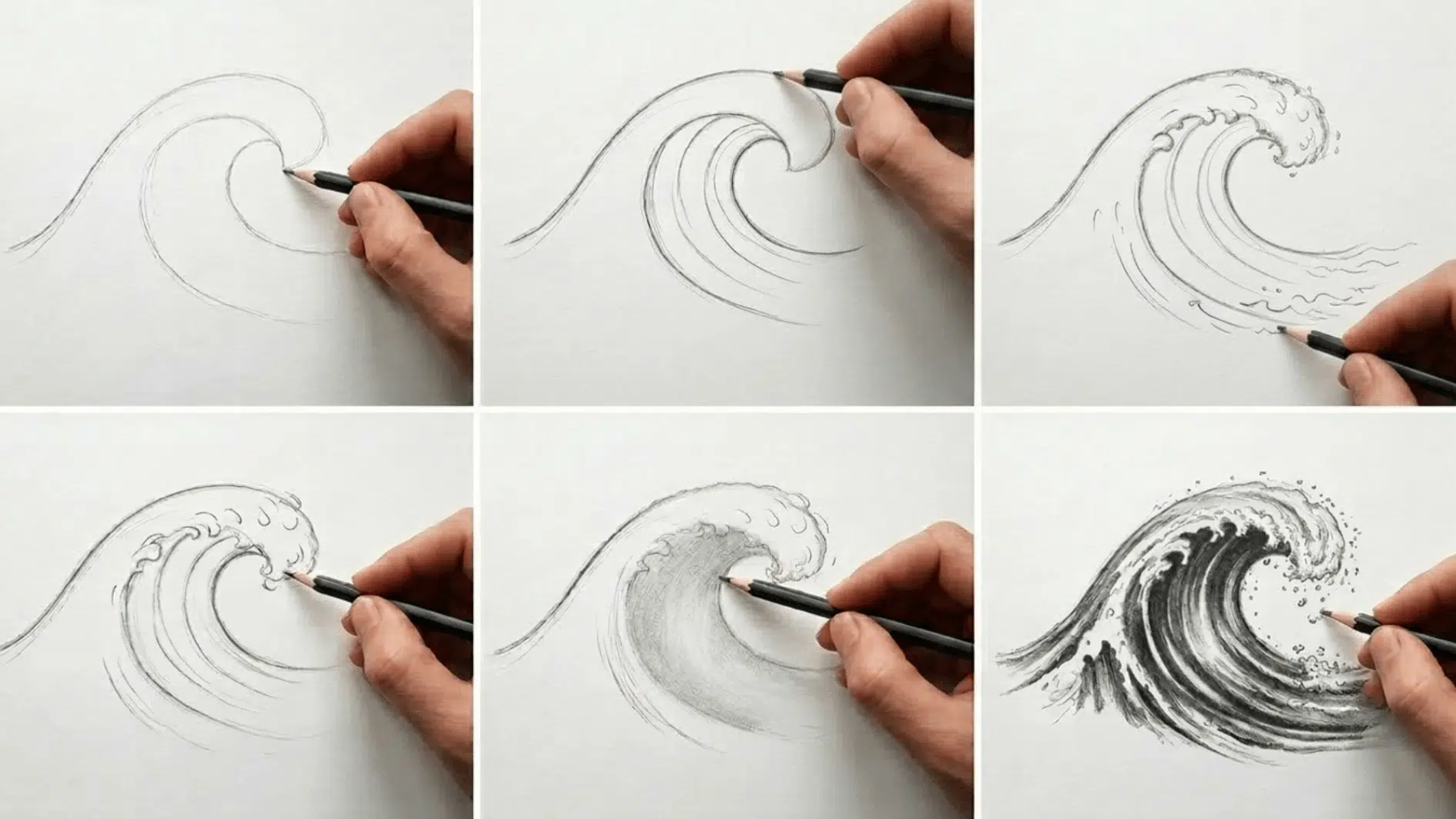
Waves are dynamic water forms with crests and troughs that show motion and volume. Adding curved lines, foam, and shading enhances their depth and realistic flow.
Observing real waves helps capture their natural movement and energy in your drawing.
Steps:
- Start with a basic sketch of the wave shape, marking the curve of the crest.
- Add inner curved lines following the wave’s flow to show depth and dimension.
- Draw the foam and splashes at the base and tip of the wave using short curved lines.
- Enhance the inner lines with darker shading to create a sense of volume and curl.
- Add fine details like additional foam, texture, and highlights to complete the wave.
3. Capturing Reflections
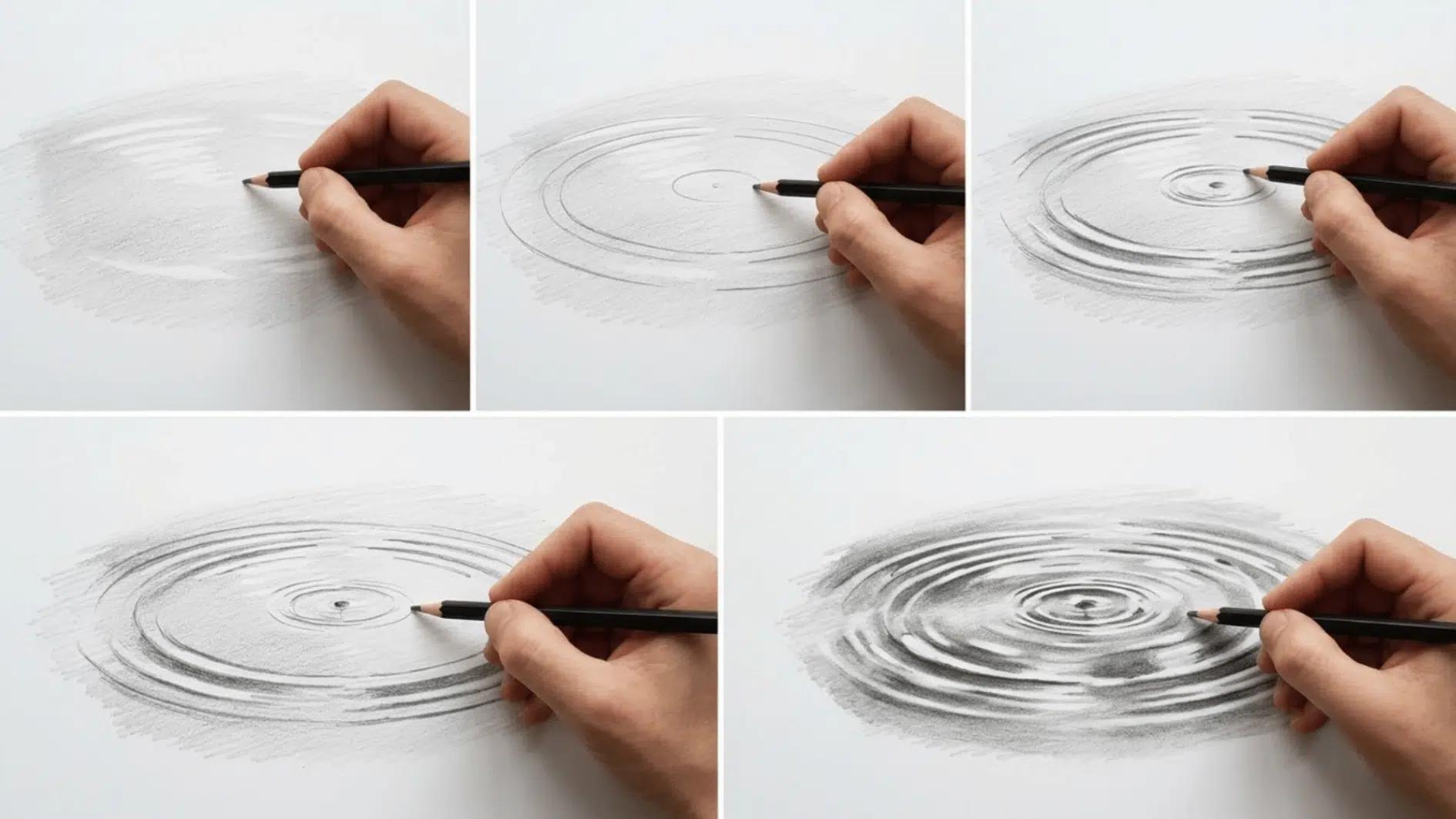
Reflections reveal how light interacts with water, creating highlights and mirrored patterns. Adding subtle contrasts and soft blending makes the surface appear wet and reflective.
Steps:
- Start with a base layer of smooth blue tones for the water surface.
- Sketch light circular ripples to indicate the initial impact point.
- Add highlights on the crests of the ripples using lighter blue or white to show reflections.
- Gradually darken areas between ripples to create depth and dimension.
- Refine the details by softening the edges and enhancing contrast to achieve a realistic water effect.
4. Drawing Realistic Water Droplets
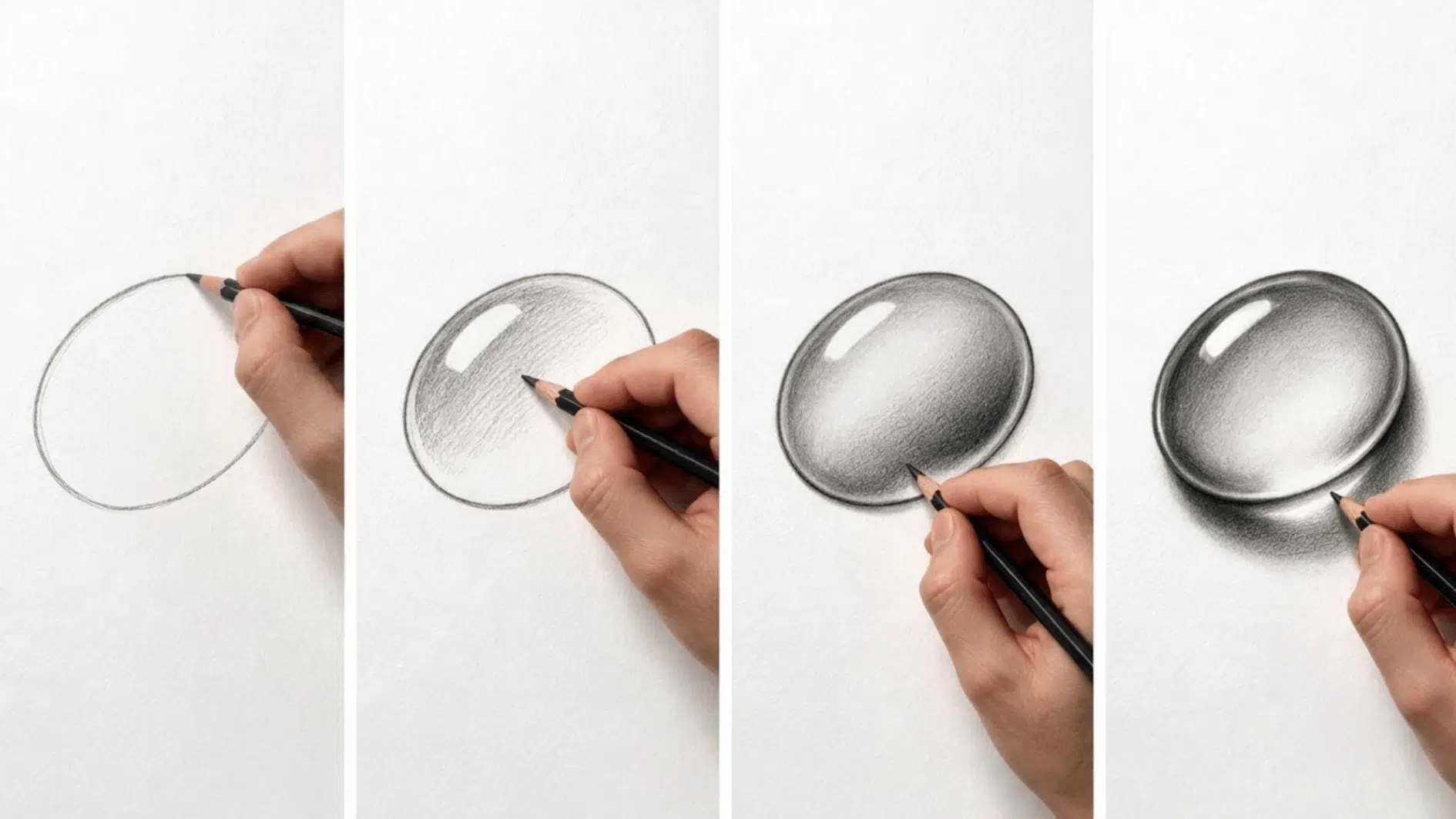
Droplets are rounded, often wider at the bottom, with a gentle curve on top. Adding highlights and a gradient from light to dark gives them volume.
A cast shadow and a thin reflected light line anchor them to the surface, completing a realistic look.
Steps:
- Draw a wide oval, flatter on the bottom, with a gentle upward curve at the top.
- Pick a light source and leave a small bright highlight in that corner.
- Shade progressively darker as you move away from the light, deepest near the bottom right.
- Add a cast shadow below the droplet, then a thin reflected light line just above it.
Common Mistakes to Avoid
A drawing can follow every step above and still look off. It usually comes down to one of these habits.
Even Ripple Spacing
Real ripples lose energy as they travel, so the rings widen and fade with distance. Equal spacing reads as a pattern, not water.
No Halftone
Jumping straight from bright highlight to dark shadow makes water look plastic. It needs a gradient, not two flat blocks of tone.
Mirror-Copy Reflections
Wind and current break a reflection into broken vertical streaks. Only a still pond mirrors cleanly.
Flat Droplets
Skipping the rim light or cast shadow leaves a droplet looking like a sticker instead of something sitting on a surface.
To Sum It Up
Water stops feeling intimidating once you see it as four separate skills: ripples, waves, reflections, and droplets. Each has its own logic. Once that logic clicks, drawing water becomes repetition, not guesswork.
Light and shadow do most of the work. Get those right, and water reads as real, even without heavy detail. Watch actual water surfaces too. That habit sharpens your eye for the small variations that make a drawing feel authentic.
Build each skill on its own before combining them. A ripple study, a wave study, a reflection study, a droplet study, practiced separately, gives you the control to bring them together later.
Keep practicing, and water shifts from a technical hurdle to something you draw with instinct.
Frequently Asked Questions
How Do You Make Drawn Water Look Realistic?
Use a mix of light and dark values to show depth, reflections, and movement. Avoid outlining every ripple, since water usually has soft and broken edges.
What Is the 70-30 Rule in Art?
70% of your artwork should be dominated by a main, unifying element, while the remaining 30% is reserved for contrasting accents.
How Do You Shade Water without Making It Look Flat?
Change the pressure and spacing of your pencil strokes instead of using one even tone. Keep some areas bright and place darker values beneath ripples, waves, and reflected objects.