Lines in art may look simple at first, but they hold hidden power inside every masterpiece. A single line can guide your eyes, create emotion, or reveal movement without saying a word.
From quiet horizontal lines to sharp, dramatic strokes, artists use lines to shape stories and feelings.
Long before color and shading appear, line becomes the first mark of creativity. It is the silent path that turns empty space into something meaningful, emotional, and unforgettable.
What Is Line in Art?
It is a mark that connects two points. It is one of the seven basic elements of art and helps artists create shapes, forms, and movement.
Lines can be thick or thin, straight or curved, and even broken or continuous. Artists use lines to guide the viewer’s eye and share ideas or feelings.
Before artists can create shapes and forms, they first use lines as a foundation. Different types of lines can also change the mood of an artwork, making it feel calm, exciting, soft, or strong.
Why Is Line Important in Art?
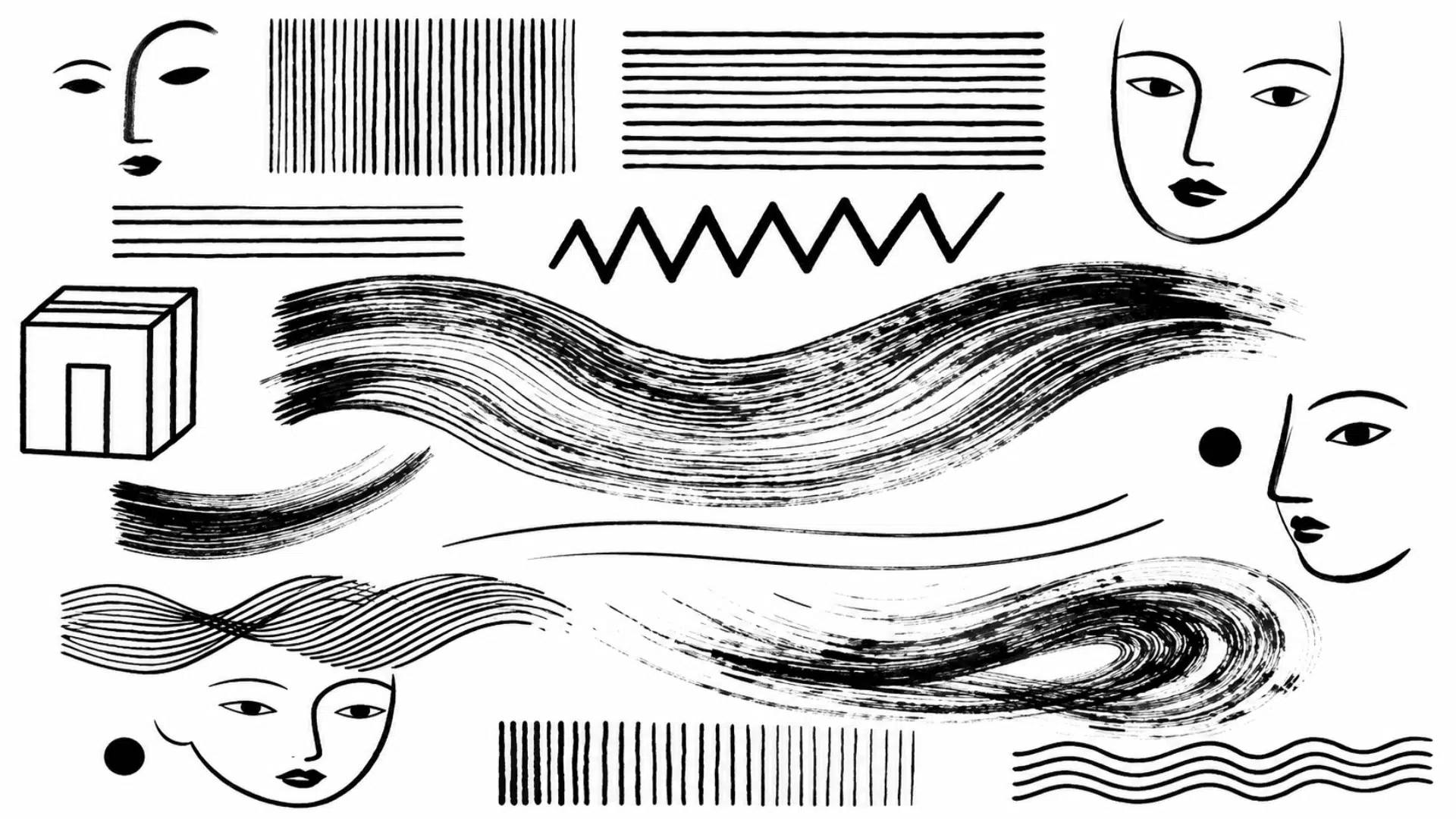
Line is important in art because it helps artists create outlines, shapes, and forms. It also shows movement and direction, leading the viewer’s eye across the artwork.
Artists use line quality in art to add texture, shading, and depth. Lines can also create emotion and mood.
For example, diagonal lines often create tension or action, while horizontal lines convey a calm, peaceful feeling.
In line drawing, artists use different types of lines to organize a composition and enhance visual movement. As one of the main elements of art, line helps bring artwork to life.
The Main Types of Lines in Art
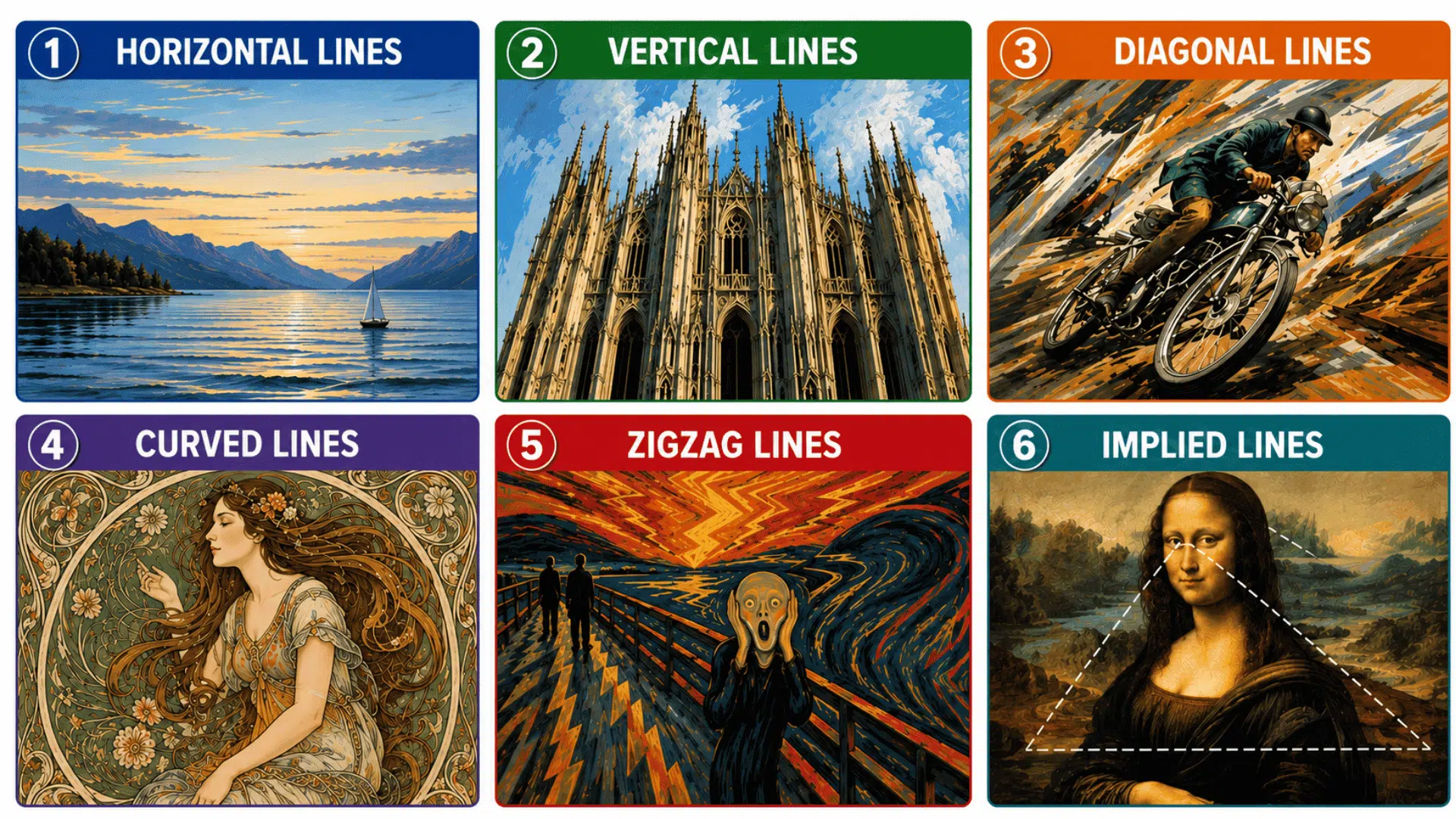
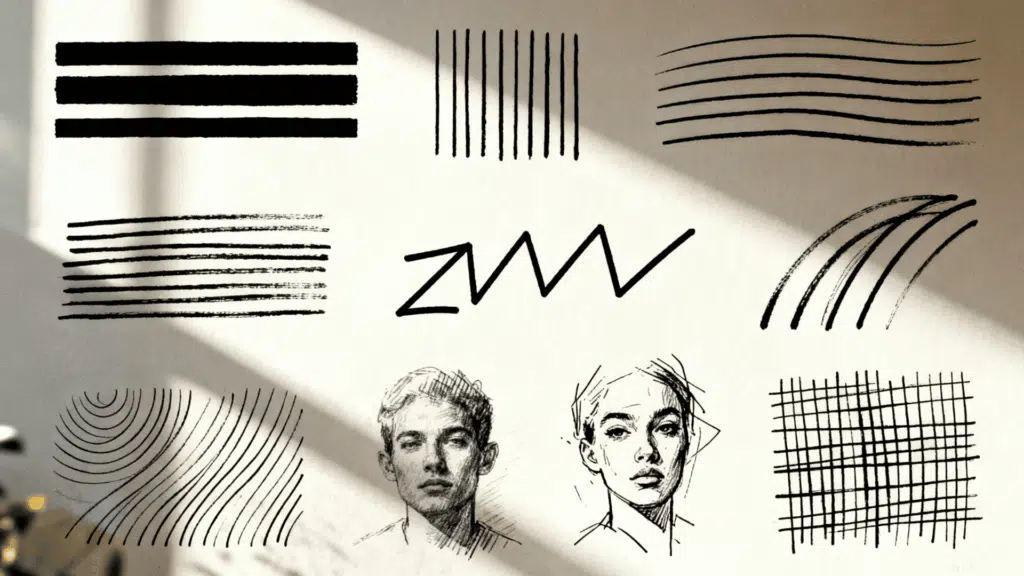
Different types of lines help artists create mood, movement, and meaning in artwork. Each type of line gives viewers a different visual experience and helps artists communicate ideas more clearly.
1. Horizontal Lines
Horizontal lines represent calmness, rest, and stability. They are often seen in landscapes, seascapes, and artworks by Piet Mondrian because they evoke a peaceful, balanced feeling.
These lines can help your artwork feel more spacious, calm, and soothing for anyone who looks at it.
2. Vertical Lines
Vertical lines show strength, power, and growth. They are commonly used in architecture, portraits, and Gothic cathedral designs to make subjects appear tall and important.
Artists often incorporate vertical lines to evoke feelings of pride and assurance in their compositions, adding a touch of grace and strength.
3. Diagonal Lines
Diagonal lines create movement, energy, and tension in art. Artists often use them in action scenes and Futurism paintings to make artwork feel more exciting and dynamic.
These lines help direct the viewer’s eye smoothly across the composition and add a touch of visual drama, making the scene more engaging.
4. Curved Lines
Curved lines give a soft, smooth, and natural feeling. They are used in organic designs like Art Nouveau and Van Gogh’s flowing brushwork to create beauty and motion.
Curved lines also help artwork appear gentle, graceful, and more in tune with nature.
5. Zigzag Lines
Zigzag lines suggest excitement, chaos, and instability. These lines are common in abstract and expressive art because they add strong emotion and visual energy.
Artists often use zigzag patterns to add energy and excitement to their artwork, making it feel bolder and livelier.
6. Implied Lines
Implied lines are not drawn directly but are suggested visually. They guide the viewer’s eye naturally through artwork, photography, and famous compositions by Leonardo da Vinci.
Artists use implied lines to create focus and connect important parts of an image together.
Different Line Qualities in Art
Artists change the look of lines to create different emotions, textures, and styles in artwork. Line quality helps viewers better understand the mood and feeling of an art piece.
| LINE QUALITY | MEANING AND EFFECT |
|---|---|
| Thick vs Thin Lines | Thick lines feel strong and bold, while thin lines appear soft and delicate. |
| Short vs Long Lines | Short lines create quick movement, while long lines feel smooth and calm. |
| Smooth vs Rough Lines | Smooth lines give a clean and peaceful look, while rough lines add energy and texture. |
| Continuous vs Broken Lines | Continuous lines show flow and connection, while broken lines create tension or mystery. |
| Bold vs Faint Lines | Bold lines attract attention and power, while faint lines create softness and distance. |
Techniques That Use Line in Art
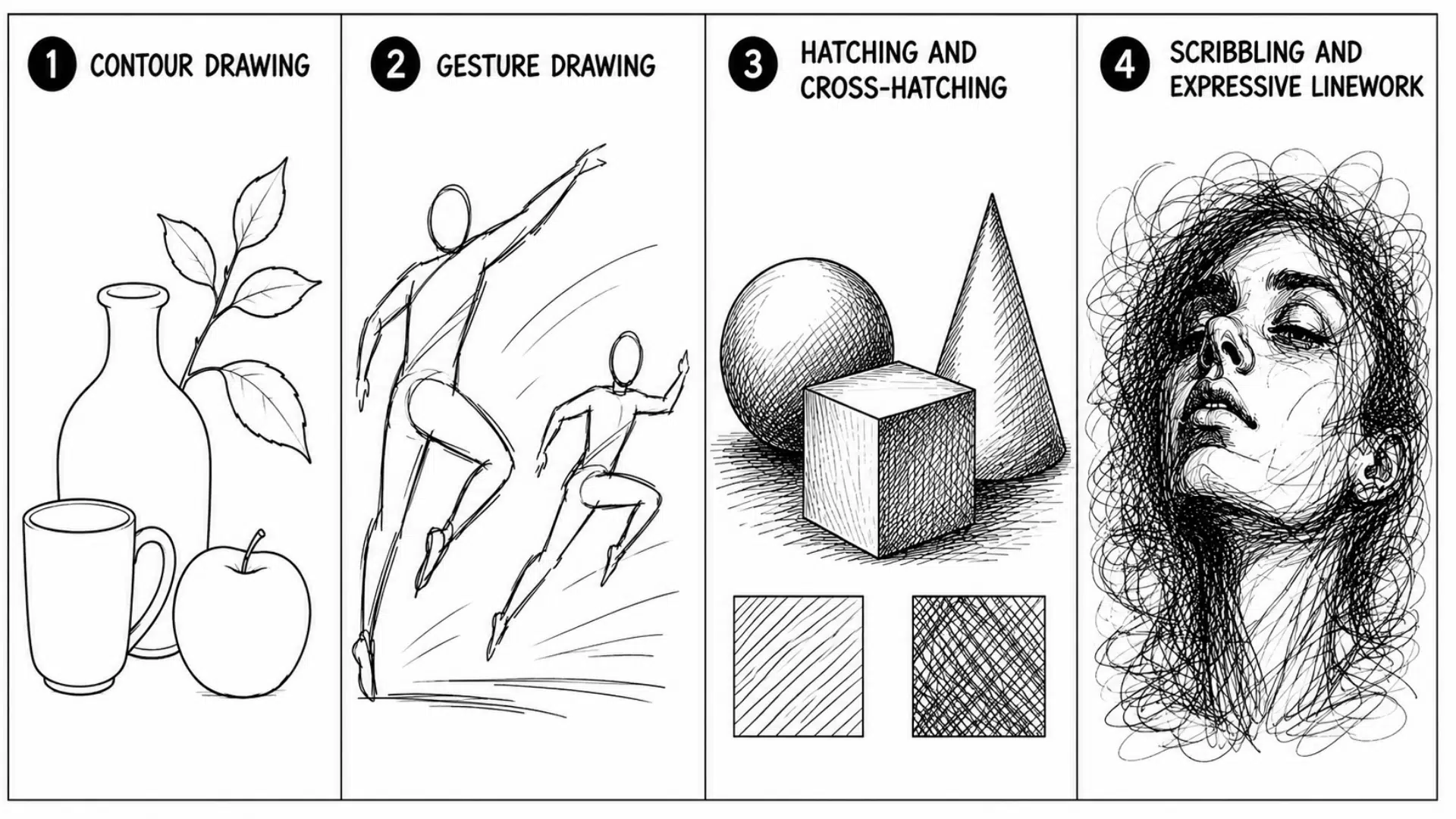
Artists use different line techniques to create shapes, movement, texture, and emotion in artwork. These techniques help bring drawings to life and improve artistic expression.
1. Contour Drawing
Contour drawing uses lines to define the edges and shapes of objects. Artists focus on outlines and details to show form without heavy shading.
This technique helps improve observation skills and teaches artists to notice small details more carefully.
2. Gesture Drawing
Gesture drawing captures movement and action quickly with loose lines. It helps artists convey energy, posture, and motion simply.
Many artists use gesture drawing as a practice to understand the natural flow of the human body.
3. Hatching and Cross-Hatching
Hatching and cross-hatching use repeated lines to create shadows and texture. Artists place lines close together to add depth and darker areas.
These techniques are often used in pencil and ink drawings to make artwork appear more realistic.
4. Scribbling and Expressive Linework
Scribbling and expressive linework are used to show emotion and creativity. These free and energetic lines are common in abstract and expressive art styles.
Artists use this technique to create strong feelings and make artwork appear more personal and dramatic.
Famous Examples of Line in Art
Many famous artists used lines in creative ways to express emotion, movement, and structure. These artworks show how different line styles can completely change the feeling of a painting.
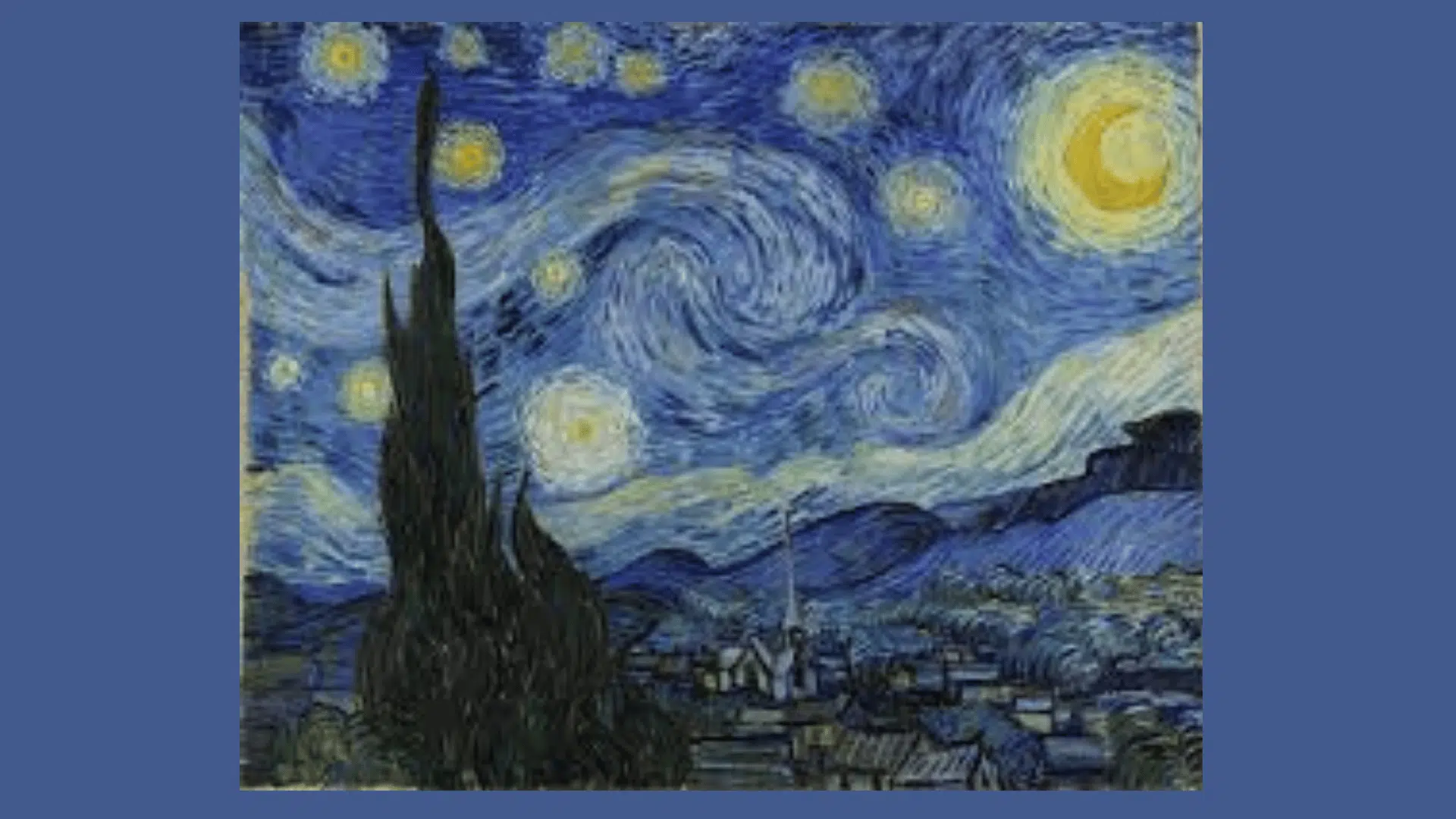
1. “Starry Night” by Vincent van Gogh
Source: Wikipedia
Van Gogh used curved and flowing lines to create movement in the sky and landscape. His expressive brushstrokes make the painting feel emotional, energetic, and alive.
Where to see: Museum of Modern Art (MoMA), New York City
2. “Composition VIII” by Wassily Kandinsky
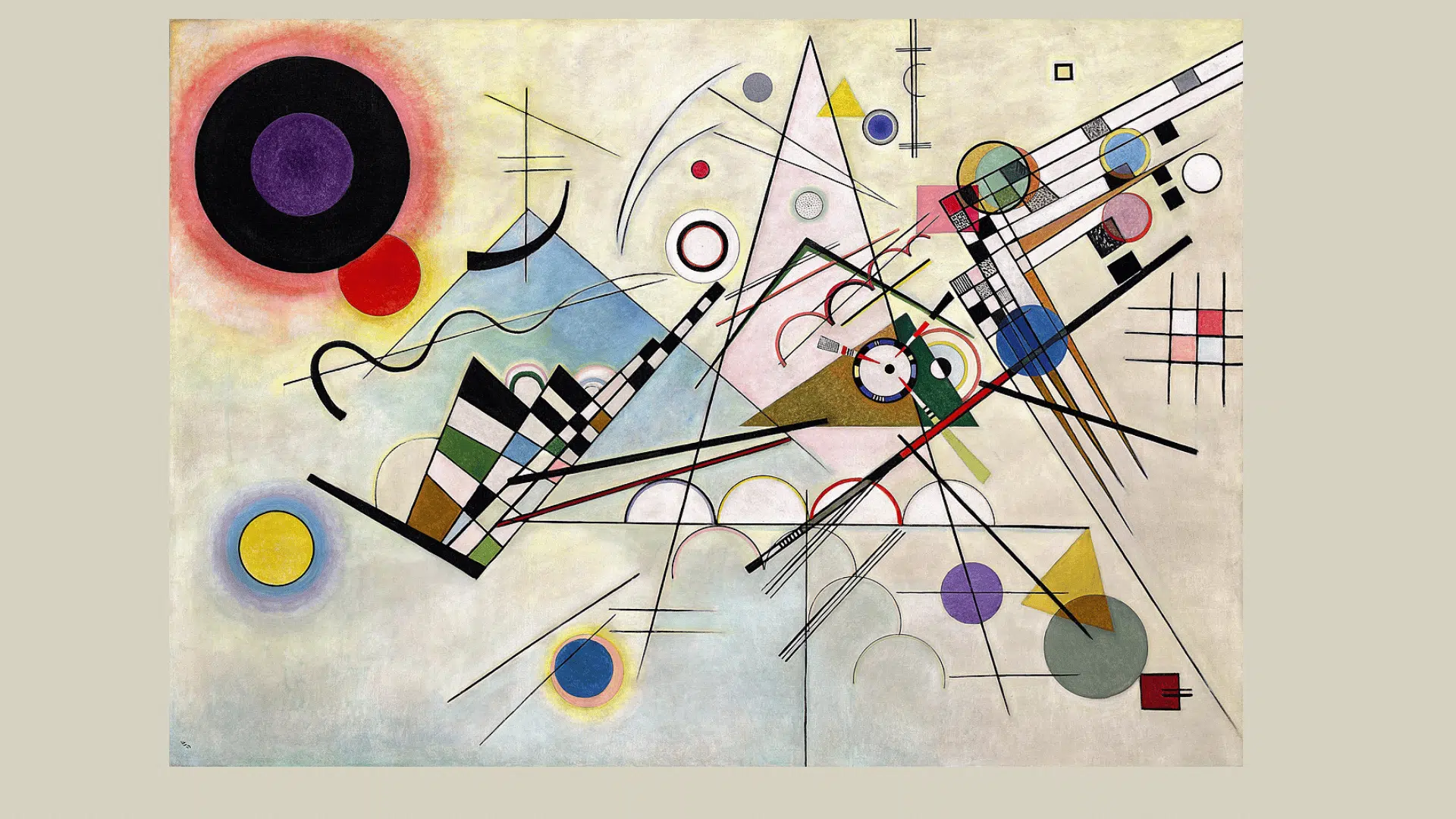
Source: Guggenheim
Kandinsky used geometric and directional lines to create balance and rhythm in abstract art. The lines guide the viewer’s eye across the painting, creating visual movement.
Where to see: Guggenheim Museum, New York
3. “Guernica” by Pablo Picasso
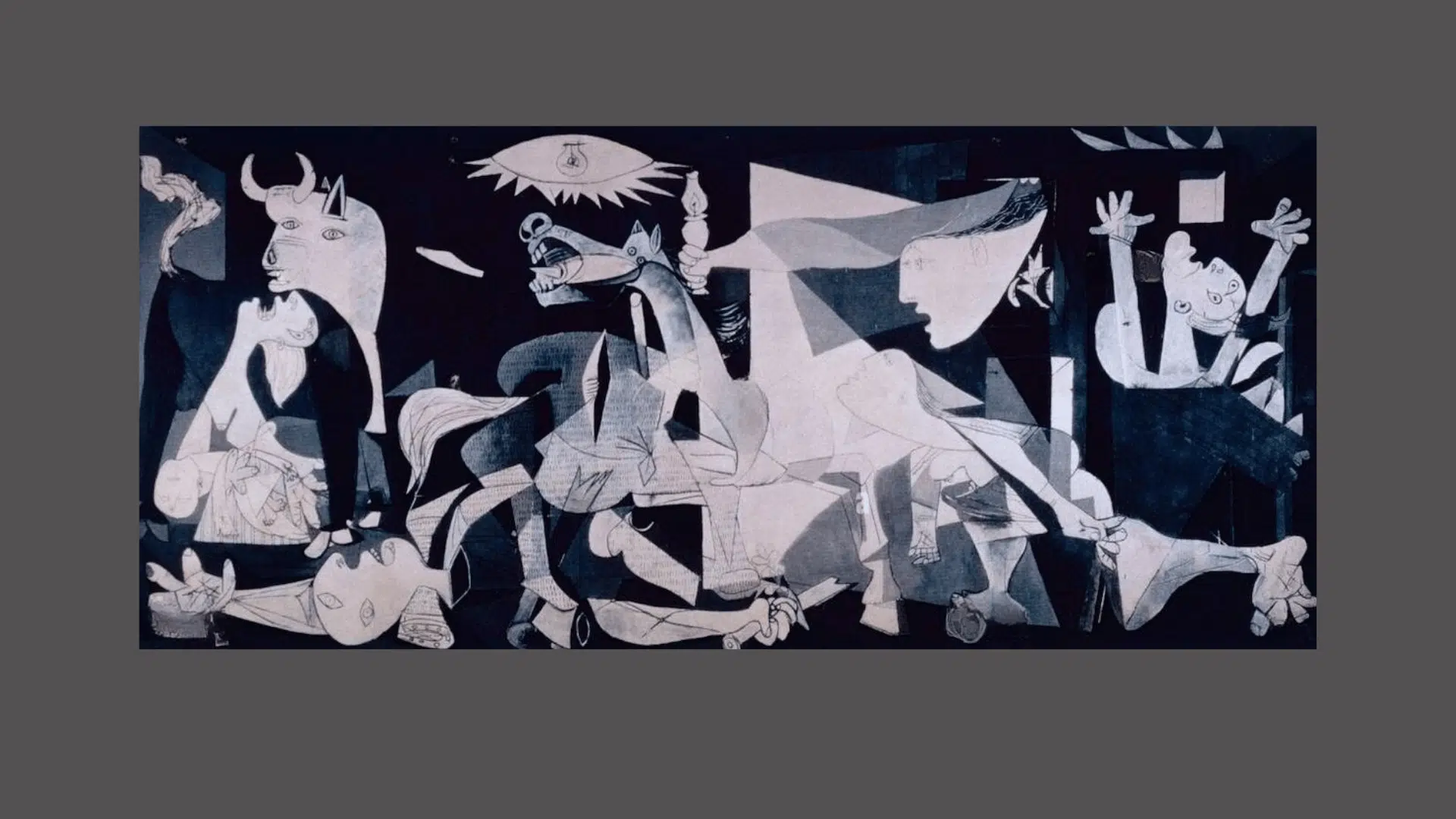
Source: PabloPicasso
Picasso used sharp, angular, and expressive lines to convey the chaos and pain of war. The broken and dramatic lines make the artwork feel tense and emotional.
Where to see: Museo Reina Sofía, Madrid, Spain
4. Piet Mondrian’s Grid Paintings
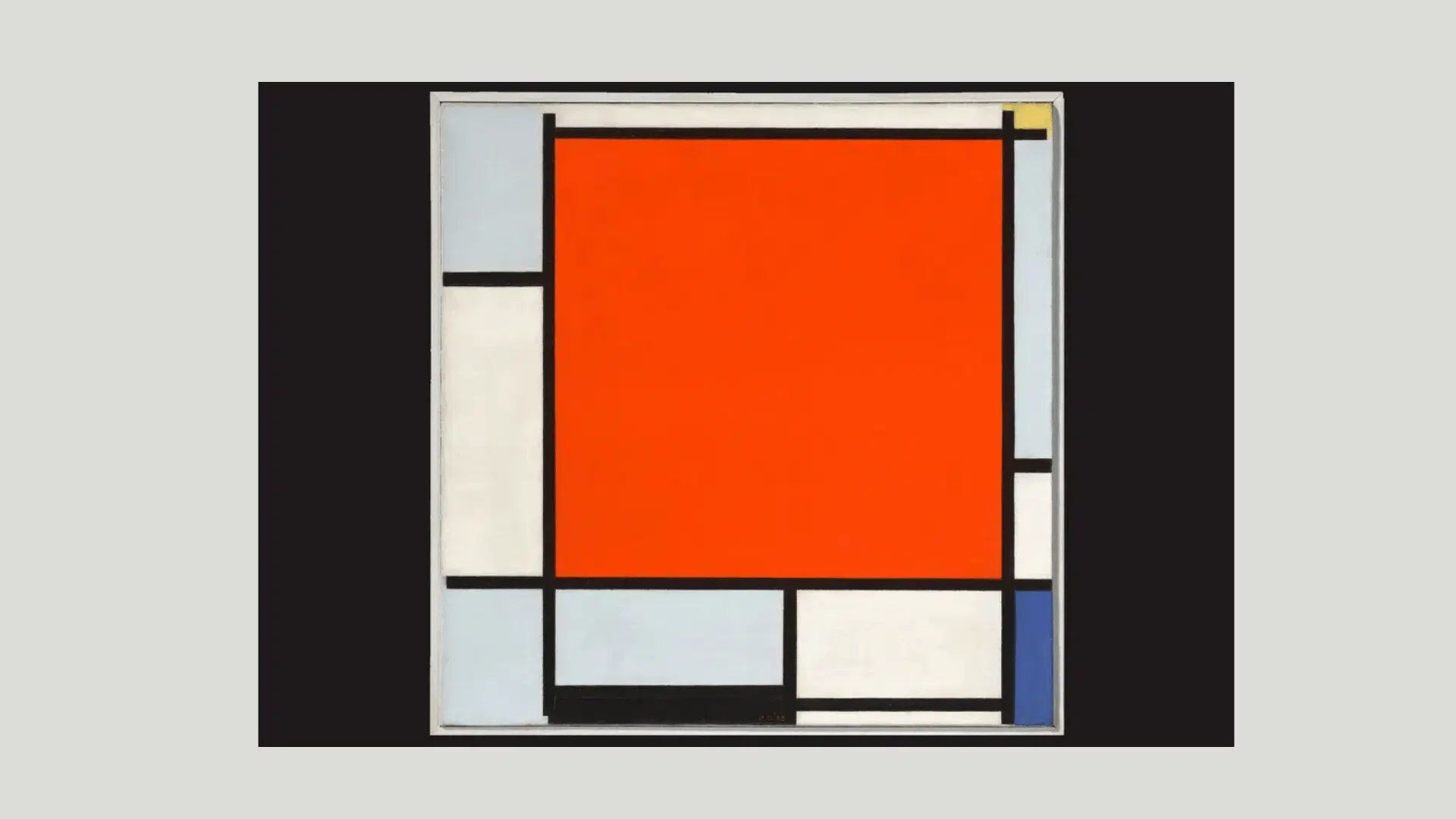
Source: Smithsonian Magazine
Mondrian used straight horizontal and vertical lines to create order and simplicity. His grid paintings became famous for their balance, structure, and modern style.
Where to see: Kunstmuseum, The Hague, Netherlands
How Beginners Can Practice Line in Art
Practicing lines is one of the best ways for beginners to improve drawing skills. Simple line exercises help artists build control, confidence, and creativity over time.
- Try blind contour exercises to improve observation and hand control without looking at the paper too often.
- Practice line weight by drawing both thick and thin lines to create depth and focus in artwork.
- Do one-line drawing exercises to improve flow, movement, and drawing confidence with fewer mistakes.
- Sketch everyday objects like cups, plants, or shoes to understand shapes, outlines, and textures better.
- Study master artworks and avoid common mistakes, such as pressing too hard or using stiff, uneven lines.
Line, Shape, and Form: What’s the Difference in Art?
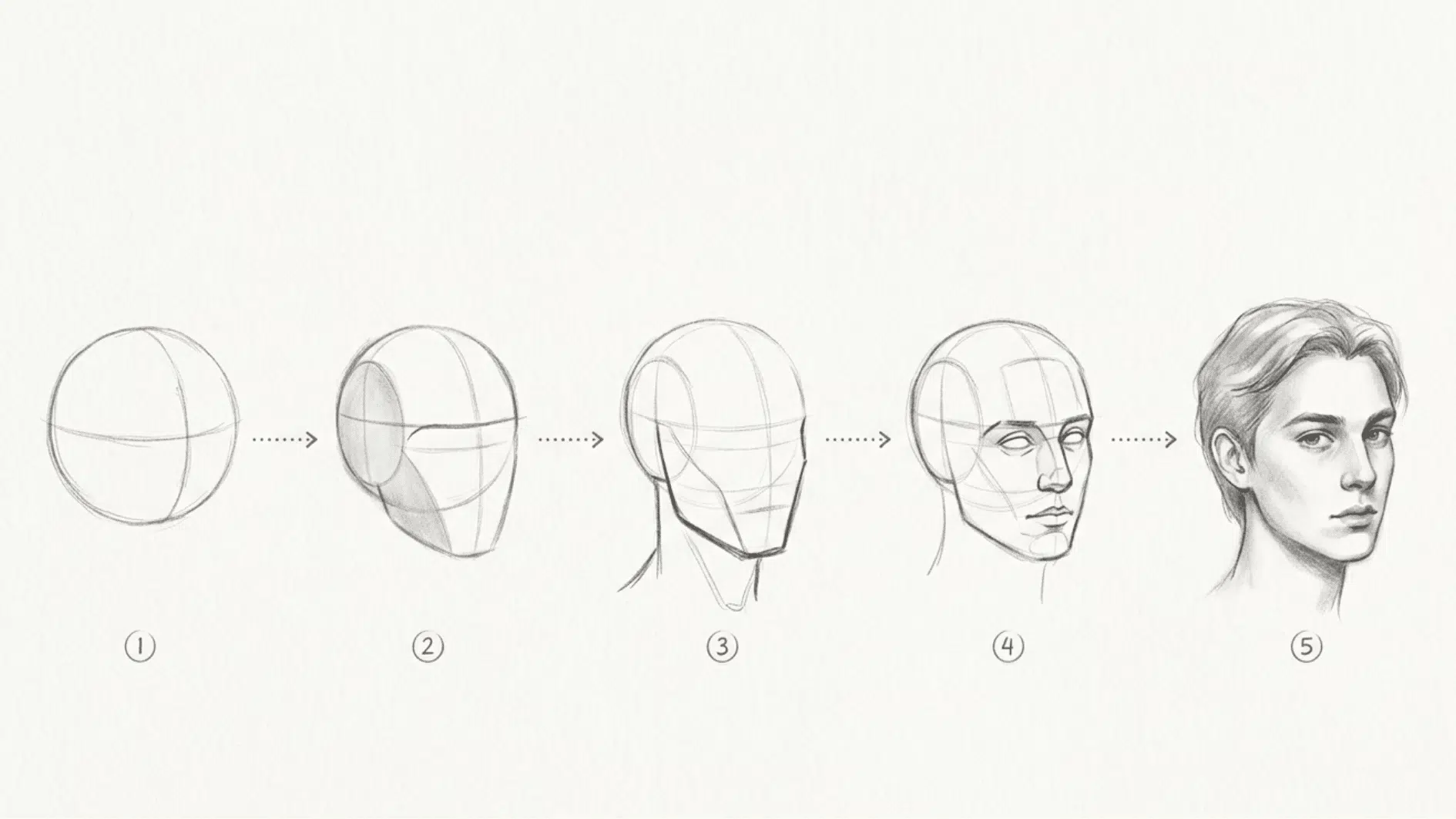
Line, shape, and form are interconnected elements that build drawings and designs. Artists start with lines, then develop shapes and forms to complete their artwork.
| ELEMENT | MEANING | EXAMPLE |
|---|---|---|
| Line | A moving point that creates direction and outlines. | Straight or curved pencil marks |
| Shape | A flat closed area made by connected lines. | Circle, square, triangle |
| Form | A shape with depth and volume that looks three-dimensional. | Sphere, cube, cylinder |
Wrapping It Up
Line in art is more than simple marks on a surface. It helps artists create emotion, movement, depth, and meaning in every piece of artwork.
From soft curves to bold strokes, every line adds creativity and expression to art.
Start practicing different line styles in your own sketches and notice how they change the mood of your art. Every great artwork begins with a single line.