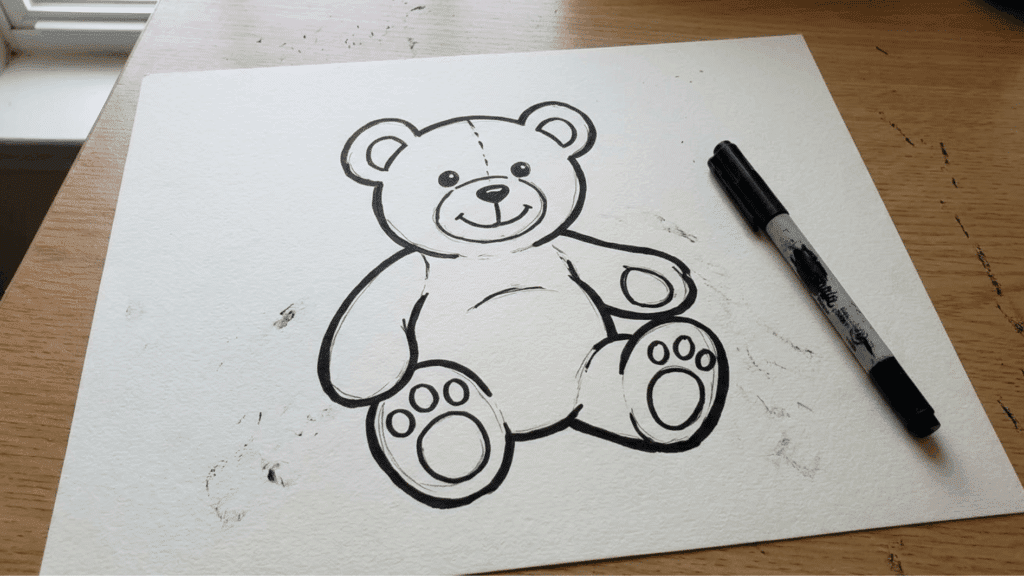
An artist can master proportions, understand values, and still produce artwork that feels stiff, flat, or unfinished, because the issue is often not the shading or the subject itself but the quality of the line work underneath it.
Confident outlines, thoughtful edge control, and purposeful line variation are what give a drawing structure, depth, and visual energy.
This blog includes an outline in art definition, the different types of outline and line techniques in art, explaining how each one works and how to apply them effectively to create stronger, more expressive drawings and paintings.
What Is an Outline in Art Definition?
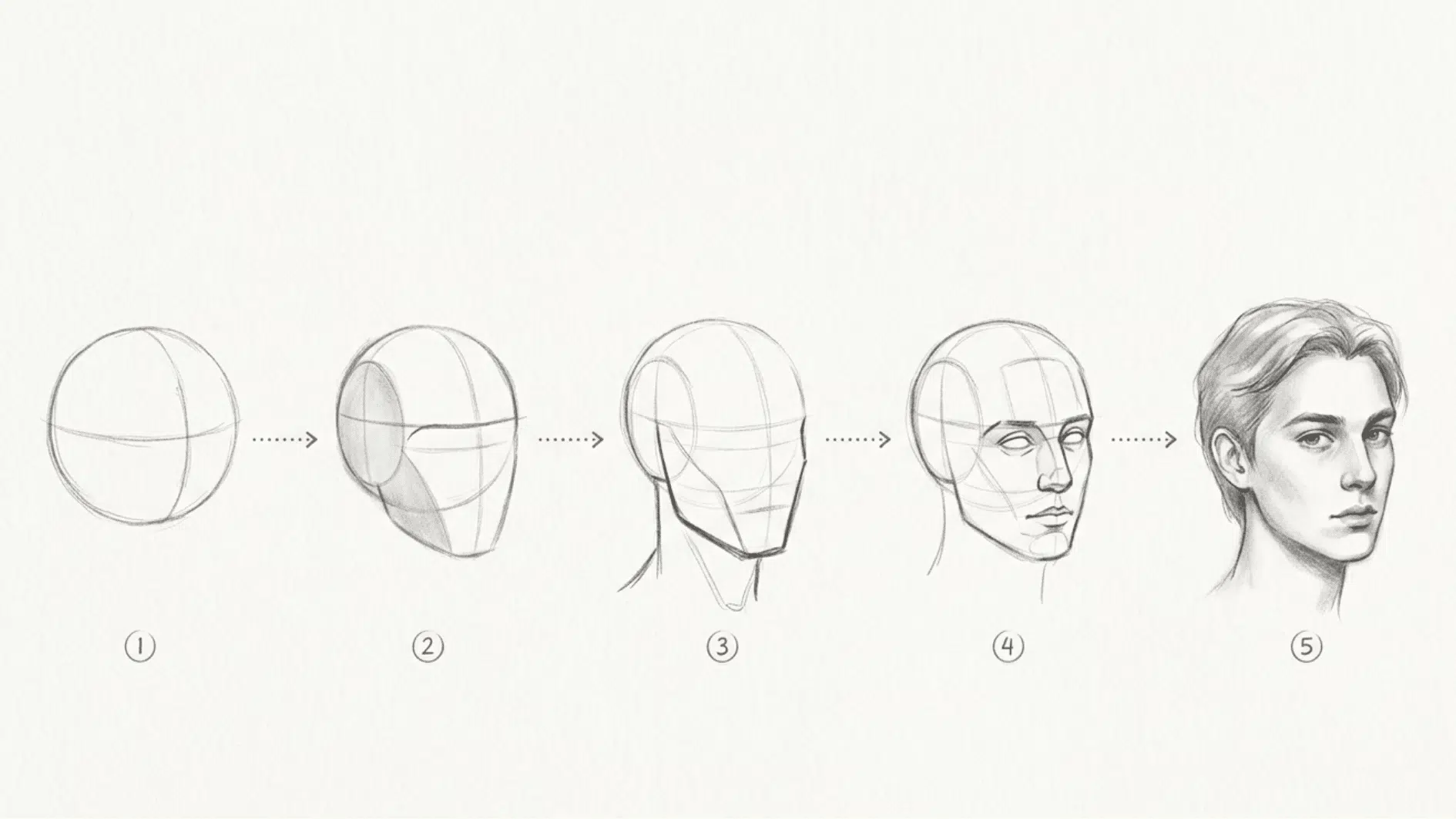
In simple terms, an outline is the skeleton behind a drawing, connecting observation, gesture, and structure so that a subject reads clearly before color, shading, or fine details are added.
It defines the outer edges and essential form of an object, helping artists establish accurate proportions, balance, and visual clarity.
A strong outline provides the foundation for both traditional and digital artwork, making it easier to build depth, add texture, and create expressive compositions with confidence.
Key Characteristics of Outline Definition Art
By emphasizing contours, edges, and line quality, this approach creates artwork that is clean and easy to recognize while serving as the foundation for many traditional and digital art styles.
- Visual Simplicity: Uses clear and minimal lines to communicate the subject without unnecessary details.
- Expressive Movement: Line flow and direction can create energy, emotion, and personality within the artwork.
- Edge Definition: Creates clear separation between objects, shapes, and different areas of a composition.
- Consistency of Style: Maintains a similar approach to line quality and drawing style throughout the artwork.
- Focus and Emphasis: Uses stronger or more noticeable outlines to draw attention to important areas.
- Adaptability Across Styles: Works well in realistic, cartoon, abstract, and graphic art forms.
Principles of Outline in Art
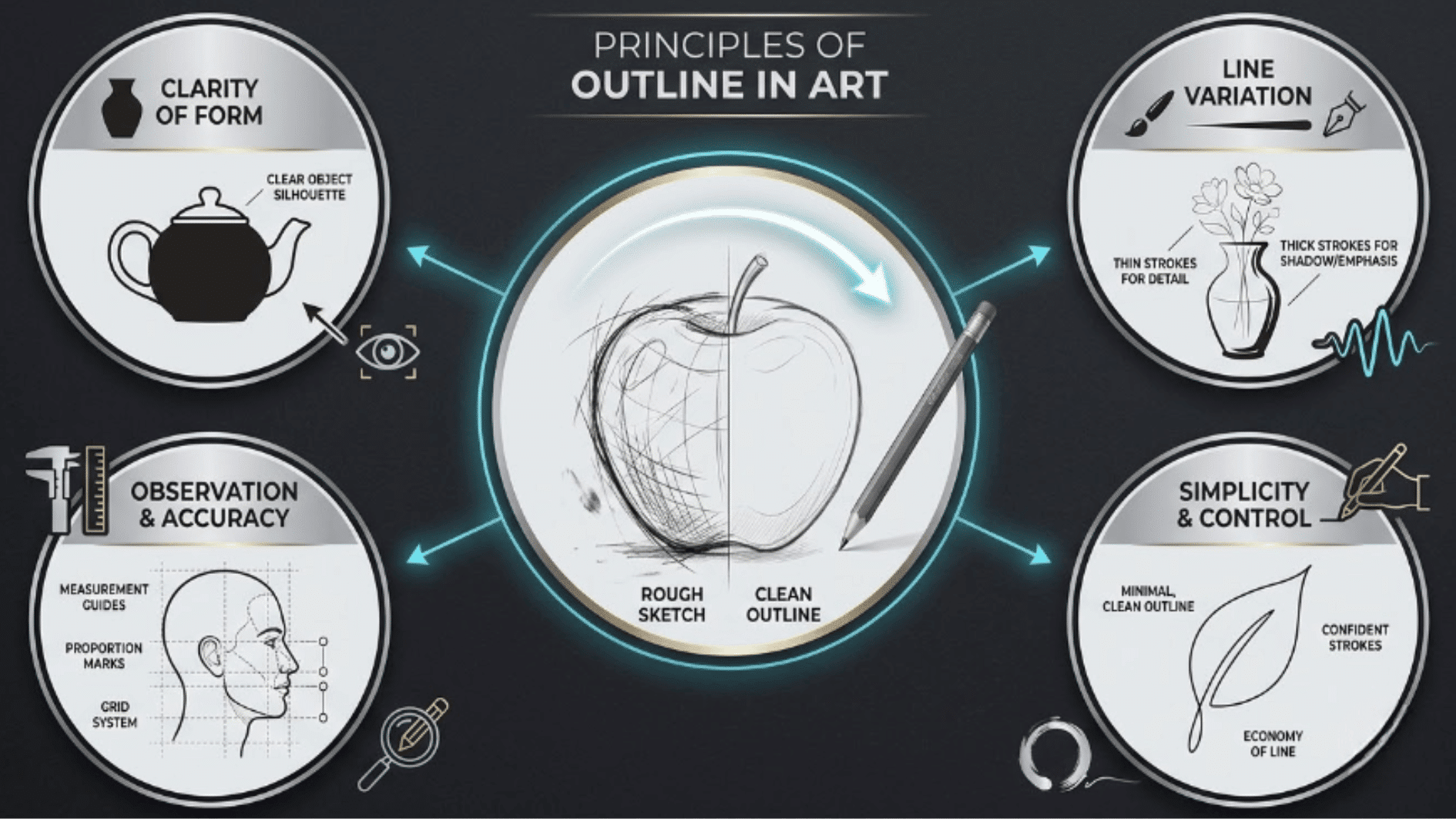
The principles of outline art help artists create clear, balanced, and expressive drawings. These guidelines focus on using lines effectively to define form, add structure, and communicate visual ideas.
Clarity of Form
Outlines should clearly define the shape and structure of an object, helping viewers understand the subject without needing extra details.
Line Variation
Changing line thickness, pressure, and style can add depth, focus, and visual interest to an outline drawing.
Observation and Accuracy
Strong outlines come from carefully observing proportions, curves, and edges rather than simply drawing from memory.
Simplicity and Control
Effective outlines use only the necessary lines to communicate a form while avoiding unnecessary marks that make the artwork look cluttered.
Outline Art Compared with Other Techniques
Outline art is one of the simplest ways to define shapes and forms, but it differs from other techniques that focus on depth, texture, color, or realism. Each method creates a different visual effect and style.
| Technique | Main Focus | How It Differs From Outline Art |
|---|---|---|
| Outline Art | Uses clear lines to define shapes, forms, and details. | Focuses on edges and structure without relying heavily on shading or color. |
| Shading | Uses light and dark tones to create depth and dimension. | Adds realism and volume, while outline art mainly emphasizes shape and boundaries. |
| Sketching | Uses loose, expressive lines to capture ideas and early concepts. | Is often rough and unfinished, while outline art uses cleaner, more defined lines. |
| Color Blocking | Uses large areas of color to create visual impact and contrast. | Focuses on color placement rather than defining objects through drawn boundaries. |
| Painting | Uses colors, textures, and brushwork to create complete visual compositions. | Builds the overall image through color and texture, while outline art relies mainly on line definition. |
Types of Outline With Practical Guidance
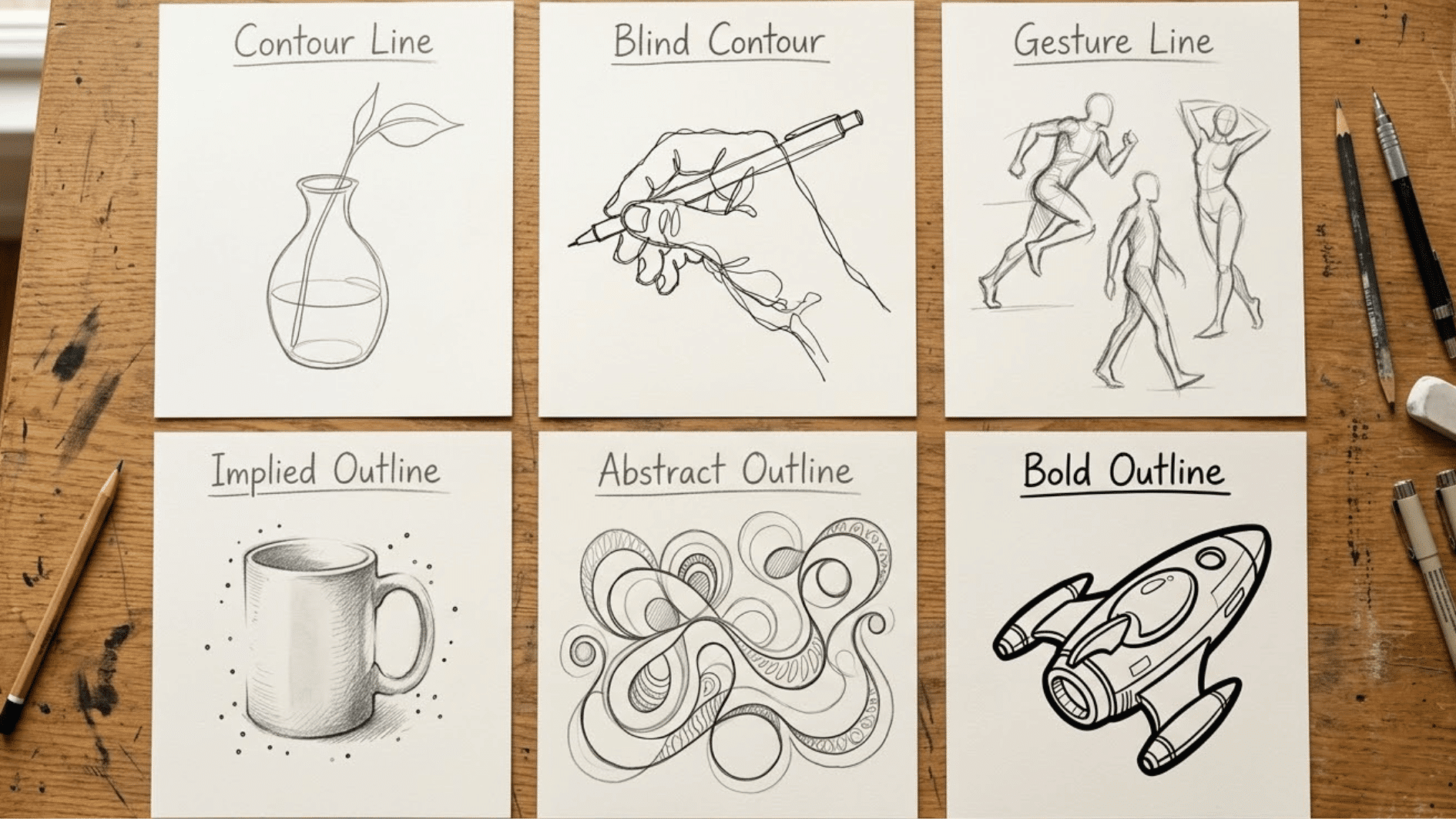
Different outline techniques help artists observe subjects, build form, and create artwork with greater purpose. Learning when to use each technique improves line quality, structure, and depth.
1. Contour Line
A contour line defines the visible edges and curves of a subject, describing its shape and form without relying on shading, and follows the object’s surface to create a clear, recognizable outline.
Practical Guidance: Draw slowly, carefully observing your subject, and use continuous, confident lines to capture its true shape rather than sketching from memory.
2. Blind-Contour Line
Blind-contour drawing involves tracing the edges of a subject without looking at your paper, forcing you to rely entirely on observation rather than memory.
Practical Guidance: Practice with simple objects such as leaves, cups, or hands for 5–10 minutes each day, focusing on moving your eyes and pencil together at a slow, steady pace.
3. Gesture Line
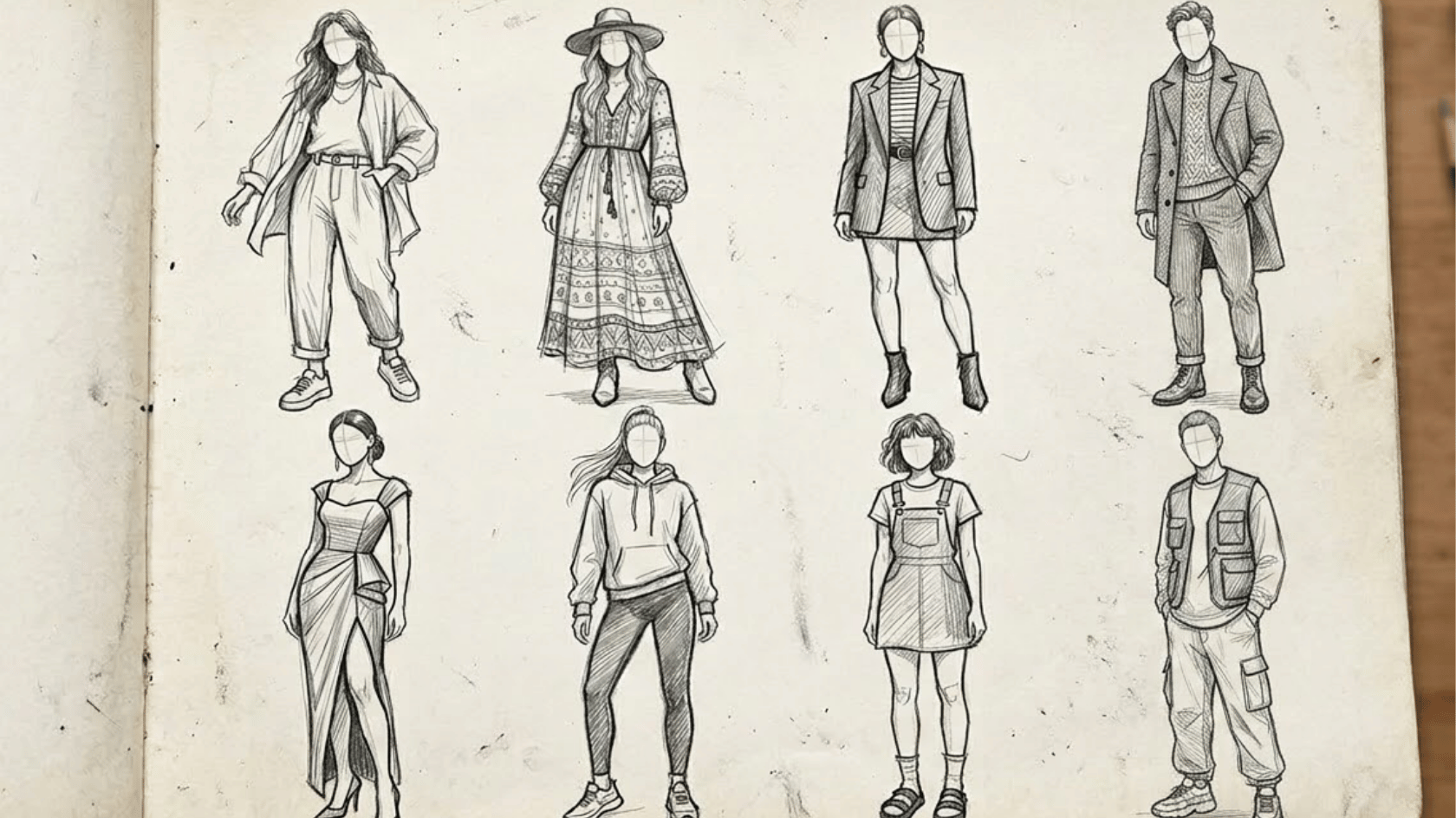
Gesture drawing captures the movement, rhythm, and flow of a subject using quick, energetic lines rather than detailed outlines. If you’re short on subjects to practice with, sketchbook drawing prompts are a good place to pull from.
Practical Guidance: Set a timer for 30 to 60 seconds and sketch moving people, athletes, or animals. Concentrate on the overall action and posture instead of small details.
4. Implied Outline
An implied outline suggests the edge of a subject without drawing a continuous boundary. Instead, the viewer’s eye naturally completes the missing lines using nearby shapes and values.
Practical Guidance: Complete a light pencil sketch first, then slowly ink the final outlines using confident strokes. Avoid repeatedly tracing the same line to keep the artwork clean and professional.
5. Abstract Outline
Abstract outline art uses lines to express ideas, emotions, and movement instead of accurately representing real objects.
Practical Guidance: Start with simple shapes and experiment with flowing lines and balanced compositions to express ideas and emotions rather than realistic details.
6. Bold and Thick Outline Style
Bold and thick outlines use strong, heavy lines to create clear, eye-catching shapes that stand out instantly. These techniques are used in comics, cartoons, graphic novels, and anime.
Practical Guidance: Use thicker lines for the outer silhouette and key focal areas while keeping interior details lighter to create better contrast, depth, and visual impact.
Common Outline Mistakes to Avoid
Avoiding common outline mistakes is just as important as learning proper techniques. Small adjustments in line control, observation, and structure can make drawings appear cleaner and more confident.
- Overworking the Line: Repeatedly tracing the same edge weakens confidence; commit to one deliberate stroke instead.
- Uniform Line Weight: Using the same thickness throughout flattens the drawing; vary pressure to show depth.
- Treating Every Edge as Equally Sharp: Rendering all boundaries with the same hardness removes natural softness; let some edges dissolve.
- Drawing From Memory Instead of Observation: Relying on mental shorthand produces stiff, generic shapes; keep practicing contour drawing.
- Outlining Before Establishing Gesture or Proportion: Jumping to a clean outline too early locks in errors; block in structure first.
Wrapping It Up
Learning outline definition art and mastering outline techniques is essential for creating artwork that feels structured, expressive, and visually engaging if you are practicing gesture sketches.
Contour studies, or detailed illustrations, strong line control form the foundation of every successful drawing. Start with simple exercises, and experiment with different outline and edge techniques.
With consistent practice and careful observation, your outlines will become more confident.
Over time, these consistent habits will improve your observational skills, strengthen your artistic confidence, and help you create more dynamic, balanced, and refined drawings.
Frequently Asked Questions
Do I Need to Learn Blind Contour Drawing if I Want to Do Finished Line Art?
Yes, it helps. blind contour training builds the observation skills that make finished line art more accurate and confident, even though the two look very different as end results.
Why Do My Drawings Look Flat Even When the Outline Is Clean?
This usually happens when every line has the same weight and every edge is equally hard. Adding line-weight variation and softening some edges will add depth almost immediately.
What Materials Can Be Used to Create Outlines in Art?
Artists can create outlines using pencils, pens, markers, charcoal, brushes, or digital drawing tools depending on the style and effect they want.