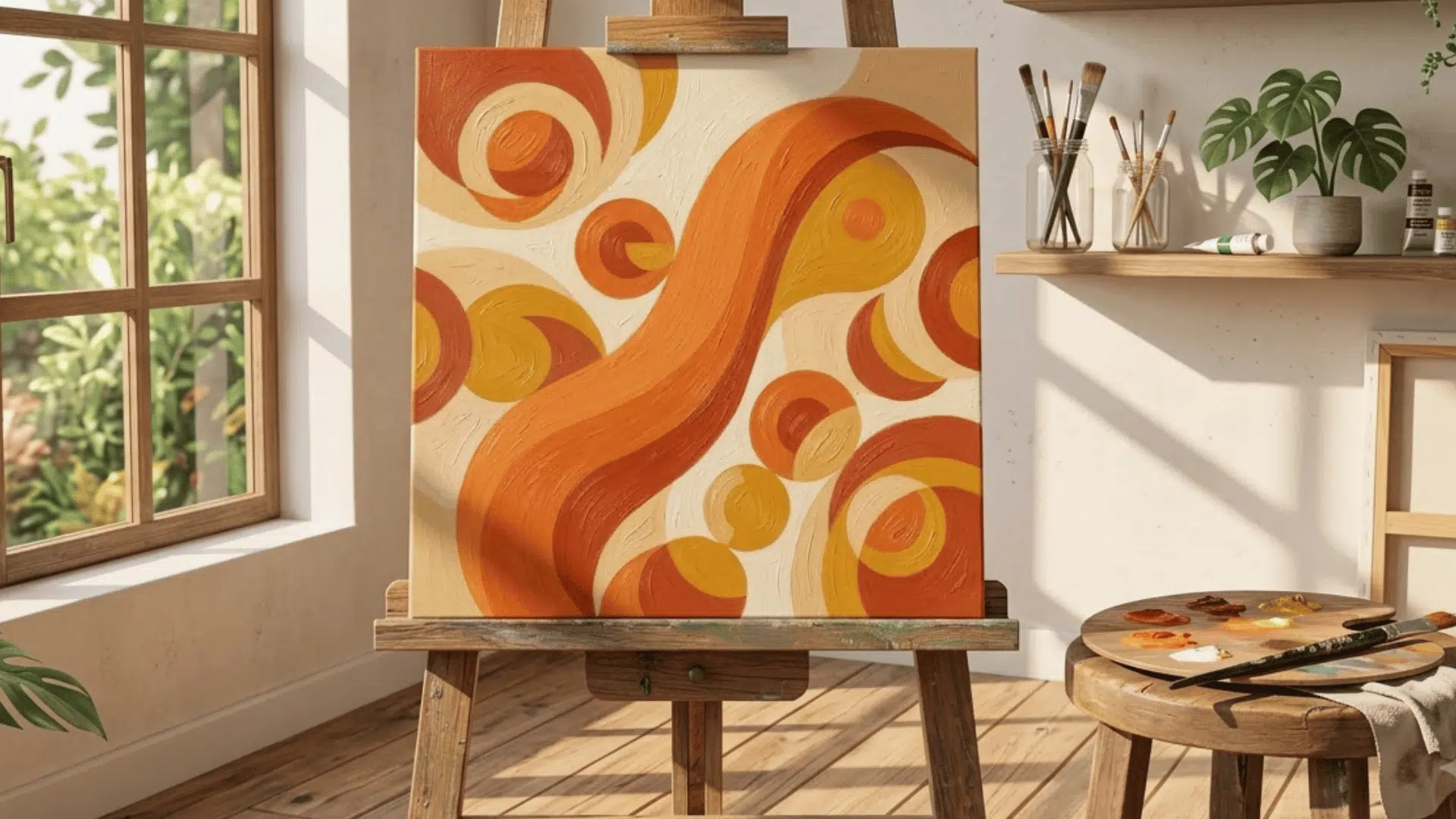
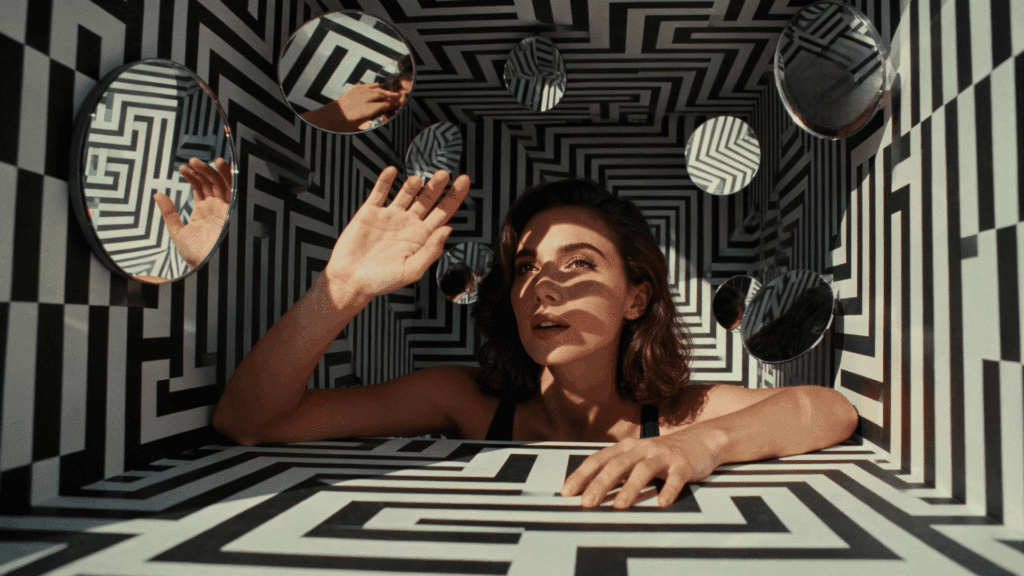
Illusion art pulls viewers into a world where nothing looks quite real. Simple lines, shadows, and shapes can suddenly appear to move, float, or open into deep spaces.
Artists use clever visual tricks to blur the line between reality and illusion, creating mind-bending art that confuses the eyes and keeps viewers questioning what they see.
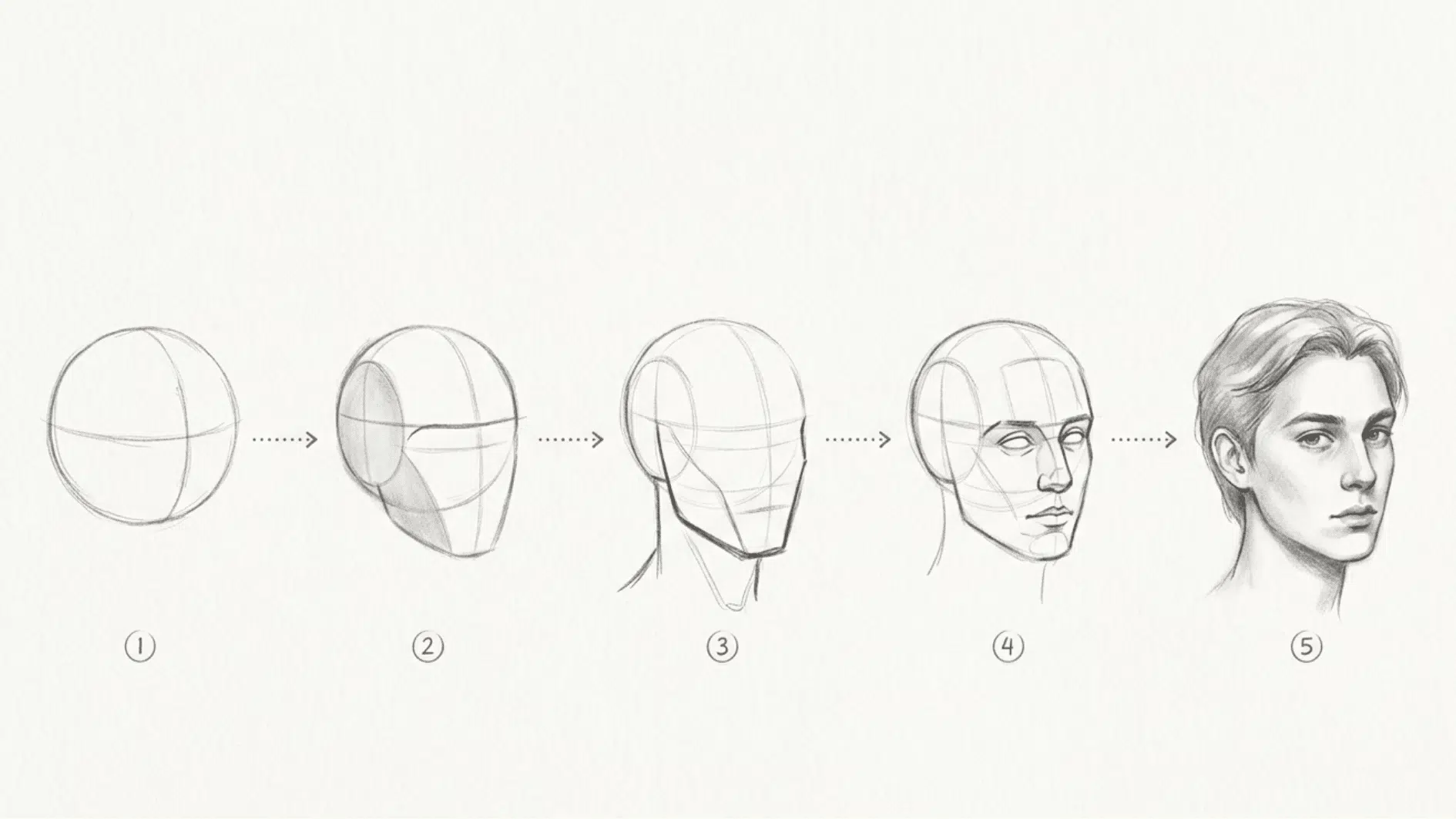
If you want to build the foundation first, starting with basic sketching skills makes the learning curve much gentler.
What Is Illusion Art?
Illusion art, also called Op Art, is a style that tricks the eyes and brain into seeing movement, depth, or hidden shapes.
Artists use perspective, shading, contrast, geometry, light, shadows, and vanishing points to create realistic effects.
Understanding linear perspective in art is especially important here, as it forms the structural backbone of most believable depth illusions.
Popular illusion styles include 3D hole drawings, impossible shapes, floating objects, spiral illusions, and forced perspective art.
These drawings look real because the brain processes visual clues in certain ways. Visual psychology and depth perception help explain why optical illusions can confuse and amaze viewers.
Essential Tools for Creating Illusion Drawings
Creating illusion drawings is easier with the right tools. Beginners can use simple supplies, while digital artists and advanced creators may use specialized tools for greater detail and realism.
| TOOL CATEGORY | RECOMMENDED TOOLS | PURPOSE |
|---|---|---|
| Basic Supplies | Pencils, erasers, rulers, fine liners, sketch paper | Help create clean lines, shading, and accurate shapes |
| Digital Tools | Drawing tablets, Procreate, Adobe Fresco, Infinite Painter | Allow easy editing, layering, and digital illusion effects |
| Advanced Tools | Blending stumps, white gel pens, and perspective grids | Improve depth, highlights, and realistic 3D illusions |
Choosing the right pencils matters more than most beginners realize. Take a look at this breakdown of the best drawing pencils to find the right grades for shading and line work.
Easy Illusion Drawings for Beginners
Illusion drawings are fun beginner projects that create stunning effects with simple techniques. They help new artists practice perspective, shading, and depth, providing quick, satisfying results.
How to Draw a Simple 3D Hole
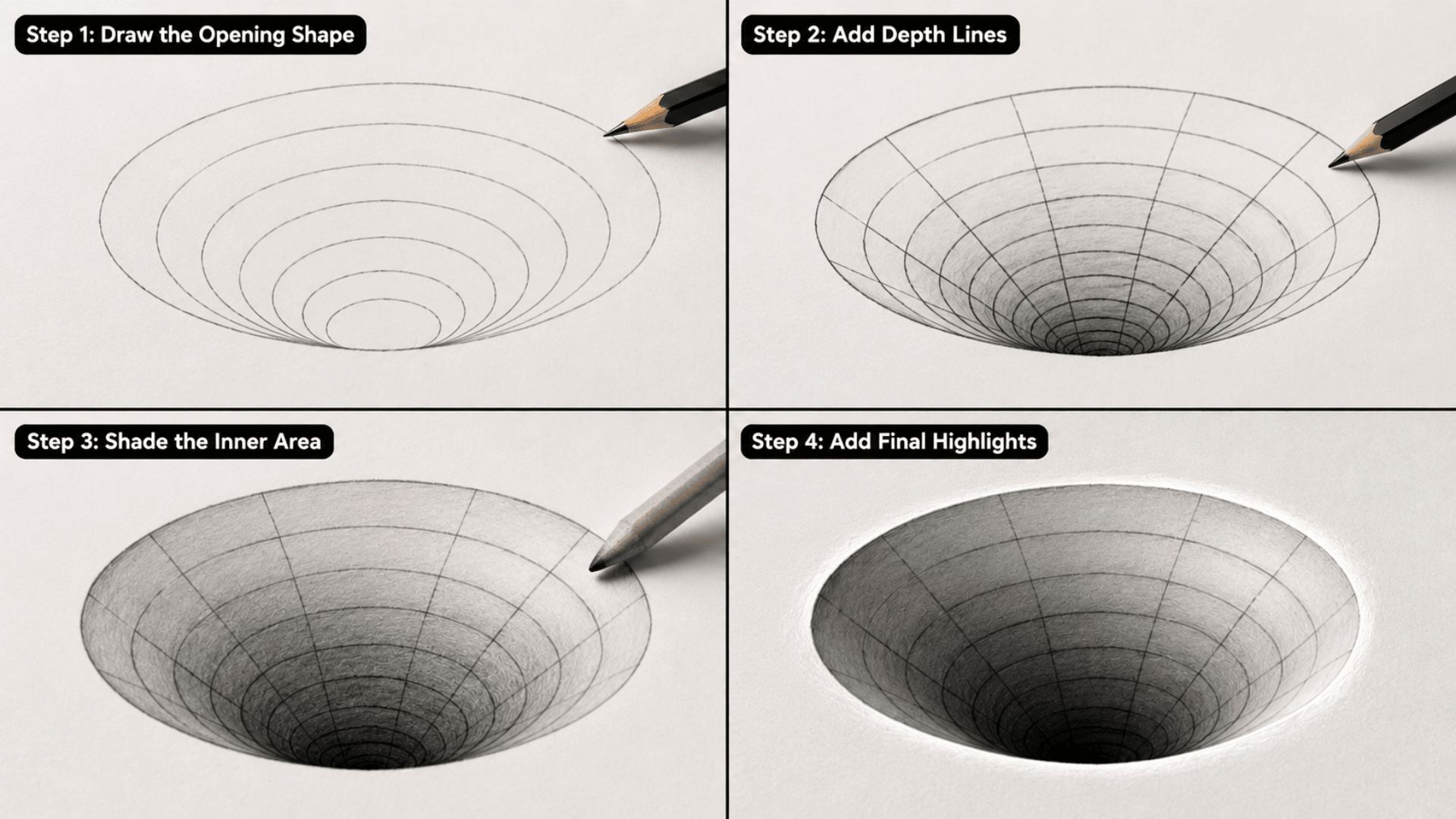
A 3D hole illusion makes the paper look deep and hollow. This drawing mainly uses curved shapes, layering, and smooth shading to trick the eyes.
Step 1: Draw the Opening Shape
Sketch several oval or elliptical shapes inside each other to form the hole. Keep the spacing even so the illusion looks balanced and realistic.
Larger outer shapes and smaller inner shapes help create a strong depth effect. Light sketch lines are useful because you can easily erase and refine the shapes later.
Step 2: Add Depth Lines
Connect the oval edges with short curved lines to create a tunnel effect. These lines help guide the viewer’s eyes toward the center.
Make the lines slightly darker near the middle to increase the illusion of depth. Curved connecting lines also make the drawing appear smoother and more natural.
Step 3: Shade the Inner Area
Darken the center and blend outward to make the hole appear deep. Smooth shading creates a more natural 3D effect.
If you want to get more confident with gradients and blending, these shading techniques for art cover everything from basic hatching to smooth blending stumps.
Step 4: Add Final Highlights
Leave light edges around the top to improve the realistic 3D illusion. Highlights make the drawing appear brighter and more believable.
Small white spaces can create the effect of light hitting the surface. Clean highlights also help separate the hole from the paper background.
How to Draw an Impossible Triangle
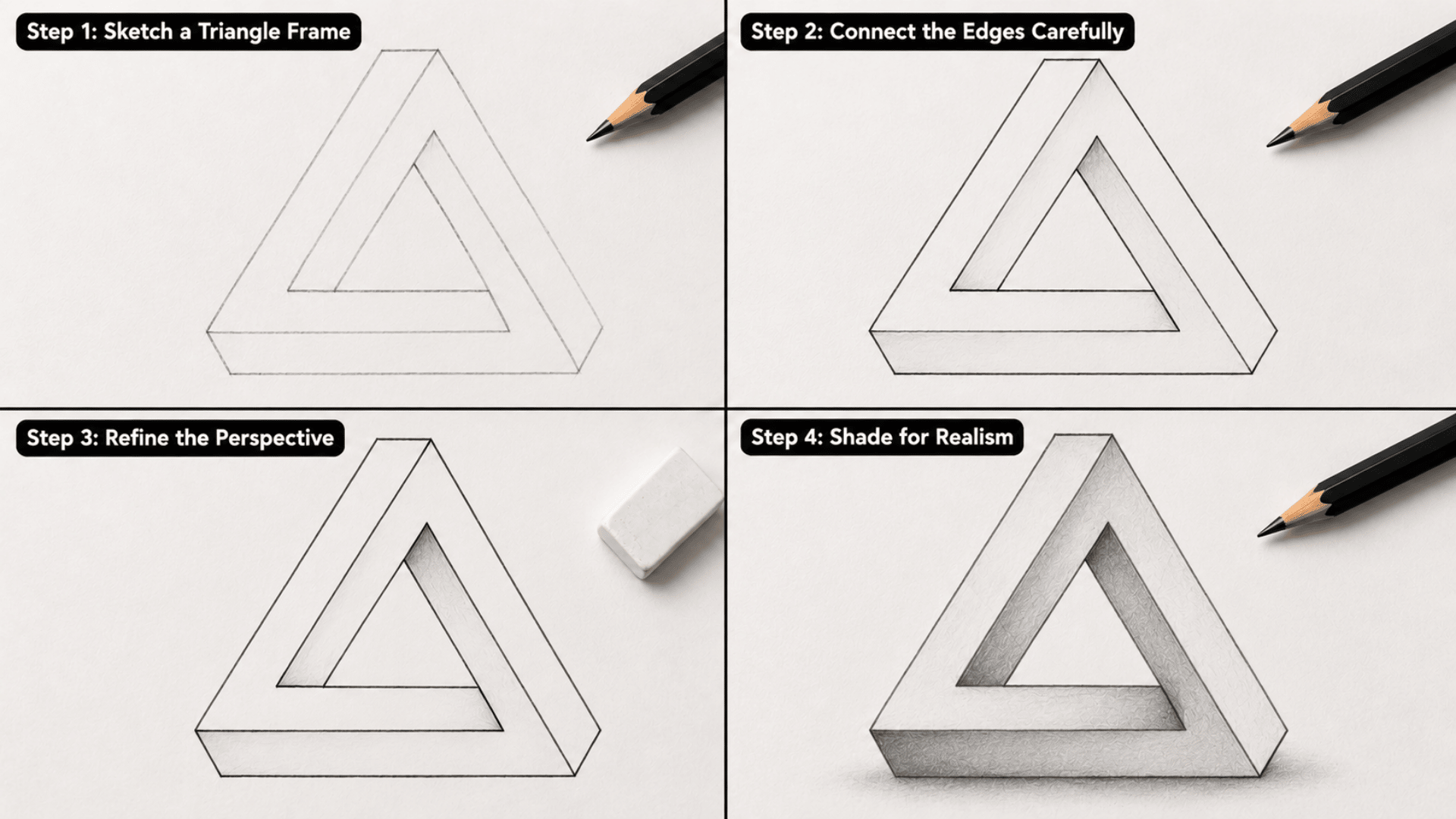
The impossible triangle is a famous illusion that appears real at first glance but cannot exist in the real world. It works by using smart angles and perspective tricks.
Step 1: Sketch a Triangle Frame
Draw a basic triangle with thick bar-like sides. Use light pencil strokes so corrections are easier later. Keep the bars evenly sized to make the illusion cleaner and more convincing.
Straight and balanced edges are important for creating a believable impossible shape.
Step 2: Connect the Edges Carefully
Adjust the corners so the bars appear connected in an impossible way. Small changes in alignment can greatly improve the illusion.
Focus on making each side appear continuous from the viewer’s perspective. Even tiny mistakes in the connections can break the illusion effect.
Step 3: Refine the Perspective
Clean the angles and erase overlapping lines to strengthen the illusion. Sharp edges help the shape look more solid and confusing.
Proper perspective makes the impossible design appear believable at first glance. Careful line work also gives the drawing a more polished appearance.
Step 4: Shade for Realism
Add light shading along the edges to make the shape look solid. Shadows also help separate the different sides of the triangle.
Consistent lighting improves the overall 3D appearance of the drawing. Darker shading near corners can make the structure appear more realistic.
How to Create a Floating Cube Illusion
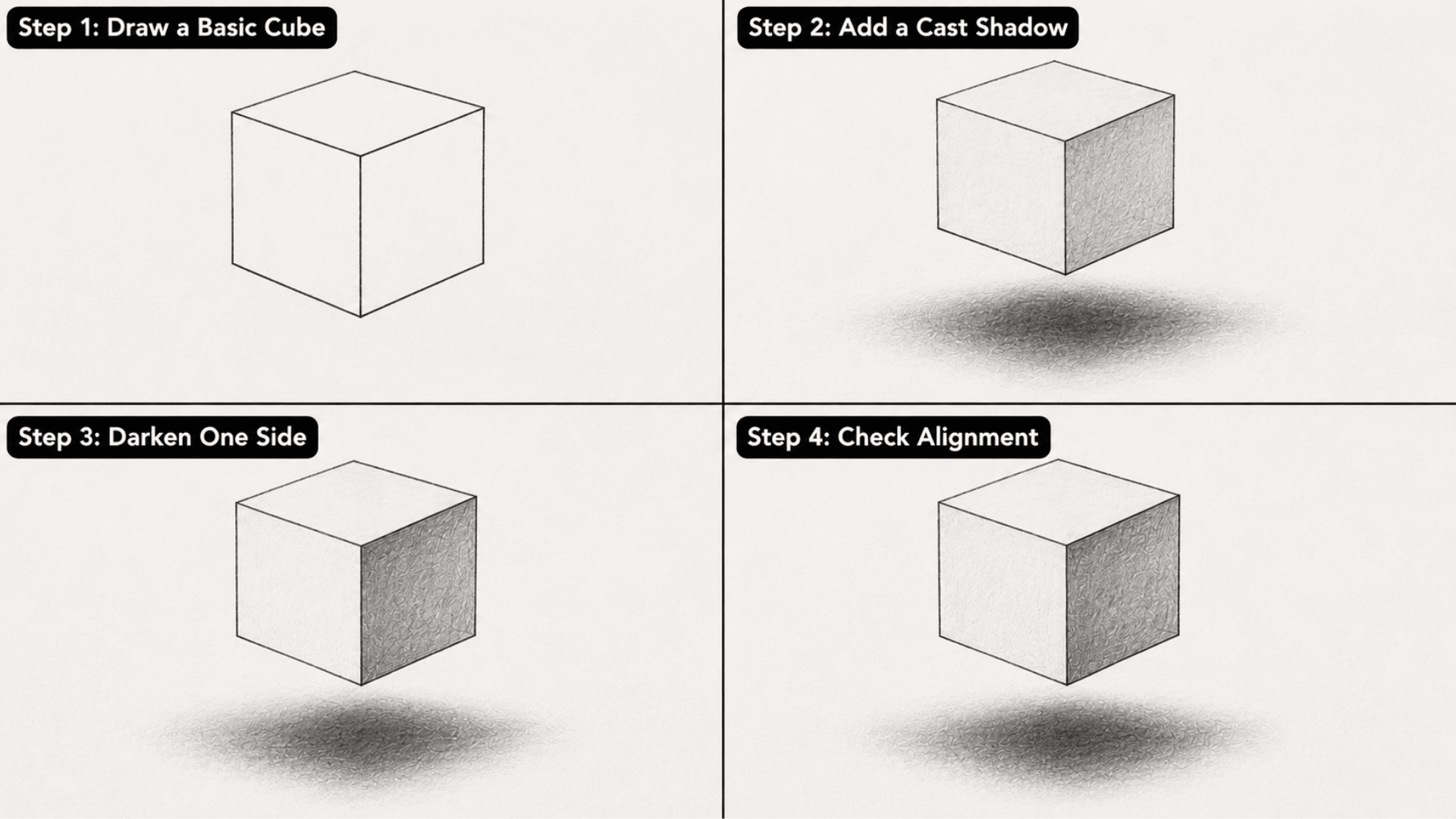
A floating cube illusion makes a cube appear to hover above the paper. Proper shadow placement and alignment are the keys to this effect.
Step 1: Draw a Basic Cube
Sketch a neat cube using a ruler for straight and balanced lines. Accurate proportions make the illusion more convincing.
Try to keep all cube edges clean and evenly connected. A carefully drawn cube creates a stronger foundation for the floating effect.
Step 2: Add a Cast Shadow
Draw a shadow below the cube to create a floating appearance. Keep the shadow soft and slightly stretched for realism.
The farther the shadow sits from the cube, the higher the cube will appear. Smooth shading inside the shadow helps make the illusion look more natural.
Step 3: Darken One Side
Shade one cube face darker to improve depth and lighting. This helps the cube look more three-dimensional.
Smooth blending between the light and dark sides creates a stronger illusion. Consistent light direction is important for maintaining realism in the drawing.
Step 4: Check Alignment
Avoid uneven lines or misplaced shadows because they weaken the illusion. Clean finishing details make the drawing look more professional.
Erasing extra sketch marks will also improve the final appearance. Reviewing the cube from different angles can help spot small perspective mistakes.
Popular Types of Illusion Art You Should Try
Illusion art comes in many creative styles that challenge the eyes and brain. From geometric patterns to realistic 3D effects, these popular illusion techniques are fun for beginners and advanced artists to explore.
| ILLUSION ART TYPE | POPULAR EXAMPLES | MAIN EFFECT |
|---|---|---|
| Op Art Patterns | Wavy grids, checker distortions, spiral illusions | Creates movement and visual confusion |
| Anamorphic Drawings | Side-angle illusions, street art designs | Looks correct only from certain angles |
| Hyper-Realistic 3D Art | Floating objects, cracked paper, water drops | Makes drawings appear real and touchable |
| Face and Body Illusion Art | Makeup illusions, camouflage painting, and surreal body art | Blends human features into creative visual tricks |
If you’re drawn to the hyper-realistic end of things, looking at what 3D art really is gives great context for understanding how depth and dimension work across different media.
Common Mistakes to Avoid in Illusion Drawings
Even small mistakes can weaken an illusion drawing, making the effect look unrealistic. Learning these common problems helps beginners create cleaner, more believable, and visually impressive illusion art.
- Incorrect perspective angles can make the illusion appear flat or unrealistic, rather than creating believable depth.
- Weak or misplaced shadows diminish the 3D effect, making objects appear disconnected from the surface.
- Overcomplicated designs often confuse beginners and lead to messy drawings with poor structure.
- Ignoring light source consistency creates uneven shading that breaks the realism of the illusion.
- Rushing details and skipping clean line work can weaken the overall visual impact of the artwork.
Famous Illusion Artists to Inspire Your Work
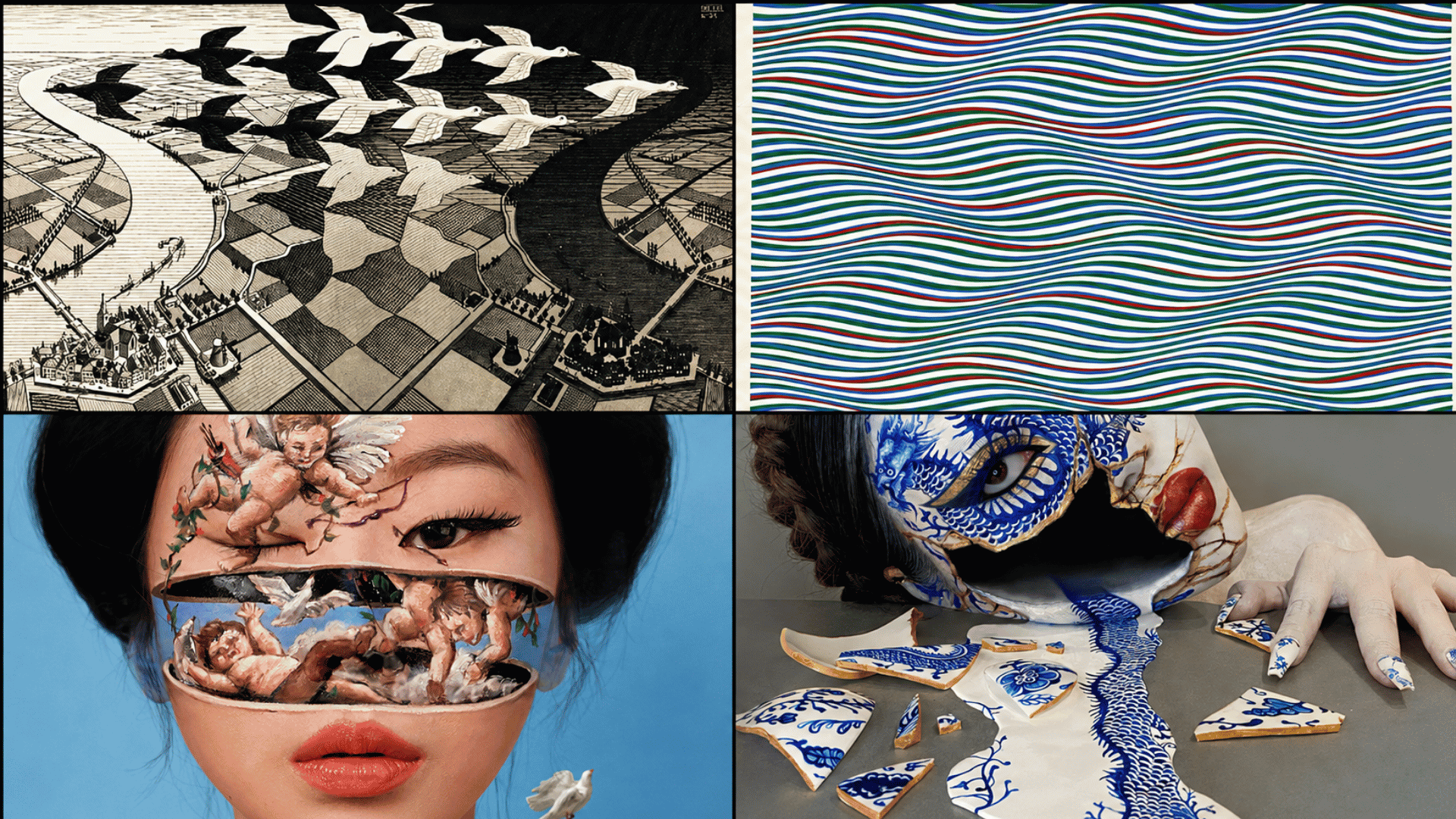
Many illusion artists have changed the art world with creative designs that challenge human perception. Their work inspires beginners and professionals to experiment with perspective, realism, and optical tricks.
M.C. Escher
M.C. Escher gained fame for impossible architecture and endless staircases that trick the brain. His detailed geometric art is still one of the most recognized illusions today.
He used mathematical precision and repeating patterns to create seemingly impossible scenes, and his love of interlocking shapes is the direct ancestor of modern tessellation art. Many modern illusion artists study his techniques to understand perspective and visual confusion.
Bridget Riley
Bridget Riley is known as a pioneer of Op Art and optical pattern design. Her black-and-white wave patterns create movement and visual vibration through simple shapes and repetition.
Riley’s artwork often makes viewers feel as if the images are shifting or moving on the page. Her bold use of lines, contrast, and rhythm helped popularize modern optical illusion art around the world.
For a deeper look at how repetition and pattern function as a visual tool, the MoMA collection on Op Art is a great reference point.
Contemporary Viral Illusion Artists
Modern illusion artists like Feng Dengyu, Dain Yoon, and Mimi Choi create social-media-friendly artworks using makeup, realism, and surreal visual effects.
Their illusion art blends human features with realistic visual tricks, quickly attracting attention online.
Benefits of Practicing Illusion Art
Practicing illusion art helps artists develop both technical drawing skills and creative thinking. It also improves focus and teaches how the human brain reacts to shapes, light, and visual depth.
- Improves perspective skills by teaching artists how to create realistic depth and dimension.
- Boosts creativity and focus because illusion drawings require careful planning and attention to detail.
- Enhances observation skills by helping artists notice light, shadows, angles, and object placement.
- Helps artists understand visual perception and how the brain interprets optical illusions.
Best Resources to Learn Illusion Drawings Online
Learning illusion drawing is easier today because many online resources offer step-by-step visual guidance. Video tutorials, art communities, and drawing books help beginners improve perspective, shading, and realistic illusion techniques.
| LEARNING RESOURCE | EXAMPLES | BENEFITS |
|---|---|---|
| YouTube Channels | Circle Line Art School, beginner 3D tutorials | Easy visual demonstrations and step-by-step lessons |
| Online Courses & Communities | Skillshare, Udemy, Reddit art groups | Structured learning and artist feedback |
| Books for Illusion Art | Optical illusion sketchbooks, perspective drawing books | Improve drawing fundamentals and creative techniques |
Wrapping It Up
Illusion art is more than creative drawing because it changes the way people see shapes, depth, and reality.
Regular practice helps create impressive illusion art using perspective, shading, and simple techniques. Mastering the core drawing elements will sharpen your ability to construct convincing illusions.
Start with simple illusion sketches and progress to advanced styles as skills improve. Experiment more to surprise viewers and realize impossible ideas. Grab your tools and create mind-bending art.