Art fundamentals are the hidden framework behind all artworks. They seem simple, almost invisible, but they shape depth, movement, balance, and realism in ways many beginners overlook.
The more artists study fundamentals, the better they understand why some art feels alive while others are flat.
Beneath every confident sketch lies a deeper understanding waiting to be discovered through careful observation and consistent practice.
What Are Art Fundamentals?
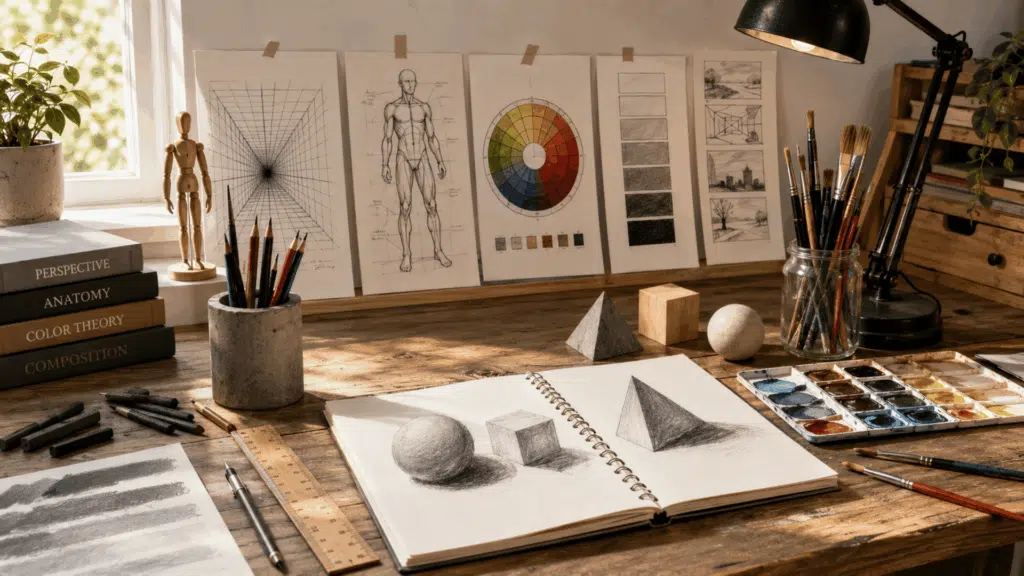
Fundamentals of art are the core building blocks every artist needs to create strong, believable work. They include form, perspective, anatomy, value, lighting, composition, color theory, and gesture.
These skills are not just for beginners. Professional artists practice them throughout their entire careers. Fundamentals are different from style.
Style is personal, but fundamentals are the structure underneath it. Without them, even the most creative ideas fall flat on the page.
The Best Order to Learn Art Fundamentals
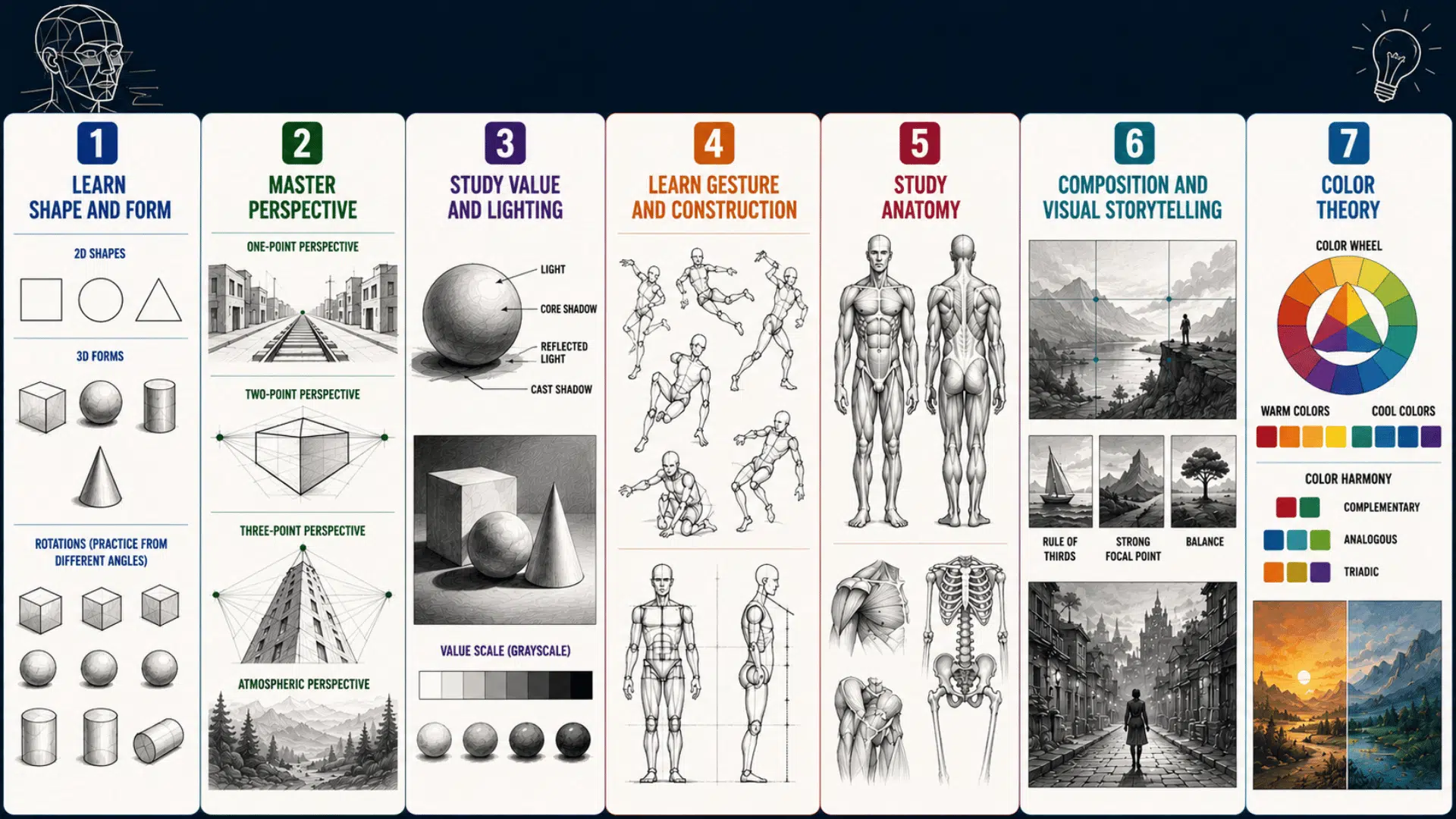
Learning fundamentals in the right order saves you years of frustration and builds each skill on top of the last.
Step 1: Learn Shape and Form
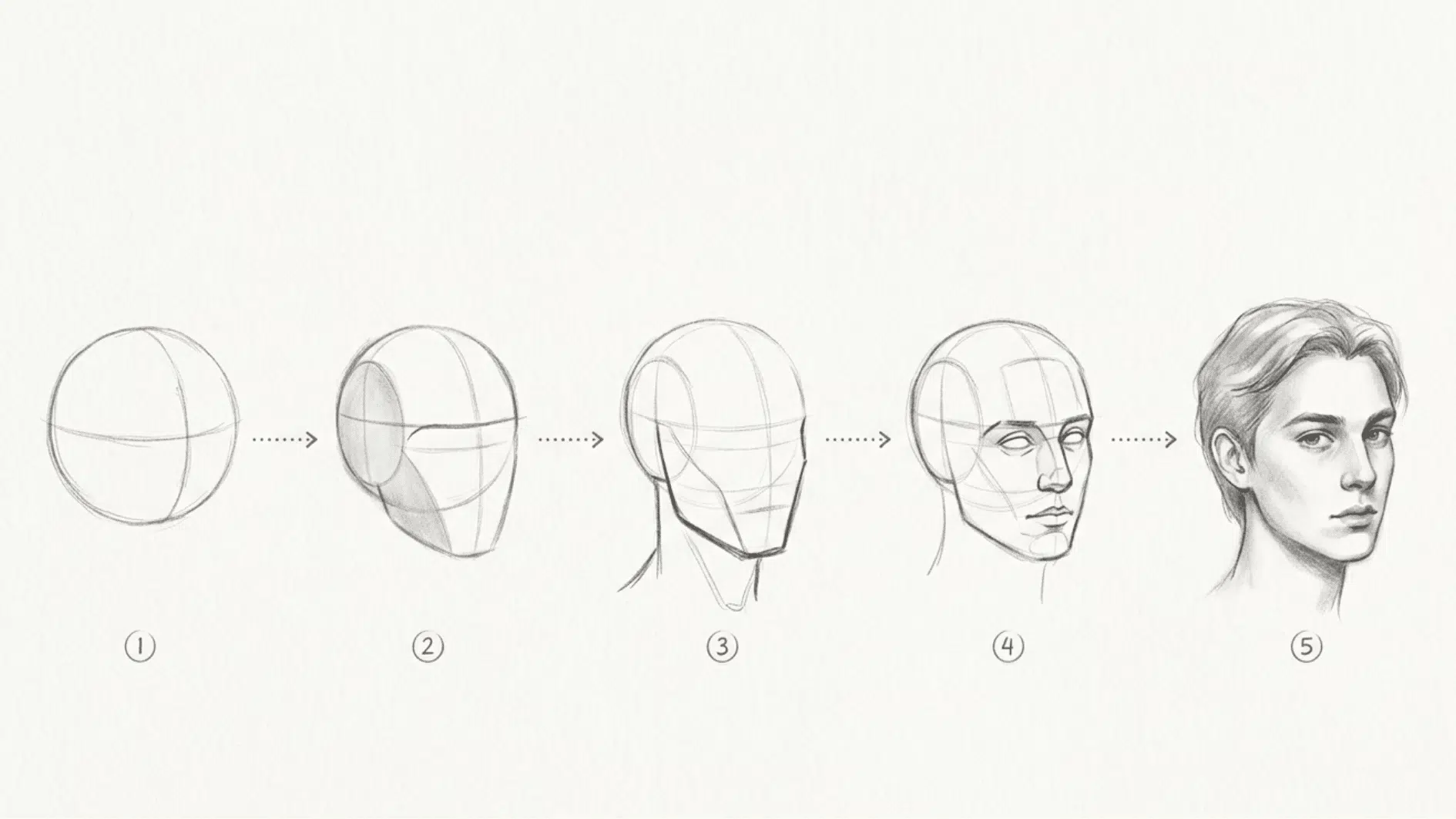
Start with 2D shapes and 3D forms like cubes, spheres, and cylinders. Every object you will ever draw is built from these basic forms.
Practice drawing these shapes from different angles until you can construct them from memory without a reference.
Step 2: Master Perspective
Perspective teaches you how objects exist in space. Learn one-point, two-point, and three-point perspectives, along with atmospheric perspective, to make your drawings feel real.
Even simple perspective exercises done daily will dramatically improve how you place objects in a scene.
Step 3: Study Value and Lighting
Value is the range from light to dark. Understanding light sources, core shadows, reflected light, and cast shadows adds depth and dimension to your work.
Many artists work only in grayscale at first to fully master value before introducing color.
Step 4: Learn Gesture and Construction
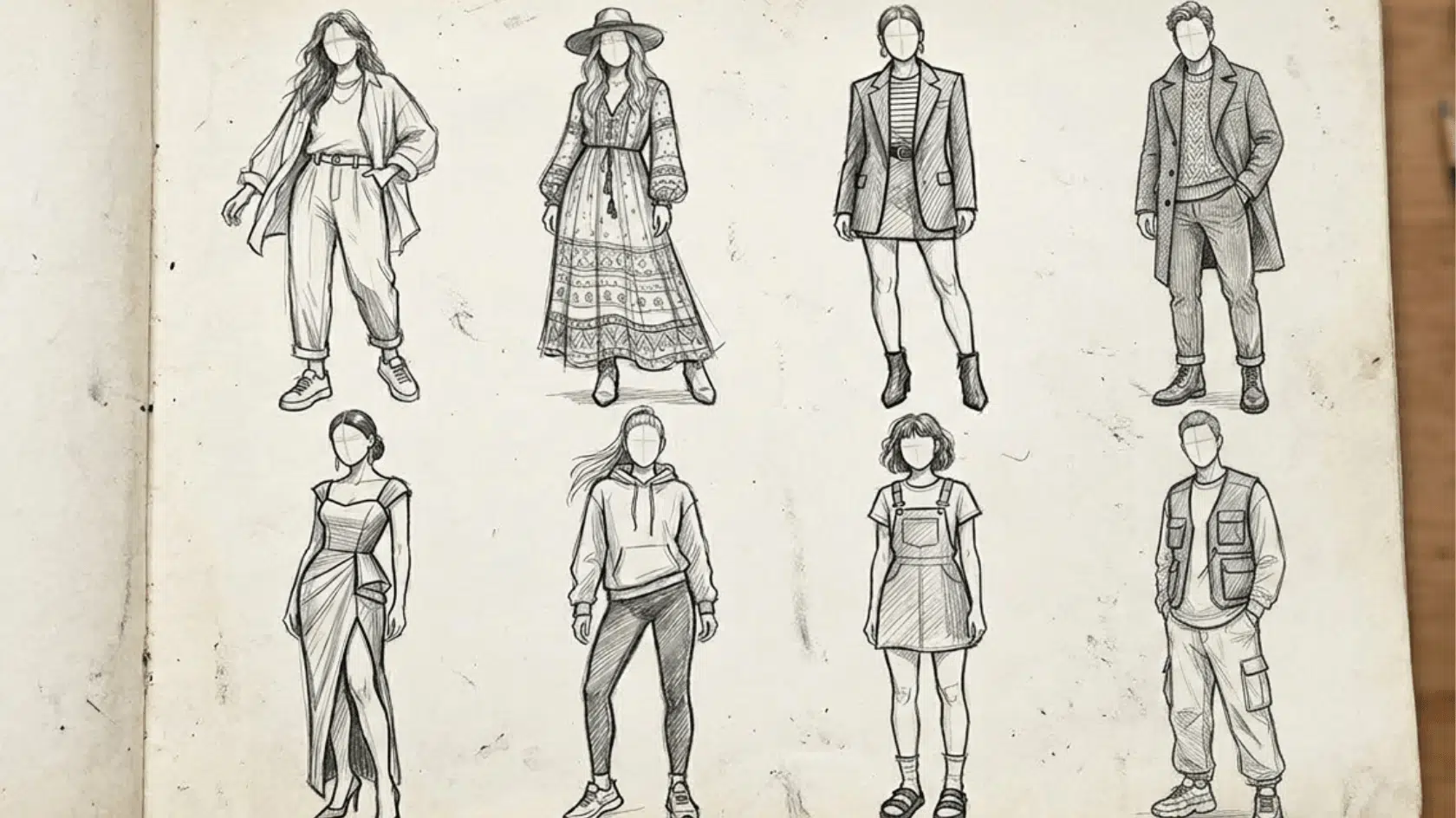
Gesture captures movement and flow in a figure. It helps you pose characters dynamically before adding any detail or structure.
Spending just ten minutes a day on quick gesture sketches will loosen your hand and sharpen your eye faster than almost anything else.
Step 5: Study Anatomy
Once you understand gesture, anatomy adds accuracy. Focus on major muscle groups, skeletal landmarks, and human proportions to draw convincing figures.
You do not need to memorize every muscle, but knowing how the body is structured will make every figure you draw feel more grounded and believable.
Step 6: Composition and Visual Storytelling
Composition controls where the viewer looks. Use the rule of thirds, strong focal points, and balance to guide the eye through your artwork.
A well-composed piece can make even a simple subject feel powerful and intentional.
Step 7: Color Theory
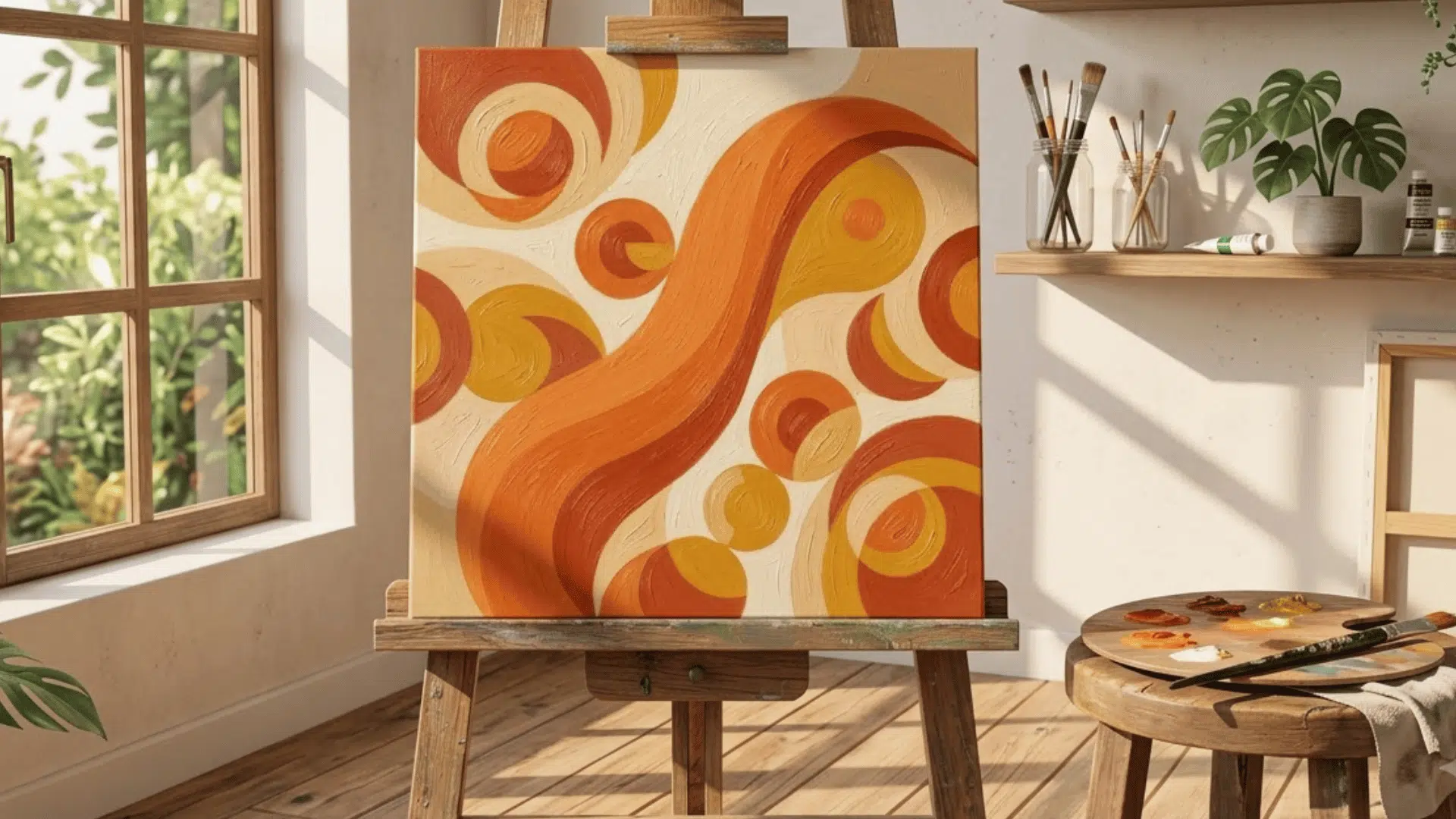
Color is the final layer. Learn warm and cool colors, color harmony, and how saturation affects the mood of your entire piece.
Understanding color relationships will help you make deliberate choices rather than guess which colors work well together.
Drawing Fundamentals Every Beginner Should Practice Daily
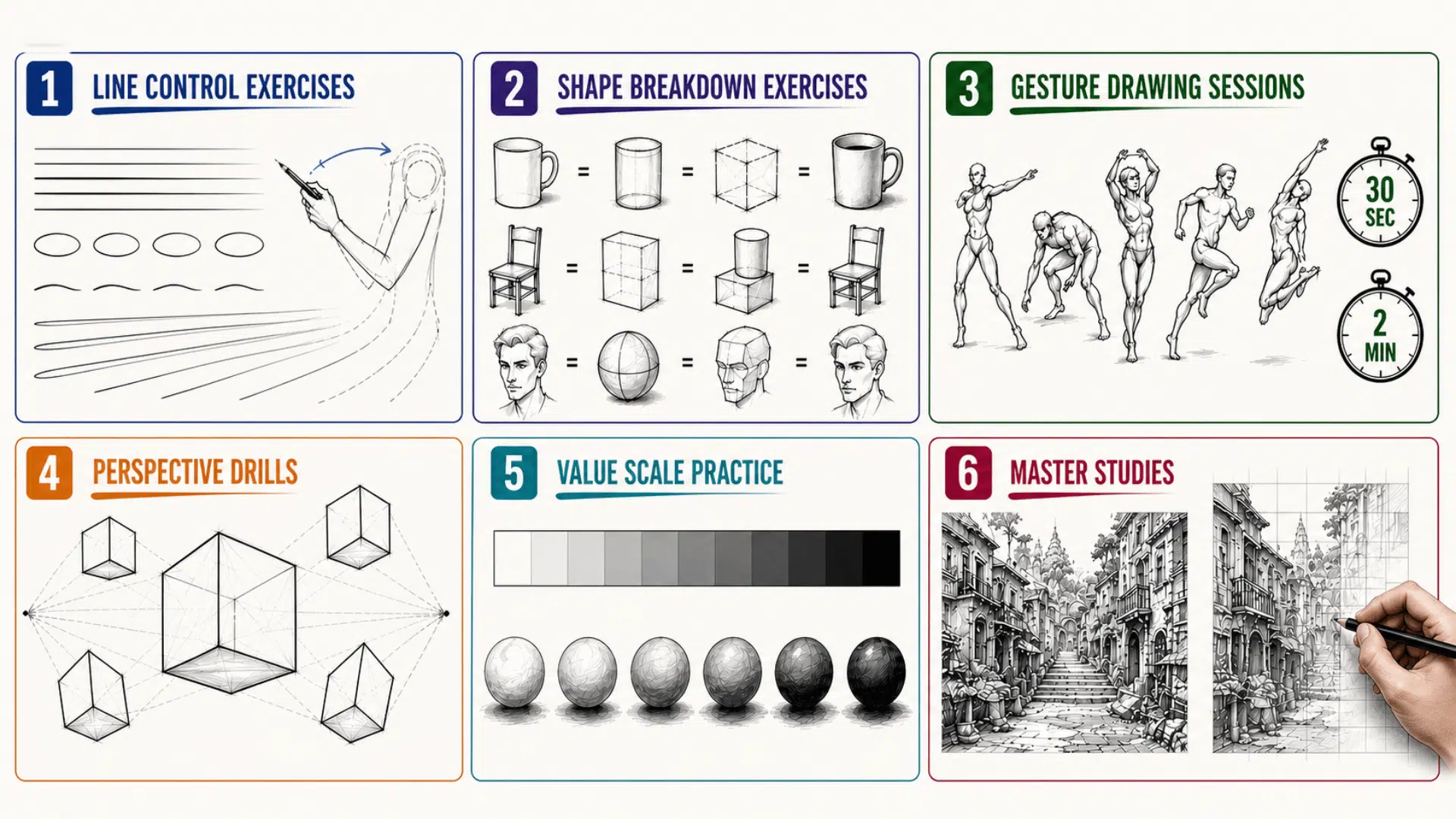
Building strong drawing habits early lays a foundation that supports every style and subject you will ever encounter.
1. Line Control Exercises
Line control is the first thing every beginner should train. Practice drawing straight lines, smooth ellipses, and ghosted lines by moving from your shoulder rather than your wrist.
Consistency here builds the muscle memory that makes every future drawing feel more controlled and intentional.
2. Shape Breakdown Exercises
Train your eye to see any object as a collection of simple forms. Break down everyday items like cups, furniture, and faces into cubes, cylinders, and spheres before drawing them.
This habit makes complex subjects far less overwhelming and gives your drawings a solid three-dimensional foundation from the very first sketch.
3. Gesture Drawing Sessions
Gesture drawing trains your hand and eye to work quickly and confidently. Practice 30-second and 2-minute timed poses to capture a figure’s energy and flow without overthinking the details.
Sites like Line of Action and SetchDaily give you an unlimited supply of references to work from every day.
4. Perspective Drills
Draw boxes floating in space, then rotate and tilt them in every direction you can think of. This simple drill builds a strong intuitive understanding of how forms exist in three-dimensional space.
Once rotating a box feels easy, placing any object or environment in perspective becomes significantly more natural.
5. Value Scale Practice
Create smooth gradients from pure white to deep black using pencil, pen, or digital tools. Focus on keeping transitions even and learning how contrast separates objects from their backgrounds.
Strong value control is one of the fastest ways to make your drawings look more polished and professional.
6. Master Studies
Pick a drawing from an artist you admire and recreate it as closely as you can. This exercise forces you to slow down and truly analyze decisions around line weight, value, and composition.
Over time, studying masters like Kim Jung Gi or Andrew Loomis will quietly influence and elevate your own personal style.
Essential Drawing Fundamentals to Build Stronger Art Skills
Drawing fundamentals focus on practical skills like gesture, contour, construction, and understanding form.
These skills help artists create stronger sketches before adding paint, color, or digital effects. If you feel stuck, focus on the areas where your drawings look weakest instead of practicing everything at once.
Try simple daily exercises like gesture sketches, drawing basic 3D forms, contour studies, perspective boxes, and light-shadow shading practice. Consistent, focused practice leads to steady improvement over time.
How to Practice Art Fundamentals Effectively
Improving the fundamentals of art needs consistent, focused practice, not random daily drawing. A structured routine helps beginners develop skills faster and prevents burnout and frustration.
- Follow a weekly study plan focused on specific fundamentals each day.
- Practice timed gesture drawings from 10 seconds to 5 minutes regularly.
- Copy master studies and draw from life to improve observation skills.
- Use beginner-friendly resources like Drawabox, Proko, Line of Action, and Ctrl+Paint.
- Digital tools can speed up learning, but fundamentals matter more than software features.
Art Fundamentals for Different Paths
The fundamentals of art remain crucial regardless of your artistic type. The key difference lies in how deeply and quickly you study them, depending on your goals and experience.
| ARTIST TYPE | RECOMMENDED FOCUS |
|---|---|
| Complete beginners | Start with mark-making, shapes, and basic 3D forms |
| Self-taught artists feeling stuck | Use self-assessment to identify weak fundamentals |
| Digital artists | Learn the same core fundamentals used in traditional art |
| Hobby artists | Practice slowly and focus on enjoyment and consistency |
| Career-focused artists | Study fundamentals deeply with structured daily practice |
Common Mistakes Beginners Make When Learning Art Fundamentals
Many beginners slow their progress by skipping fundamentals and rushing results. Strong drawing skills come from understanding form, structure, perspective, and regular practice.
- Jumping into style too early without learning fundamentals first.
- Avoiding perspective practice because it feels difficult and technical.
- Copying drawings without understanding construction and form.
- Studying anatomy without learning three-dimensional shapes.
- Practicing randomly instead of following structured deliberate practice.
Wrapping It Up
Mastering the fundamentals of art is not about becoming perfect overnight, but about building skills that support every piece of artwork you create in the future.
Each session gradually improves your understanding of form, perspective, light, and movement.
Whether creating art traditionally or digitally, mastering fundamentals boosts confidence and expression. Start small, stay consistent, and focus on continual improvement. Top artists always practice the basics.