There’s something enduring about a spooky old mansion, and that’s exactly why a haunted house drawing never goes out of style, even if you are sketching for Halloween fun or building your art skills.
Learning how to draw a haunted house can be both creative and surprisingly relaxing; from crooked windows to eerie shadows, the small details are what bring the creepy vibe to life.
The best part is you don’t need to be a professional artist to get started; with a little imagination and a few simple techniques, you can create a haunted scene that looks fun, spooky, and full of character.
Why Haunted House Drawings are Trending Among Young Artists?
A haunted house drawing has become a favorite among youngsters because it combines creativity with a touch of thrill.
Many people enjoy spooky themes, especially around Halloween, and drawing creepy houses feels fun rather than difficult, as it also gives artists the freedom to experiment with dark skies, twisted trees, and mysterious details.
Additionally, the social media trends and horror-inspired games have made learning even more exciting for beginners and art lovers alike.
If you want to keep the Halloween creativity going beyond just drawing, there are plenty of Halloween art projects that use the same spooky spirit across different mediums and skill levels.
Step-by-Step Guide on How to Draw a Haunted House
Drawing a spooky house may look difficult at first, but breaking it into simple steps makes the process much easier and more fun.
Follow this step-by-step guide to drawing a haunted house and turn basic shapes into a creepy masterpiece filled with eerie details.
Step 1: Sketch the Basic Shape
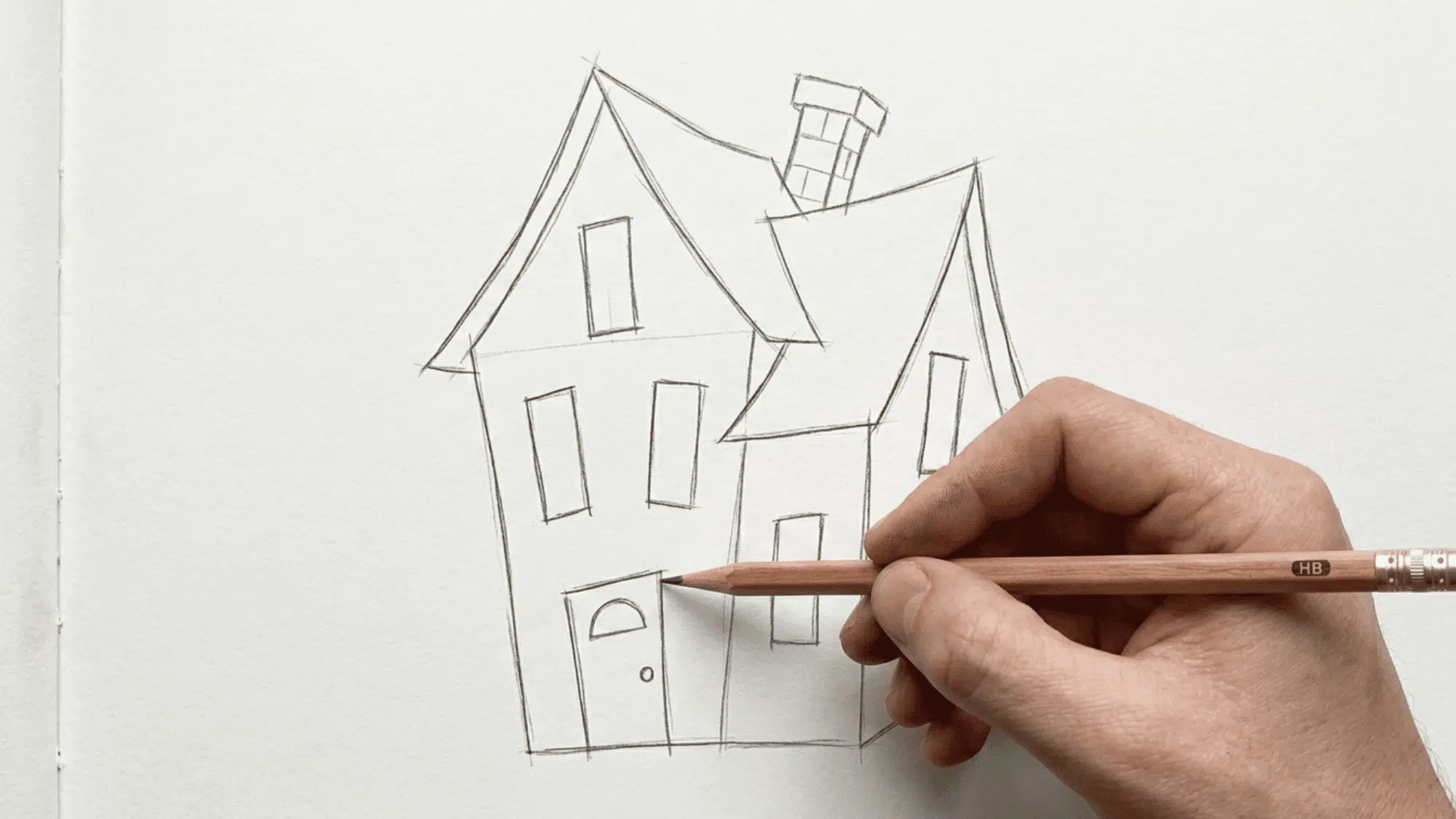
Start by drawing the main outline of the house using simple shapes like rectangles and triangles while keeping the walls slightly uneven to create an old, creepy look.
Add a pointed roof and tall structure to give the house drawing a spooky appearance right from the beginning.
Step 2: Add Windows and Doors
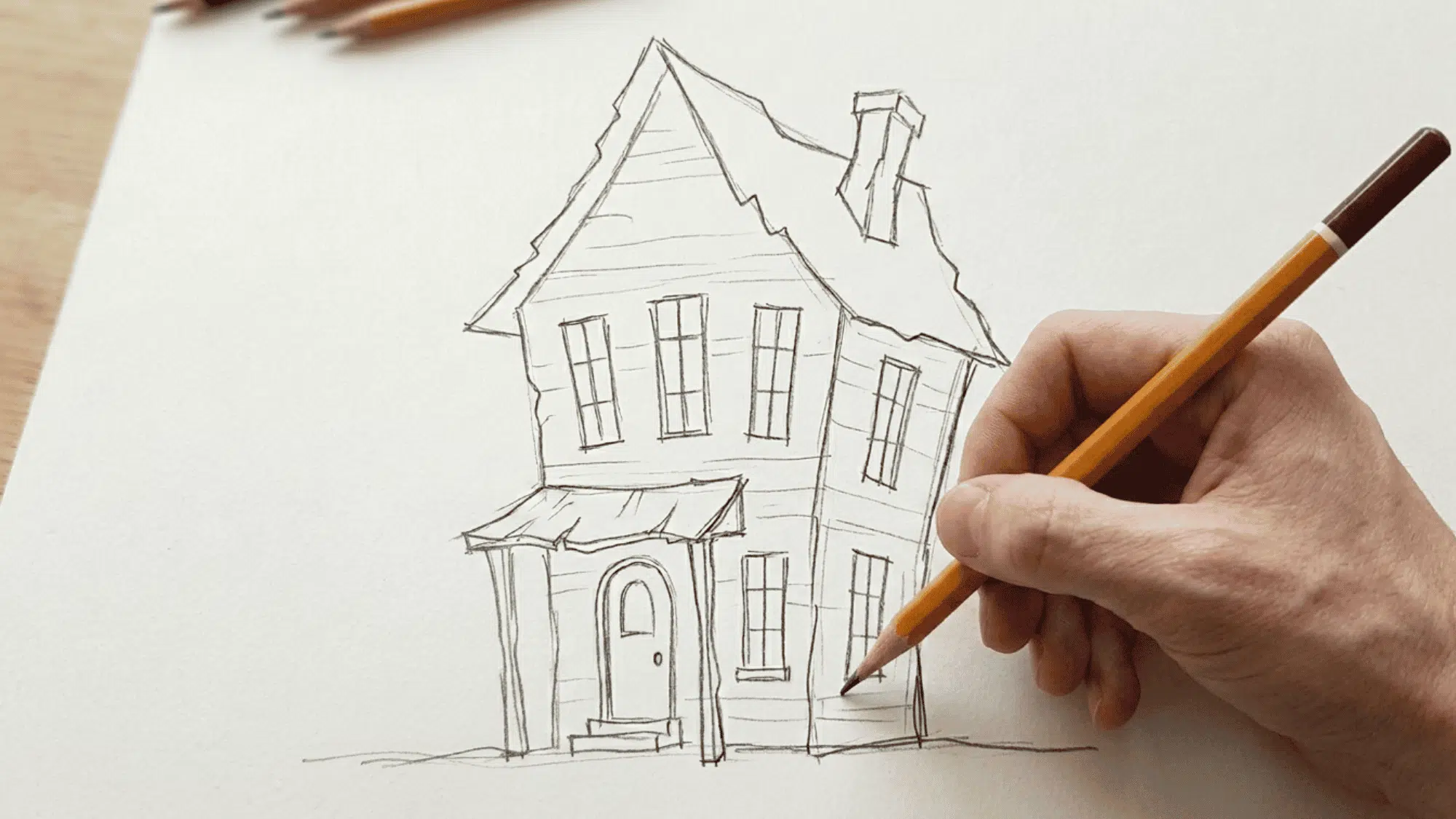
Draw narrow windows with crooked lines and a large front door in the center; you can tilt the windows slightly to make the house feel abandoned and eerie.
Broken window panes or cracked doors also help add personality and make the haunted house look more mysterious.
Step 3: Create the Spooky Details
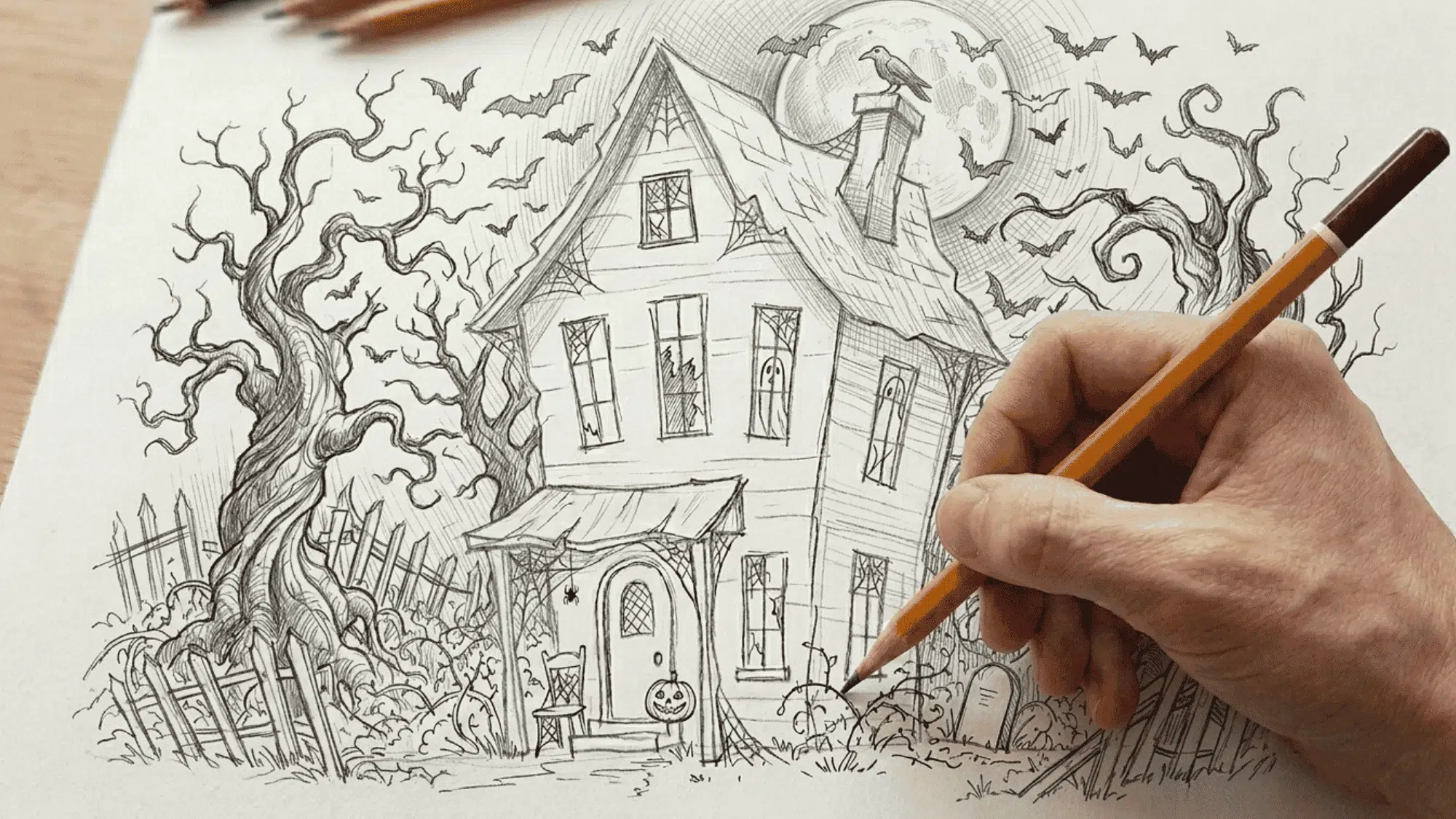
Now add creepy elements around the house like twisted trees, broken fences, bats, or even a glowing moon in the background.
Small details like cracked walls, loose planks, and hanging vines can instantly make your haunted house feel darker and more dramatic.
Step 4: Outline and Refine the Drawing
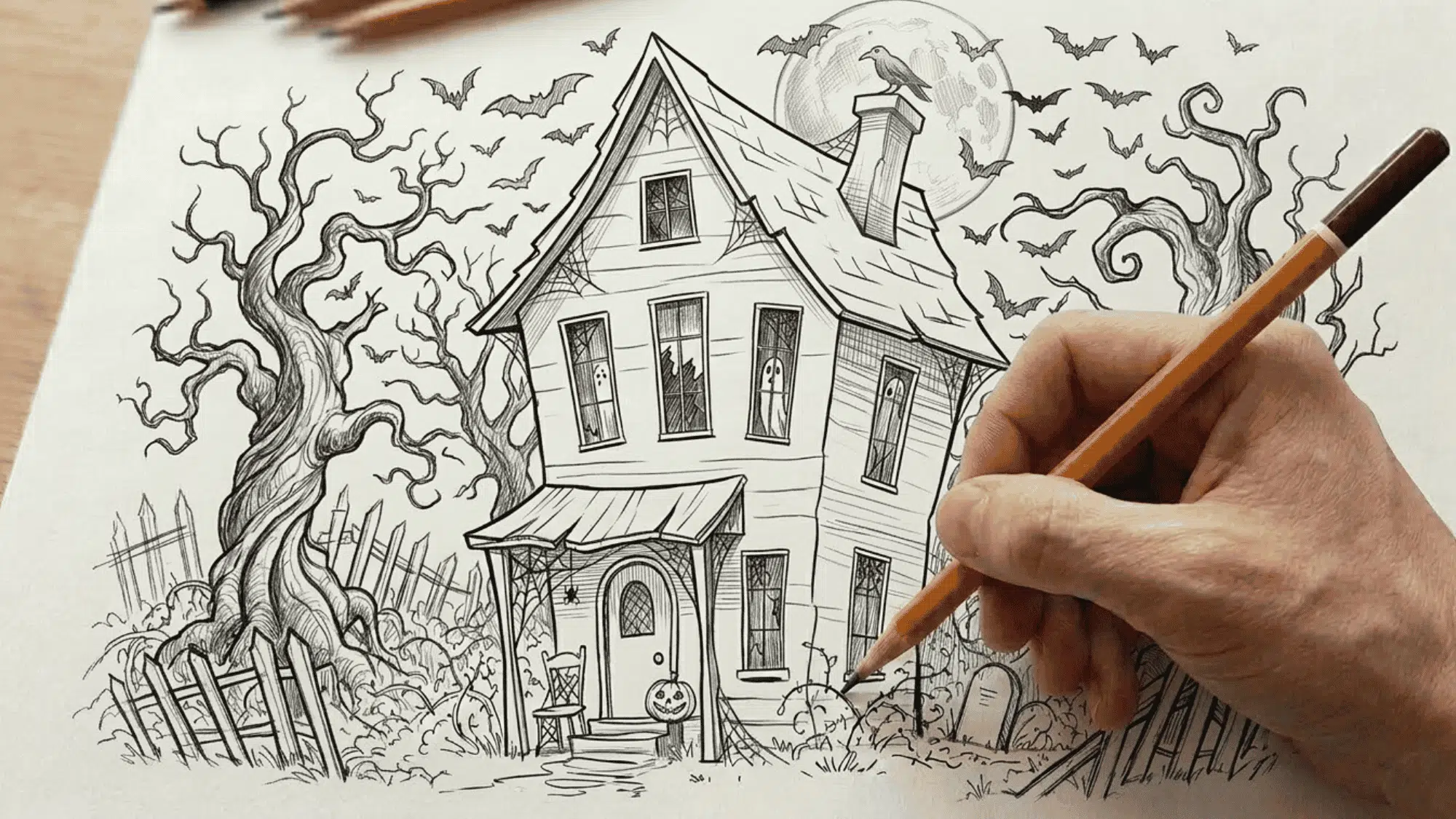
Go over your sketch with darker lines to define the final shape, erase the extra guidelines, and sharpen the important details, such as roof edges and tree branches.
Step 5: Shade for a Creepy Effect
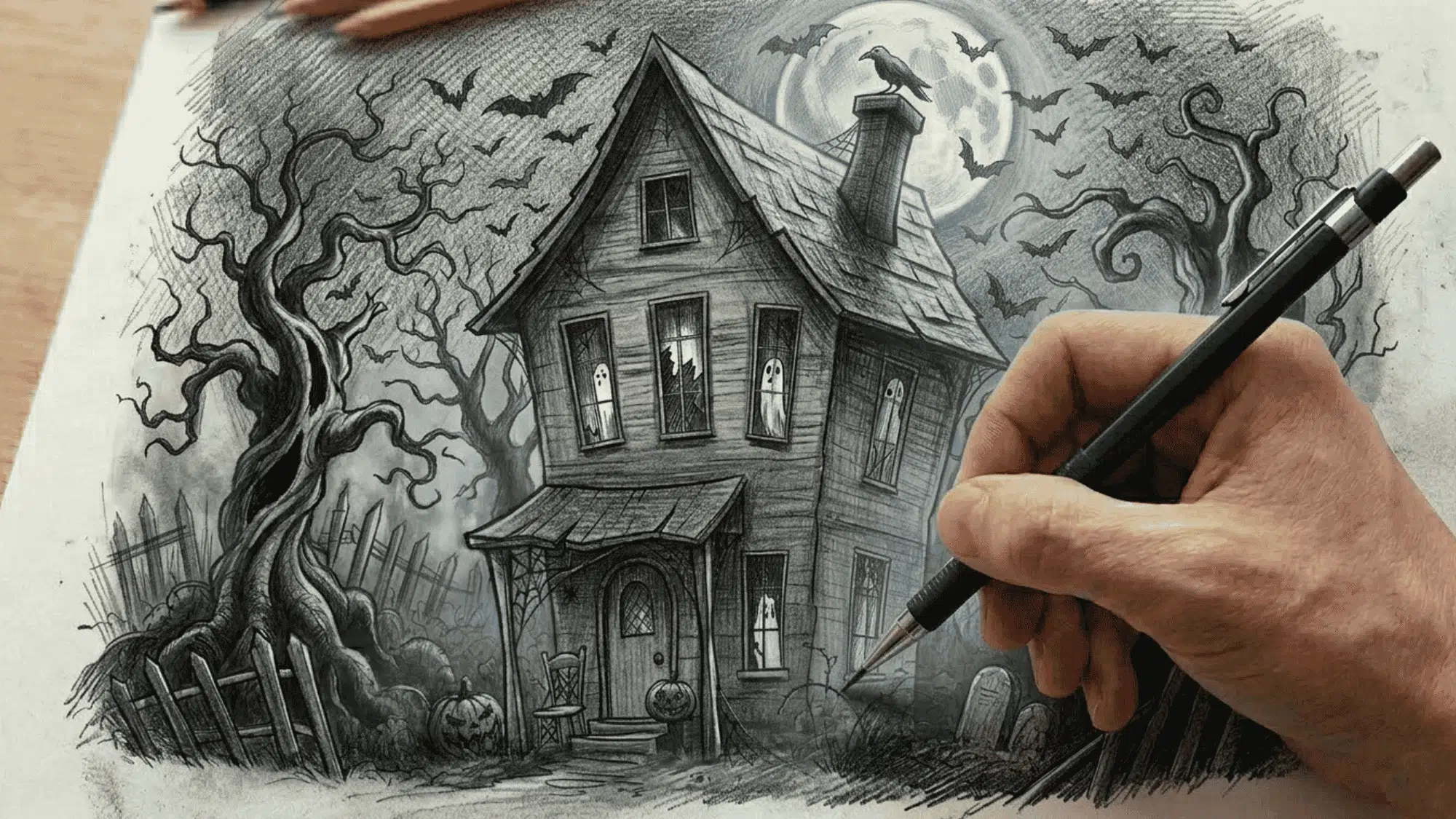
Use shading to add depth and atmosphere to the drawing, darkening the areas around windows, corners, and the roof to create shadows.
Mastering pencil shading techniques like hatching and cross-hatching is especially effective for haunted house artwork, as layered marks can mimic weathered wood, crumbling brick, and the deep darkness of empty windows.
Other Haunted House Inspos
Haunted house drawings come in many styles, from simple cartoon sketches to detailed gothic artwork, allowing artists to look into spooky creativity in their own unique way.
1. Cartoon Haunted House
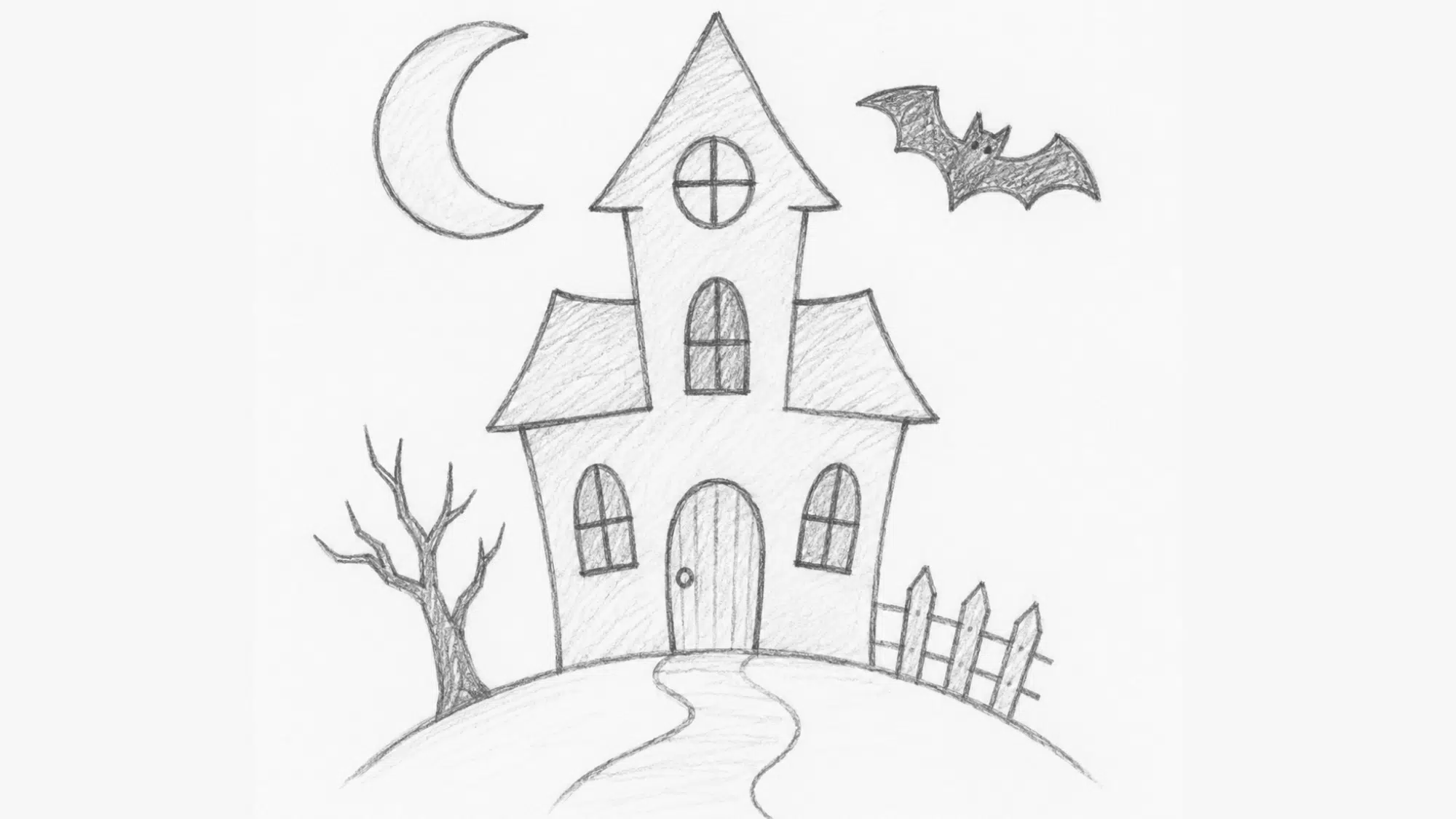
Cartoon-style haunted houses are fun, playful, and perfect for beginners, as they exaggerate shapes like crooked roofs, oversized windows, and smiling ghosts to create a light, spooky vibe.
Bright colors and simple details work best, making this style great for kids, Halloween cards, and creative doodles.
2. Realistic Haunted House
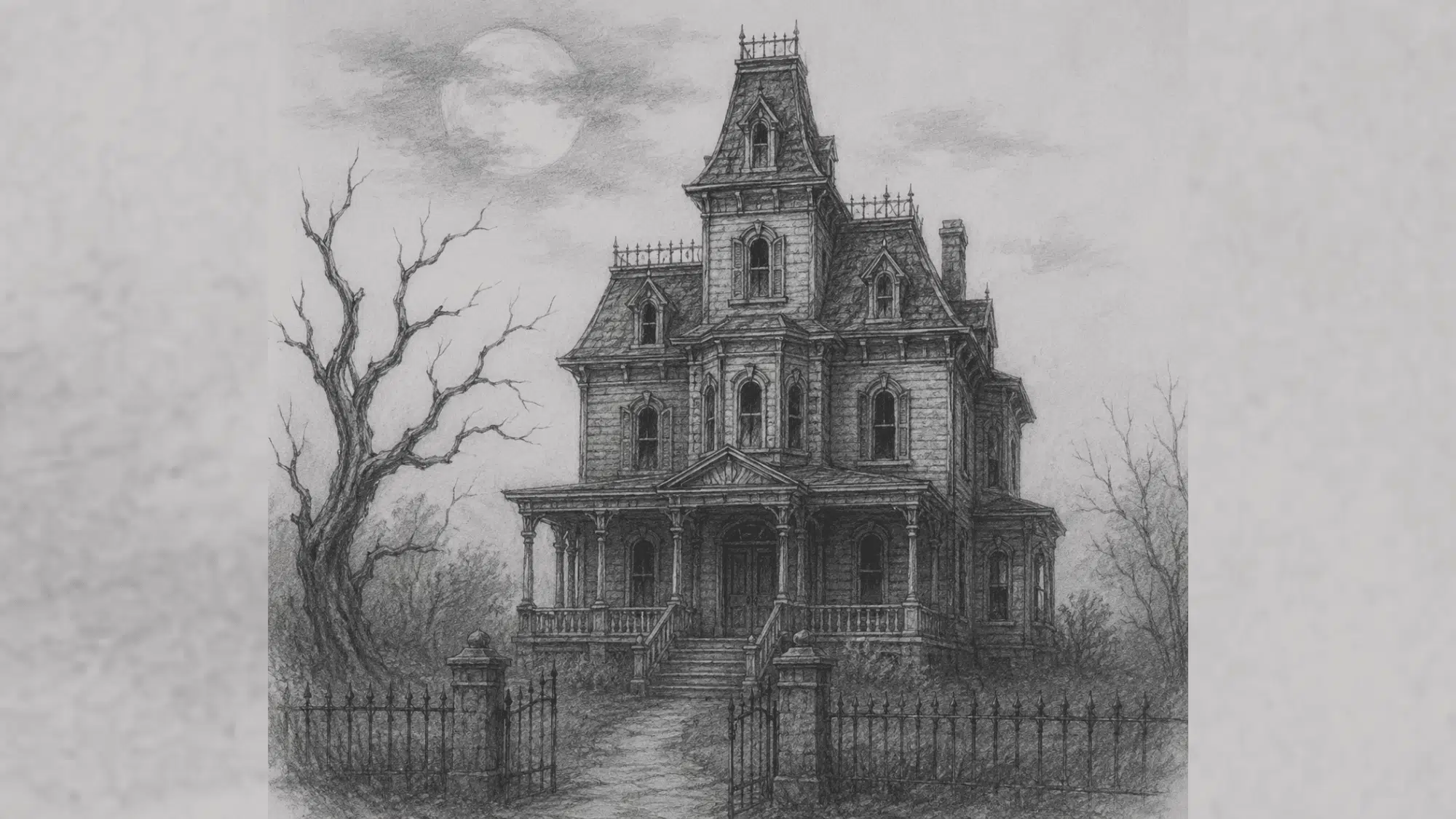
A realistic drawing focuses on shadows, textures, and detailed architecture, adding cracked walls, dark windows, and weathered wood to create a believable, spooky setting.
This style takes more patience, but careful shading and fine details can make the artwork look dramatic and cinematic.
3. Gothic Style Haunted House
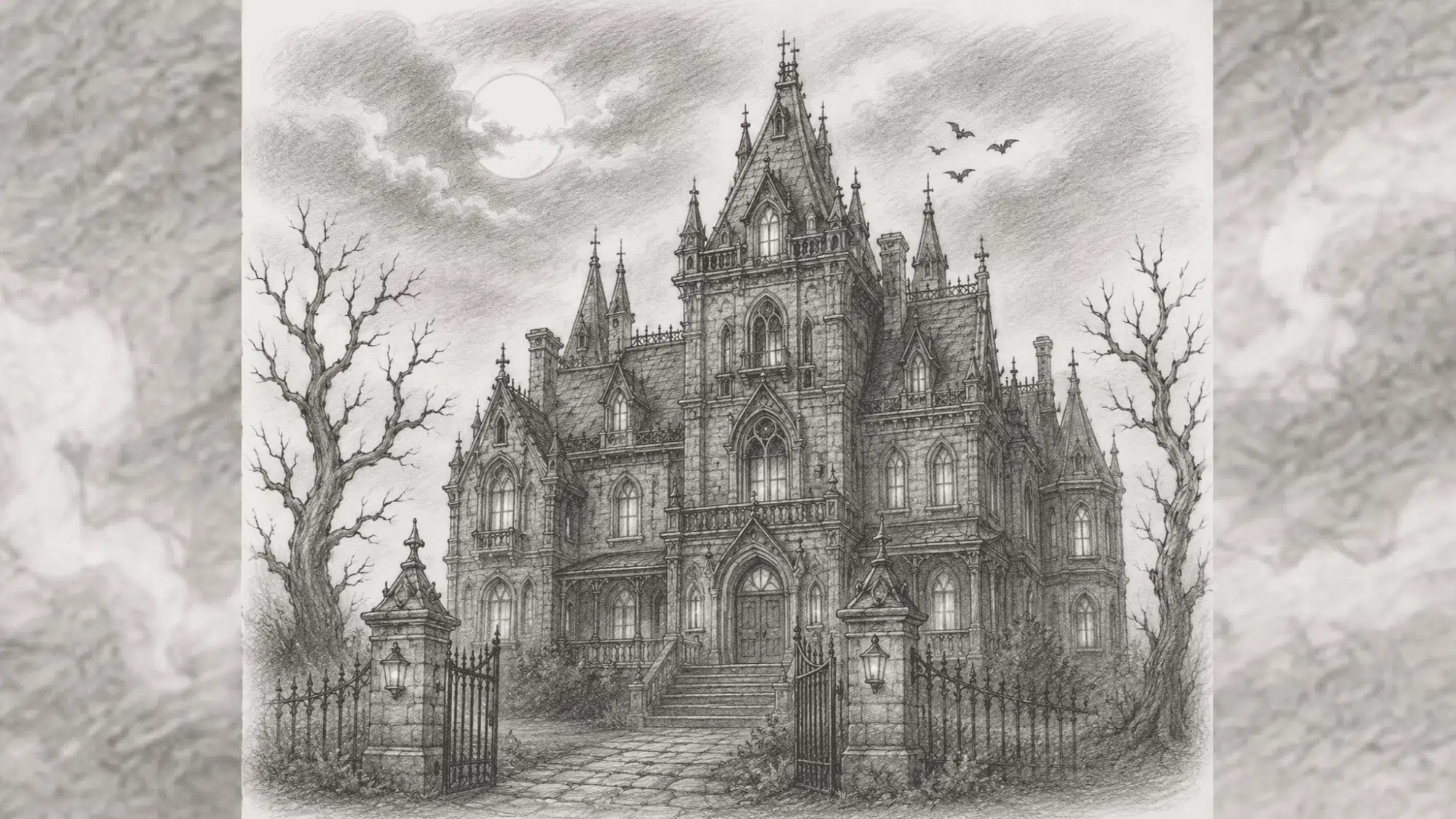
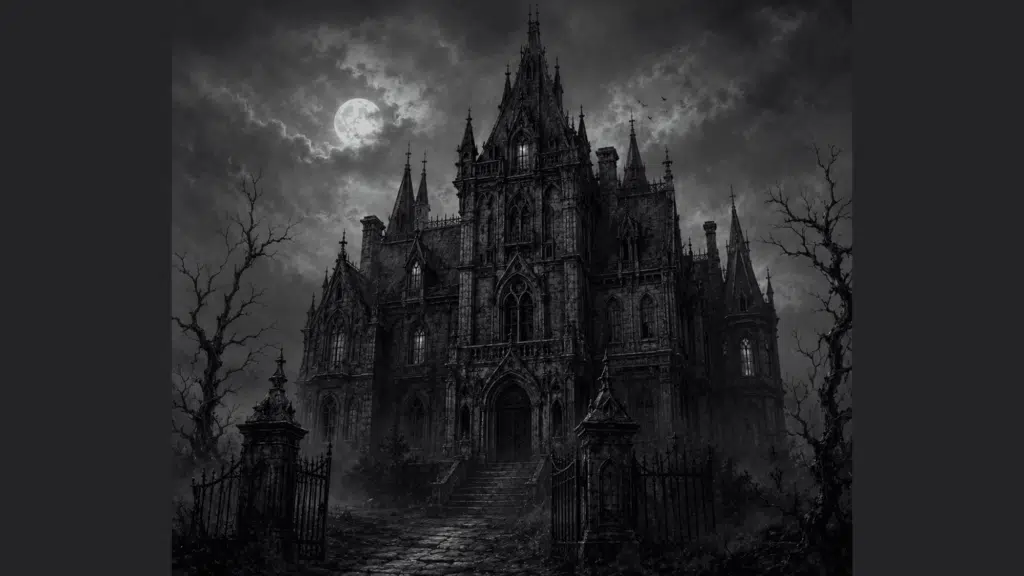
Gothic haunted houses feature tall towers, pointed roofs, and vintage Victorian details; dark themes, large staircases, and eerie surroundings help create a mysterious atmosphere.
This style is perfect if you enjoy classic horror aesthetics and want your haunted house to look style yet frightening.
The best reference point for this style is the Tim Burton gothic art approach, twisted architectural shapes, dramatic contrast, and layered textures that make every detail feel intentionally unsettling.
4. Silhouette Haunted House
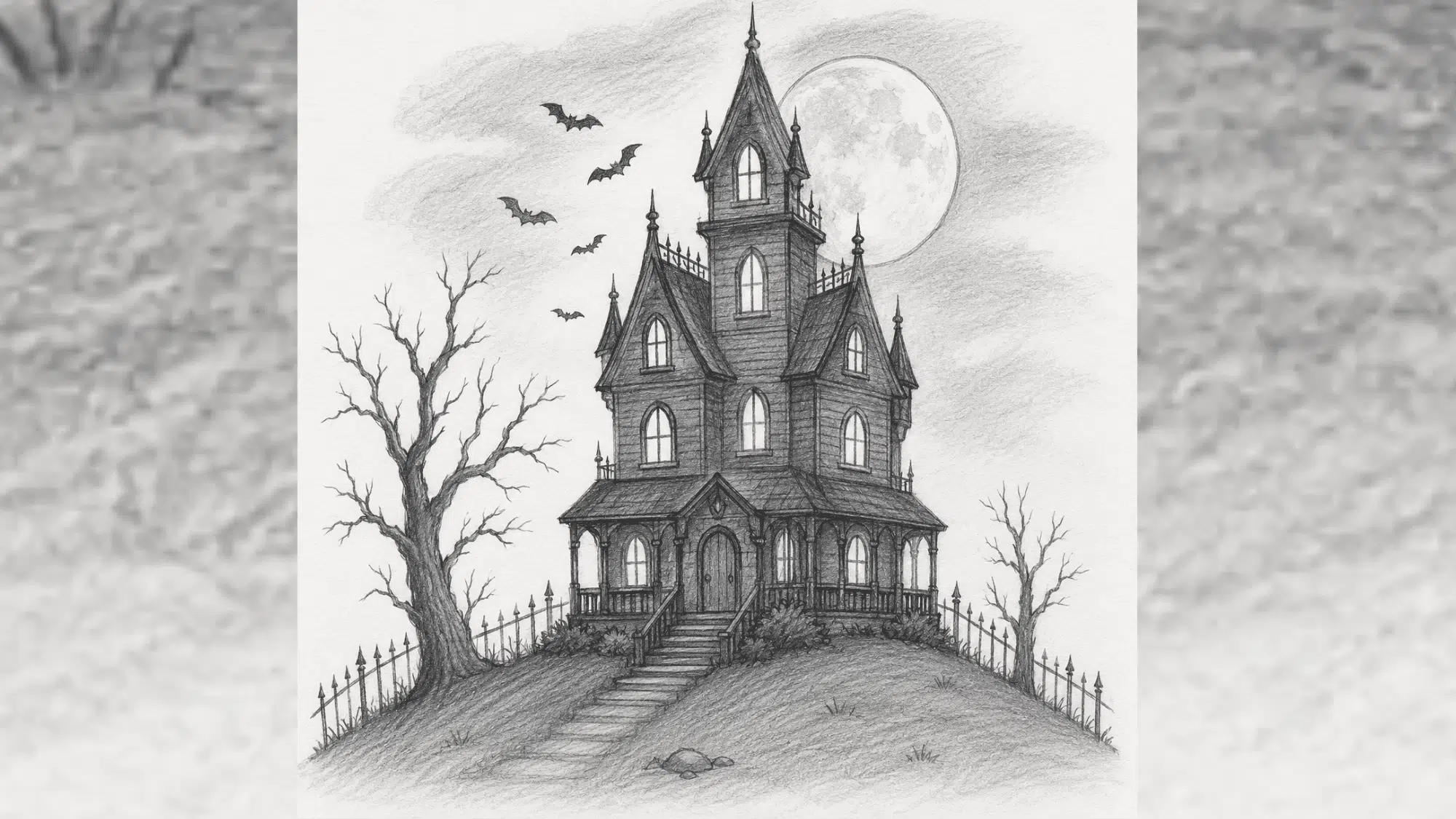
Silhouette haunted house drawings use dark black shapes against a glowing moon or misty background. Instead of focusing on details, this style highlights strong outlines and spooky scenery.
The Smithsonian American Art Museum notes that silhouette, as an artistic form, has deep historical roots, and that using negative space and shadow to tell a story is a technique artists have relied on for centuries.
Best Reference Sources
Finding the right inspiration can make your drawing look more creative and realistic.
From spooky movies to old mansion photos, good reference sources help you add better details, atmosphere, and unique ideas to your artwork.
- Stock Photo: Stock photo websites offer haunted-mansion references, spooky landscapes, and abandoned-house ideas, helping artists study lighting, textures, and architectural details for realistic drawings.
- Pinterest: Pinterest offers endless drawing ideas, tutorials, and artwork styles that help artists easily uncover fresh inspiration, techniques, and creative spooky concepts.
- Unsplash: Free high-quality photos of old mansions and foggy landscapes, great for realistic texture and lighting reference.
The Bottom Line
Creating a haunted house drawing is a fun way to examine imagination, spooky themes, and creative storytelling through art, and practicing different techniques will help improve your confidence and drawing skills over time.
Learning how to draw a haunted house also becomes easier when you use good references, focus on details, and experiment with shading.
The best part is that every drawing can have its own unique atmosphere and personality; so grab your pencil, try new ideas, and enjoy turning simple sketches into creepy artwork that truly stands out.