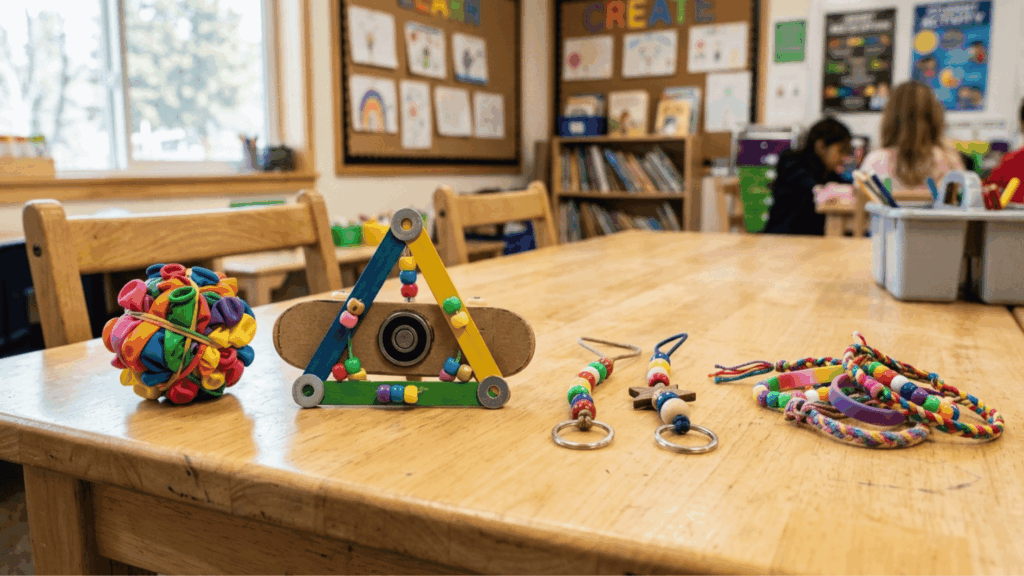
Keeping hands busy can help kids and adults stay calm, focused, or engaged during class, work, or quiet time.
That is why many people look for simplediy fidget toys they can make at home with paper, beads, balloons, fabric, or recycled supplies.
This blog shares easy step-by-step ideas, material lists, safety tips, and helpful notes on how homemade fidgets may support sensory play, fine motor skills, and classroom use.
How DIY Fidget Toys Support Focus and Sensory Play
It gives the hands a small task while the mind stays on listening, reading, or learning.
For some kids and adults, squeezing, rolling beads, pressing tabs, or touching fabric textures may help reduce restlessness in a quiet way.
They can also support sensory play through soft, rough, stretchy, smooth, or firm materials. In classrooms, they work best when they are safe, quiet, and used with clear rules.
Making them also builds fine motor skills through cutting, folding, tying, filling, and pressing.
Easy Homemade Fidgets for Focus and Sensory Play
These homemade fidgets are simple, low-cost, and useful for quiet hand movement, sensory play, focus, and classroom-friendly activities.
1. Balloon Stress Ball
A balloon stress ball is a simple homemade fidget filled with flour, rice, or cornstarch. It supports squeezing, grip practice, quiet hand movement, and calming sensory input.
Materials Required: balloon, flour, empty plastic bottle, funnel or paper cone, spoon, scissors, permanent marker.
How to make:
- Fill an empty plastic bottle with flour using a funnel.
- Inflate the balloon once, then let the air out to stretch it.
- Place the balloon opening over the bottle mouth.
- Turn the bottle upside down and move the flour into the balloon.
- Remove the balloon, release extra air, and tie it tightly.
- Trim the end if needed, then squeeze to check the firmness.
2. Rice-Filled Balloon Fidget
A rice-filled balloon fidget gives firm, grainy pressure when squeezed. It is easy to make, quiet to use, and helpful for grip practice, focus, and calming hand movement.
Materials Required: balloon, rice, empty plastic bottle, funnel or paper cone, spoon, scissors.
How to make:
- Fill an empty plastic bottle with rice using a funnel.
- Inflate the balloon once, then let the air out to stretch it.
- Place the balloon opening over the bottle mouth.
- Turn the bottle upside down and move the rice into the balloon.
- Remove the balloon carefully and release extra air.
- Tie it tightly, trim the end if needed, then squeeze to check the feel.
3. Bead and Pipe Cleaner Fidget
A bead-and-pipe-cleaner fidget is quiet, flexible, and easy to hold. Sliding the beads supports finger movement, fine motor practice, focus, and calm sensory input.
Materials Required: pipe cleaner, large beads, scissors.
How to make:
- Take one pipe cleaner and fold one end slightly.
- Slide large beads onto the pipe cleaner.
- Leave a little space so the beads can move.
- Bend the pipe cleaner into a small loop or bracelet shape.
- Twist both ends together to close it.
- Trim any sharp ends, then slide the beads back and forth.
4. Pocket fidget
A pocket fidget is a small fabric pouch containing a marble. Moving the marble supports quiet finger movement, focus, fine motor skills, and calming sensory input.
Materials Required: fabric scraps, a marble or bead, a needle, thread, scissors, pins, a marker.
How to make:
- Cut two small fabric squares of the same size.
- Place them together with the outer sides facing in.
- Sew around the edges, leaving a small opening.
- Turn the fabric right side out and place a marble inside.
- Sew the opening closed tightly.
- Push the marble around inside the pocket with your fingers.
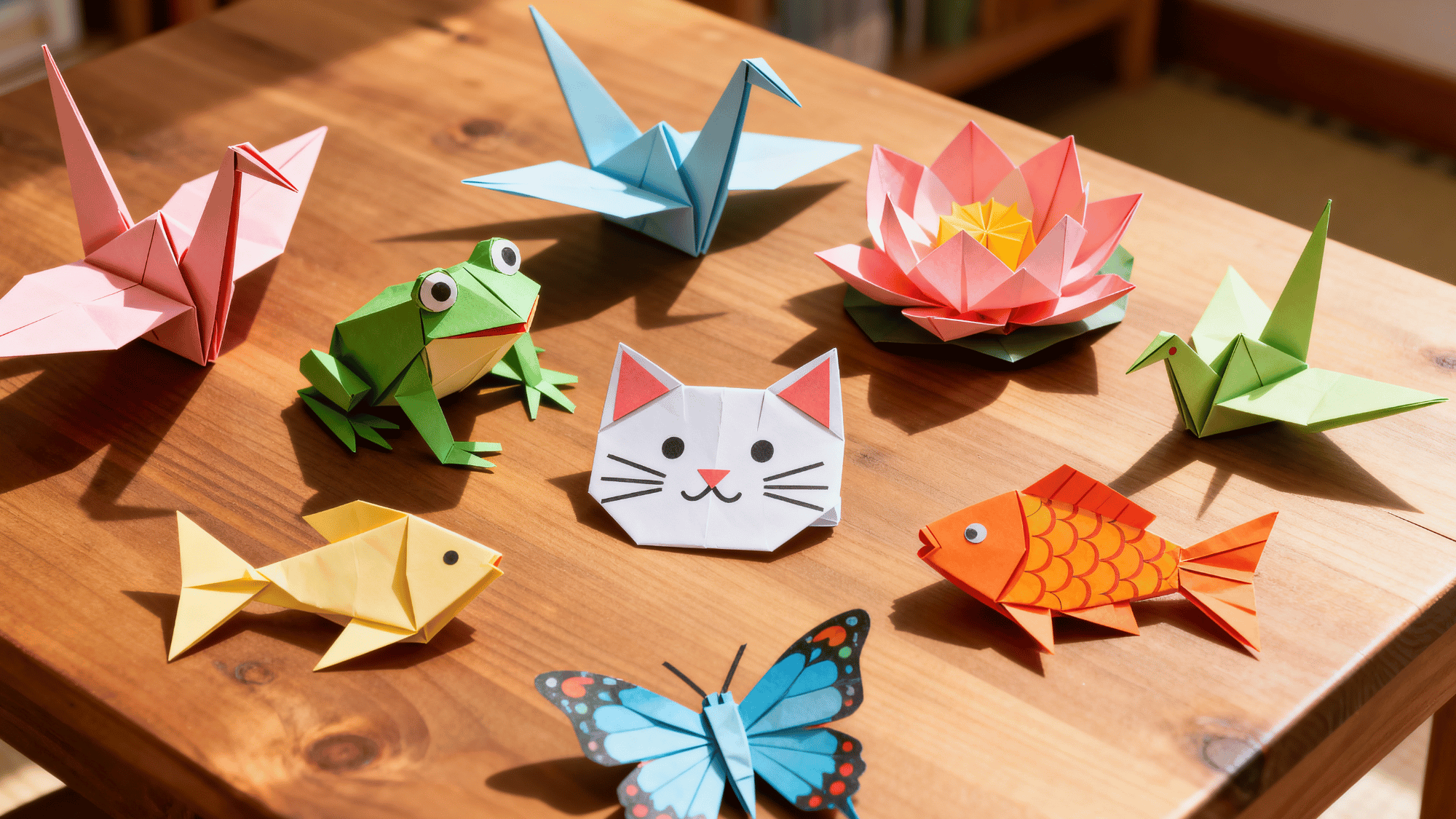
5. Origami Flip Toy
A paper-squishy octopus fidget is soft, lightweight, and fun to press. It supports quiet hand movement, simple craft practice, sensory play, and classroom-friendly calming use.
Materials Required: paper octopus template, colored paper, scissors, glue, clear tape, cotton or tissue, markers.
How to make:
- Cut out two octopus shapes from paper or a printed template.
- Color or decorate both sides with markers.
- Glue or tape the edges, leaving a small opening.
- Fill the inside with cotton or soft tissue.
- Seal the opening tightly with glue or tape.
- Press and flip the octopus to use it as a squishy fidget.
6. Pencil Grip Spinner
A fidget pencil keeps fingers busy during writing or classwork. Moving the beads supports quiet hand movement, focus, fine motor practice, and simple, classroom-friendly sensory use.
Materials Required: pencil, pipe cleaner, beads, scissors, tape.
How to make:
- Take a pencil and wrap one pipe cleaner around its top.
- Slide a few beads onto the loose end of the pipe cleaner.
- Fold the end slightly so the beads do not fall off.
- Wrap the remaining pipe cleaner around the pencil.
- Secure loose parts with tape if needed.
- Roll or slide the beads while writing or listening.
7. Marble Mesh Fidget
A marble mesh fidget is quiet, small, and easy to use. Moving the marble through the mesh supports finger control, focus, calming pressure, and classroom-friendly sensory input.
Materials Required: mesh tubing, marble, needle, thread, scissors, lighter, or glue.
How to make:
- Cut a small piece of mesh tubing.
- Place one marble inside the mesh.
- Push the marble to the center of the tube.
- Sew or tie one end tightly to close it.
- Sew or tie the other end to keep the marble inside.
- Push the marble back and forth through the mesh.
8. Straw Bead Slider
A pipe cleaner fidget is soft, bendable, and quiet. Sliding the beads supports finger movement, focus, fine motor practice, and simple, classroom-friendly sensory use.
Materials Required: pipe cleaners, pony beads, scissors.
How to make:
- Take one pipe cleaner and fold one end to stop beads from falling.
- Slide pony beads onto the pipe cleaner one by one.
- Leave small gaps so the beads can move easily.
- Bend the pipe cleaner into a loop, twist, or small handle shape.
- Twist the loose ends together tightly.
- Trim sharp ends, then slide and roll the beads with fingers.
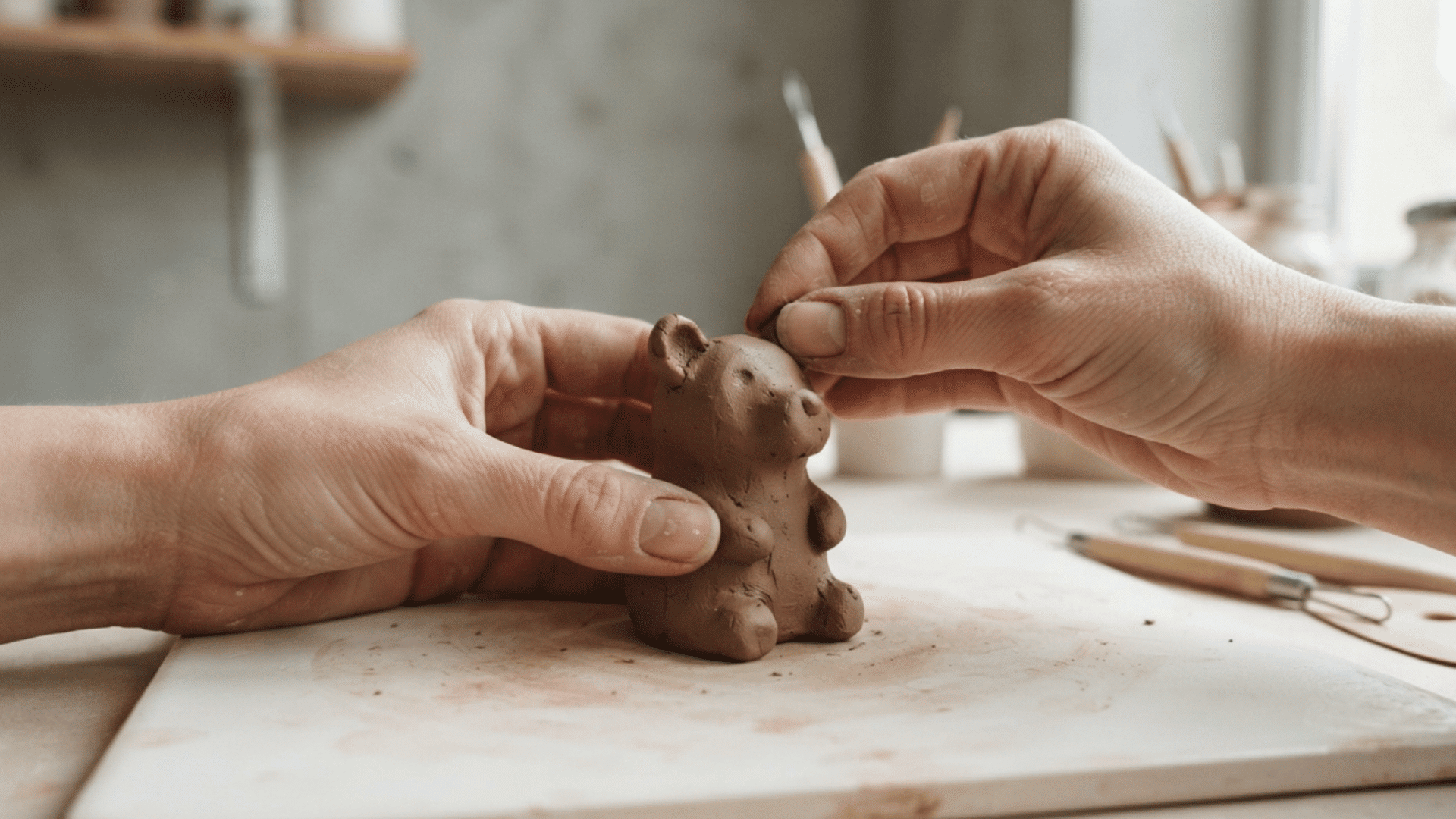
9. Smooth Clay Thumb Stone
A clay worry stone is a small handheld fidget for rubbing and pressing. It supports calm touch, quiet focus, finger movement, and simple sensory use during class or rest.
Materials Required: air-dry clay, water, rolling pin, paint, paintbrush, sealant, tray.
How to make:
- Take a small piece of air-dry clay and roll it into a ball.
- Flatten it into a smooth oval or heart shape.
- Press a thumbprint gently in the center.
- Smooth the edges with a little water.
- Let it dry fully, then paint it if needed.
- Rub the center with your thumb for a calming touch.
10. Yarn-Wrapped Stress Sphere
A woolen pom-pom stress buster is soft, light, and easy to hold. It supports quiet squeezing, gentle touch, finger movement, and calming sensory use during class or rest.
Materials Required: wool yarn, fork or cardboard, scissors, glue, googly eyes, marker.
How to make:
- Wrap wool yarn around a fork or cardboard several times.
- Tie the wrapped yarn tightly from the center.
- Cut both looped sides with scissors.
- Fluff and trim the yarn into a round pom-pom.
- Glue on googly eyes or draw a simple face.
- Squeeze or roll it gently in the palm.
11. Glitter Calm-Down Bottle
A sensory bottle is a calm, homemade visual fidget filled with moving glitter or beads. It supports quiet focus, sensory play, and relaxing use in the classroom or during therapy.
Materials Required: plastic bottle, water, clear glue, glitter, small beads, food coloring, tape.
How to make:
- Fill a clean plastic bottle halfway with water.
- Add clear glue to slow the liquid’s movement.
- Put in glitter, small beads, or food coloring.
- Close the bottle cap tightly.
- Seal the cap with strong tape.
- Shake the bottle and watch the slow movement.
12. Squishy Anti-Stress Balls
A squishy anti-stress ball feels soft, bumpy, and fun to squeeze. It supports quiet hand movement, grip practice, sensory play, and calming use during class or breaks.
Materials Required: balloon, Orbeez or water beads, empty plastic bottle, funnel, water, scissors.
How to make:
- Soak Orbeez or water beads in water until they grow.
- Fill an empty plastic bottle with the prepared beads.
- Inflate the balloon once, then let the air out.
- Place the balloon opening over the bottle mouth.
- Turn the bottle upside down and move the beads into the balloon.
- Remove the balloon, release extra air, and tie it tightly.
13. Pop it Fidget Toy
A mini DIY pop-it fidget provides a repetitive pressing motion for busy hands. It supports quiet focus, finger movement, sensory play, and stress relief during study or classroom breaks.
Materials Required: foam sheet, cardboard, bottle caps, scissors, glue, pencil, ruler, markers.
How to make:
- Cut a small cardboard base in your chosen shape.
- Trace bottle caps on a foam sheet to make pop circles.
- Cut the foam circles carefully with scissors.
- Glue the foam circles onto the cardboard base.
- Let the glue dry fully before using it.
- Press each circle gently to create a pop-it effect.
14. Nano Tape Bubbles
A nano tape bubble fidget is soft, squishy, and fun to press. It supports stress relief, finger movement, sensory play, and quiet hand activity during breaks.
Materials Required: nano tape, straw, glitter, small beads, scissors, hair straightener or iron, marker.
How to make:
- Cut a small piece of nano tape.
- Fold it, leaving one side open for air.
- Add glitter or tiny beads inside.
- Seal the edges with gentle heat.
- Insert a straw into the opening and blow slowly.
- Seal the opening, then gently press or pop the bubble.
15. Clay Squishy Fidget Toy
A clay squishy fidget toy is soft, easy to press, and easy to hold. It supports stress relief, quiet hand movement, sensory play, and calming use during breaks.
Materials Required: soft clay, clear plastic sheet or pouch, cotton or sponge, tape, scissors, markers.
How to make:
- Take a small amount of soft clay and shape it into a flat piece.
- Cut two equal pieces of clear plastic sheet or use a pouch.
- Place the clay inside the plastic sheet.
- Add cotton or sponge if a softer feel is needed.
- Seal the edges tightly with tape.
- Press gently to use it as a squishy clay fidget.
16. Paper Infinity Cube Fidget
A paper infinity cube fidget folds again and again in the hands. It supports quiet finger movement, focus, stress relief, and simple sensory play during class or breaks.
Materials Required: colored paper, ruler, pencil, scissors, glue stick, tape.
How to make:
- Cut paper into equal square pieces.
- Fold each square into a small cube unit.
- Make eight cube units of the same size.
- Join the cubes with tape in a folding pattern.
- Check that each side folds smoothly.
- Flip the cube repeatedly as a fidget.
17. Tri Fidget Spinner
A tri fidget spinner without bearings uses cardboard and coins for smooth spinning. It supports quiet hand movement, focus, stress relief, and simple sensory play during breaks.
Materials Required: cardboard, printed spinner template, toothpick, coins, glue, scissors, pencil, markers.
How to make:
- Trace and cut the tri-spinner shape from cardboard.
- Glue coins near each end for weight.
- Make a small hole in the center.
- Push a toothpick through the center hole.
- Add small cardboard circles on both sides as grips.
- Hold the grips and spin the cardboard fidget.
18. Water Wiggle Fidget
A homemade water wiggle fidget feels soft, slippery, and flexible in the hand. It supports stress relief, quiet squeezing, sensory play, and calming hand movement during breaks.
Materials Required: clear plastic sheet, water, hair gel, food coloring, tape, scissors, straw.
How to make:
- Cut two equal pieces of clear plastic sheet.
- Seal three sides with strong tape.
- Add water, hair gel, and food coloring inside.
- Seal the open side tightly with tape.
- Press the edges to check for leaks.
- Squeeze it gently so it wiggles in the hand
19. Marble Maze
A homemade marble maze toy keeps hands and eyes active through gentle movement. It supports focus, hand control, problem-solving, stress relief, and quiet play during breaks.
Materials Required: cardboard box lid, straws, marble, glue, scissors, pencil, ruler.
How to make:
- Take a cardboard box lid as the maze base.
- Draw a simple maze path with a pencil.
- Cut straws into small pieces.
- Glue the straw pieces along the maze lines.
- Let the glue dry fully.
- Tilt the board to move the marble through the maze.
20. Anti-Stress Balloons
A paper flex-angle fidget folds and flips in a repeating motion.
It also supports quiet hand movement, focus, stress relief, fine motor practice, and simple sensory play during short breaks.
Materials Required: colored paper, ruler, pencil, scissors, glue stick, tape, markers.
How to make:
- Cut the paper into equal strips.
- Fold each strip into triangle sections.
- Join the folded strips with glue or tape.
- Connect the ends to form a loop.
- Press each fold to make it move smoothly.
- Flip it back and forth as a fidget toy.
21. Cardboard Cube
A cardboard fidget cube offers a variety of hand actions in one small toy. It supports stress relief, focus, finger movement, and quiet sensory play during study or breaks.
Materials Required: cardboard, scissors, glue, tape, ruler, pencil, small buttons, beads, rubber band, bottle cap.
How to make:
- Cut six equal cardboard squares for the cube sides.
- Add a button, bead, rubber band, or cap to each of the squares.
- Glue the cardboard squares together to form a cube.
- Reinforce the edges with tape for strength.
- Let the cube dry fully before use.
- Press, roll, stretch, or click each side as a fidget.
Wrapping It Up
DIY fidget toys are simple, useful, and easy to make with everyday Materials Required like paper, beads, balloons, fabric, cardboard, clay, and wire.
They can keep kids and adults busy, support quiet focus, and provide a safe way for them to use touch and movement during class, study, work, or short breaks.
Each homemade fidget works differently, so the best choice depends on the need, such as squeezing, rolling, pressing, folding, or rubbing.
With adult supervision, safe Materials Required, and clear classroom rules, homemade fidgets can be a helpful, low-cost part of sensory play and fine motor practice.