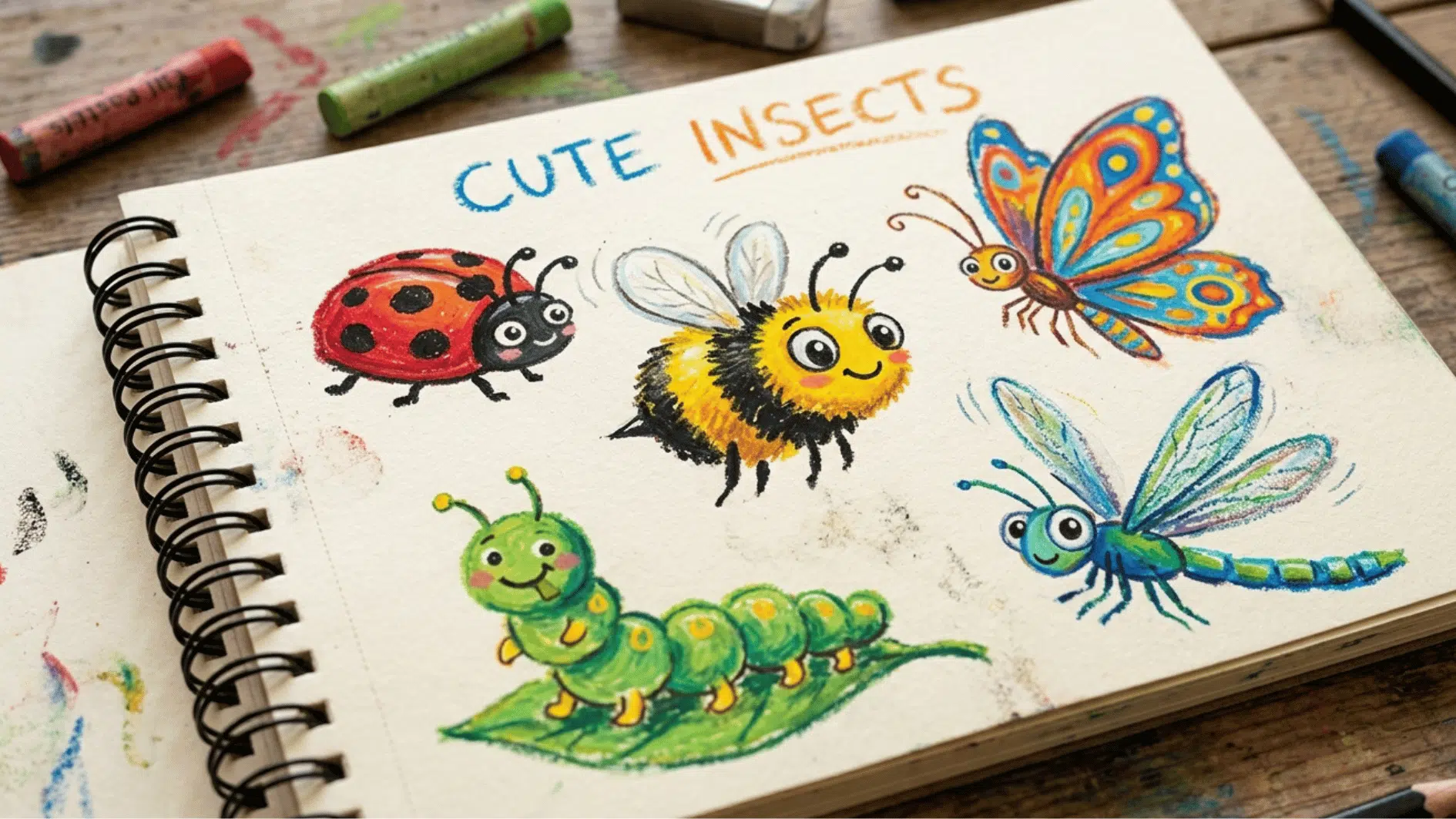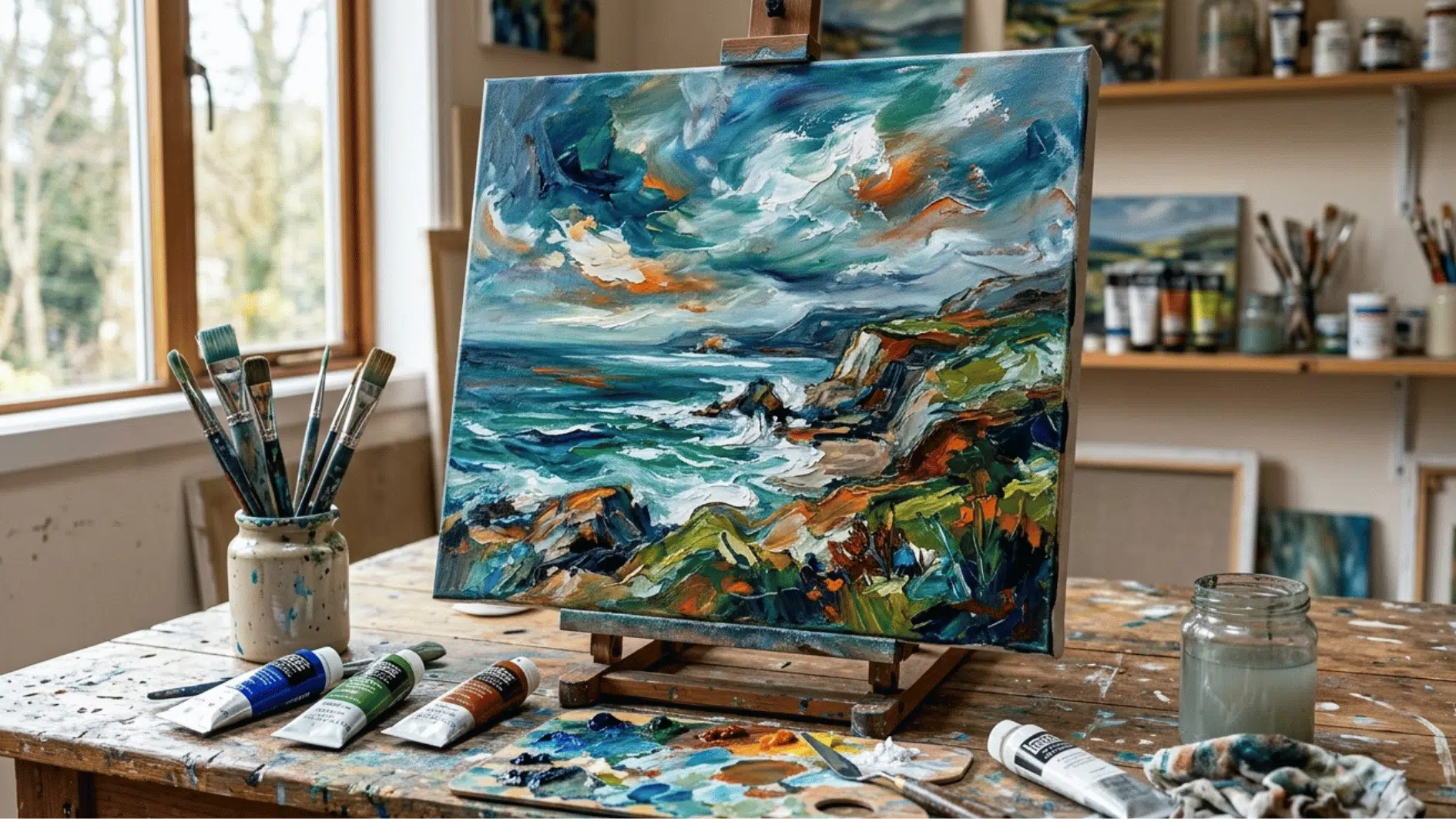
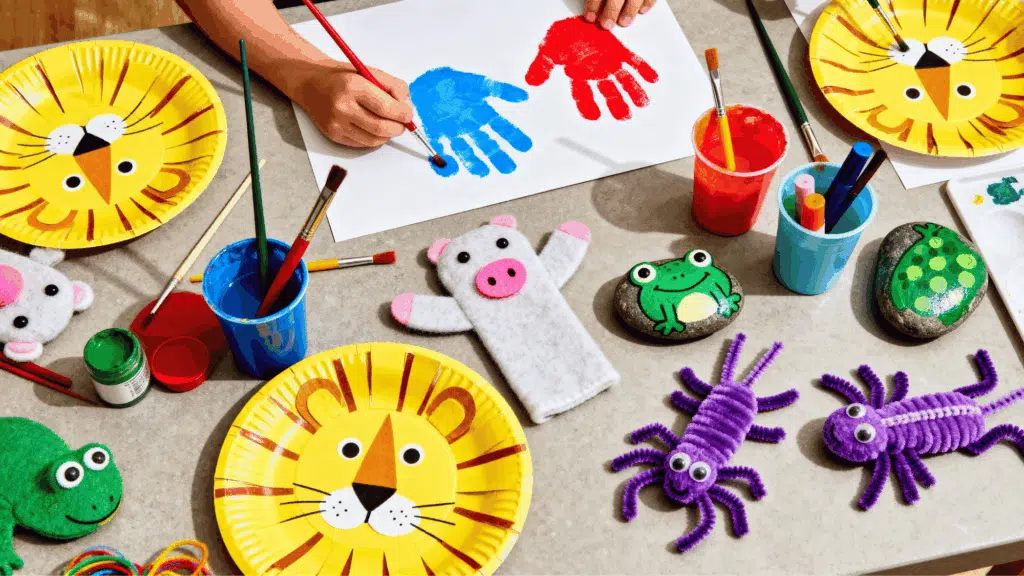
Animal crafts are an easy, low-cost way to build curiosity, creativity, and fine motor skills in kids.
With everyday supplies like paper plates, toilet rolls, rocks, felt, and paint, children can make playful creatures and grow their confidence.
Projects range from toddler handprint animals to papier-mache models, and along the way, kids practice sequencing and problem-solving and learn a little about animals and their habitats.
At home, in class, or on a playdate, these crafts make learning hands-on for kids and easy for adults to set up.
How Animal Crafts Help Kids Learn
Animal-themed crafts are a fun way for children to increase creativity while learning about different species, shapes, and colors.
These activities improve fine motor skills, hand-eye coordination, and focus, all while sparking imagination.
Using simple materials, kids can make playful, hands-on projects that teach them about animals, habitats, and textures in a way that feels like play rather than work.
Easy and Colorful Animal Crafts
These are the variety of crafts, each designed to be simple, fun, and engaging. Kids can create colorful, imaginative projects while learning about different animals and practicing hands-on skills
1. Paper Plate Animals
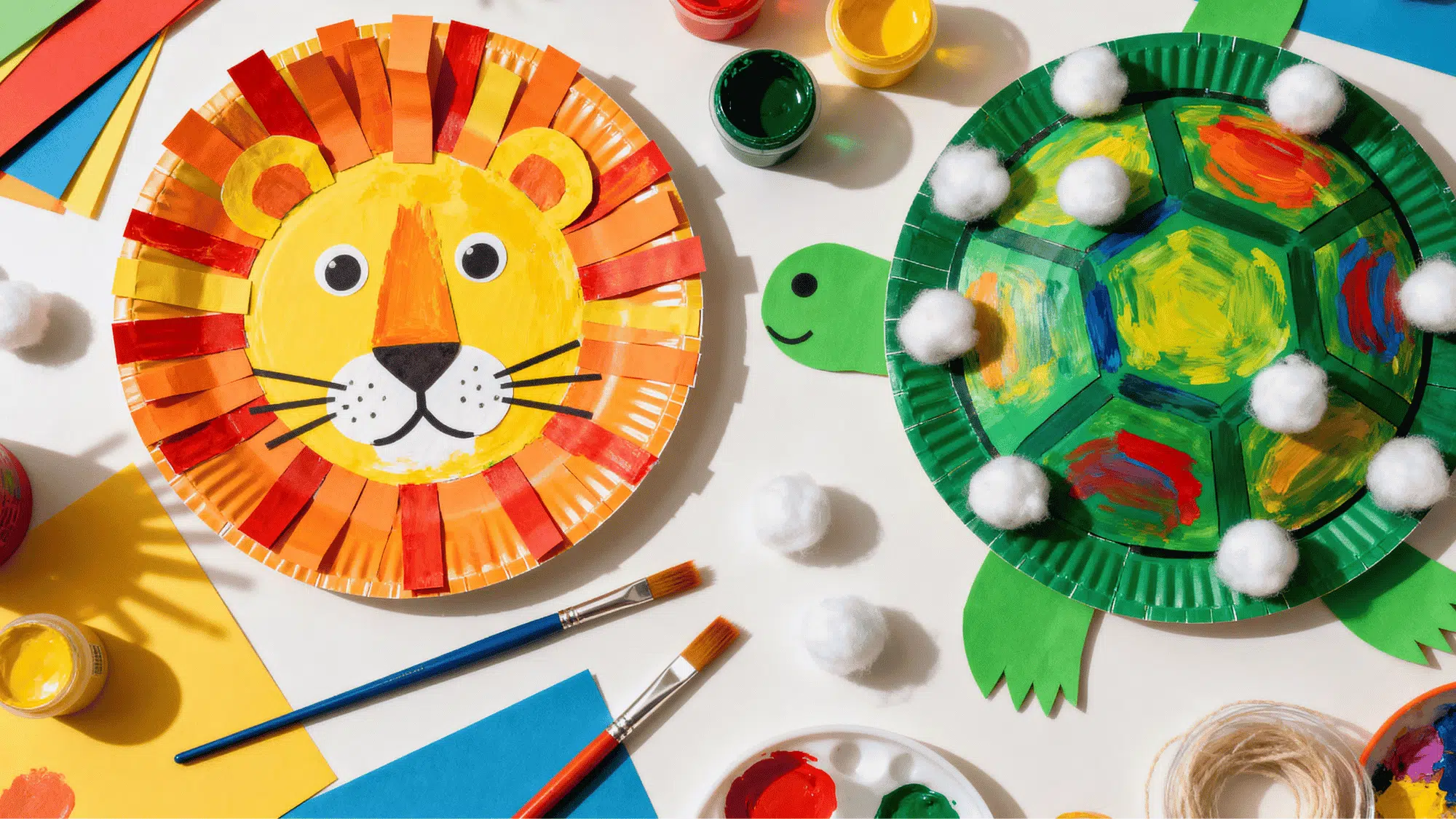
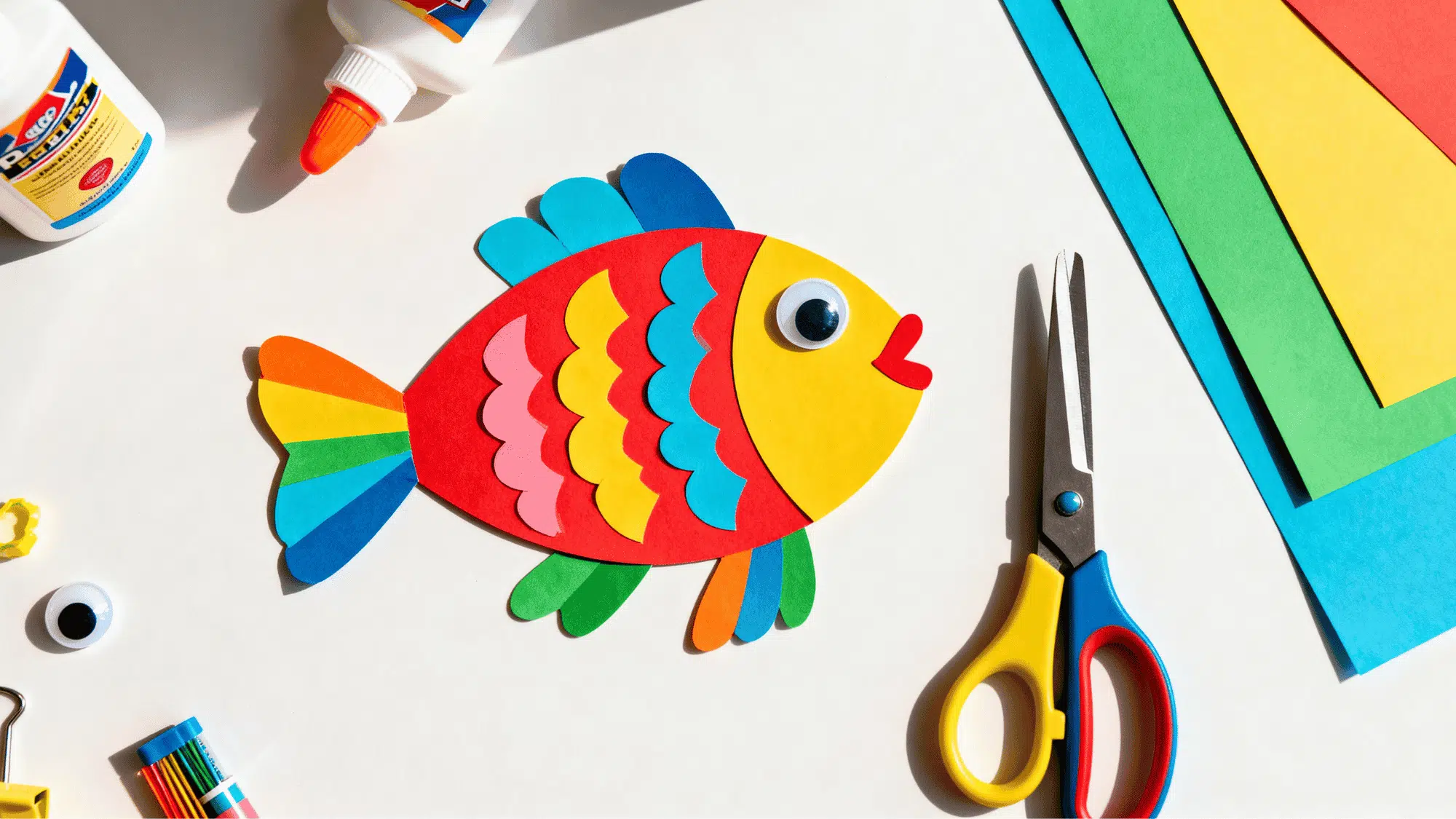
Paper plate crafts turn everyday plates into imaginative creatures by using paint and simple materials like paper, felt, or cotton for features.
This activity encourages creativity, allows for customization of colors and textures, and gives kids a playful, hands-on way to learn about different animals while developing fine motor skills.
- Material Required: Paper plate, acrylic paint, brushes, colored paper or felt, glue, cotton balls, markers or pens.
- How to make it: Paint the plate as the animal’s base, let it dry, then add features with paper, felt, or cotton. Finish by drawing or painting details such as eyes, a nose, or patterns for a fun, hands-on animal craft.
- Suitable for age group: 4–10 years
2. Handprint and Footprint Animals
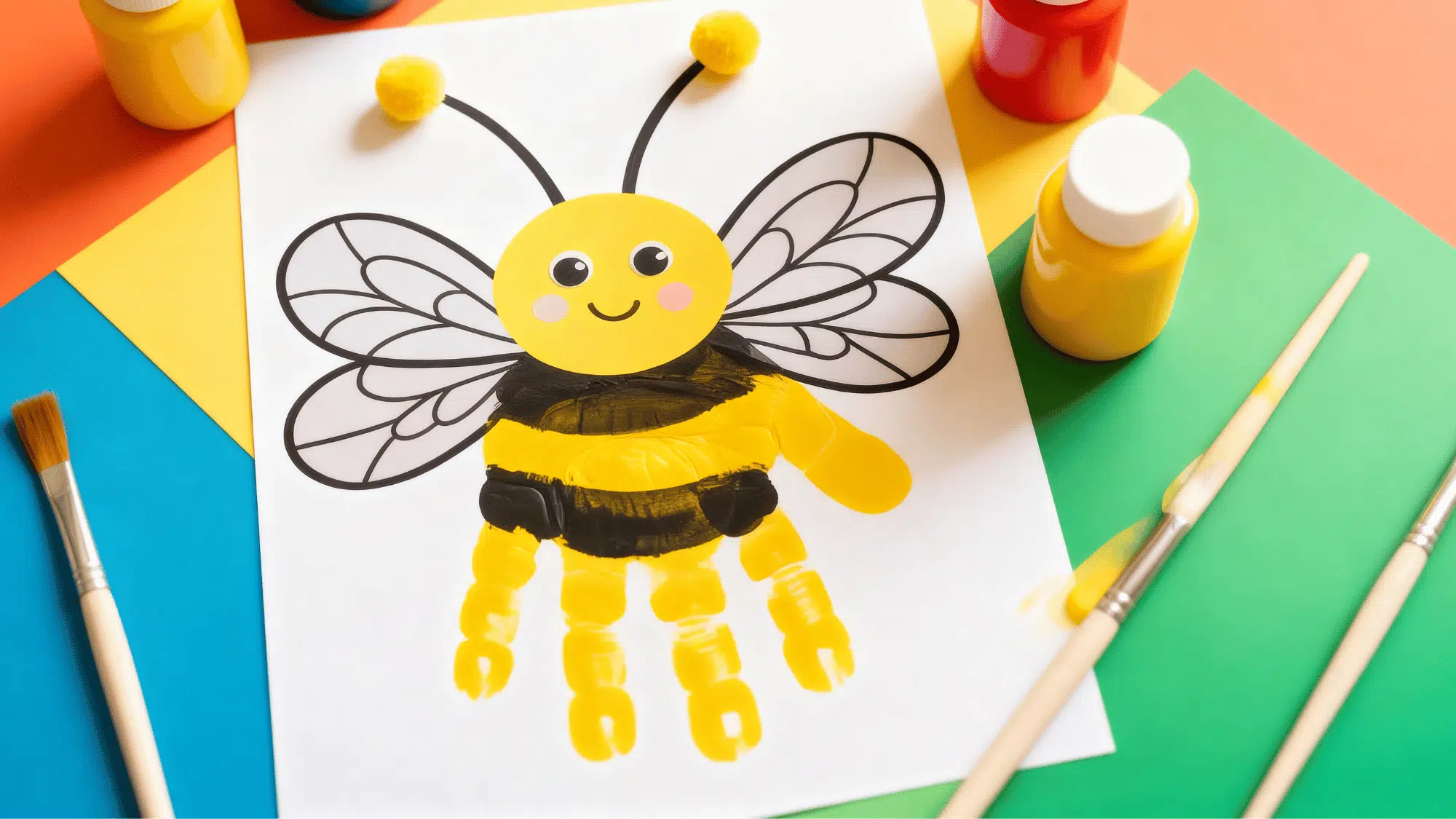
Create a bee using a child’s handprint, adding painted stripes, wings, and cute antennae for a playful, personalized craft. This activity encourages creativity and is perfect for toddlers and young children to explore colors and shapes.
- Material Required: Paper, paint (yellow and black), paintbrushes, markers, pom-poms or small craft balls, glue
- How to make it: Paint the child’s hand and press it onto paper to create the bee’s body. Add stripes with black paint, attach wings and antennae, and draw eyes and a smile to finish the bee craft.
- Suitable for age group: 2–6 years
Before starting, it helps to let kids mix and experiment with colors, this simple guide to primary and secondary colors makes the color-mixing part feel like its own little activity.
3. Pipe-Cleaner Critters
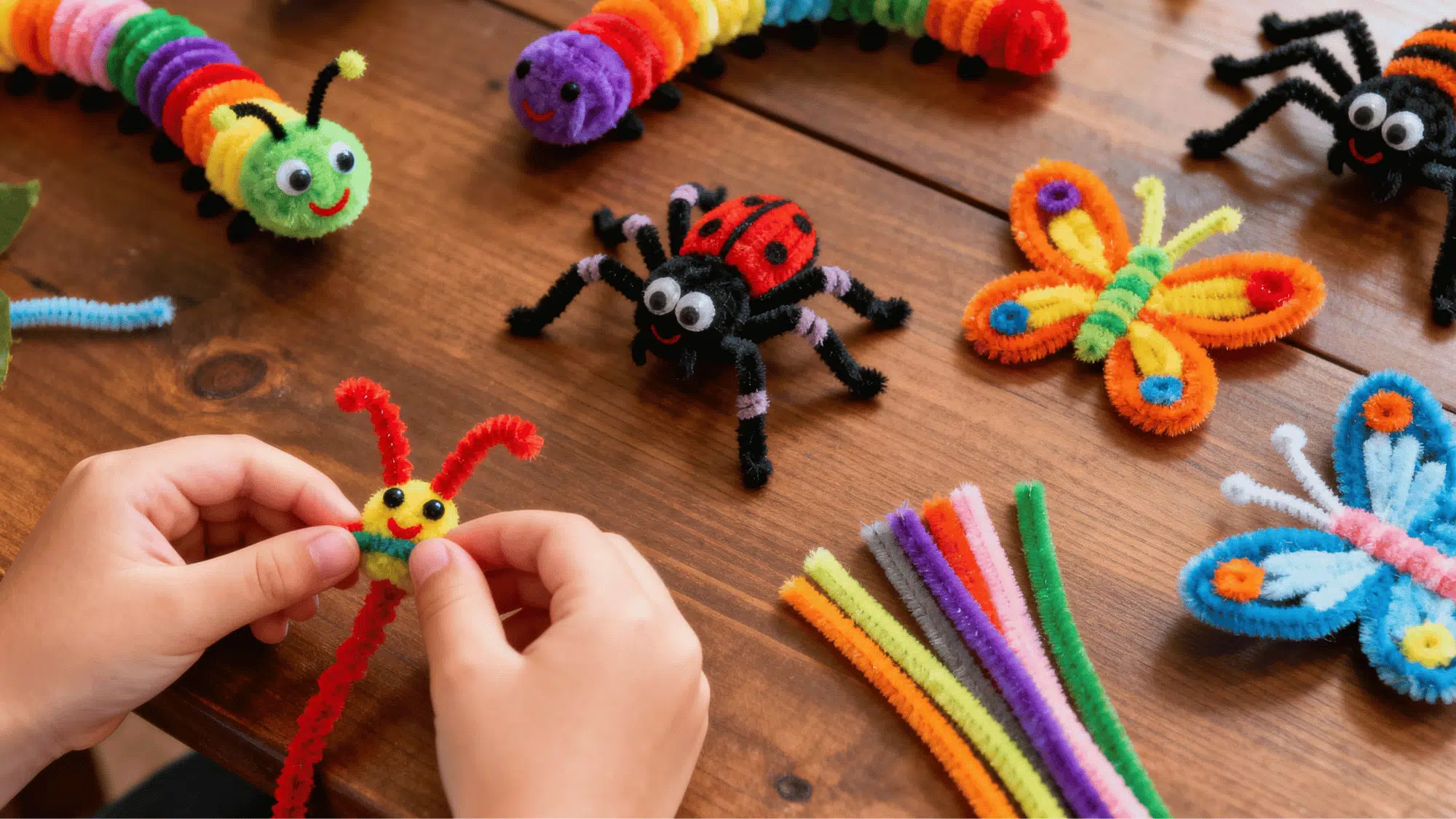
Colorful pipe cleaners can be twisted and shaped into insects like caterpillars, butterflies, and spiders.
Kids can bend, loop, and attach them to create fun, tactile creatures while developing fine motor skills and hand-eye coordination.
- Material Required: Pipe cleaners, googly eyes, markers, small pom-poms
- How to make it: Twist and bend pipe cleaners to form the body and legs, add googly eyes or small pom-poms for eyes and decorations, and shape antennae or wings as needed.
- Suitable for age group: 2-5 years
4. Toilet-Roll Menagerie
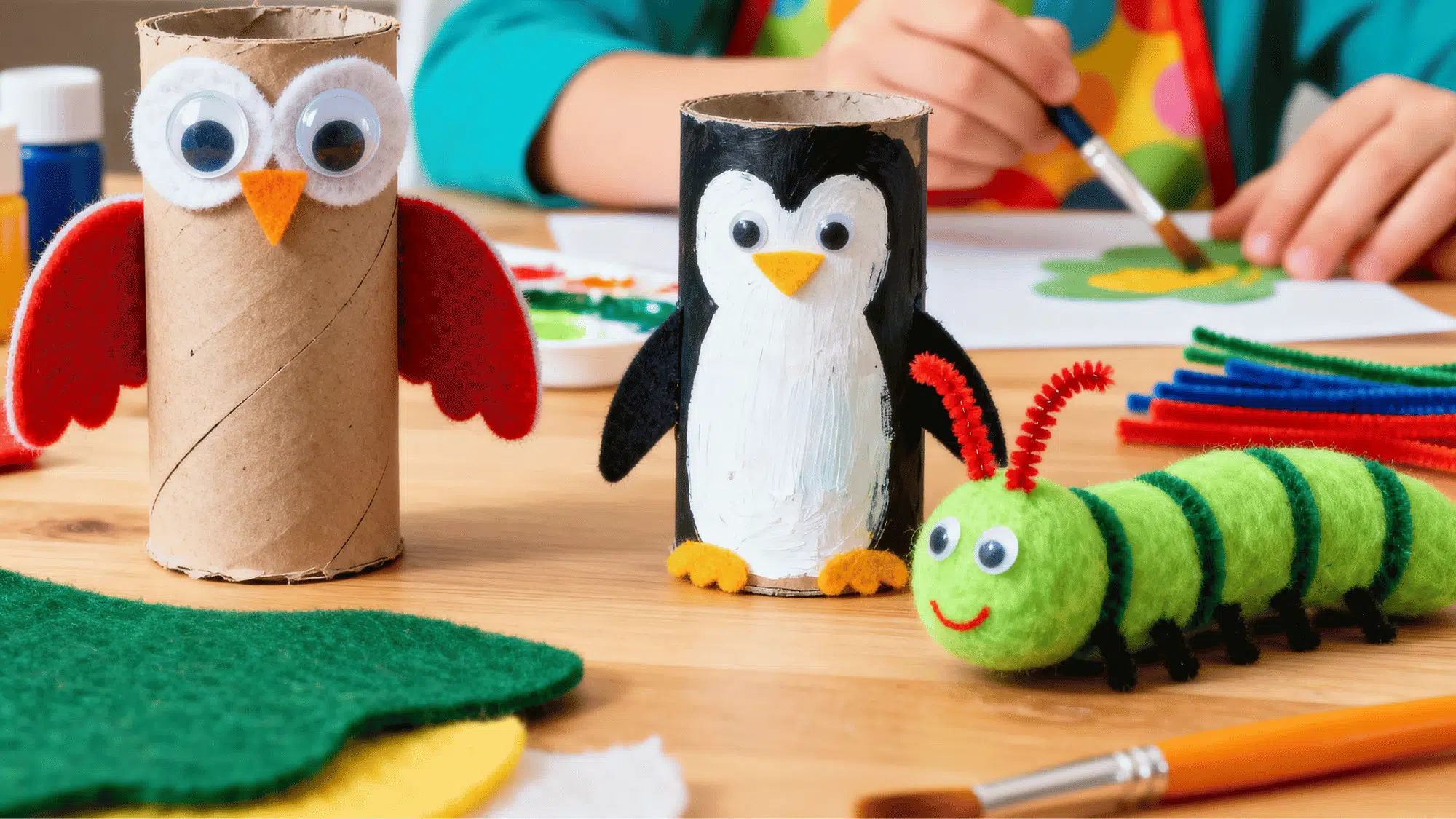
This craft uses empty toilet paper rolls to make fun animal figures, providing a hands-on way for children to know textures, colors, and simple construction.
Kids can decorate, paint, and add features like wings, tails, and eyes, turning everyday recyclables into imaginative creatures.
- Material Required: Toilet paper rolls, paint, felt or paper scraps, googly eyes, glue, scissors
- How to make it: Paint or wrap the toilet roll, cut and attach shapes for wings, tails, or fins, add eyes and other features to complete the animal.
- Suitable for age group: 3-6 years
5. Felt Puppets and Softies
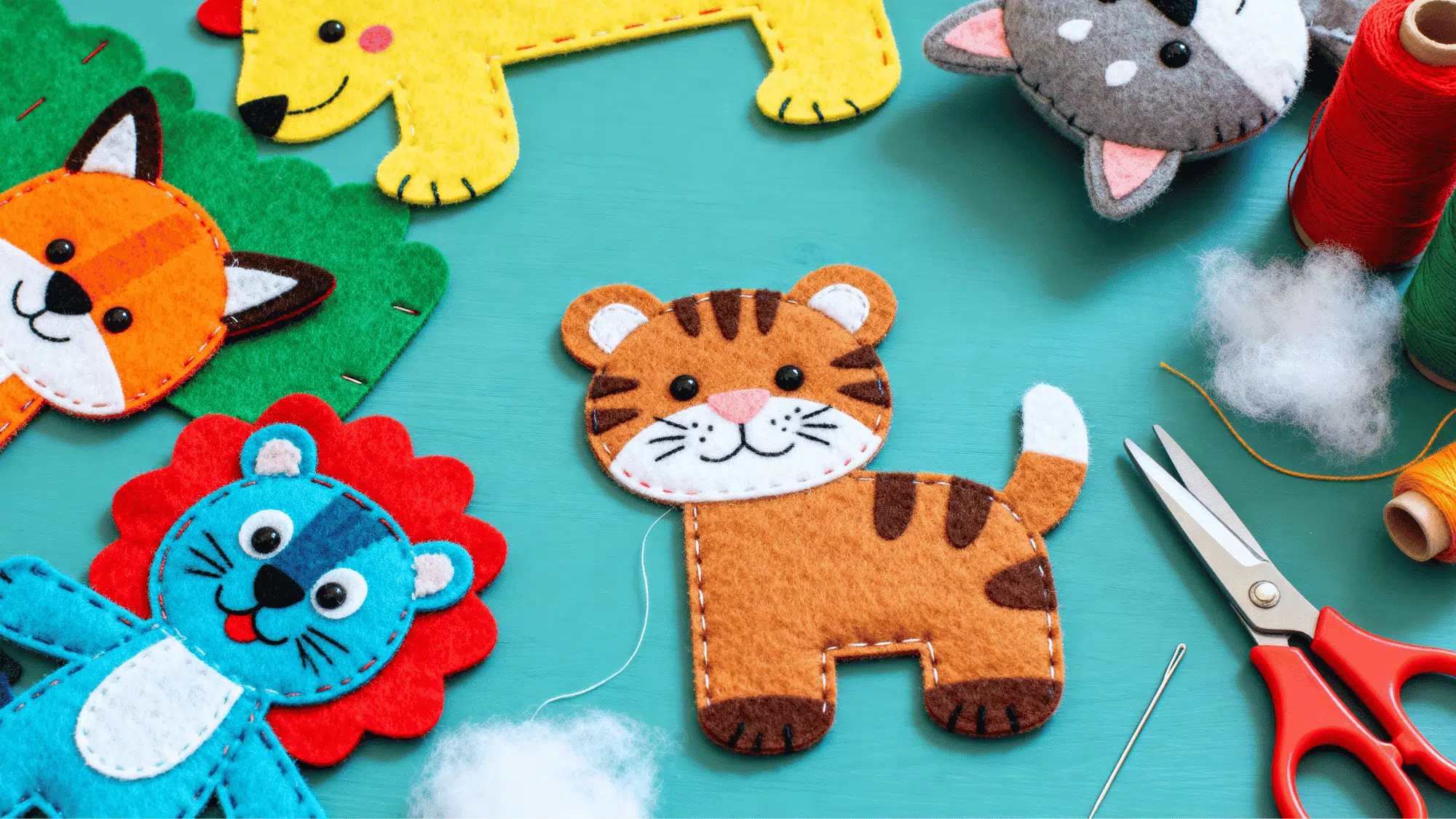
Felt animal softies are a hands-on craft where children can create small plush animals using felt pieces, stuffing, and simple stitching.
This activity encourages creativity and fine motor skills and introduces basic sewing techniques in a fun and safe way.
- Material Required: Felt sheets, Thread, Needle, Stuffing, Scissors, Glue, Googly eyes
- How to make it: Cut felt pieces into desired animal shapes, sew or glue them together, add stuffing for volume, and attach eyes and small details to complete the softie.
- Suitable for age group: 5-10 years
6. Rock Painting
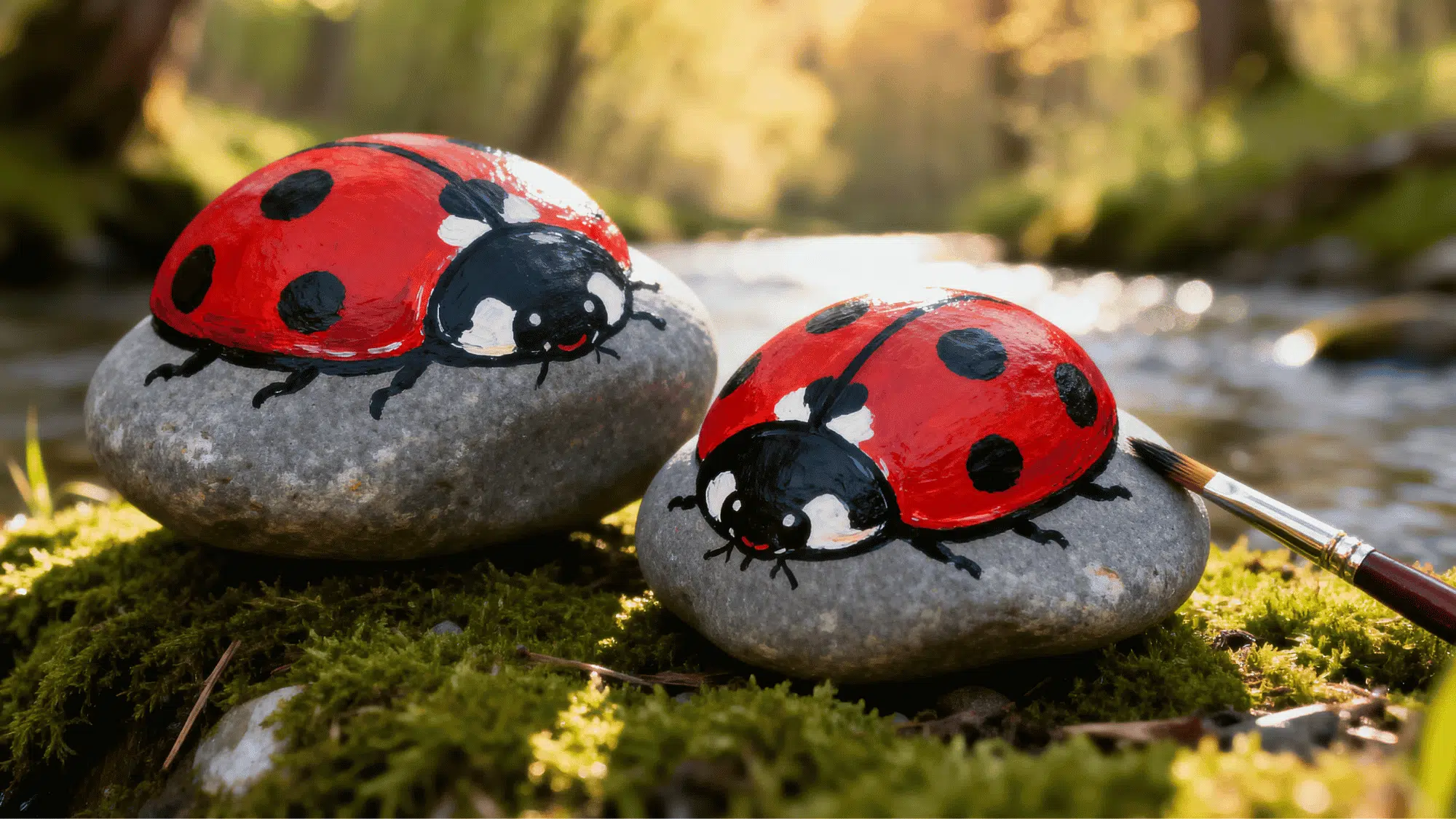
Painted Rock Animals are a fun and creative way to convert ordinary stones into charming animal figures.
Kids can enjoy decorating rocks with bright colors and patterns, while adults can use them for garden décor or educational crafts.
This activity helps develop fine motor skills and encourages imagination without needing complex tools.
- Material Required: smooth rocks, acrylic paints, paintbrushes, permanent markers, and optional sealant
- How to Make It: Clean and dry the rocks, then paint on base colors, patterns, and details such as eyes and spots with markers or fine-point brushes. Finish with a protective sealant if you like.
- Suitable for Age Group: 4-10 years
7. Origami and Paper Engineering
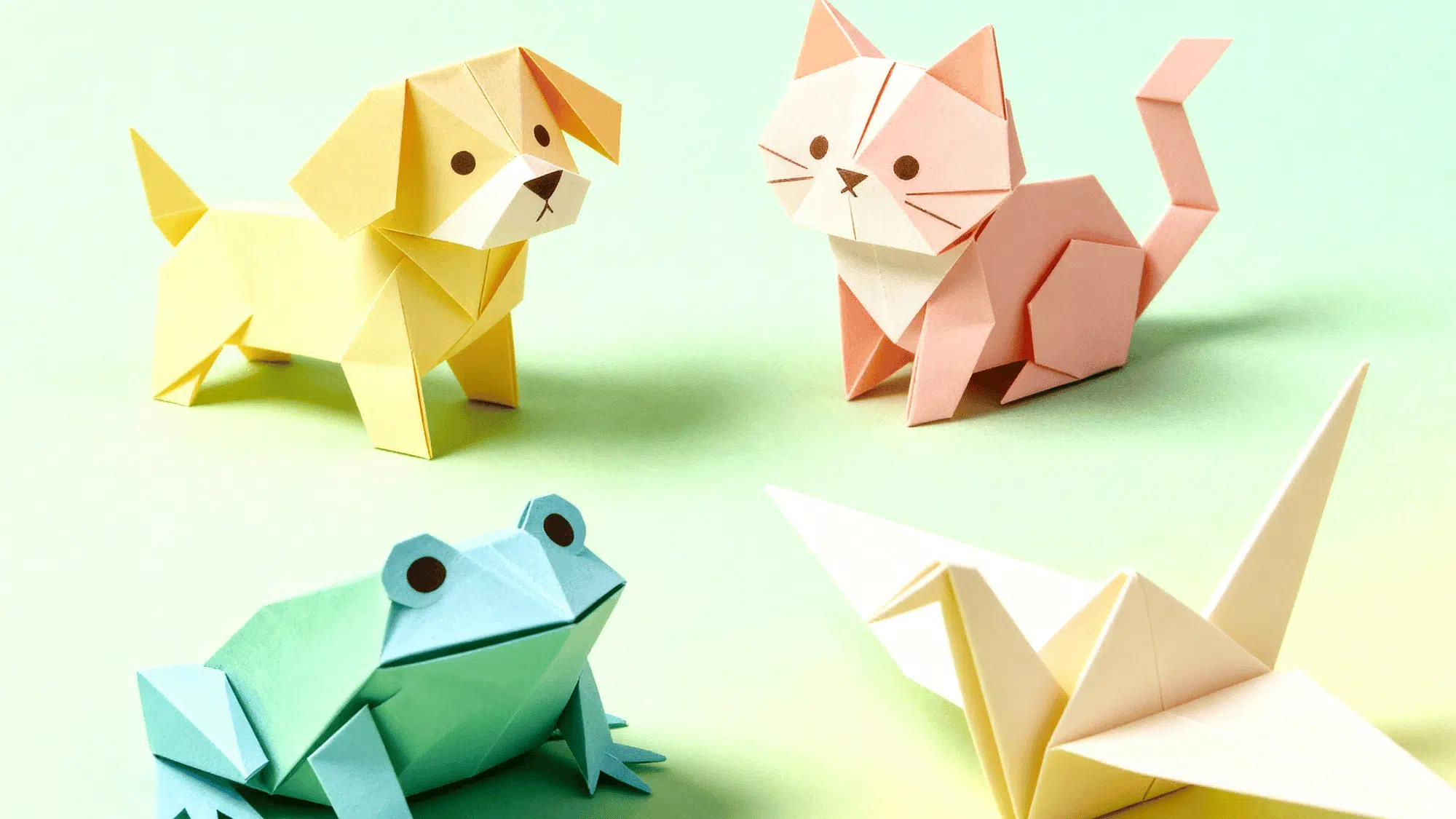
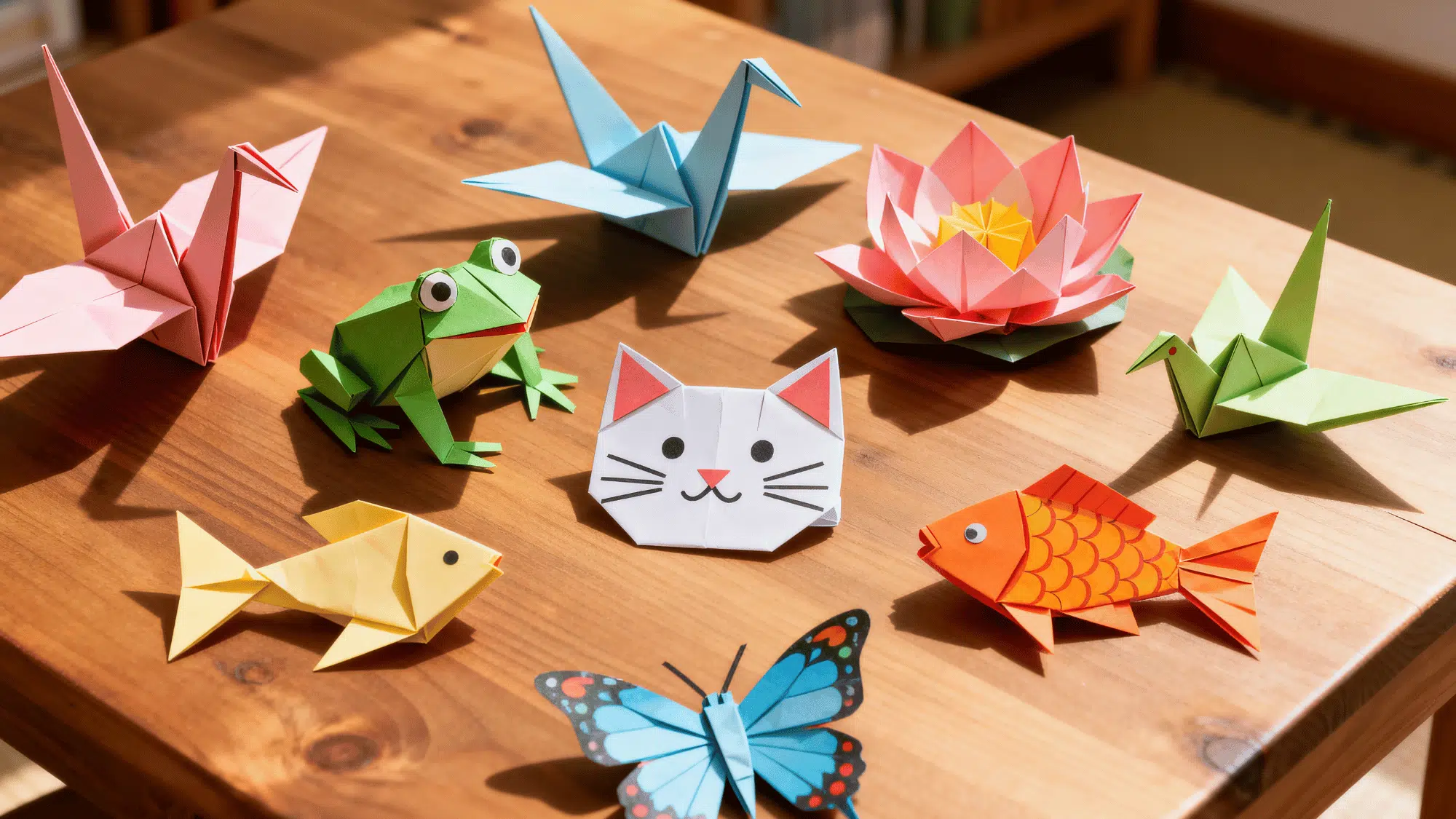
Origami animals are created by folding paper into shapes such as dogs, cats, frogs, and cranes.
These crafts enhance fine motor skills, hand-eye coordination, creativity, and spatial reasoning, making them both fun and educational for children.
- Material Required: Colored origami paper, black marker, and optional stickers for eyes
- How to make it: Fold a square of origami paper step by step into your chosen animal, keeping the creases sharp, then shape smaller details like ears, tails, or wings.
- Suitable for age group: 6-12 years
8. Papermache and Clay Models
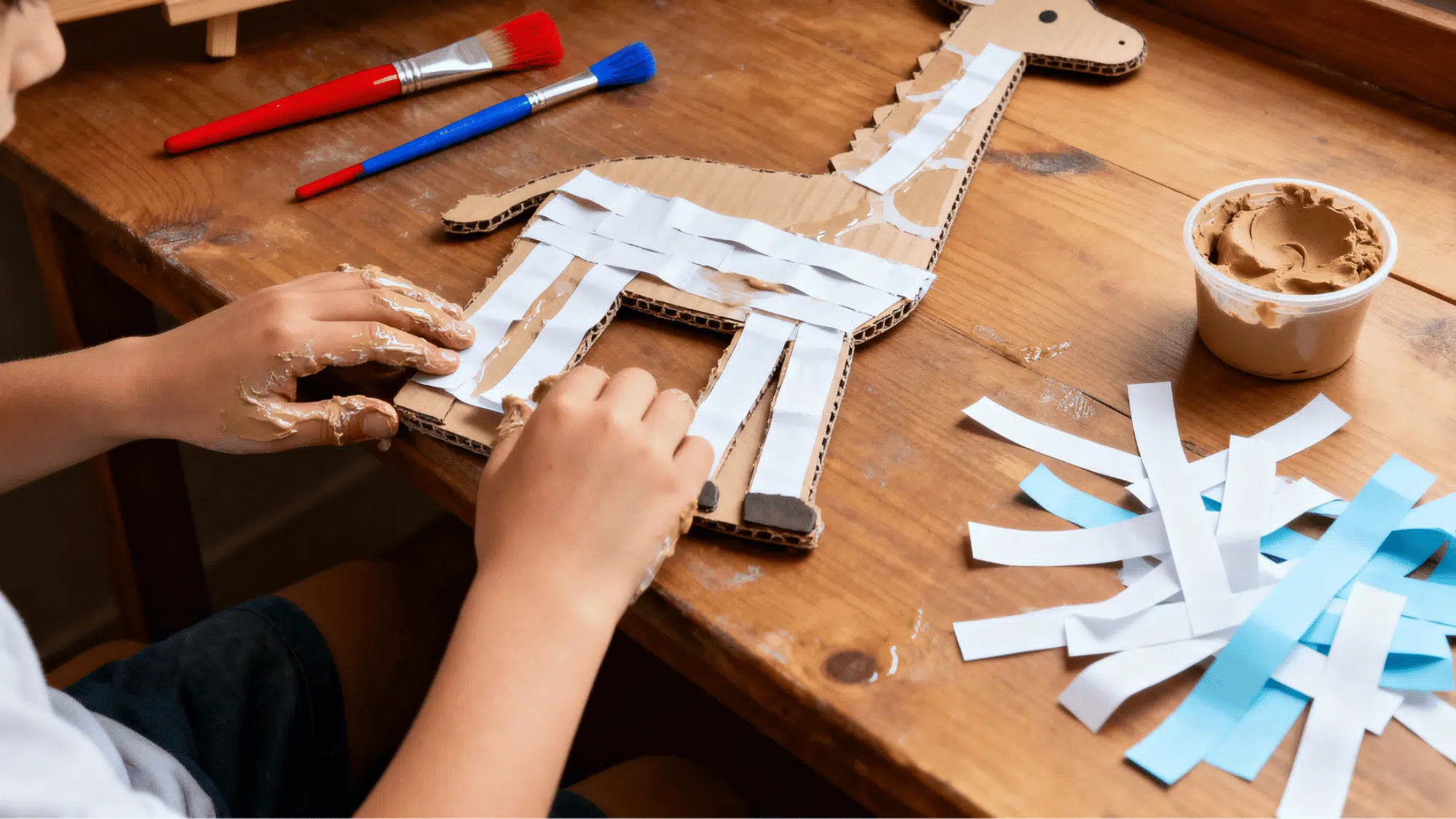
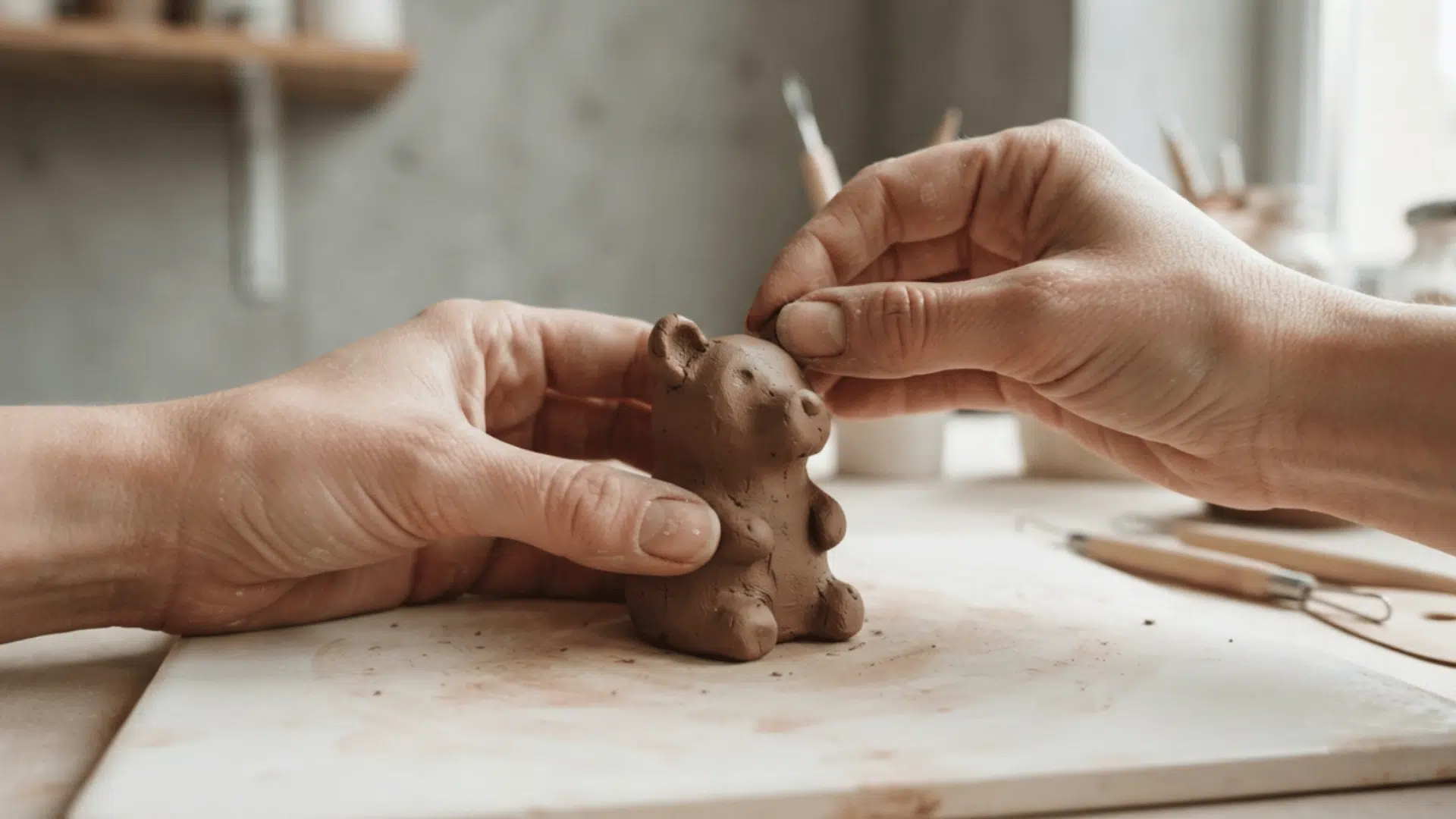
Kids can turn simple cardboard shapes into textured animal figures using papier-mache paste. It allows them to know three-dimensional art while building fine motor skills and creativity.
If your child enjoys working with clay, these DIY air-dry clay hearts are a lovely follow-up project that uses the same hands-on modeling skills in a slightly different direction.
- Material Required: Cardboard cutouts, Paper strips, Paper mache paste, Paint, Paintbrush
- How to Make it: Layer paper strips with papier-mache paste over cardboard cutouts until fully covered, then let them dry completely. Paint and add details like eyes, spots, or patterns to finish.
- Suitable for Age Group: 5-10 years
9. Mixed-Media Dioramas
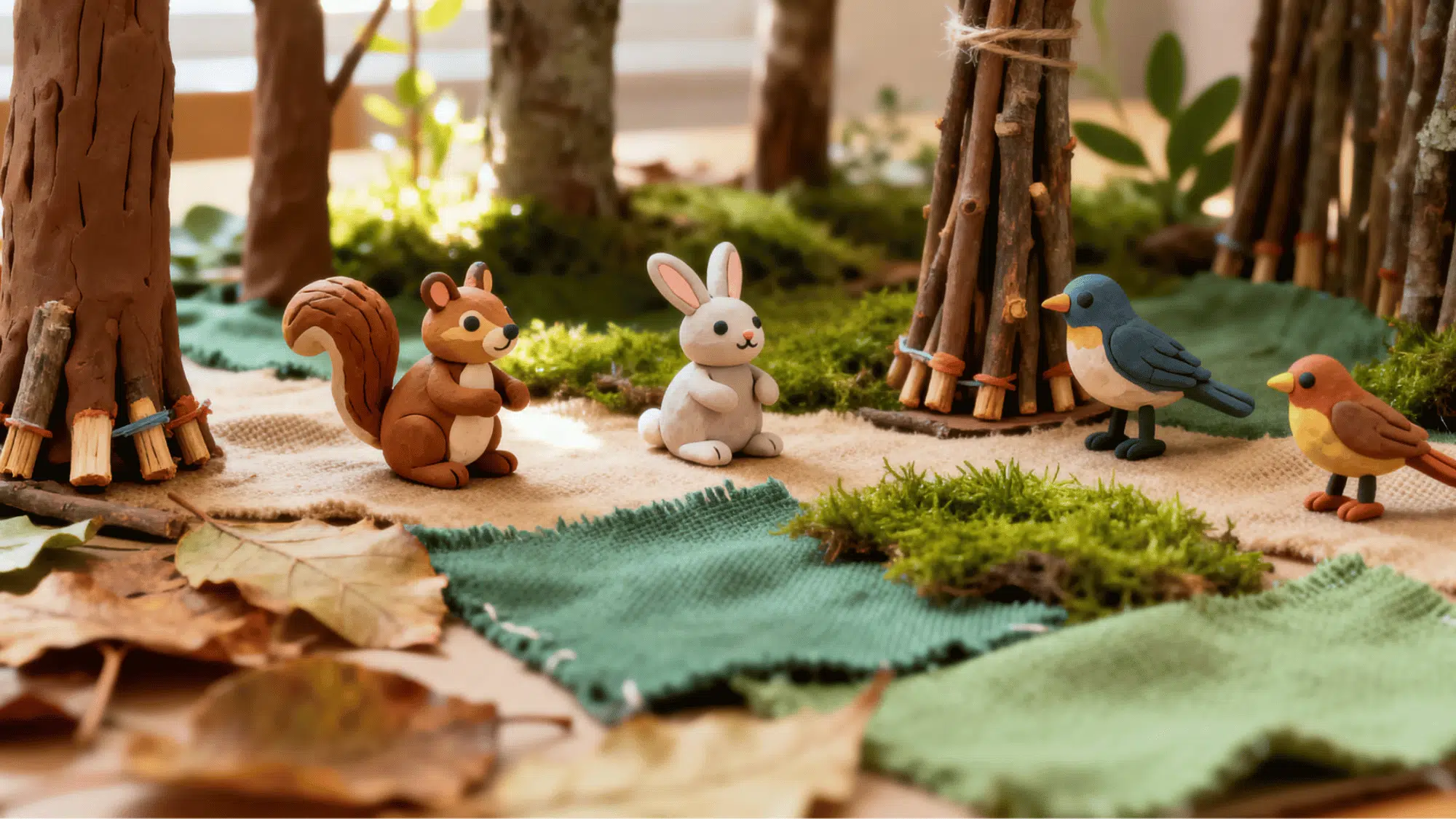
This craft uses natural elements like sticks and felt pieces to create a miniature forest scene with animals, combining creativity with tactile play.
Children can build a small ecosystem while arranging animals, encouraging imaginative storytelling, and developing fine motor skills.
- Material Required: Clay, sticks, felt, moss, glue, small craft tools
- How to make it: Lay out felt and moss for the forest base, then shape squirrels, rabbits, and birds from clay with eyes, ears, and tails. Arrange the animals around the floor, add small sticks for trees, and let everything dry before moving it.
- Suitable for age group: 4-10 years
10. Egg-carton caterpillar
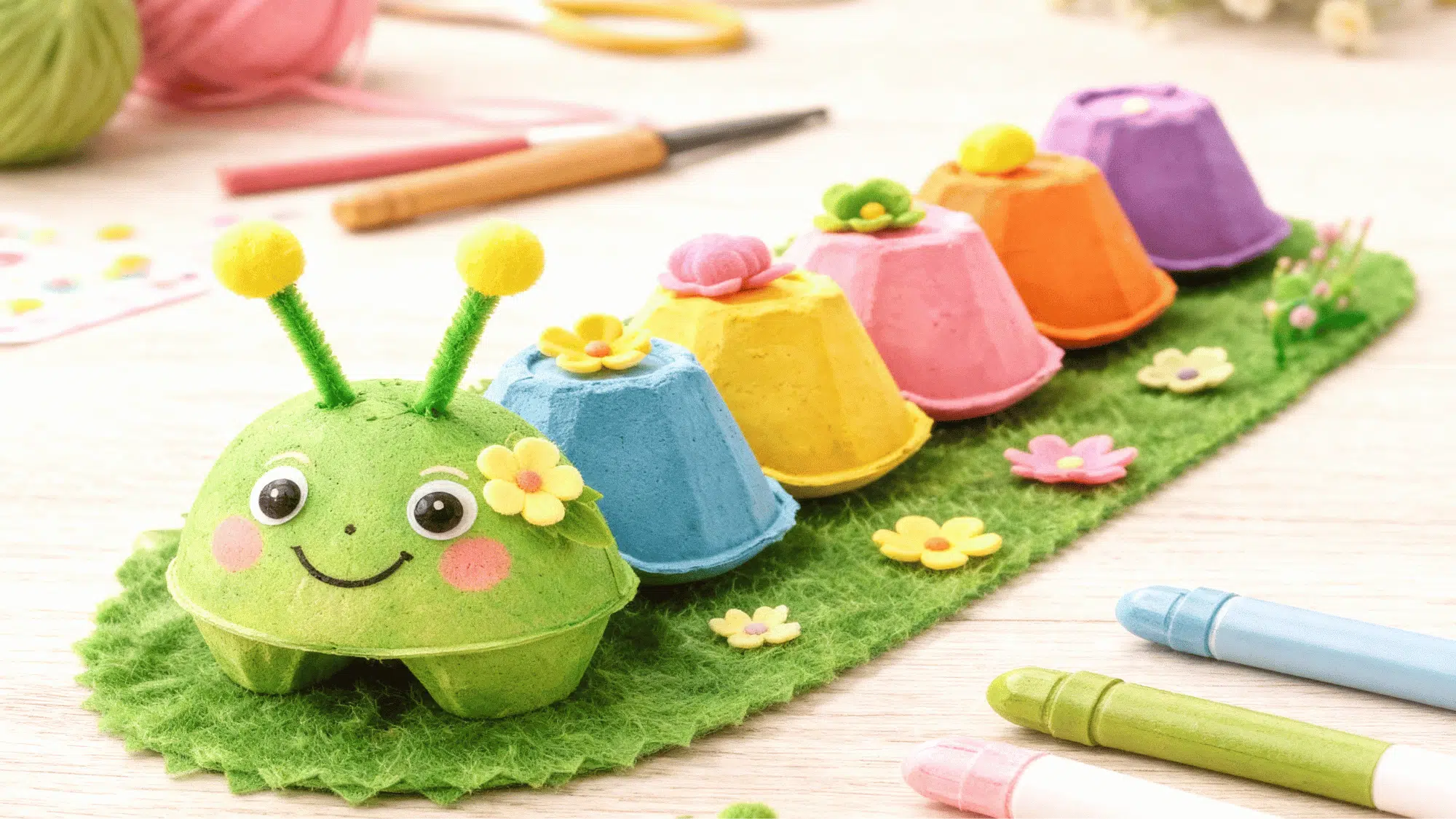
This craft turns ordinary egg cartons into a fun caterpillar, perfect for kids to decorate with paint, pipe cleaners, and paper accents.
It’s tactile and colorful, encouraging imaginative play while teaching basic shapes and colors.
- Material Required: Egg carton, paint, pipe cleaners, pom-poms, glue, scissors, markers
- How to make it: Cut the egg carton into cups, paint each one a bright color, and glue them in a row to form the body. Add pipe-cleaner antennae, pom-pom eyes, and a drawn-on smile to finish.
- Suitable for age group: 3-6 years
11. Paper-Cup Spider
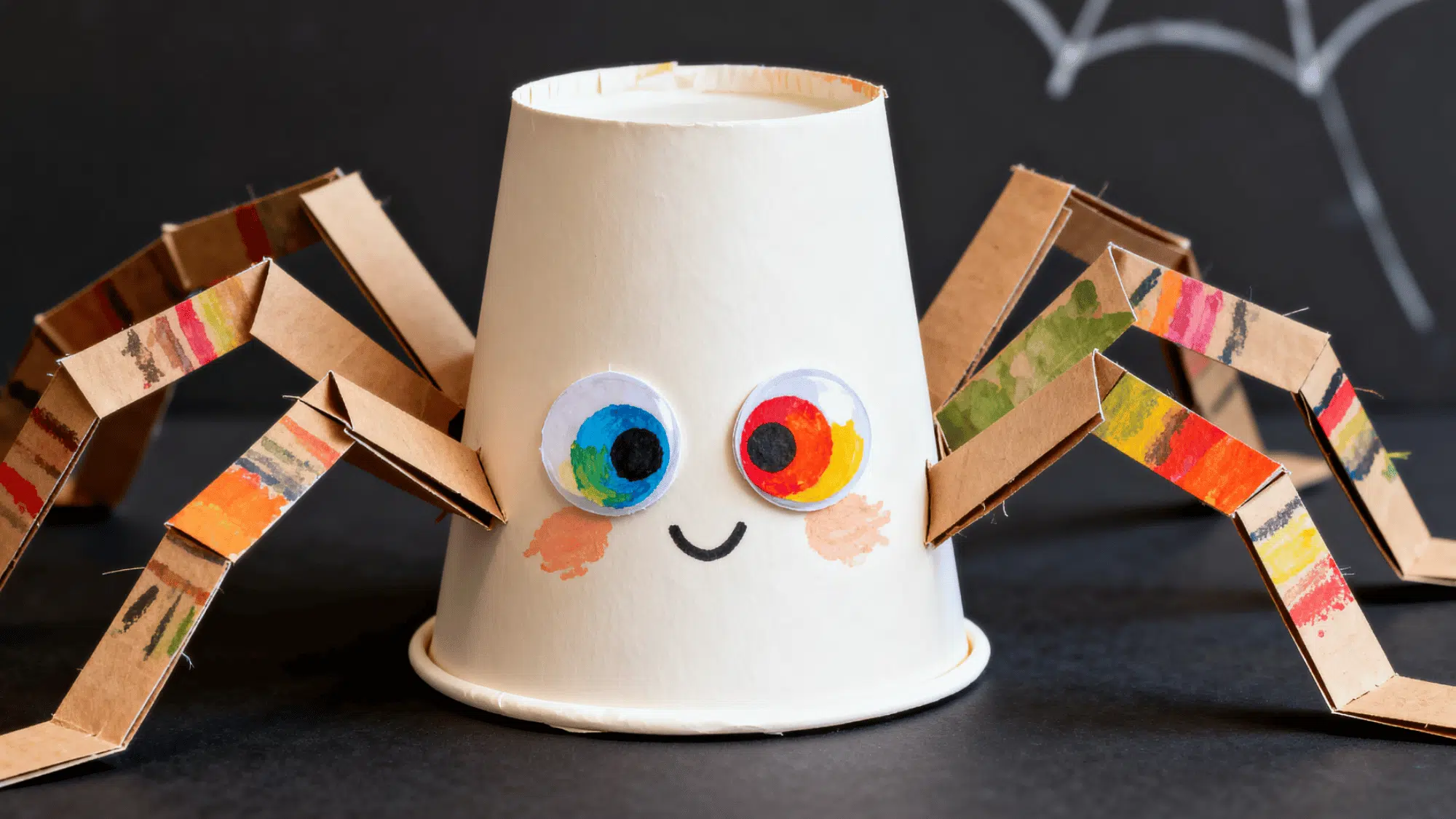
A fun and simple craft that turns a plain paper cup into a colorful spider with bendable legs, perfect for imaginative play or a Halloween-themed activity.
Kids can decorate the spider with paint or markers to add extra personality.
- Material Required: Paper cup, cardboard, paint, markers, scissors, glue
- How to make it: Cut cardboard strips for legs, color the cup and pieces, then glue the legs to the sides. Add googly eyes, let it dry, and bend the legs outward for a 3D effect.
- Suitable for age group: 4-8 years
Quick Tips
A few small things can make any animal craft go more smoothly and keep kids interested from start to finish. The tips below cover what helps most.
- Choose crafts that match the child’s age and skill level.
- Gather all materials before starting to keep things smooth.
- Let kids pick colors and designs for their animals.
- Break instructions into simple, easy steps.
- Talk about the animals and their habitats while crafting.
- Use cutting, painting, and gluing to help develop fine motor skills.
- Display finished crafts to celebrate their work and encourage pride.
Wrapping It Up
Animal crafts turn everyday materials into meaningful learning experiences. Children practice new skills, animal life, and enjoy the pride of creating something tangible.
Start with a project that fits the child’s age and the supplies you have; short, clear steps help maintain attention and reduce frustration.
Encourage personal choices in color and decoration, and display finished pieces.
Use the opportunity to talk about habitats and behavior. With a handful of basic supplies and a bit of supervision, crafting becomes a regular source of creativity, learning, and fun for kids of all ages.