Think watercolor is only for soft sketches and quick studies? Famous watercolor paintings show how much depth, control, and emotion this medium can hold.
You may see watercolor as simple because the paint looks light and the tools seem basic. That idea can make great work easy to overlook.
Water moves at a fast pace, colors mix on the page, and mistakes are hard to hide. A skilled artist has to work with all of that at once.
If you judge watercolor by casual school projects or simple hobby art, you may miss why serious collectors and museums value it so highly.
A skilled artist has to work with all of that at once, which is why wet washes, soft edges, and layered color take so long to master.
What Makes a Watercolor Painting Famous?
A watercolor painting often becomes widely known because it combines technical control, a recognizable subject, and A fresh way of using color or light.
Some artists became known for delicate transparent layers, while others used strong pigment, graphite, charcoal, wax, or opaque watercolor.
Their work also helped move watercolor from private sketchbooks into galleries and museum collections.
Many famous watercolor paintings remain influential because artists can still study their washes, edges, compositions, and use of the paper’s natural white surface.
Famous Watercolor Paintings Worth Knowing
Watercolor has been used for detailed nature studies, quiet landscapes, portraits, buildings, abstract forms, and scenes from daily life.
These well-known works show how artists shaped the medium in very different ways.
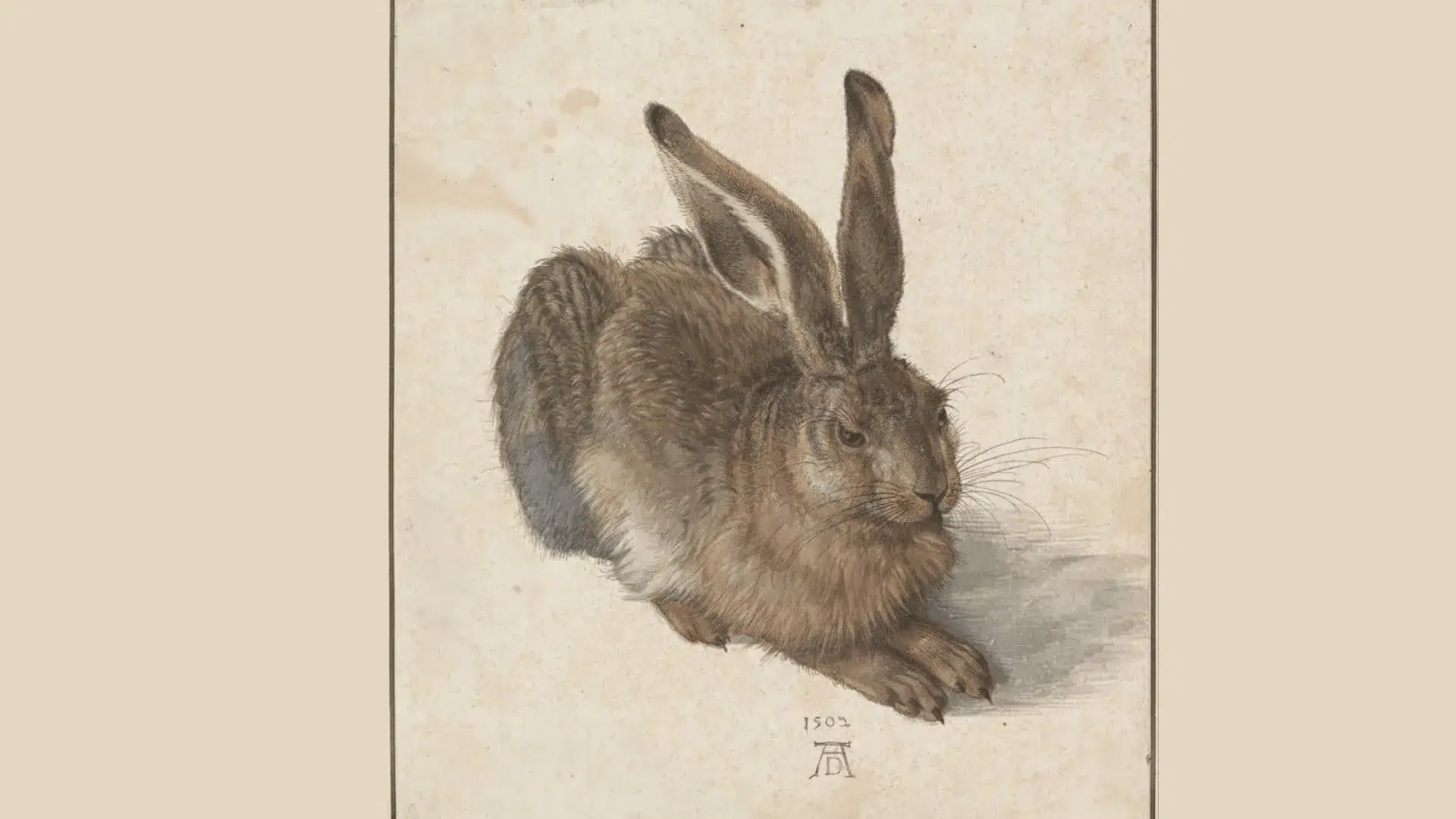
1. Young Hare
Source: Wikiart
A small hare sits against a plain background, yet every part of its fur feels carefully observed. A tiny window reflection in its eye makes the animal seem alert and alive.
- Artist: Albrecht Dürer
- Year: 1502
- Collection: Albertina Museum, Vienna
- Medium: Watercolor and opaque color with brush
- Why it is Famous: Dürer combined close study of nature with highly controlled brushwork. The result became one of his most recognized animal studies.
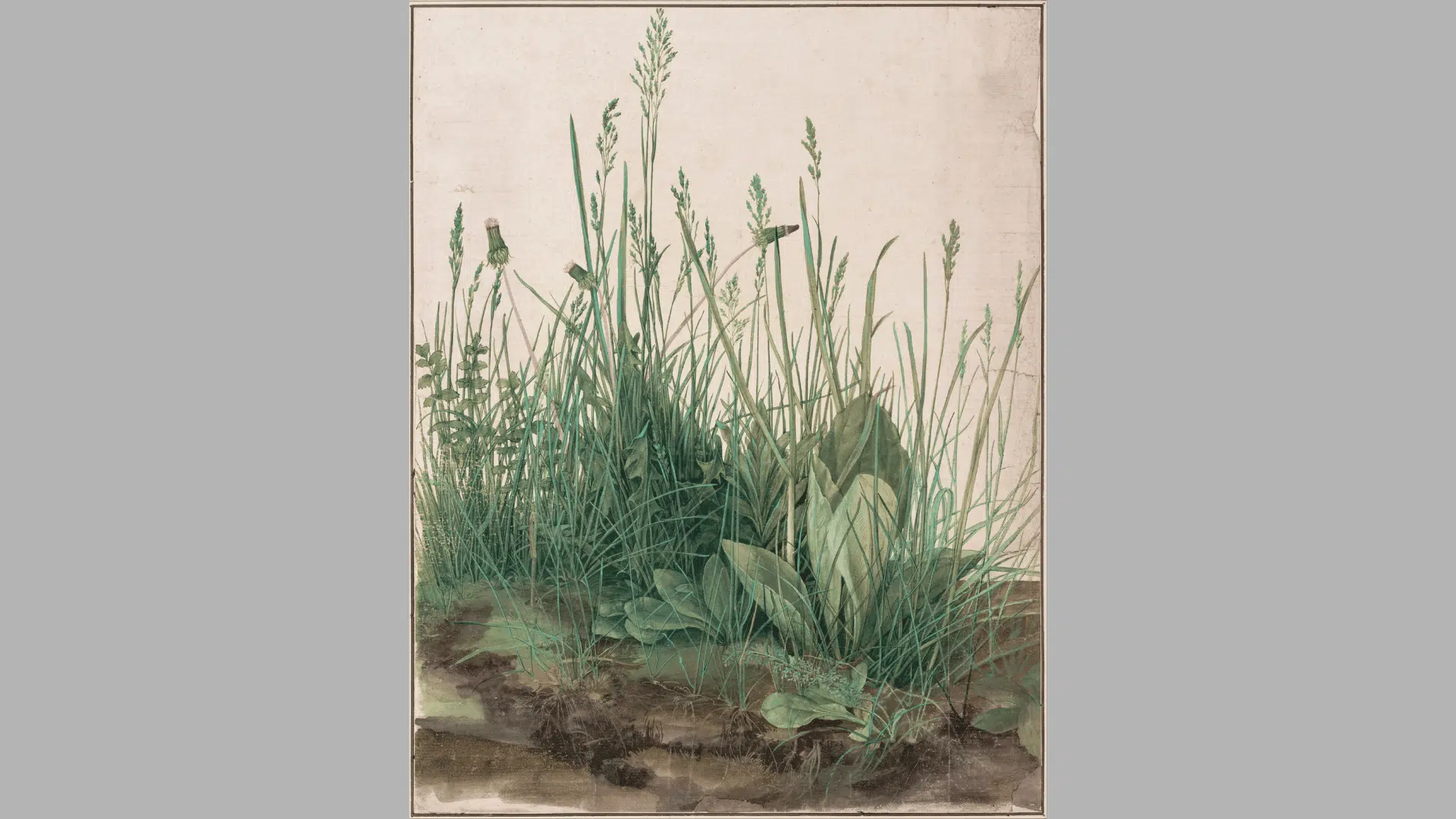
2. Great Piece of Turf
Source: Obelisk Art History
Instead of painting a grand landscape, Dürer focused on an ordinary patch of wild plants. Grasses, leaves, roots, and seed heads overlap in a way that feels natural rather than arranged.
- Artist: Albrecht Dürer
- Year: 1503
- Collection: Albertina Museum, Vienna
- Medium: Watercolor and bodycolor
- Why it is Famous: The work gives common plants the same careful attention normally given to more important subjects.
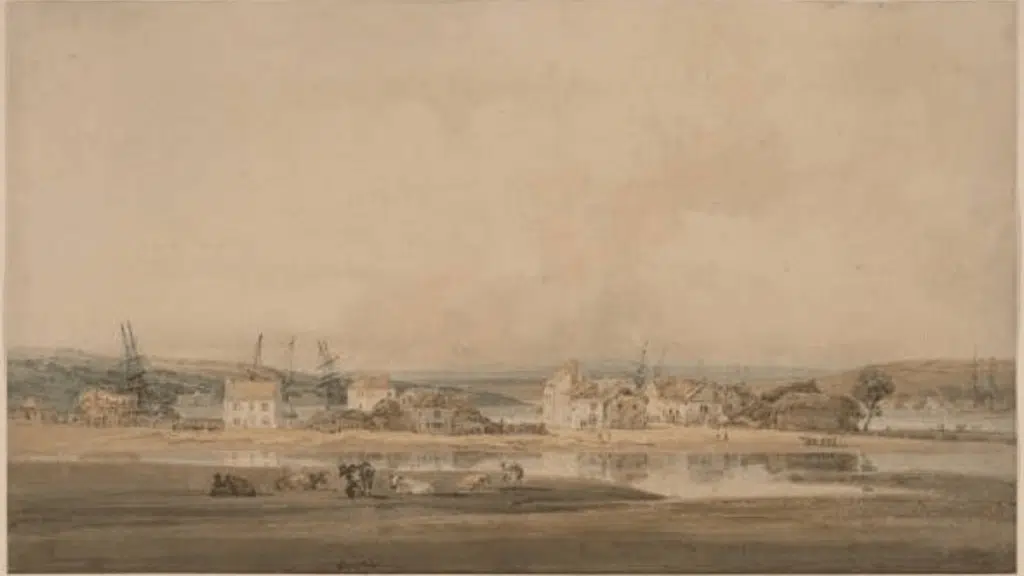
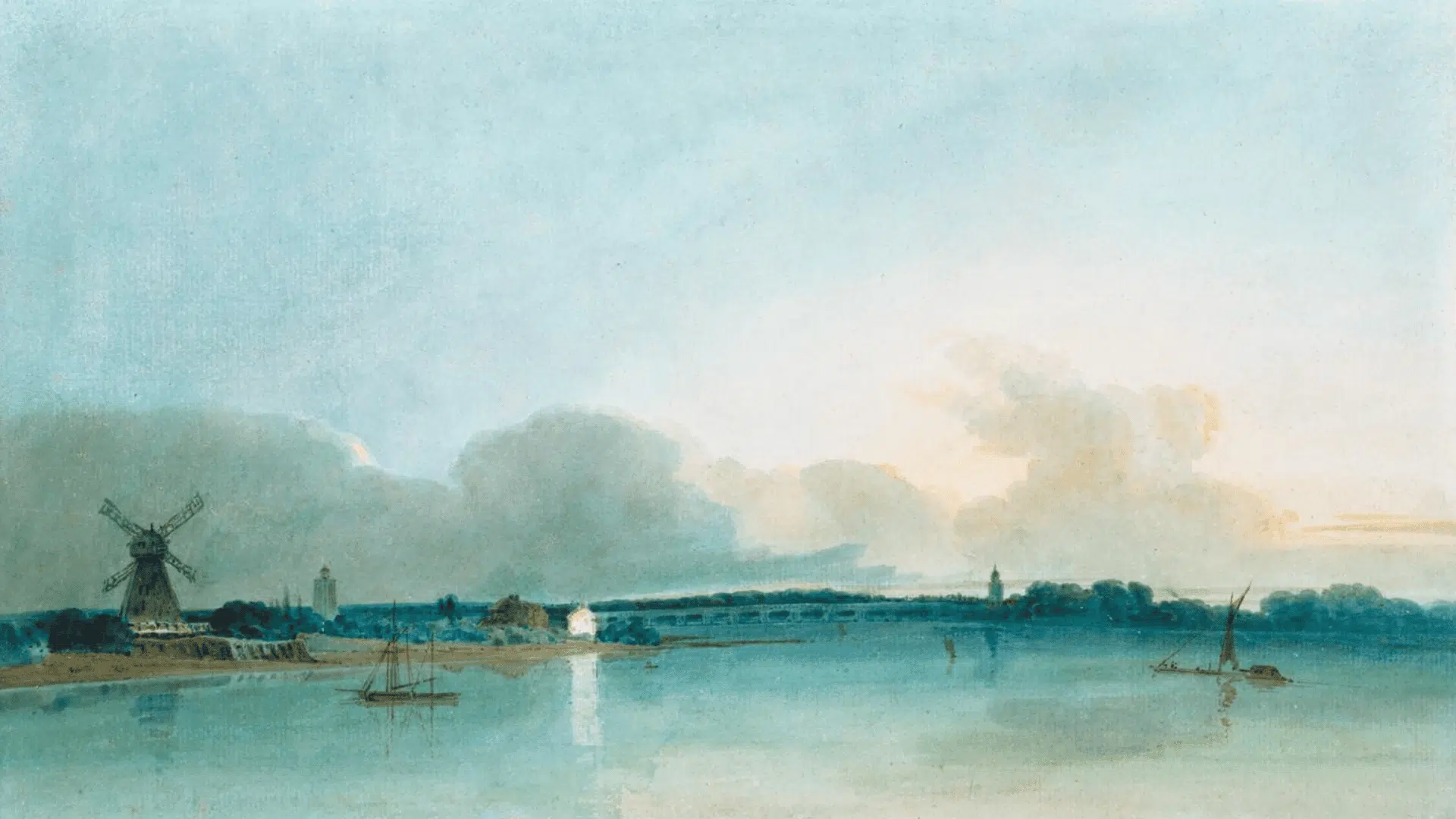
3. The White House at Chelsea
Source: Tate
A pale building sits beside the Thames under a wide, muted sky. Large areas of open space make the house appear distant, quiet, and slightly isolated.
- Artist: Thomas Girtin
- Year: 1800
- Collection: Tate, London
- Medium: Watercolor on paper
- Why it is Famous: Girtin used a limited palette and a spacious layout to give watercolor landscape painting a stronger sense of atmosphere.
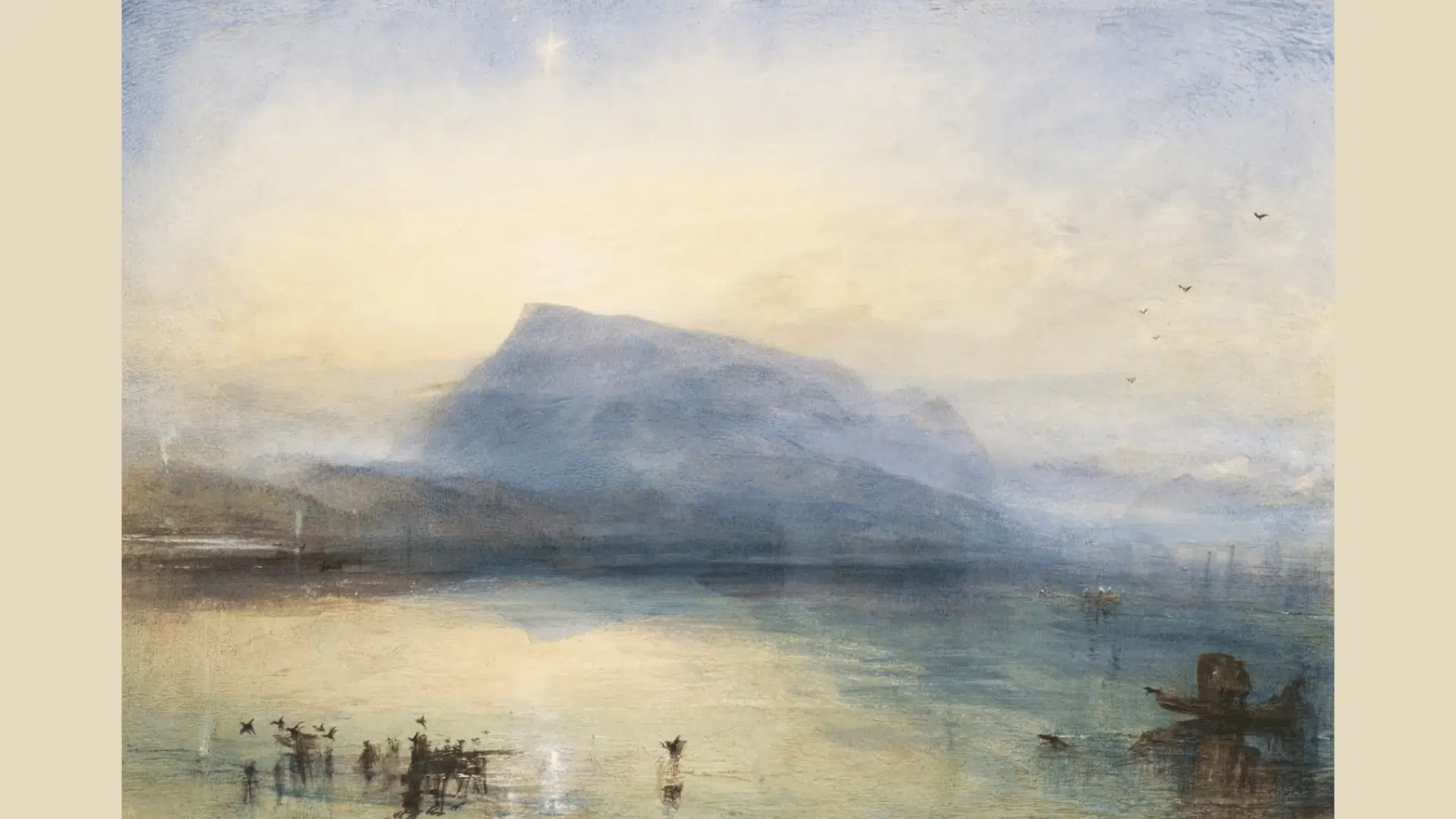
4. The Blue Rigi, Sunrise
Source: Artfund
Mount Rigi rises above Lake Lucerne as morning light moves across the cool blue landscape. Small birds and figures help show the huge scale of the lake and mountain.
- Artist: J. M. W. Turner
- Year: 1842
- Collection: Tate, London
- Medium: Watercolor on paper
- Why it is Famous: Turner used thin washes and small changes in color to capture a short moment of changing light.
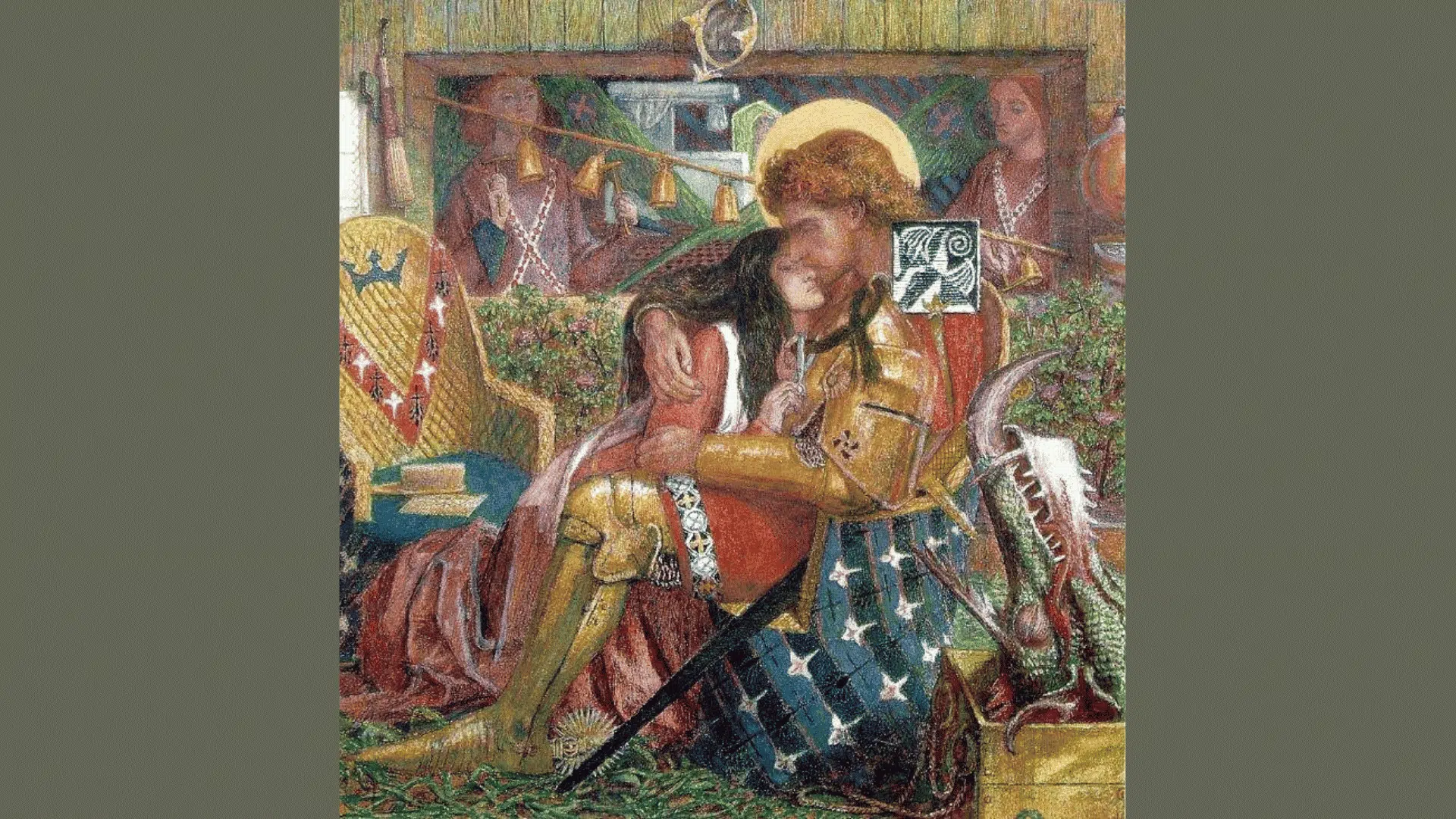
5. The Wedding of St George and Princess Sabra
Source: Artchive
Saint George and Princess Sabra appear together after the legendary defeat of the dragon. Medieval clothing, patterned surfaces, and strong color fill the small scene.
- Artist: Dante Gabriel Rossetti
- Year: 1857
- Collection: Tate, London
- Medium: Watercolor on paper
- Why it is Famous: The painting reflects the Pre-Raphaelite interest in medieval stories, romance, pattern, and rich color.
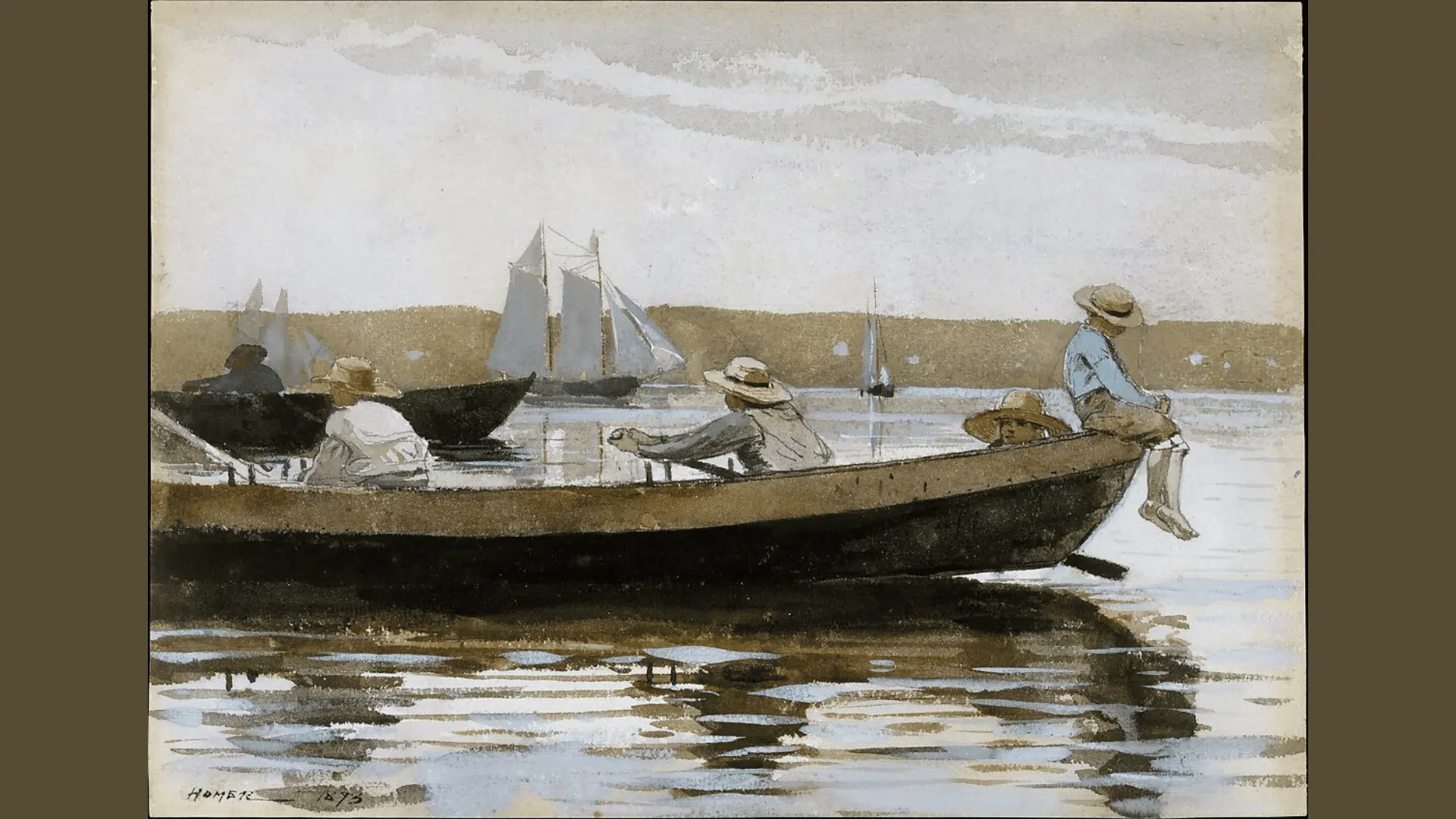
6. Boys in a Dory
Source: The Metropolitan Museum of Art
Two boys sit inside a small boat in Gloucester Harbor. The sail, hull, and water are formed with loose marks that still give the scene a clear structure.
- Artist: Winslow Homer
- Year: 1873
- Collection: The Metropolitan Museum of Art, New York
- Medium: Transparent watercolor with touches of opaque watercolor
- Why it is Famous: The painting comes from the period when Homer began working seriously with watercolor.
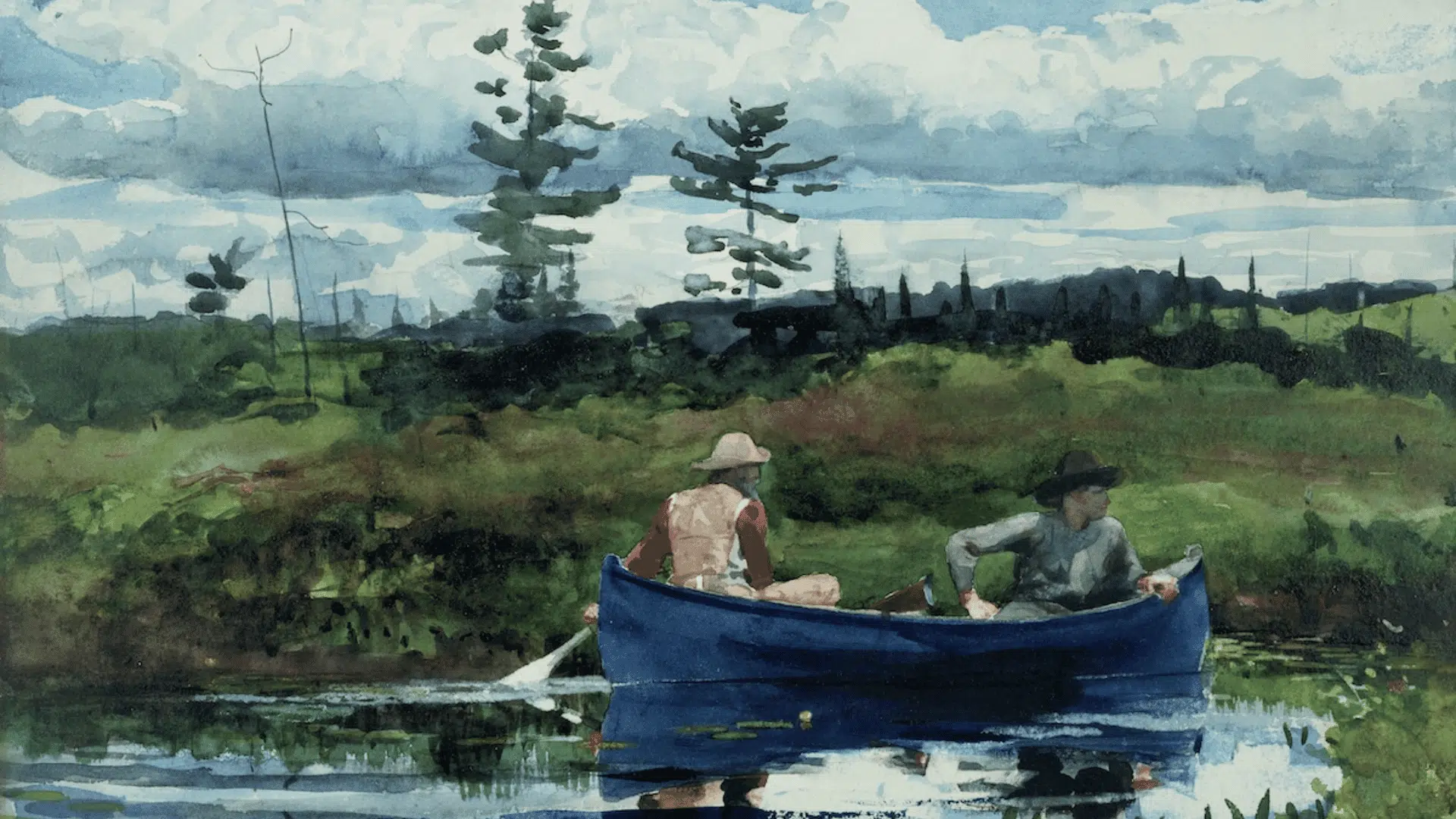
7. The Blue Boat
Source: Winslow Homer
A fisherman waits in a small blue boat surrounded by dark green water and thick plant life. Reflections soften the edge between the boat, trees, and water.
- Artist: Winslow Homer
- Year: 1892
- Collection: Museum of Fine Arts, Boston
- Medium: Watercolor over graphite
- Why it is Famous: Homer created a strong sense of stillness and depth through layered washes and dark tones.
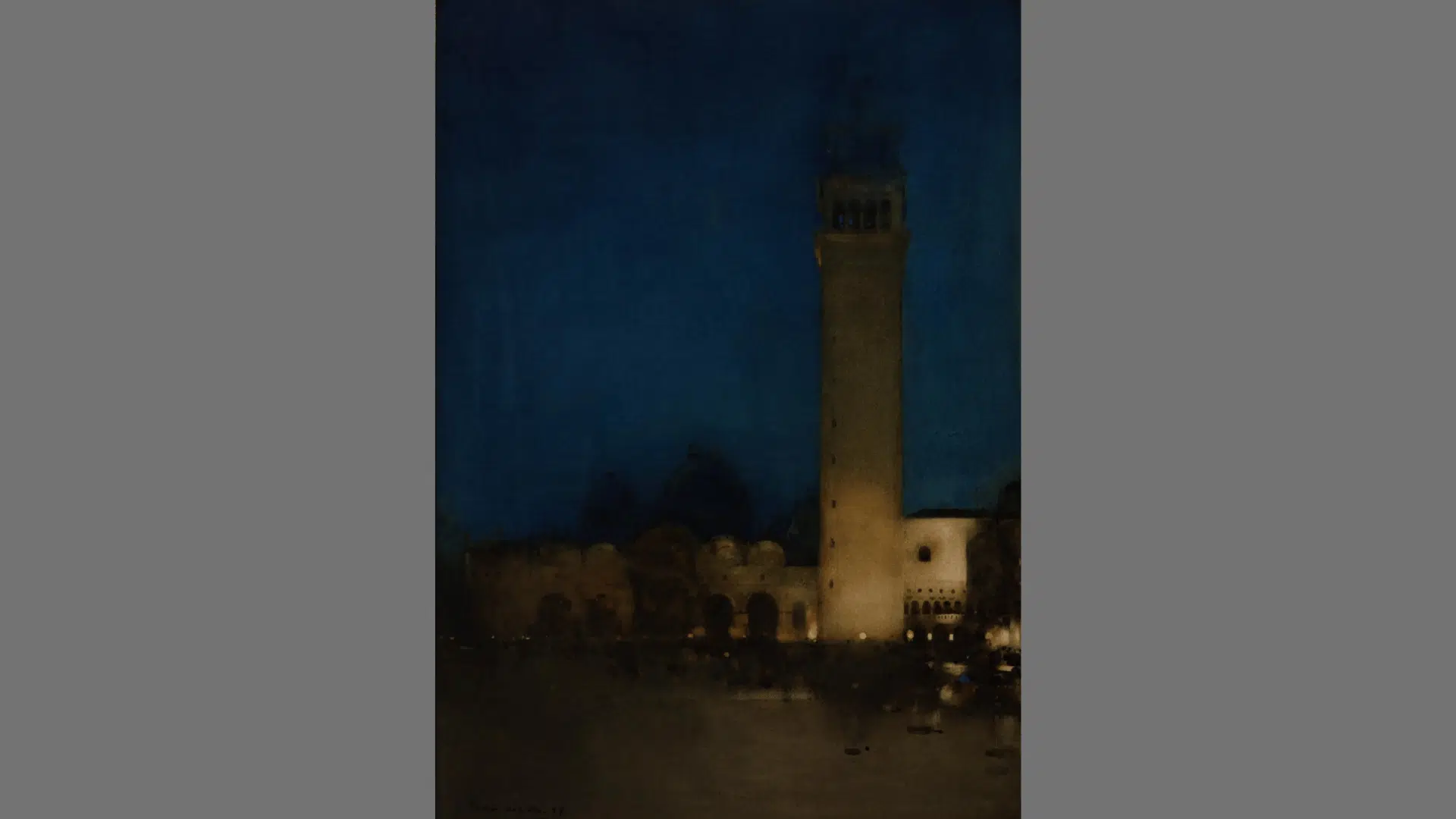
8. The Blue Night, Venice
Source: Tate
Venice appears under a deep blue evening sky. Warm lights break through the darkness and reflect across the water, while much of the architecture fades into broad areas of color.
- Artist: Arthur Melville
- Year: 1897
- Collection: Tate, London
- Medium: Watercolor on paper
- Why it is Famous: Melville used deep color and sharp light contrasts to capture Venice after sunset.
9. Fishing Boats, Key West
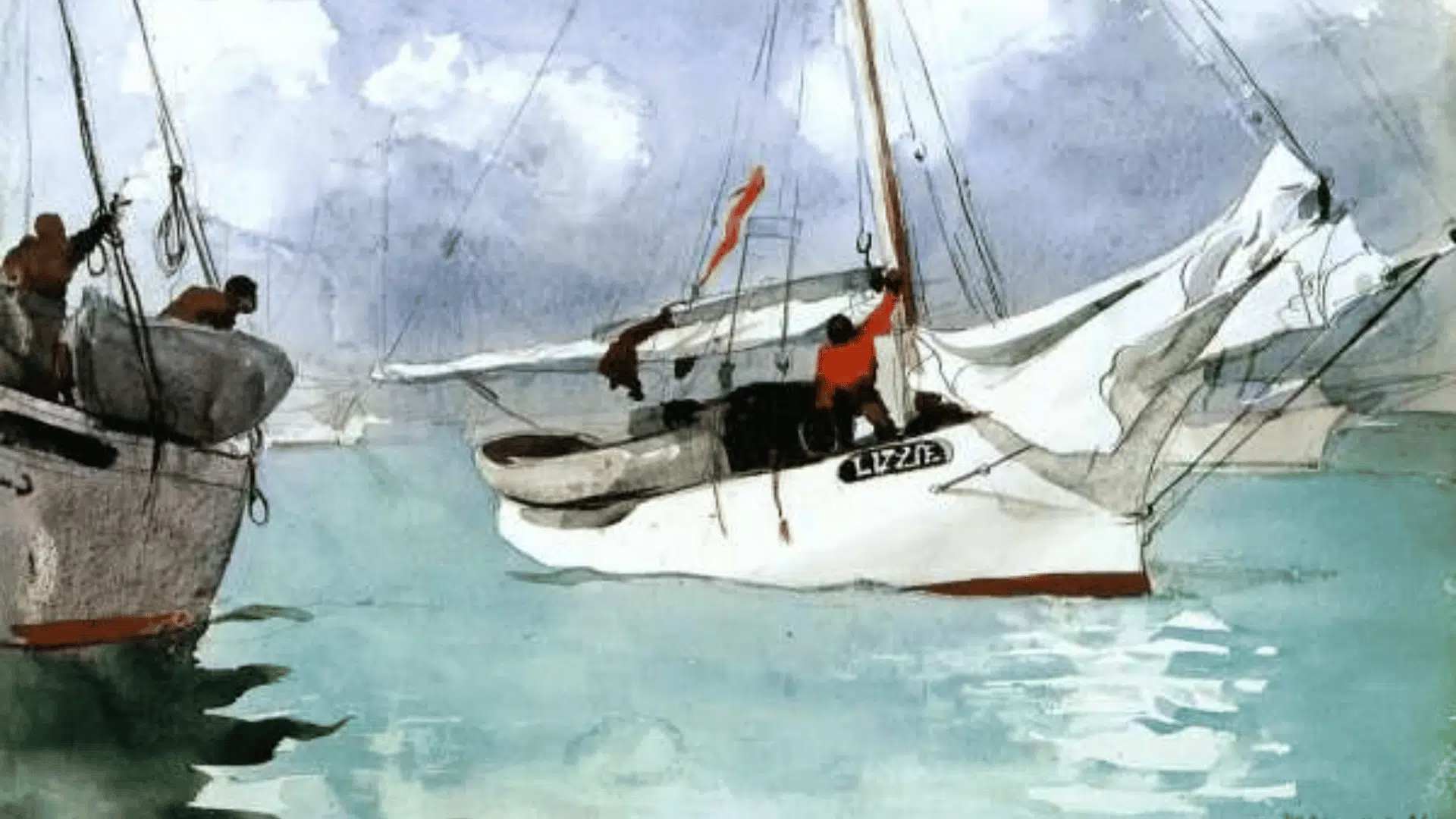
Source: Winslow Homer
Sailboats rest on clear tropical water beneath a bright sky. Transparent washes suggest sunlight moving through the shallow sea.
- Artist: Winslow Homer
- Year: 1903
- Collection: The Metropolitan Museum of Art, New York
- Medium: Watercolor on paper
- Why it is Famous: The work shows Homer’s skill at painting strong tropical light without making the scene feel crowded.
10. White Ships
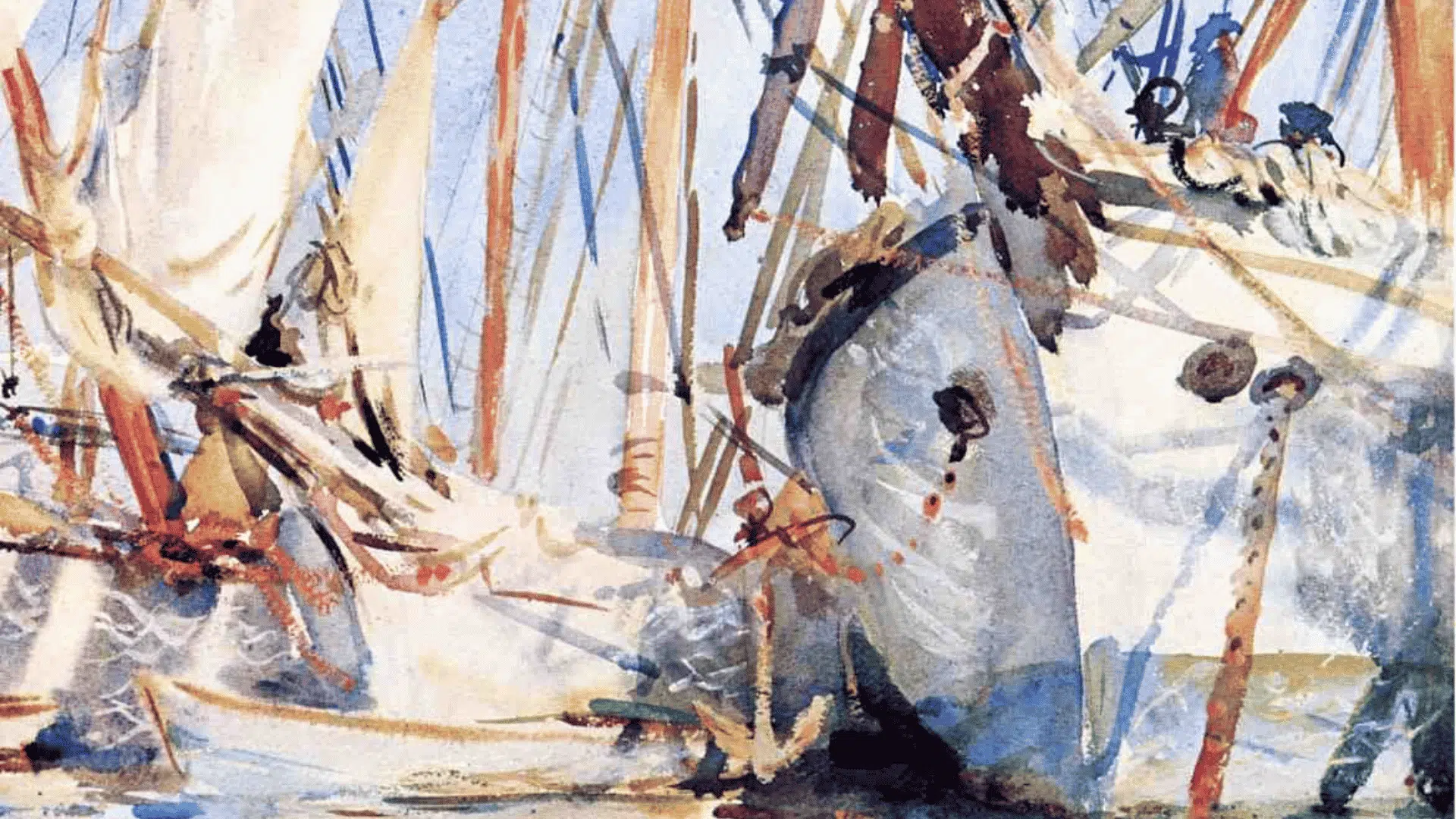
Source: Artchive
Two large boats fill much of the composition, their pale surfaces standing against blue water. Reflections and loose lines add movement without overwhelming the scene.
- Artist: John Singer Sargent
- Year: 1908
- Collection: Brooklyn Museum, New York
- Medium: Transparent and opaque watercolor, wax resist, and graphite
- Why it is Famous: Sargent mixed several methods to create the effect of bright Mediterranean sunlight.
11. Montagne Sainte-Victoire
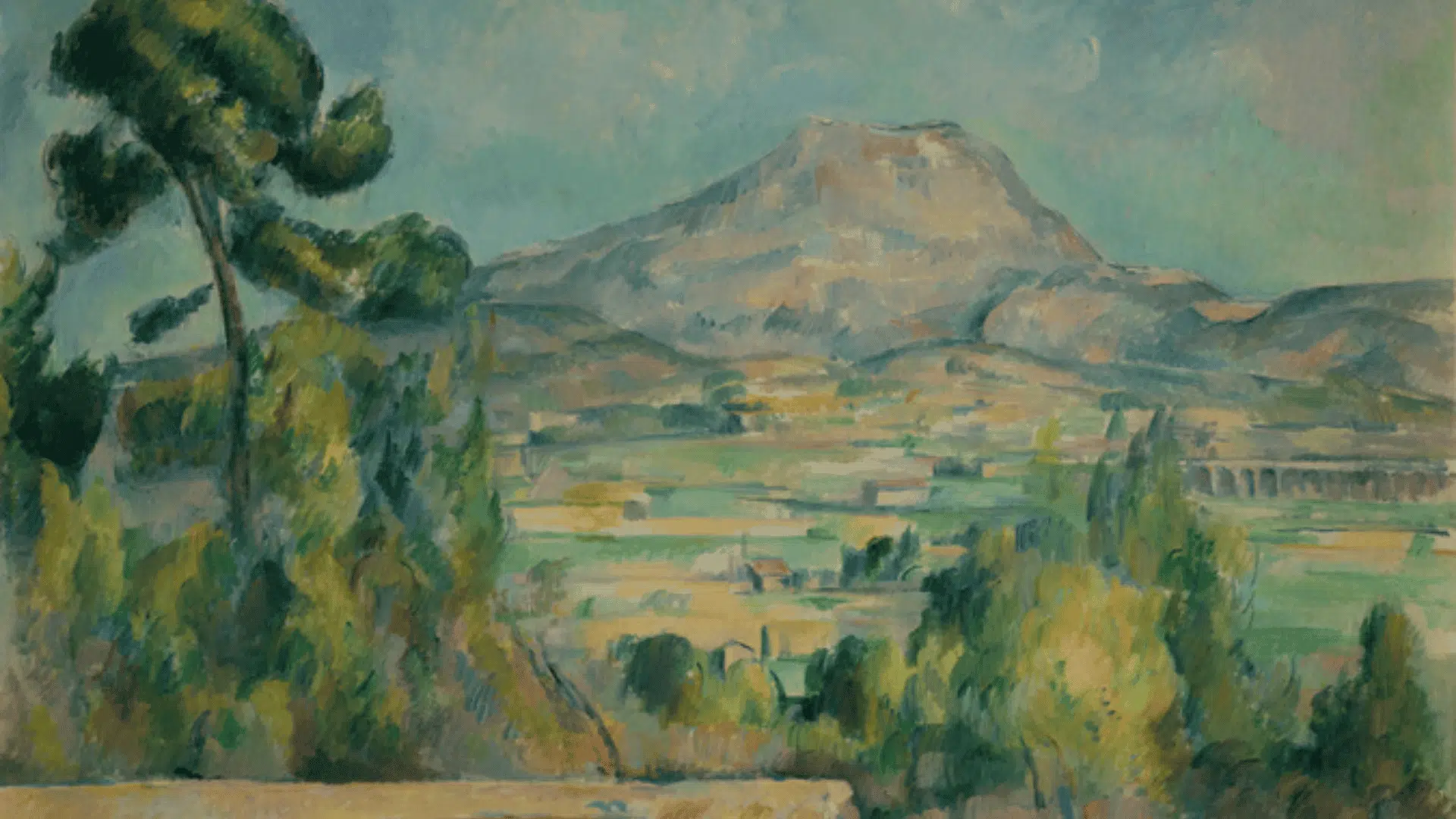
Source: Musée d’Orsay
A pine tree frames the distant mountain while a railway viaduct crosses the valley below. Pencil lines remain visible beneath broken areas of transparent color.
- Artist: Paul Cézanne
- Year: Around 1885
- Collection: Art Institute of Chicago
- Medium: Watercolor and graphite on paper
- Why it is Famous: Cézanne built the landscape from separate lines and patches of color instead of covering every part of the paper.
12. Evening Star No. II
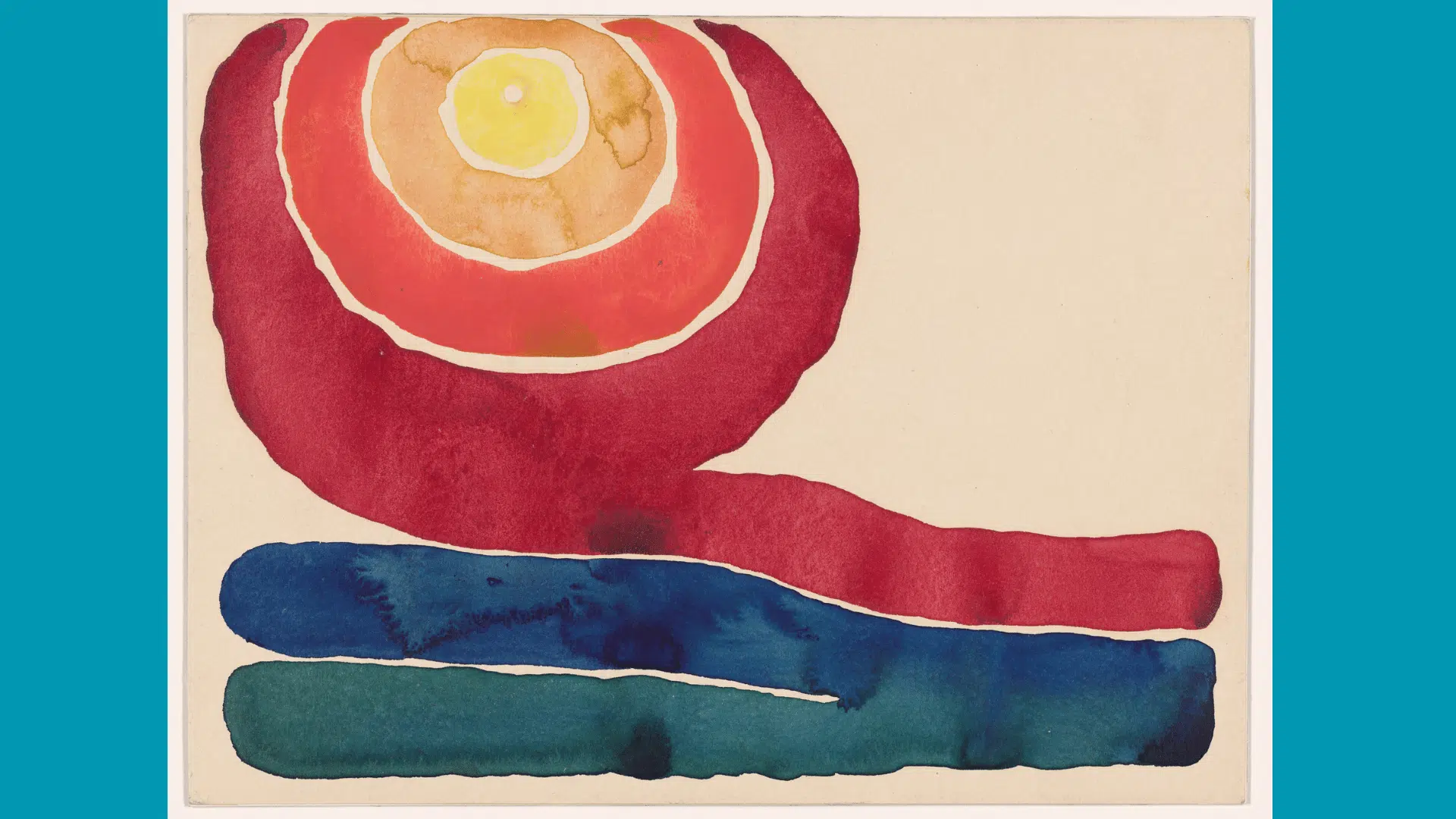
Source: crystalbridges
A white star glows above wide bands of red, orange, yellow, and blue. The colors blend softly, giving the work the feeling of a distant sunset.
- Artist: Georgia O’Keeffe
- Year: 1917
- Collection: Museum of Modern Art, New York
- Medium: Watercolor on paper
- Why it is Famous: O’Keeffe reduced the scene to color, light, and simple forms.
13. Marin Island, Maine
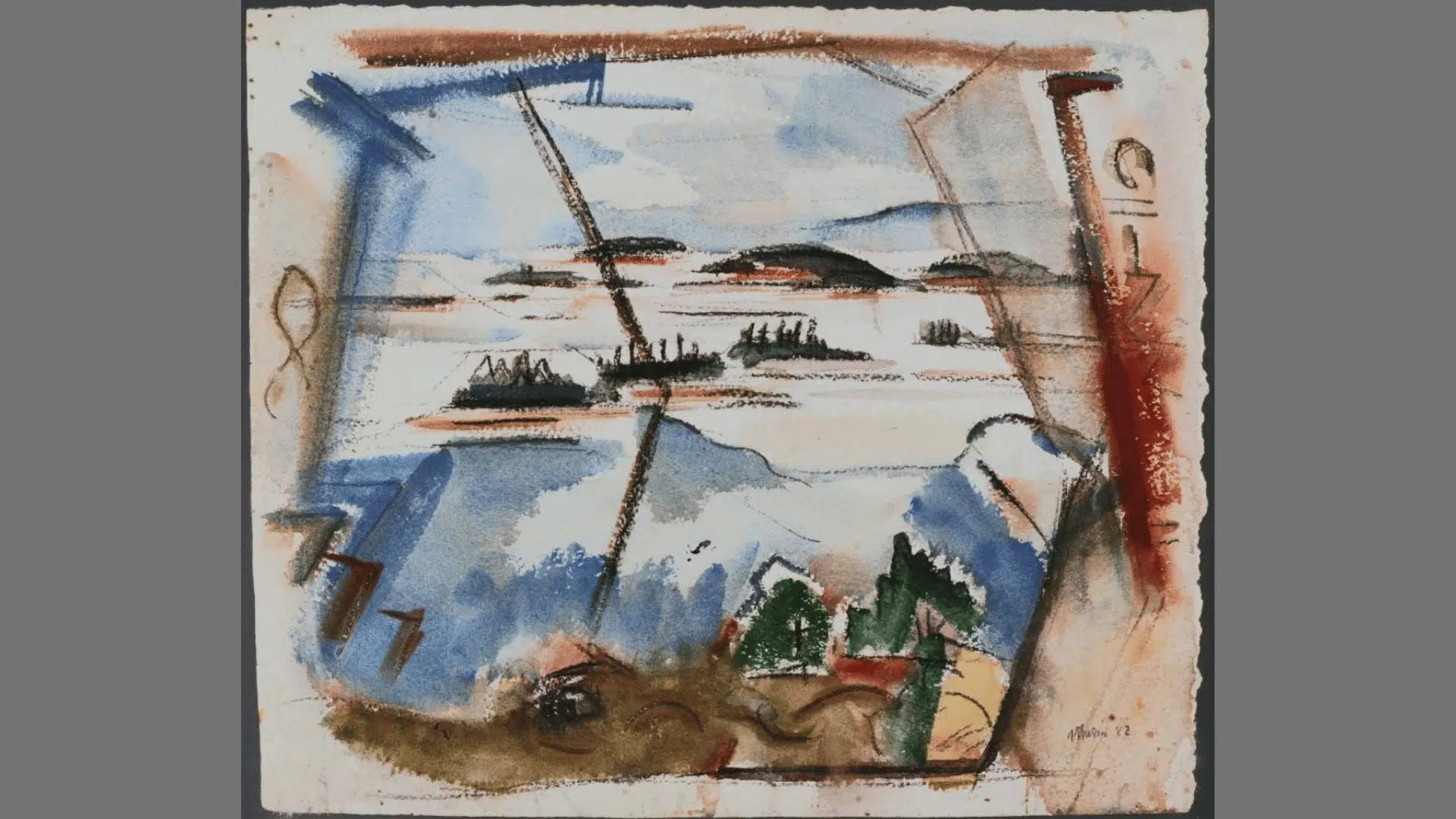
Source: The Phillips Collection
Sharp lines and broken areas of color turn the coast into an active arrangement of land, water, and sky. The island seems to shift under the force of wind and waves.
- Artist: John Marin
- Year: 1917
- Collection: The Metropolitan Museum of Art, New York
- Medium: Watercolor and charcoal on paper
- Why it is Famous: Marin combined a recognizable coastal view with the angled forms of early American modern art.
14. Red Balloon
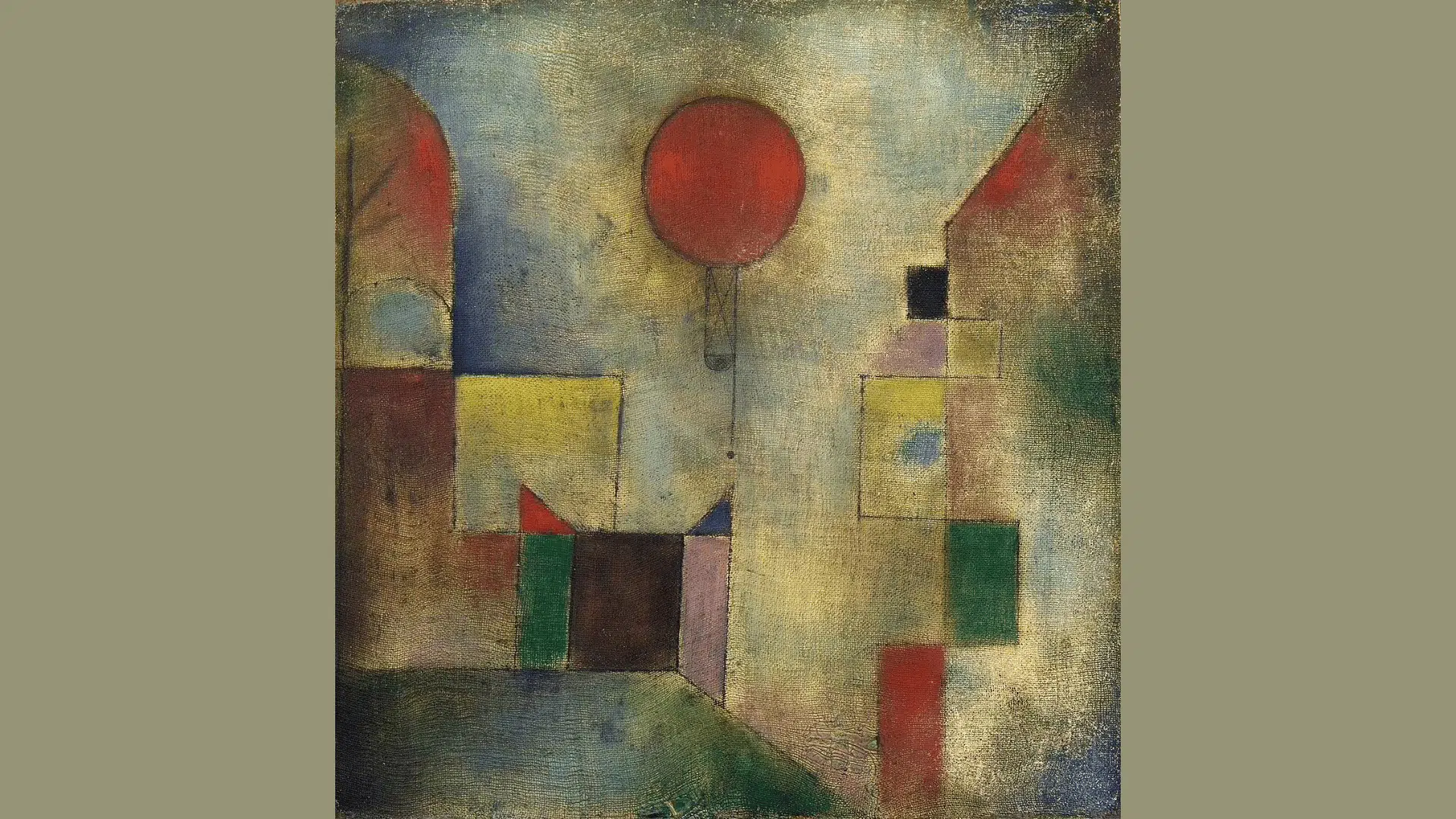
Source: Guggenheim
A bright red circle floats above an arrangement of geometric forms that suggest a town or city. Thin lines, soft washes, and block-like shapes place the work between real scenery and abstraction.
- Artist: Paul Klee
- Year: 1922
- Collection: Solomon R. Guggenheim Museum, New York
- Medium: Oil-transfer drawing and watercolor on prepared gauze
- Why it is Famous: The single red shape becomes the strongest point in a field of quieter colors and forms.
15. The Mansard Roof
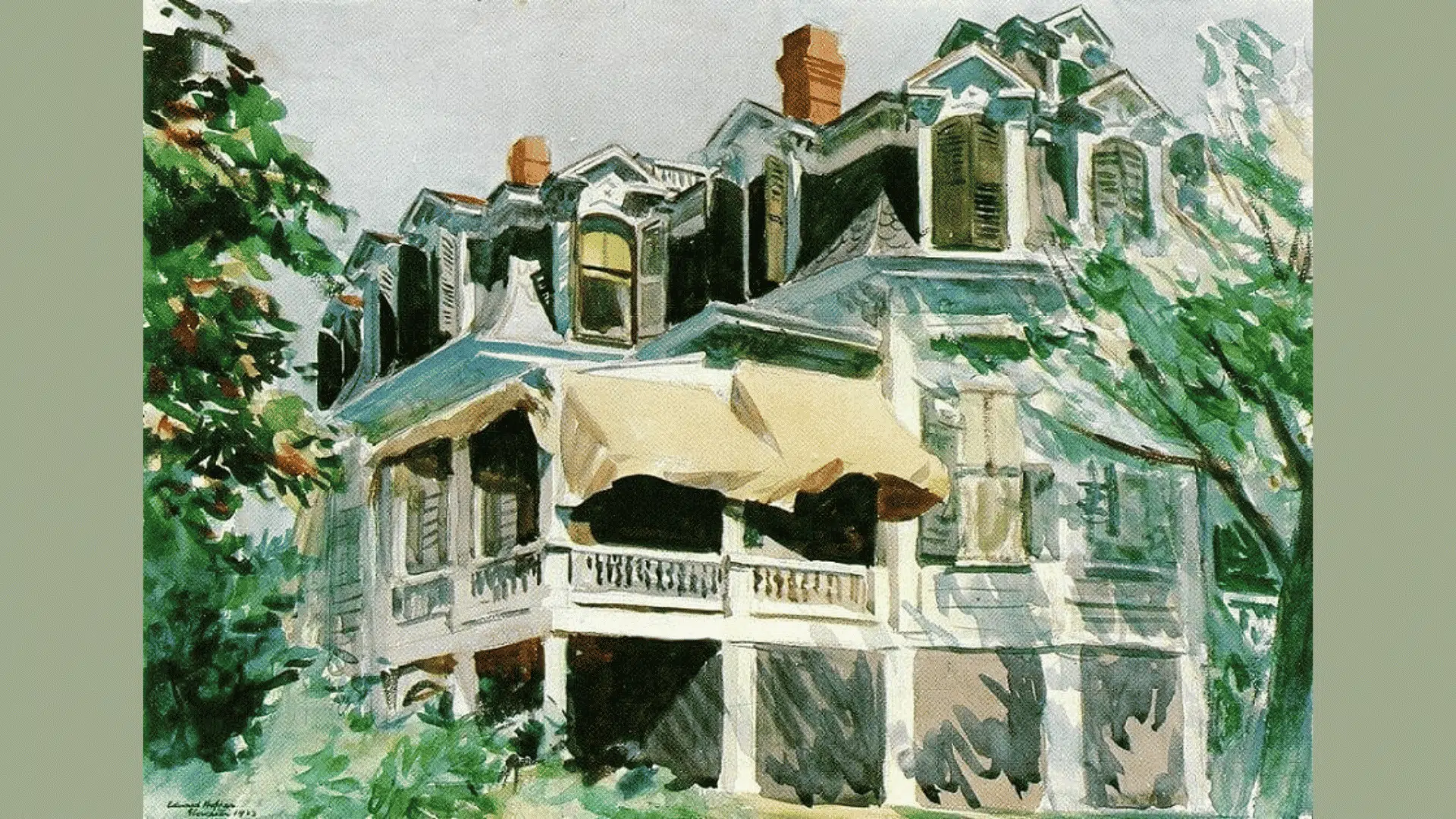
Source: Edward Hopper
A large house in Gloucester, Massachusetts, stands beneath a clear blue sky. Bright sunlight falls across the roof and walls, while deep shadows give the building its solid shape.
- Artist: Edward Hopper
- Year: 1923
- Collection: Brooklyn Museum, New York
- Medium: Watercolor over graphite
- Why it is Famous: The painting helped build Hopper’s reputation and showed how strongly he could handle light and architecture in watercolor.
16. The Great Red Dragon and the Woman Clothed with the Sun
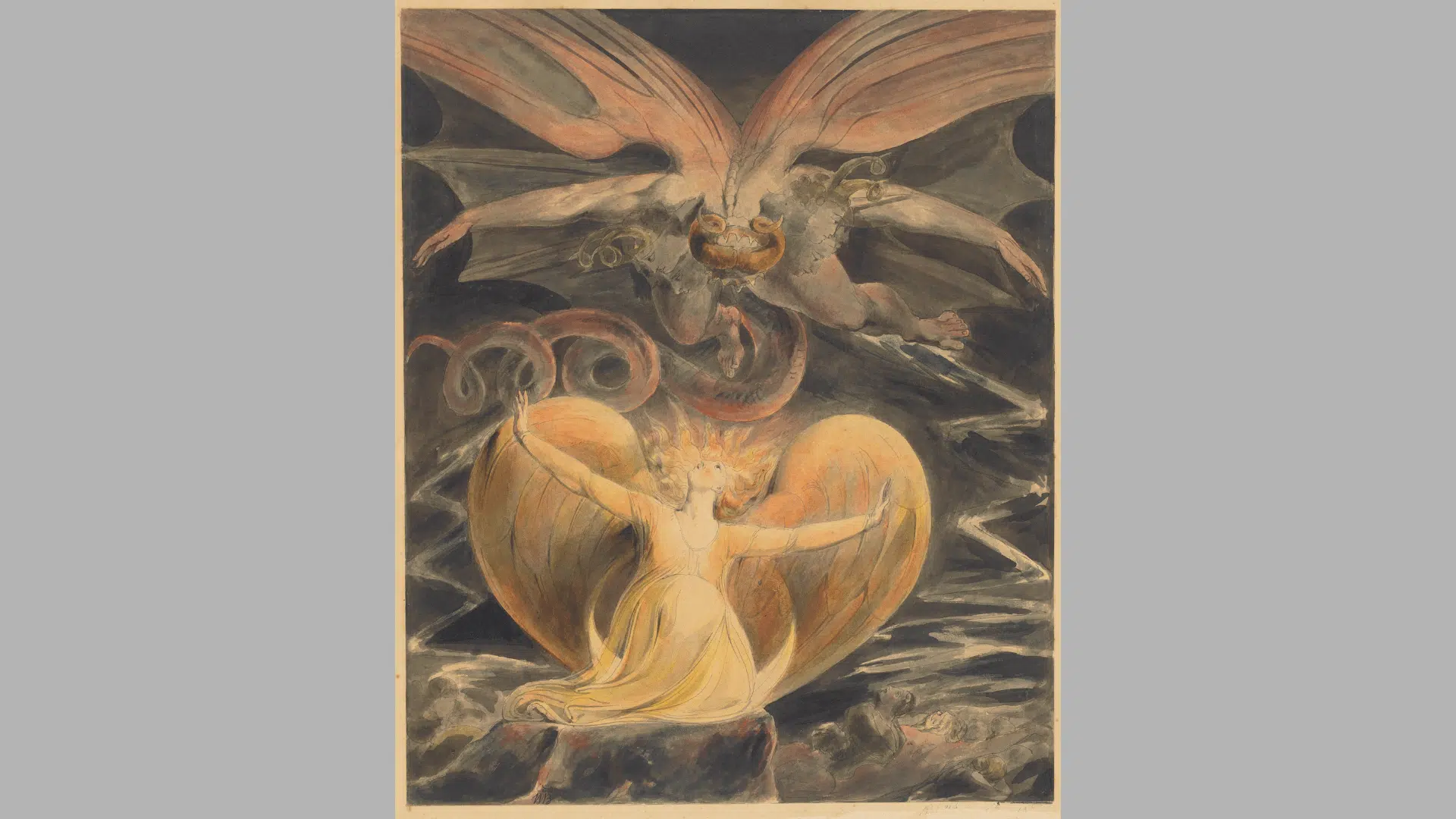
Source: National Gallery of Art
A winged woman kneels on a crescent moon while a large horned dragon hovers above her. Pale yellows, gray tones, and touches of red give the biblical scene a tense and dramatic mood.
- Artist: William Blake
- Year: c. 1805
- Collection: National Gallery of Art, Washington, D.C.
- Medium: Pen and gray ink with watercolor over graphite
- Why it is Famous: The National Gallery of Art has described it as a famous watercolor, and it remains one of Blake’s best-known images based on the Book of Revelation.
17. Simplon Pass: The Tease
Source: Artvee
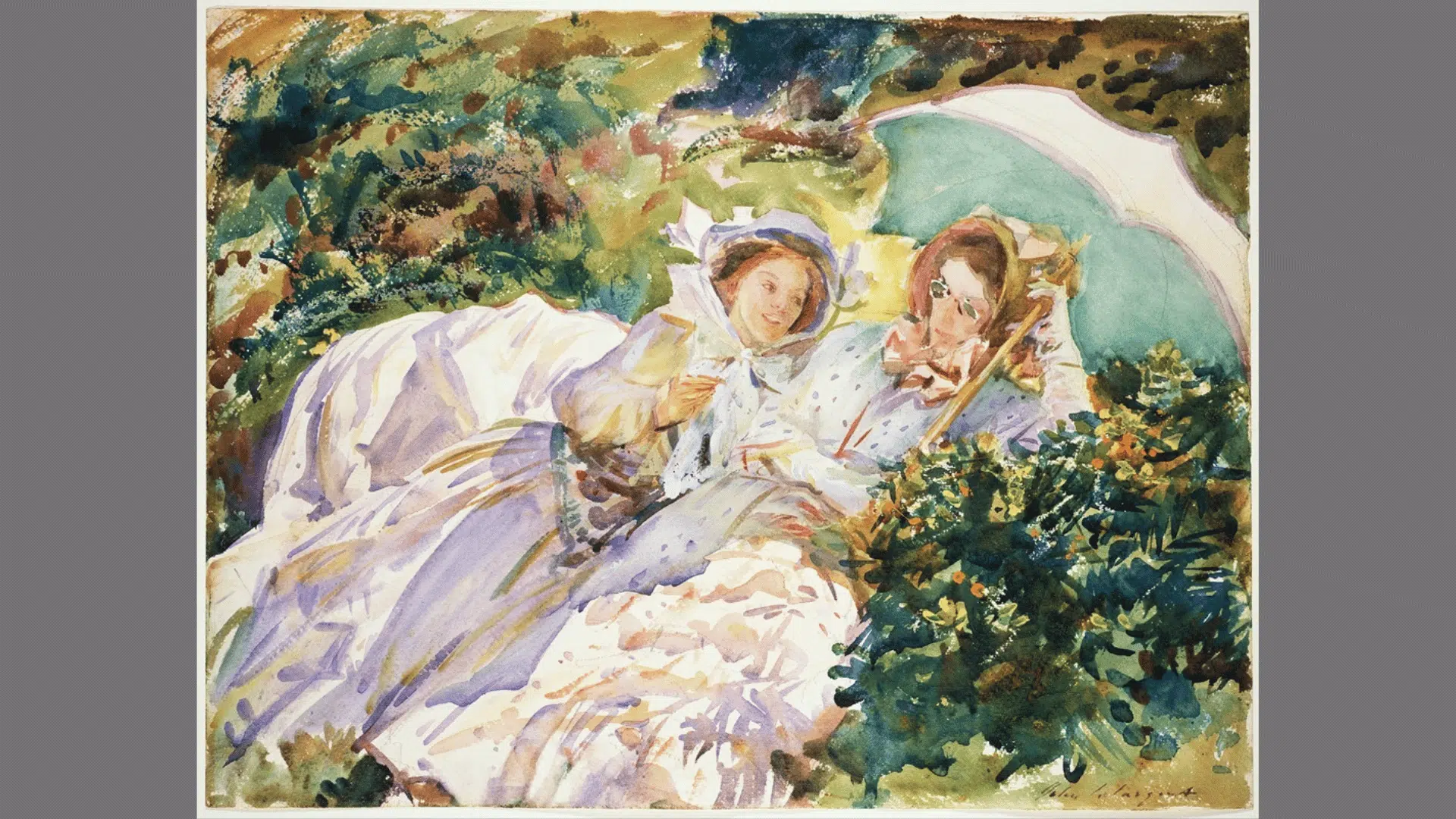
Two women appear outdoors in the mountain setting of Simplon Pass near the Italian-Swiss border. Sargent used loose marks and open areas of paper to give the figures and surrounding landscape a relaxed outdoor feeling.
- Artist: John Singer Sargent
- Year: 1911
- Collection: Museum of Fine Arts, Boston
- Medium: Transparent and opaque watercolor over graphite, with wax resist, on paper
- Why it is Famous: The work shows Sargent’s mature watercolor method, combining transparent washes, opaque paint, graphite, and wax resist in a single composition.
18. Untitled (First Abstract Watercolor)
Source: Wassily Kandinsky
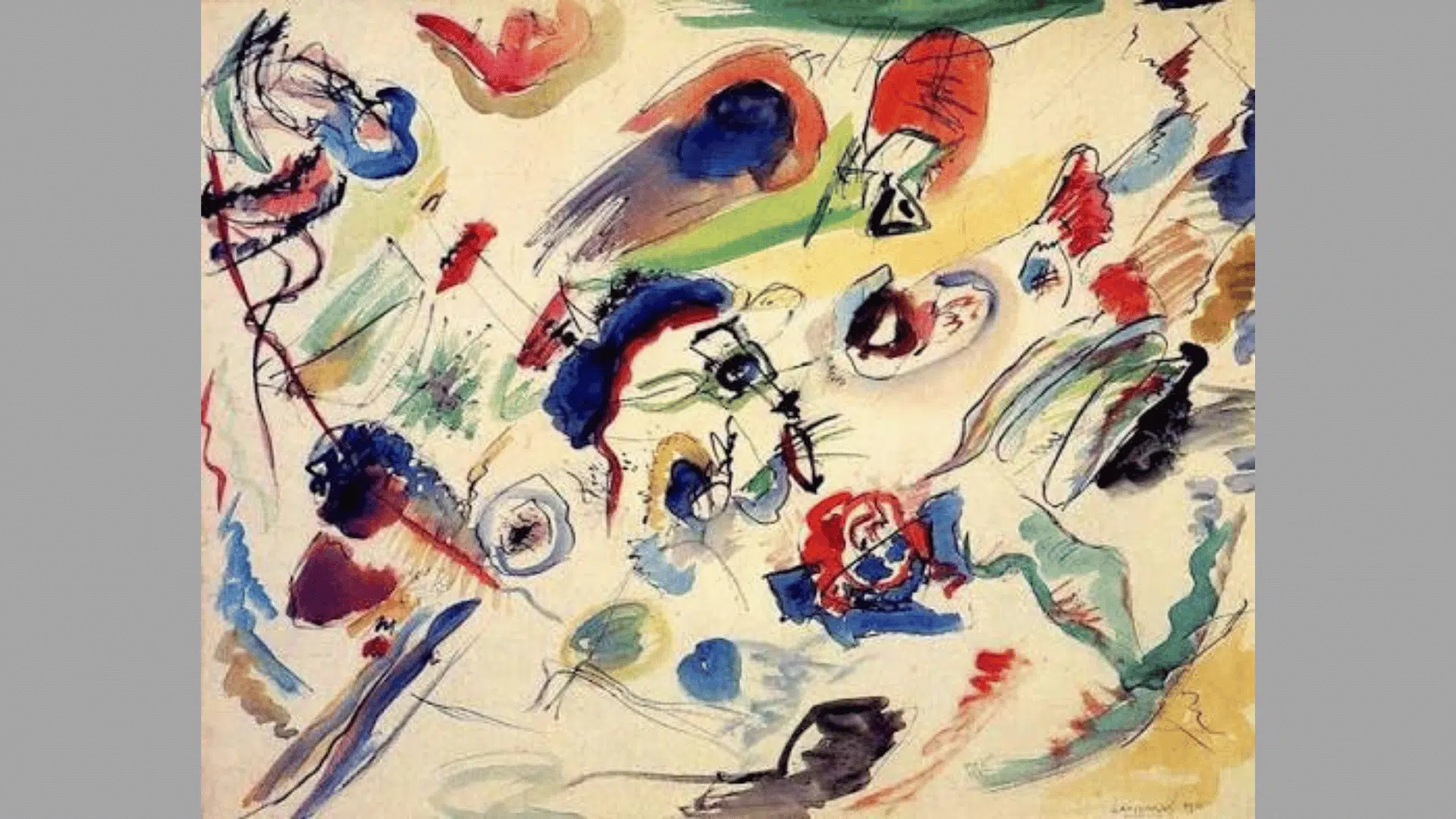
Loose patches of red, blue, yellow, and green spread across the paper while dark lines move freely between them. The forms do not build a clear landscape or figure, allowing color and line to work almost on their own.
- Artist: Wassily Kandinsky
- Year: 1913
- Collection: Center Pompidou, Paris
- Medium: Graphite pencil, India ink, and watercolor on paper
- Why it is Famous: The work was long considered the first fully abstract painting because Kandinsky dated it 1910. Current research places it in 1913 and links it closely with his work on Composition VII.
Famous Watercolor Paintings by Other Artists
Several major artists shaped watercolor in very different ways, from careful nature studies to loose landscapes, bright travel scenes, and abstract forms.
If you want a wider view, it helps to read about the painters who shaped art across every era before returning to watercolor on its own.
1. J.M.W. Turner
J.M.W. Turner became known for landscapes filled with mist, changing weather, and shifting light. His watercolor work often used thin washes instead of hard outlines.
The Blue Rigi, Sunrise is a strong example. Soft blues, pale yellows, and open space help the mountain and lake feel filled with morning air.
2. Albrecht Dürer
Albrecht Dürer used watercolor to study nature with great care. His plants and animals show close attention to texture, shape, and small details.
Young Hare shows fine fur and a bright reflection in the eye. The Great Piece of Turf gives the same careful treatment to common grasses and wild plants.
3. John Singer Sargent
John Singer Sargent used watercolor during his travels to record buildings, boats, people, and bright outdoor scenes.
His brushwork often looks quick, but the placement of color was carefully controlled. Works such as White Ships show his skill with sunlight, reflections, pale surfaces, and strong areas of blue water.
4. Winslow Homer
Winslow Homer became one of the best-known American watercolor painters. Sea life, fishing boats, children, and coastal settings often appeared in his work.
Boys in a Dory, The Blue Boat, and Fishing Boats, Key West show how he handled water, sunlight, distance, and quiet outdoor scenes with clear washes.
5. Paul Klee and Wassily Kandinsky
Paul Klee and Wassily Kandinsky used watercolor in more abstract ways. Klee often relied on simple shapes, thin lines, and controlled areas of color.
Kandinsky pushed further toward free forms and strong contrasts. Both artists showed that watercolor could move beyond realistic subjects and work well with modern ideas about shape and color.
What Makes These Watercolor Paintings So Well Known?
These works became widely recognized because they combine strong subjects, skilled color use, personal style, and ideas that influenced later generations of artists.
- Recognizable Subjects: Animals, boats, mountains, buildings, plants, and people give many of these works an immediate point of interest that viewers can understand quickly.
- Transparent Color: Thin washes allow light to pass through the paint and reflect from the paper, giving watercolor its clear and luminous look.
- Control of Light and Water: Skilled painters manage wet paint, drying time, and open paper carefully to create sunlight, reflections, mist, shadows, and changing weather.
- Individual Painting Styles: Each artist handled watercolor differently. Some focused on fine detail, while others preferred loose marks, strong shapes, or large areas of flowing color.
- Influence on Later Artists: Many of these works helped show that watercolor could stand beside oil painting as a serious art form and support both realistic and abstract ideas.
Final Thoughts
Watercolor has a way of making a finished piece feel personal without looking overworked. That may be why the medium still holds attention after so many centuries.
When you look at famous watercolor paintings, the value is not only in age, name, or museum status. It is also in the choices that make each work feel distinct.
Some pieces feel immediate, while others reward a slower look. That range keeps watercolor relevant to artists and viewers today.
A good painting can stay in your mind long after you leave the page, and watercolor often does that with very little excess.
Frequently Asked Questions
Do Watercolor Paintings Fade over Time?
Yes, some watercolor pigments can fade when exposed to strong sunlight for long periods. Museums and collectors often limit direct light and control indoor conditions to protect older works.
How Can You Tell an Original Watercolor from a Print?
An original watercolor may show small changes in pigment, visible brush marks, uneven washes, and areas where color has soaked into the paper. A print usually has a more even surface.
Why are Watercolor Paintings Often Displayed Behind Glass?
Watercolor is usually painted on paper, which can be affected by dust, moisture, sunlight, and physical contact. Glass creates a protective barrier around the artwork.