Every artist hits a point where progress feels slow; they practice for hours, yet their work doesn’t look any better- that feeling is annoying and incredibly common.
Most artists aren’t lacking talent; they’re missing the right approach, as small, focused changes in their practice can make a massive difference in how quickly they grow.
This guide breaks down practical, proven tips on how to improve your art fast, no fluff, no vague advice. Just real strategies that help artists at every level start seeing results sooner than they’d expect.
Why Does Improving Your Art Sometimes Feel Complicated?
Most people think artists improve because of talent, but in reality, most artists improve because they learn what to practice and how to practice it well.
Most beginners spend hours drawing but rotate between tutorials, styles, and tools without ever staying long enough on one skill to actually own it.
Knowing how to get better at art fast isn’t about more hours; it’s about targeted reps on the skills that matter. Once you lock in the basics and stop jumping around, improvement gets visible fast.
How Long Does It Take to Get Good at Art?
Getting good at art takes time, but here’s a realistic timeline:
- 1–3 months: Noticeable improvement in basic lines, shapes, and proportions
- 6–12 months: Better shading, perspective, and figure drawing
- 2–3 years: Consistent skill, personal style starting to form
- 5+ years: Professional-level work for most self-taught artists
Actionable Tips to Improve Your Drawing Skills Quickly
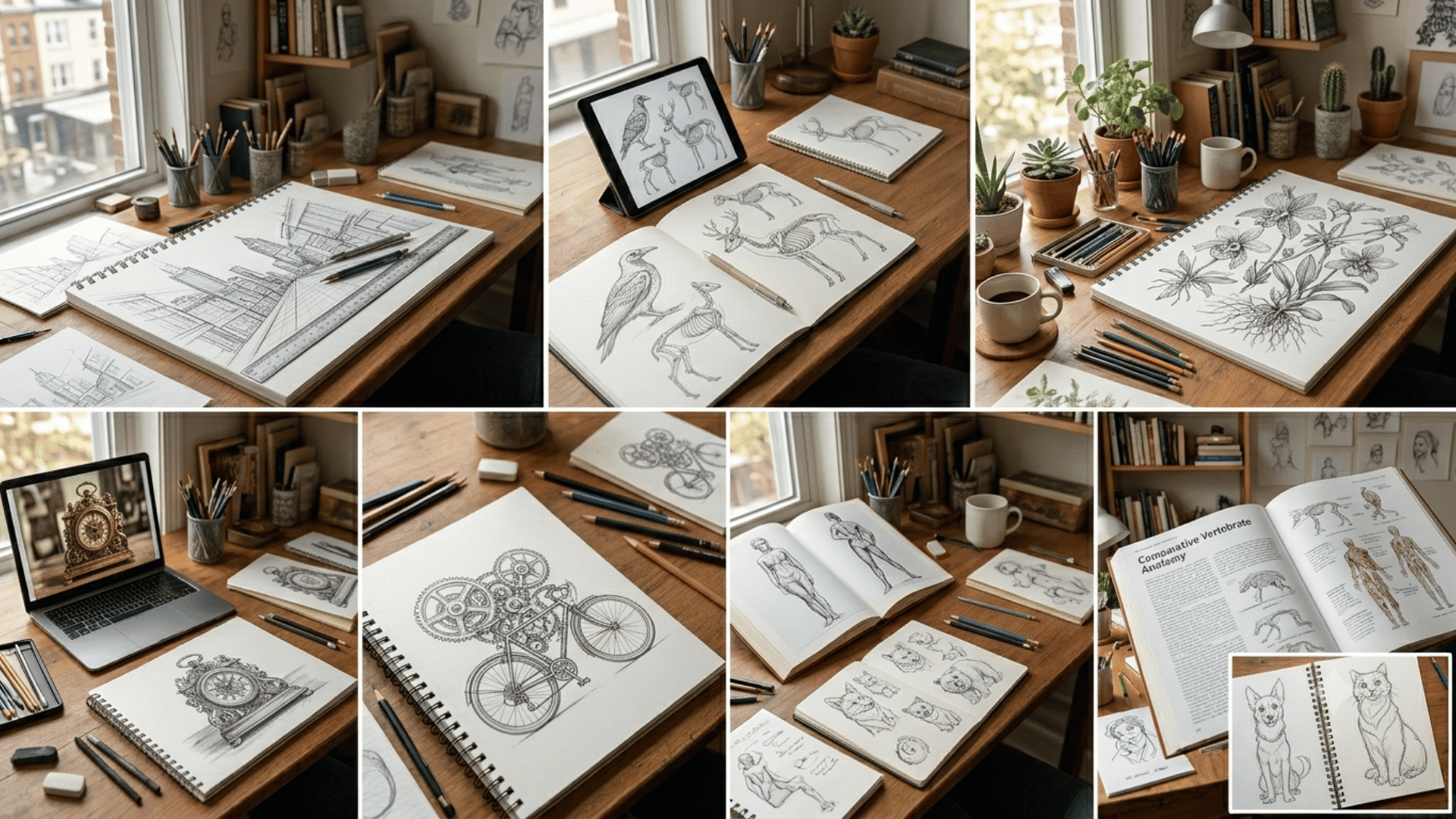
You don’t need a drawing tablet or a formal class; you just need a sketchbook, a pen, and a clearer plan than “draw more.”
1. Learn the Fundamentals of Drawing
Most drawing problems trace back to one skipped fundamental: proportion, perspective, value, or basic form. Fix the foundation, and many other issues will sort themselves out.
Tips to Learn Fundamentals:
- Practice shapes, forms, and perspective
- Study proportions and simple anatomy
- Learn how light and shadows work
- Focus on accuracy before details
2. Create a Daily Drawing Routine
Consistency beats length: a 20-minute daily session will outperform a 3-hour Sunday session every time; your hands and eyes need regular reps, not occasional marathons.
Fundamental Guidance:
- Draw for at least 20–30 minutes
- Choose a fixed time for practice
- Carry a small sketchbook outdoors
- Keep your routine simple and realistic
3. Practice With Clear Goals
Vague practice produces vague results- “I’ll just draw tonight” leads to doodling the same things you already know how to draw.
If you are wondering how to get better at art, focused practice can make a huge difference. Working on one skill at a time, like anatomy, shading, and perspective, helps you improve faster and with less frustration.
Primary Insights:
- Pick one skill for each session
- Spend extra time on difficult areas
- Try timed sketching exercises
- Review mistakes after every practice
4. Use References While Drawing
Drawing from imagination feels creative, but it’s largely drawing from memory, which means repeating the same errors.
Tips:
- Study photos, objects, and poses
- Observe lighting and angles carefully
- Save useful references for later practice
- Draw from real life whenever possible
5. Simplify Complex Subject
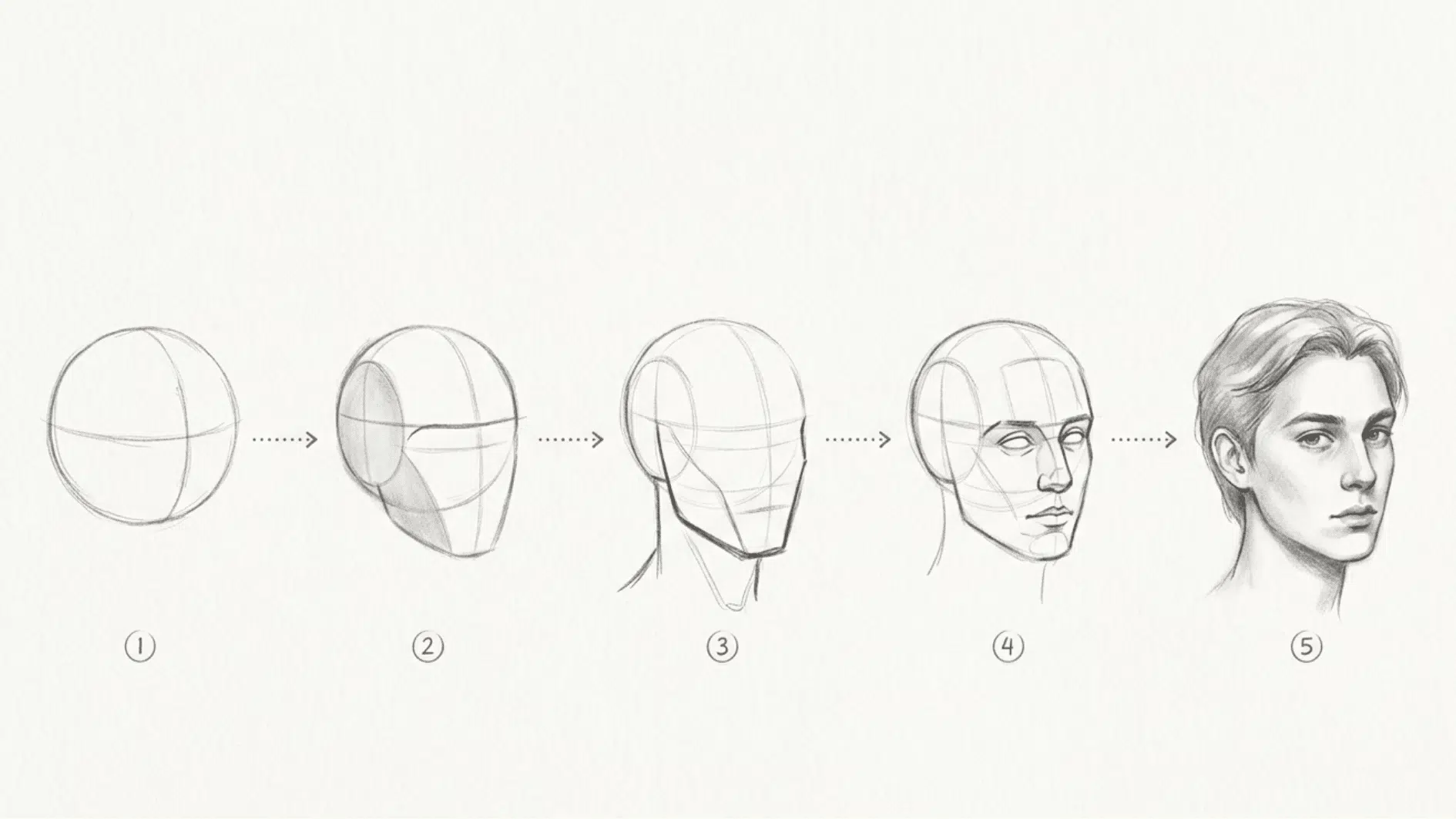
Complex drawings can feel overwhelming at first, but breaking them into simple shapes makes the process easier, cleaner, and more accurate.
By focusing on basic forms before details, artists can improve structure, proportions, and confidence much faster.
Instructions:
- Start with circles and basic forms
- Sketch the overall shape first
- Add details after the structure feels right
- Keep early sketches loose and light
6. Learn by Studying Other Artists
Pick two or three artists whose work you admire and study them deeply, not just scrolling past their work, but asking why specific choices work. How did they build that shadow? Where did they simplify a line?
- Study line work and shading methods
- Notice how artists build compositions
- Recreate small studies for learning
- Focus on techniques instead of imitation
7. Ask for Constructive Feedback
You can’t spot your own blind spots; that’s the definition of a blind spot- one honest critique from someone more advanced will often tell you more than three months of solo practice.
Techniques:
- Share your work in art communities
- Ask direct questions about your drawings
- Listen carefully to suggestions
- Apply useful feedback in future sketches
8. Stay Consistent and Patient
Art skills develop gradually through steady effort, as Regular practice helps you notice small improvements over time.
- Save your older drawings for comparison
- Focus on gradual improvement
- Accept mistakes as part of learning
- Continue practicing even on difficult days
Best Free Resources to Improve Your Art Skills
Improving your art doesn’t always require expensive courses. There are plenty of free apps, YouTube channels, and websites that can help beginners and intermediate artists practice drawing, anatomy, shading, digital art, and more.
Best Free Drawing Apps
- Krita – Free professional digital painting software for beginners and advanced artists
- Ibis Paint X – Great mobile app for sketching and anime-style art
- MediBang Paint – Lightweight free app for comics and illustrations
- Sketchbook – Simple and beginner-friendly drawing app
Best YouTube Channels for Learning Art
- Marc Brunet – Digital art tutorials and improvement tips
- Draw Like a Sir – Easy beginner-friendly drawing lessons
- SamDoesArts – Character art and creative drawing advice
- Ethan Becker – Fun and practical art improvement guidance
Best Free Websites to Practice Art
- QuickPoses – Figure drawing references and timed practice
- Posemaniacs – 3D anatomy poses for artists
- Ctrl+Paint – Free digital painting lessons
Avoid These Common Habits That Slow Progress
The biggest thing holding most artists back isn’t lack of talent or time; it’s a few small habits they don’t even realize are slowing them down.
| Habit | Why It Affects Your Progress | Quick Fix |
|---|---|---|
| Comparing Yourself to Others | Kills motivation and creates unrealistic expectations | Compare your current work to your old work – nobody else’s |
| Ignoring Fundamentals | Weakens your foundation and limits long-term growth | Dedicate time to basics before chasing advanced techniques |
| Fear of Making Bad Art | Stops you from practicing freely and taking risks | Cherish not-so-perfect drawings; they’re part of the process |
| Switching Styles Too Often | Breaks momentum and prevents real skill from sticking | Pick one direction and give it genuine, focused time |
| Expecting Instant Results | Leads to burnout and giving up too early | Progress compounds quietly, trust the process, check old sketchbooks for proof |
The Last Stroke
Bad drawings aren’t evidence that you’re not improving. There’s evidence you’re working at the edge of your current ability, which is the only place improvement actually happens.
Every skilled artist started as a beginner and improved through practice.
Figuring out how to improve your art fast was never really about having natural talent or buying expensive tools
Real improvement comes from practicing consistently, staying curious, studying your mistakes, and giving yourself the freedom to grow step by step as an artist.
Start small, trust the process, and keep creating. The more you draw, the more confident your work will become.