

Some artwork stops you before you even know why. You walk past a painting, glance over, and suddenly you are standing still, eyes fixed on one particular spot without consciously choosing it.
That pull is not accidental. Every strong piece of art has something drawing your attention exactly where the artist intended it to go. A focal point in art is the quiet force behind that experience.
Artists use this visual pull with purpose, helping viewers understand what matters most in the work. In this blog, you will learn what a focal point is, why it matters, and how to recognize it through clear examples.
What is a Focal Point?
A focal point in art is the area of an artwork that naturally draws the viewer’s eye first. It may be a person, object, color, light source, shape, or detail that feels more important than the surrounding parts.
This area creates visual hierarchy, helping the viewer understand what matters most in the composition. Without a clear focal point, an artwork can feel crowded, confusing, or flat.
A focal point also connects closely to the artist’s intent. It helps direct what the artist wants the viewer to notice, think about, or feel before moving through the rest of the piece.
How Artists Create a Focal Point
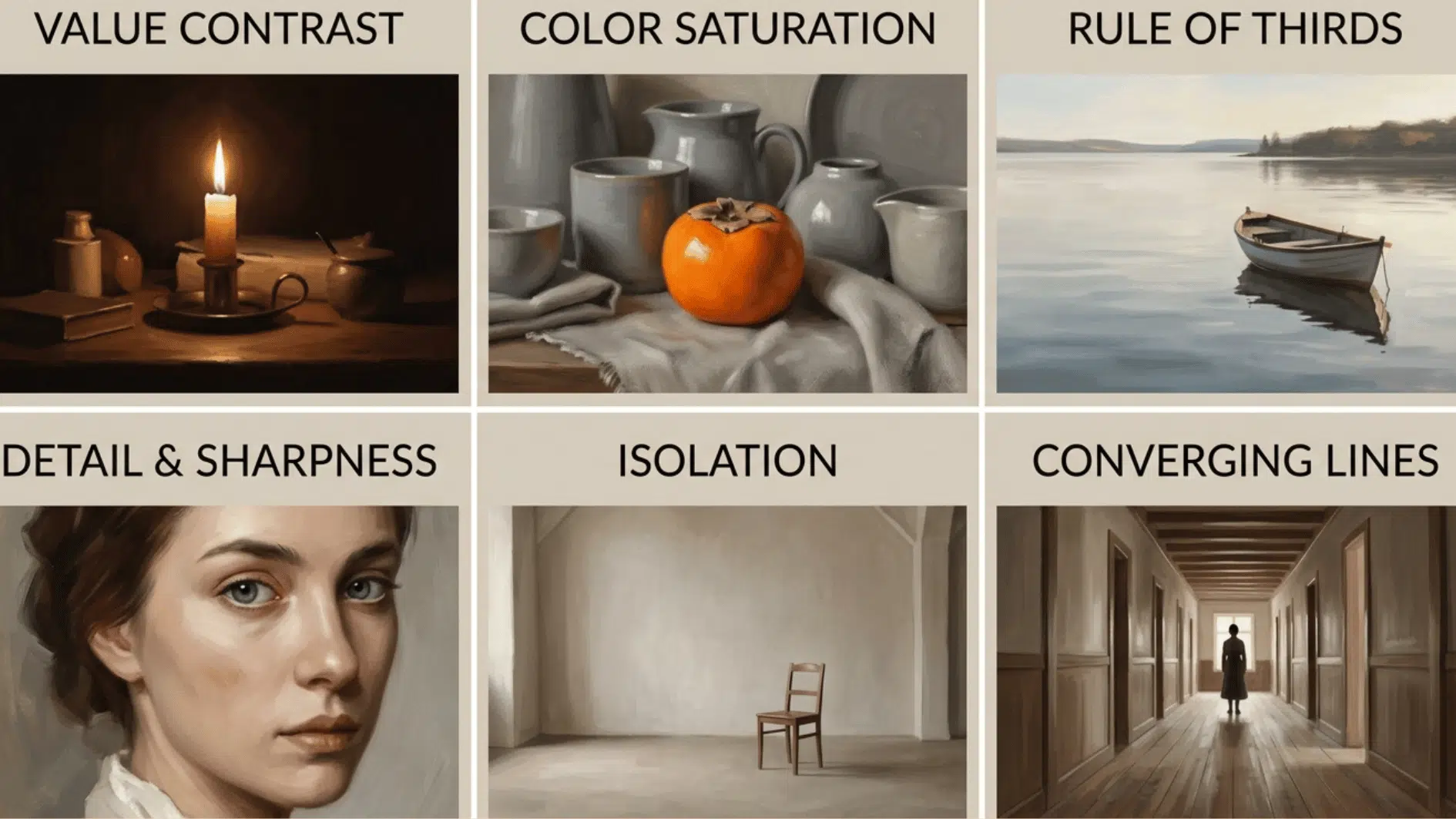
Artists create focal points through choices that guide attention. These choices can be subtle or bold, but they all help decide where the viewer’s eye goes first.
1. Contrast
Contrast is one of the most direct ways to create a focal point in art. When light sits against dark, smooth sits against rough, or warm color sits against cool color, the eye quickly notices the difference.
For example, a pale face against a dark background will usually stand out right away. The stronger the difference between the subject and its surroundings, the more attention that area receives.
2. Color and Saturation
Color can guide attention just as strongly as contrast. A single bright color in a muted scene often becomes the first thing the viewer notices.
Saturation works in the same way. If most of the artwork uses soft tones, one rich red, yellow, or blue area can instantly become the center of visual interest.
3. Placement and Composition Rules
Placement affects how important an object feels inside a composition. Artists may place a subject near the center, along the rule of thirds, or at a point where several visual paths meet.
A subject does not always need to sit in the middle to feel important.
4. Detail and Sharpness
The eye is naturally drawn to detail. If one area of an artwork has sharper edges, clearer lines, or more careful rendering than the rest, that area usually receives more attention.
This is why artists often keep the main subject crisp while leaving surrounding areas softer. The difference helps the viewer understand where to look first without needing any explanation.
5. Isolation
Isolation happens when a subject is separated from the rest of the composition. This can be done with open space, a plain background, or by keeping the object at a distance from other objects.
A single figure in an empty street or one object on a quiet table can feel important simply because it stands apart.
6. Convergence
Convergence uses lines or implied direction to guide the eye toward one point. These lines may come from roads, walls, arms, shadows, architecture, or even the direction people are looking.
When several lines lead toward the same area, the viewer follows them almost automatically. This makes the focal point feel clear and intentional without making the composition feel forced.
Can a Composition Have More Than One Focal Point?
Yes, a composition can have more than one focal point, but the key is hierarchy. One area usually acts as the primary focal point, while other areas serve as secondary points of interest.
Secondary focal points help guide the viewer through the artwork after the first point has been noticed. They can add rhythm, balance, and depth without taking attention away from the main subject.
Problems happen when too many areas compete for equal attention. If every color, shape, and detail tries to stand out, the composition can feel visually chaotic.
A strong composition gives the eye a clear order to follow. The main focal point comes first, and the supporting areas help keep the viewer engaged without creating confusion.
Focal Point Examples Across Art History
Looking at well-known artworks is one of the easiest ways to understand how focal points work. The following focal point examples show how artists use light, contrast, placement, and movement to guide attention.
1. The Girl with a Pearl Earring by Vermeer
Source: Wikipedia
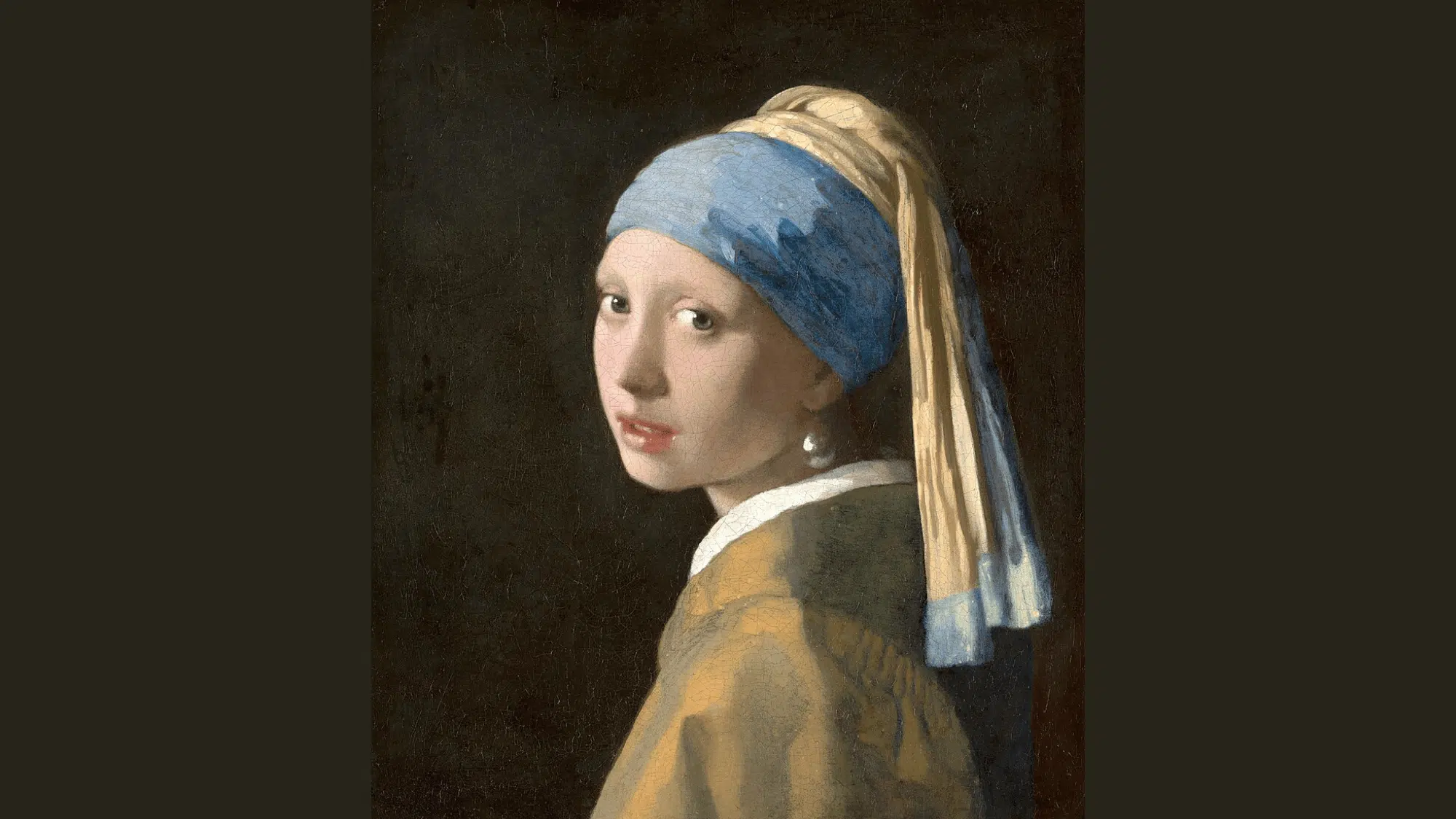
In Vermeer’s The Girl with a Pearl Earring, the viewer’s eye moves quickly to the young woman’s face. Her gaze, the turn of her head, and the light falling across her skin all help make that area feel central.
The pearl earring also plays an important role. It catches the light against the dark background, giving the painting a small but powerful focal point that supports the expression on her face.
2. The Starry Night by Van Gogh
Source: Wikipedia
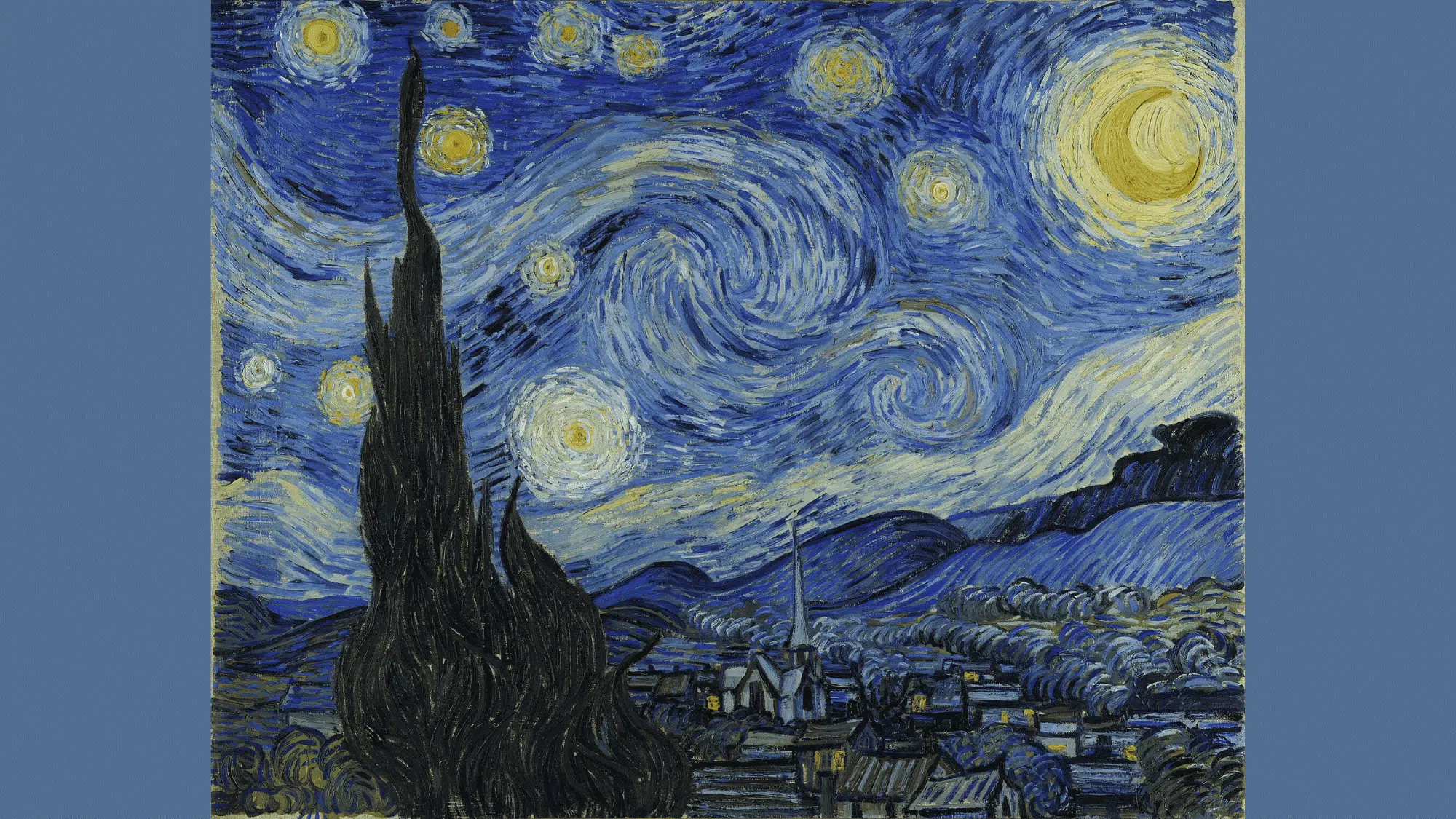
The Starry Night is full of motion, curved brushstrokes, and glowing forms. Even with so much happening in the sky, the eye often returns to the bright crescent moon and the quiet village below.
Van Gogh uses movement and contrast together. The swirling sky keeps the eye active, while the brighter areas give the viewer places to return to within the busy composition.
3. Nighthawks by Edward Hopper
Source: Wikipedia
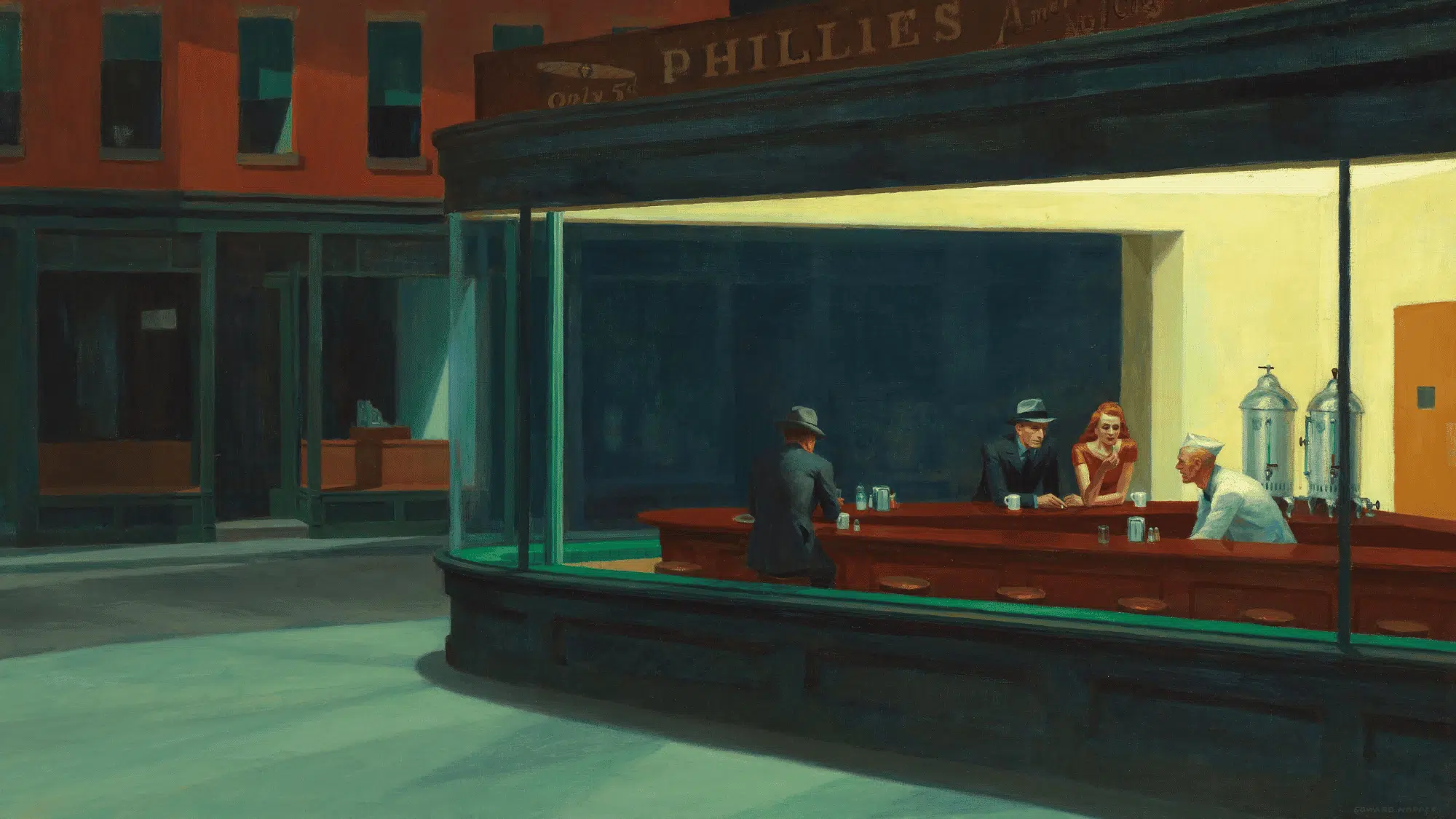
In Nighthawks, the bright diner pulls attention away from the dark street around it. The sharp interior light, glass walls, and still figures make the diner feel like the visual center of the work.
The sense of separation also strengthens the focal point in art. The people inside feel close enough to see, yet distant in mood, which gives the scene much of its quiet emotional pull.
4. Contemporary or Abstract Example
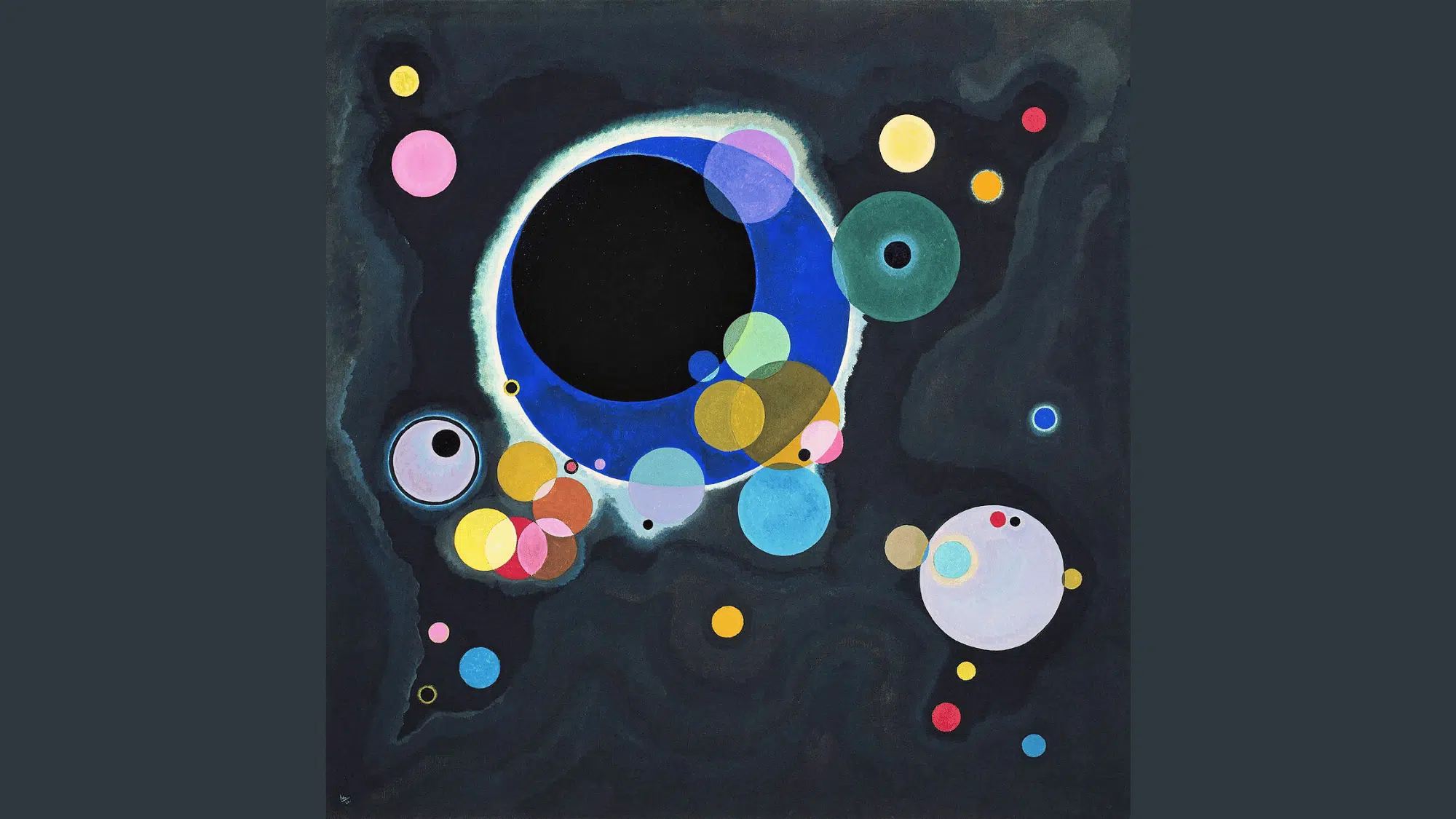
Source: Wikimedia Commons
A focal point in art does not need to be a face, figure, or object from real life. In abstract art, it might be a single geometric shape, a sharp line, or one strong area of color. For example: Vassily Kandinsky’s Several Circles.
Even without a clear subject, the eye still looks for order. A bold form within a simple field, or a small bright mark inside a muted composition, can anchor the artwork and give the viewer a place to begin.
Final Thoughts
A focal point is not a rigid rule that every artwork must follow in the same way. It is a tool artists can use, adjust, or challenge depending on the effect they want to create.
The next time you look at a favorite artwork, pause and notice where your eye lands first. Then look at the surrounding areas and ask how the artist guided you there.
Studying focal point examples can help you see art with more attention and confidence. Once you understand the focal point in art, it becomes easier to notice as a viewer and easier to use in your own creative work.
Frequently Asked Questions
Can an Artwork Work without A Focal Point?
Yes, but it may feel more open, experimental, or harder to read.
Is the Center Always the Strongest Place for Focus?
No, off-center placement often feels more natural and balanced.
Can Color Alone Guide Attention?
Yes, one strong color can stand out even in a simple composition.
Is Negative Space Useful for Focus?
Yes, empty space can make the main subject easier to notice.















#/media/File:Nighthawks_by_Edward_Hopper_1942.jpg)
