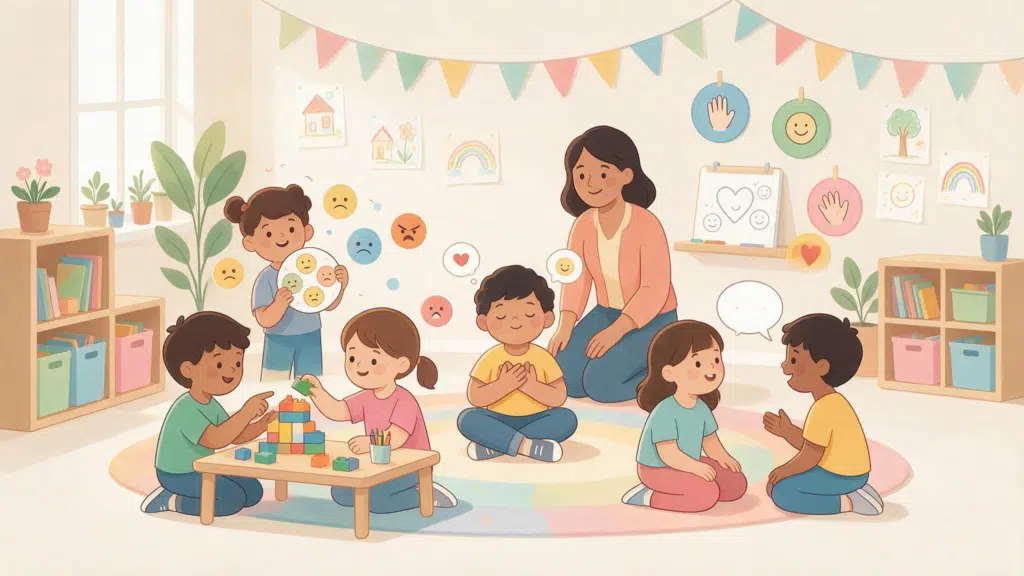
Helping children understand their emotions, communicate clearly, and build healthy relationships starts with the rightsocial emotional learning activities.
When paired with a well-planned sel curriculum elementary students can follow, these lessons make emotional and social skills easier to practice in everyday situations.
Simple sel activities for kids can also turn important skills like empathy, self-awareness, teamwork, and responsible decision-making into meaningful learning experiences that feel natural and age-appropriate.
What Social-Emotional Learning Means
Social-emotional learning gives children repeated practice with skills used during lessons, play, transitions, group work, and disagreements.
CASEL organizes SEL into five connected areas. These are self-awareness, self-management, social awareness, relationship skills, and responsible decision-making.
Practice may include direct teaching, cooperative tasks, and links to academic lessons. SEL is not a single worksheet, reward system, or replacement for professional mental-health support.
Schools can teach general skills while connecting children and families with qualified help when needs go beyond classroom practice.
The Five Core Areas of Social-Emotional Learning
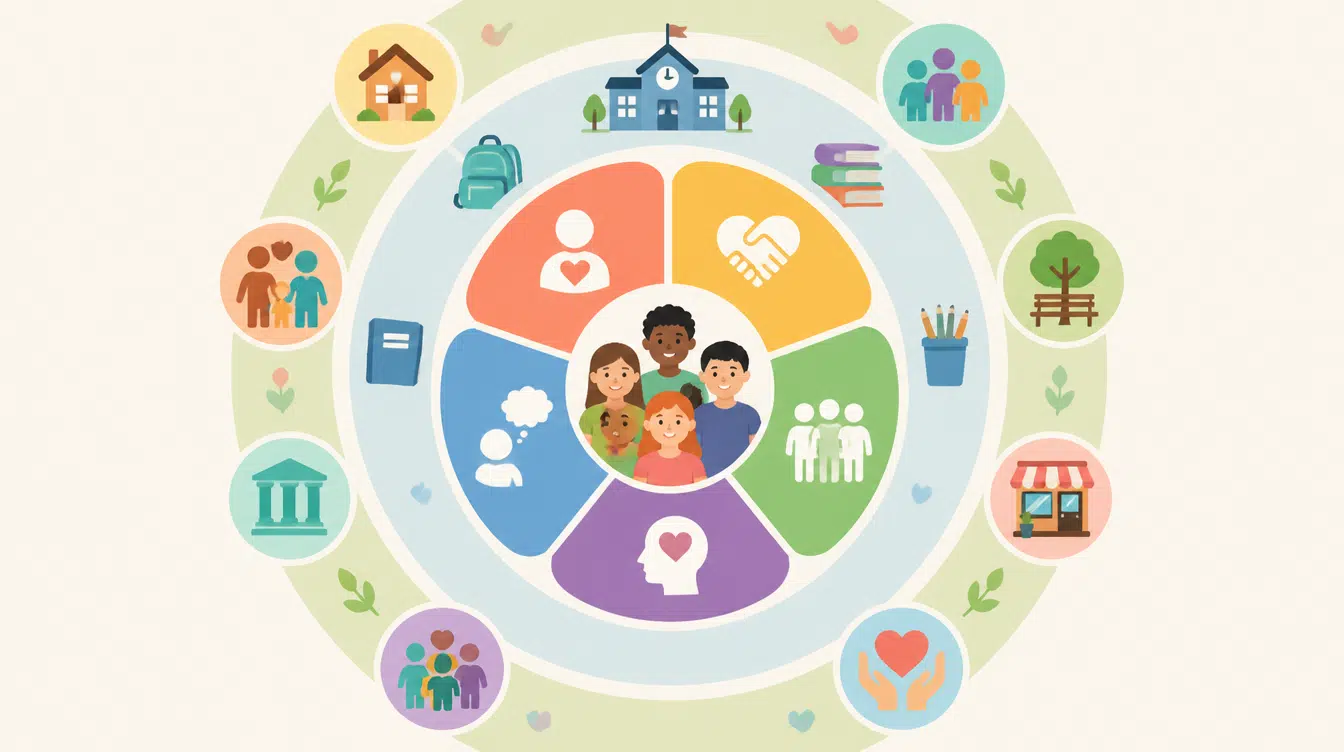
The CASEL framework brings SEL together through five connected areas that help children understand themselves, manage emotions, build relationships, understand others, and make thoughtful choices.
| SEL Area | What It Helps Children Practice |
|---|---|
| Self-Awareness | Recognizing emotions, body signals, strengths, interests, and personal needs |
| Self-Management | Managing emotions, pausing before reacting, setting goals, and using helpful strategies |
| Social Awareness | Understanding different perspectives, noticing social cues, respecting differences, and considering others |
| Relationship Skills | Listening, communicating respectfully, cooperating, asking for help, and handling disagreements |
| Responsible Decision-Making | Considering safety, fairness, possible consequences, and how choices may affect others |
Social Emotional Learning Activities for Self-Awareness
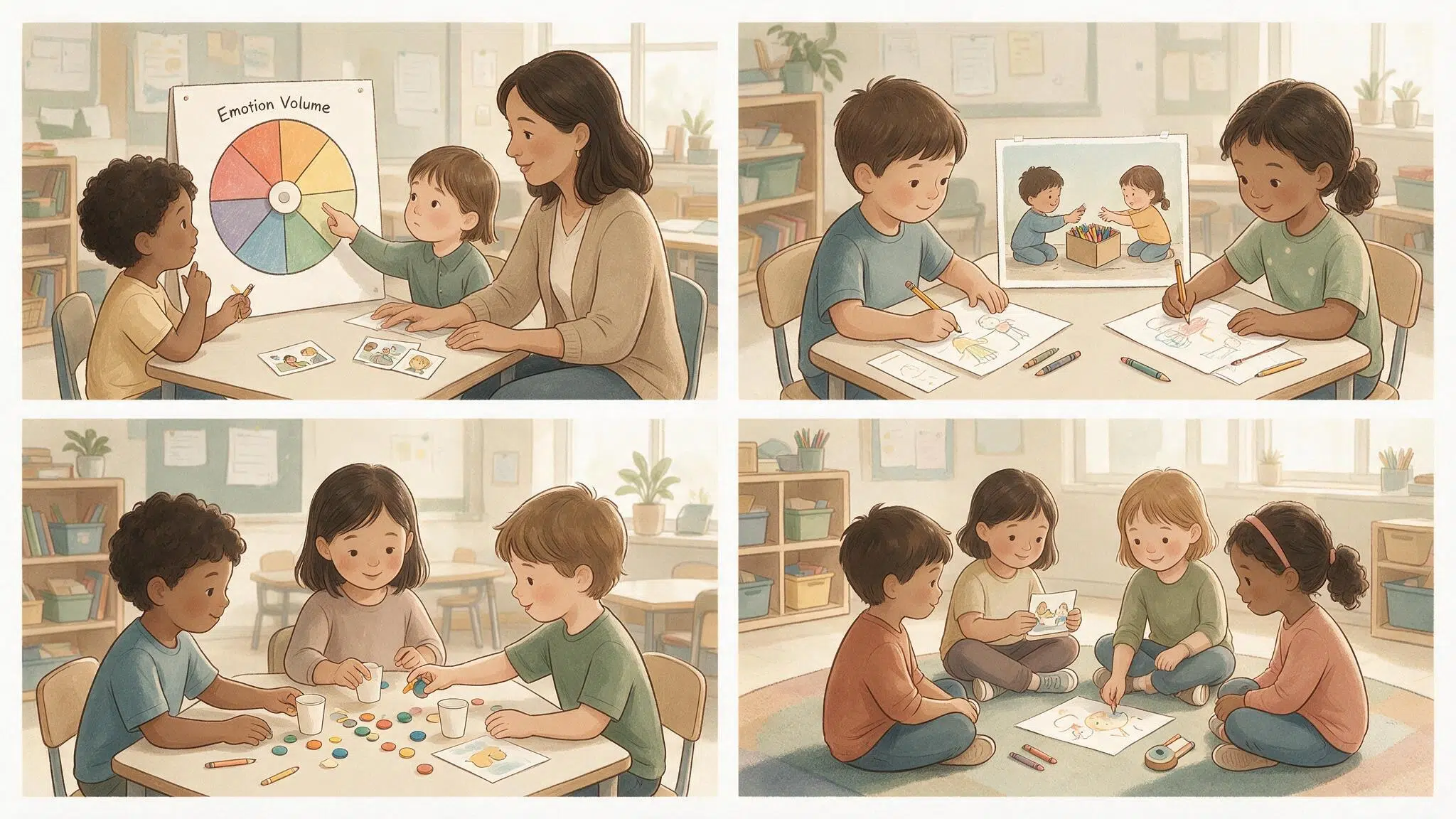
Self-awareness activities help children notice emotions, body signals, strengths, and needs, giving them language to understand themselves without uncomfortable personal disclosure in class.
1. Body Clue Detective
Students identify body clues such as warm cheeks, quick breathing, a tight stomach, or restless hands, then connect those clues with a possible emotion.
- Best for: Kindergarten through grade 2
- Materials: Body outline, crayons, and scenario cards
- How to apply: Read one fictional situation, ask children to mark possible body clues, and let them choose an emotion by speaking, drawing, or pointing.
2. Emotion Volume Dial
Draw a dial numbered one through five and read an ordinary school scenario. Students privately select how intense a character’s emotion might feel, then discuss which details could raise or lower that intensity.
- Best for: Grades 1 through 5
- Materials: Paper emotion dial, pencils, and scenario slips.
- How to apply: Present a short scenario, let students select an intensity level from one to five, then change one detail and rate it again.
3. Pause Path
Place four papers on the floor representing pause, breathe, name, and choose. Children move through the path while practicing how to slow down and select a respectful next action during a fictional frustrating moment.
- Best for: Kindergarten through grade 3
- Materials: Four sheets of paper, tape, and picture symbols
- How to apply: Show one fictional action card, ask students to identify the strength being used, and invite them to suggest another situation where it could help.
4. Three-Minute Reset Menu
Teach three short reset choices such as shoulder rolls, steady breathing, and a wall push. Children try each option for one minute before choosing which one leaves their bodies feeling most ready.
- Best for: Kindergarten through grade 5
- Materials: Timer, strategy cards, and optional chime
- How to apply: Demonstrate three reset choices, practice each for one minute, and let children privately select the option that feels most useful.
5. Two Views, One Scene
Show a picture of two children reaching for the same classroom supply. Partners choose different characters and draw or write what each person might notice, feel, and want in that moment.
- Best for: Grades 2 through 5
- Materials: Picture prompt, paper, pencils, and crayons
- How to apply: Give partners different characters from the same picture and ask them to describe what each character may notice, feel, and need.
6. Helpful Right Now Sort
Read a fictional scene about a child who drops a project. Students sort responses such as asking, helping, giving space, or laughing based on what may help in that moment.
- Best for: Kindergarten through grade 3
- Materials: Scenario and response cards
- How to apply: Read a fictional problem, sort possible responses by how helpful they may be, and change one detail to see how the choices shift.
7. Listening, Builder
Give partners matching blocks or paper shapes. One child describes a hidden design while the other follows the spoken directions and builds a matching version without looking at the original.
- Best for: Grades 1 through 5
- Materials: Blocks or paper shapes, folder, and timer
- How to apply: Place a folder between partners, let one child describe a hidden design, and allow the other child to ask questions while building a copy.
8. Repair Phrase Practice
Present a small fictional mistake such as interrupting someone or knocking over classroom supplies. Students create a respectful response that names the action, recognizes its effect, and offers a useful repair.
- Best for: Grades 2 through 5
- Materials: Scenario slips, phrase cards, and paper
- How to apply: Present a minor fictional mistake and ask children to name the action, recognize its effect, and suggest a practical repair.
9. Ripple Map
Write a fictional choice in the center of a page. Students add possible effects on the person making the choice, other people, and what may happen later.
- Best for: Grades 3 through 5
- Materials: Paper, pencils, and scenario cards
- How to apply: Place one fictional choice in the center of the page and map how it could affect the person, other people, and later events.
10. Fair Share Challenge
Give small groups limited materials for a simple task. Students gather information, divide the supplies, and explain how their plan gives every group member a meaningful way to participate.
- Best for: Grades 2 through 5
- Materials: Counters, cups, paper, and task card
- How to apply: Give groups limited materials, ask them to create a fair sharing plan, and add a new need that requires them to revise it.
11. Strength Spotting Cards
Read cards showing fictional children completing everyday tasks, such as trying again, including a classmate, or organizing materials. Students identify the strength shown through the character’s actions.
- Best for: Grades 1 through 5
- Materials: Strength cards, scenario cards, and pencils
- How to apply: Show one fictional action card, ask students to identify the strength being used, and invite them to suggest another situation where it could help.
12. Color and Shape Emotion Art
Children use colors, lines, and shapes to show how a fictional character’s emotion might look. The focus stays on noticing emotional qualities rather than creating a perfect drawing.
- Best for: Kindergarten through grade 5
- Materials: Paper, crayons, markers, and scenario cards
- How to apply: Read a fictional emotion scenario and let children represent its intensity and movement through colors, shapes, and lines.
13. Freeze, Breathe, Choose
Children move gently while music or clapping continues. When the sound stops, they freeze, take one steady breath, and select a response to a fictional classroom situation.
- Best for: Kindergarten through grade 3
- Materials: Music or hand claps and scenario cards
- How to apply: Let children move gently, pause the sound, and ask them to freeze, take one steady breath, and choose a response to a fictional situation.
14. Small-Step Task Ladder
Choose a familiar task such as cleaning a workspace, completing a book response, or preparing a school bag. Children divide it into three or four smaller actions and circle the first step.
- Best for: Grades 2 through 5
- Materials: Paper, pencils, and task cards
- How to apply: Select a familiar task, divide it into three or four manageable actions, and ask children to circle the step they will complete first.
15. Notice, Ask, Listen
Show a fictional classroom picture with a character whose feelings are unclear. Students separate what they can see from what they are assuming, then create one respectful question that could provide more information.
- Best for: Grades 2 through 5
- Materials: Picture cards, paper, and pencils
- How to apply: Show an unclear social scene, separate visible facts from assumptions, and create one respectful question that could provide more information.
16. Group Story Circle
Children create one shared story by adding a sentence or drawing when their turn arrives. Each contribution must connect with something the previous person added.
- Best for: Kindergarten through grade 5
- Materials: Story picture, paper, crayons, and optional talking object
- How to apply: Begin a simple fictional story and let each child add one connected sentence, picture, gesture, or idea before passing the turn.
17. Choice Traffic Light
Present a fictional decision and use three stages. Red means stop, yellow means consider options and possible effects, and green means select a safe and respectful action.
- Best for: Kindergarten through grade 4
- Materials: Red, yellow, and green cards with scenario slips
- How to apply: Present a fictional decision and move through red for pausing, yellow for considering options, and green for choosing a safe response.
18. Option Web
Write a fictional problem in the center of a page and draw branches for three possible choices. Students add one likely result to each branch before selecting the most constructive option.
- Best for: Grades 3 through 5
- Materials: Large paper, pencils, markers, and scenario cards
- How to apply: Write one fictional problem in the center, add three possible choices, and compare the likely result of each option.
19. Classroom Solution Vote
Give small groups a fictional classroom problem and three possible solutions. Children discuss safety, fairness, and likely results before voting privately and explaining the reasons behind the final choice.
- Best for: Grades 2 through 5
- Materials: Scenario cards, solution cards, paper, and pencils
- How to apply: Give groups three solutions to a fictional classroom problem, discuss safety and fairness, and let students vote privately before reviewing the result.
A Simple Weekly SEL Routine
Simple social emotional learning activities can fit naturally into elementary routines, helping children practice emotional awareness, perspective taking, self regulation, teamwork, and reflection each week.
| Day | Social Emotional Learning Activity | Skill Focus |
|---|---|---|
| Monday | Private emotion check | Help children identify and name their feelings |
| Tuesday | Viewpoint task | Practice understanding different perspectives |
| Wednesday | Choose one reset option | Build simple self-regulation skills |
| Thursday | Teamwork or repair practice | Develop cooperation, communication, and conflict repair |
| Friday | Drawing private rating or class appreciation | Encourage reflection, gratitude, and emotional awareness |
Choosing the Right Activity
Start with the skill children need, then consider age, group size, available time, classroom energy, and communication preferences.
Movement may suit an active transition. Drawing or card sorting may feel more comfortable during a quiet group.
Children should be allowed to observe, pass, point, draw, use assistive communication, or respond privately. Speaking in front of the class should not be the only way to participate.
Five Practical Teaching Tips
These practical tips make SEL activities easier to introduce, more comfortable for students, and simpler to repeat as part of everyday classroom routines without adding unnecessary pressure or preparation.
Model the Activity First
Use a fictional example and show every step. Include how children can pass without giving a reason.
Keep Directions Brief
Give one direction at a time. Save longer questions or explanations for the ending.
Use Neutral Emotion Language
Describe feelings as calm, comfortable, uncomfortable, difficult, or intense. Avoid treating an emotion as something a child should hide.
Protect Personal Boundaries
Do not ask children to share trauma, diagnoses, family details, or current conflicts. Fictional characters provide a safer way to practice.
Repeat Before Replacing
Use the same activity with a new scene or role. Familiar steps give children more attention for the skill itself.
Key Takeaways
Choose one activity that matches a need already present in the classroom or at home. A group struggling with interruptions may benefit from Listening Builder, while children who react quickly may need Pause Path.
Repeat the activity before adding another. Familiar steps give children more space to focus on the skill.
For the next class meeting or home routine, prepare the few materials needed for one activity and offer a calm, low-pressure chance to practice.
Frequently Asked Questions
How Long Should an Elementary SEL Activity Take?
Many activities fit into 5 to 15 minutes. A cooperative task or role-play may require a little longer. Leave enough time to model the activity, let children participate, and close with one brief reflection.
Can SEL Activities for Kids Be Used at Home?
Yes. Use familiar moments such as getting ready for school, sharing materials, choosing a game, or settling after disappointment.
What Should an Elementary SEL Curriculum Include?
An elementary social-emotional learning curriculum should address all five CASEL competencies, teach skills clearly, and offer repeated practice.