Great artwork is not just about drawing well but about placing objects in the right spot. Even a simple sketch can look more interesting when the composition is balanced.
One of the easiest ways to do that is to use the rule of thirds in art, which helps you place your main subject where it naturally catches the viewer’s attention.
In this blog, you’ll learn how the rule works, how to use it in your own artwork, and when it makes sense to break it for a different creative effect.
What is the Rule of Thirds in Art?
The rule of thirds in art is a simple guideline that helps artists create balanced and interesting compositions.
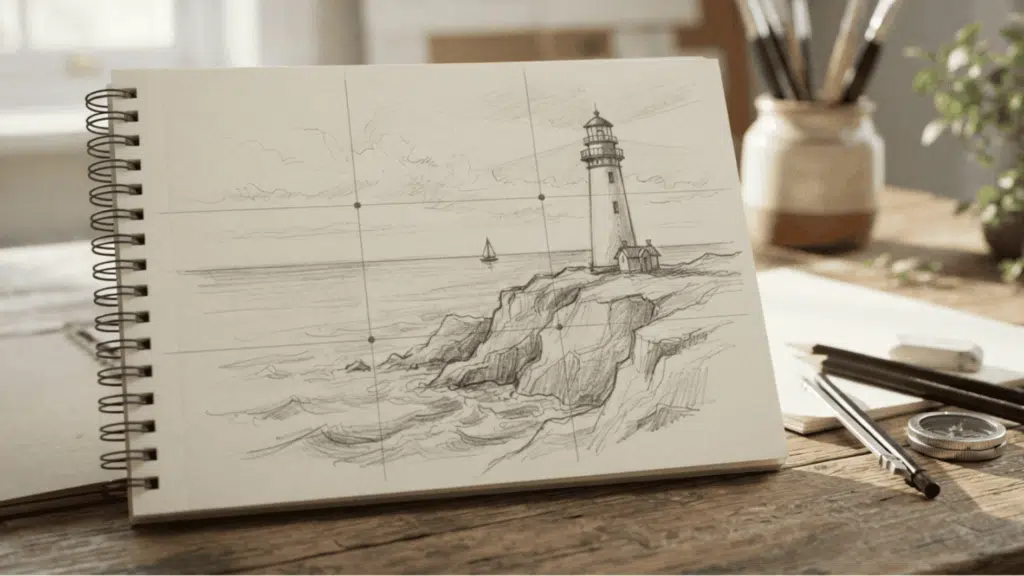
Instead of placing the main subject at the center of the page, the artwork is divided into nine equal parts using two horizontal lines and two vertical lines.
This creates a grid with four points where the lines cross. Artists often place the most important part of the artwork on one of these lines or at one of the four crossing points.
Doing this makes the image feel more natural and keeps the viewer’s attention longer.
How Does the Rule of Thirds Work in Art?
Once you understand the grid, using it becomes much easier. Instead of putting everything in the center, you place your subject along the lines or at the intersections.
| Aspect | In Drawing | In Paintings | In Visual Design |
|---|---|---|---|
| Subject | Place the main subject off-center. | Position trees, people, or buildings on third lines. | Place the focal element on a third. |
| Balance | Leave space around the object. | Balance the foreground & background. | Balance text, images, and white space. |
| Placement | Use negative space effectively. | Place the horizon on a third line. | Align elements using the grid. |
| Common Uses | Sketches and portraits. | Landscapes and still life. | Posters, websites, social media, and ads. |
Artists use the rule of thirds to make their artwork look more balanced and interesting: instead of placing everything in the center, they place the main subject slightly off-center.
How to Apply the Rule of Thirds Drawing Technique in Your Drawings?
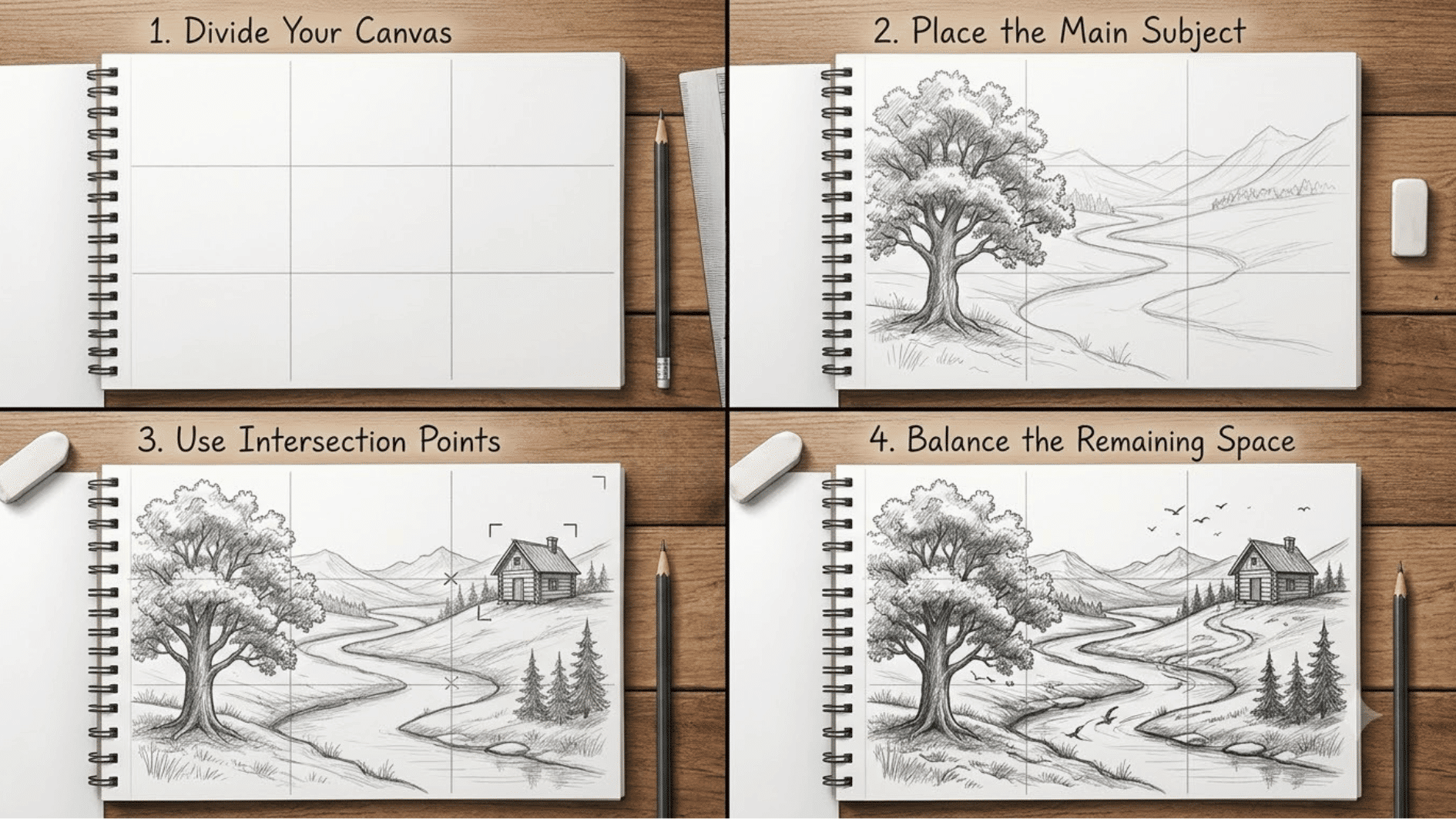
The rule of thirds drawing technique divides your artwork into a simple 3×3 grid with two horizontal and two vertical lines, helping create a more balanced composition.
1. Divide Your Canvas into Nine Equal Parts
Start by imagining or lightly drawing two evenly spaced horizontal lines and two vertical lines across your canvas.
This creates nine equal boxes. The grid acts as a guide while you plan your composition, and you can erase it once your artwork is complete.
2. Place the Main Subject Along the Grid Lines
Instead of placing your subject right in the middle, try positioning it along one of the four grid lines.
This creates a more natural-looking composition and gives the viewer’s eyes room to move around the artwork.
3. Use the Four Intersection Points as Focal Areas
The four spots where the grid lines cross are called intersection points. These are the areas where people naturally look first.
Placing important parts of your artwork, such as a person’s face, a flower, or a tree, near one of these points helps draw attention to the subject.
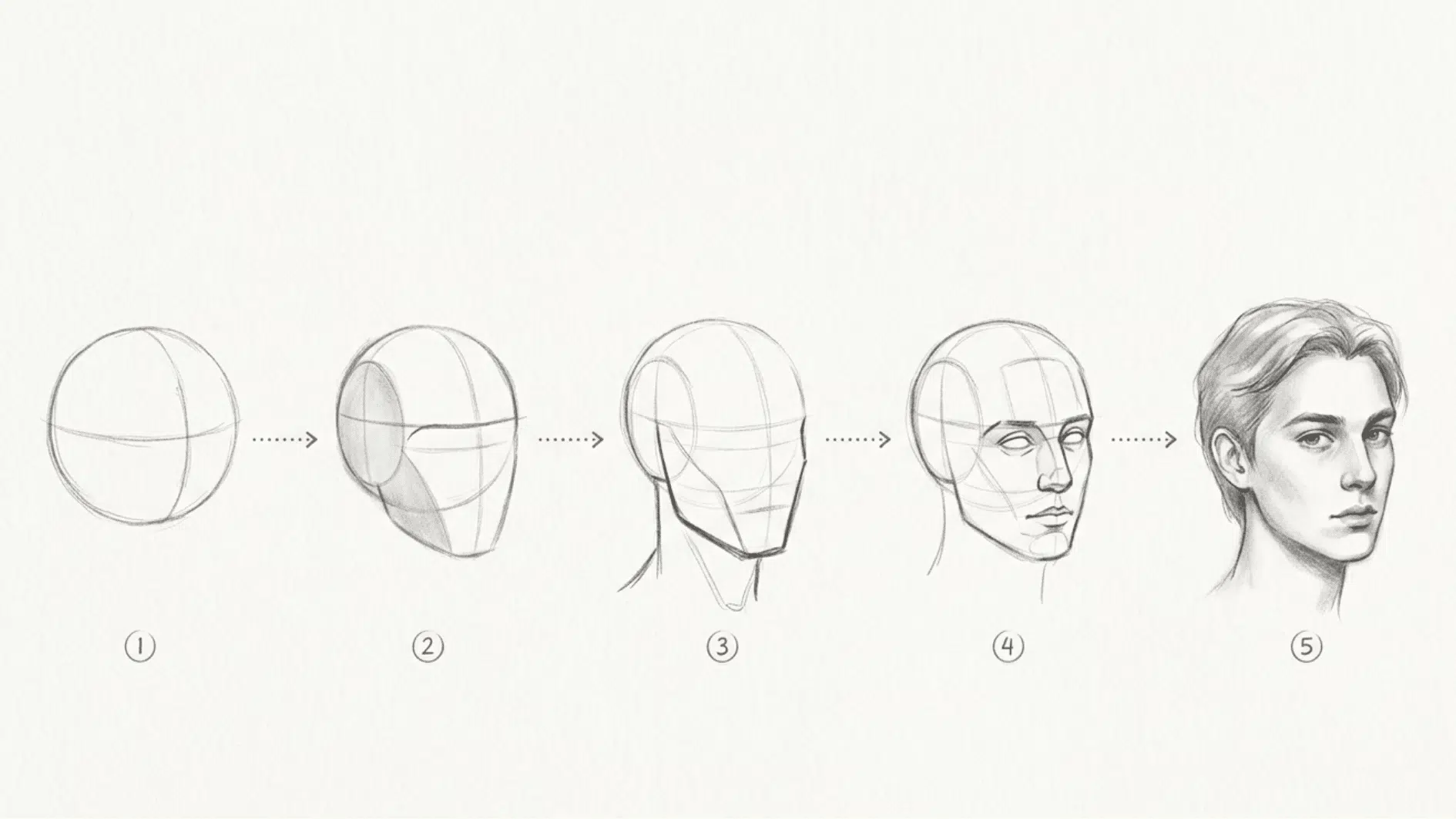
This is especially handy in portrait work; how to draw a person without getting the proportions wrong covers the groundwork you’ll need before worrying about placement.
4. Balance the Remaining Space
After placing your main subject, think about what fills the rest of the canvas; leave some open space or add smaller objects to create balance.
A well-balanced composition helps keep the viewer interested from one side of the artwork to the other.
If you’re working on scenery, drawing landscapes with simple techniques pairs naturally with this kind of horizon placement.
Relationship of The Rule of Thirds to Other Principles of Art
The rule of thirds works alongside other art principles to create stronger compositions. By guiding placement, balance, and focus, it helps artists organize visual elements in a more engaging way.
| Art Principle | Connection With the Rule of Thirds | How It Works Together |
|---|---|---|
| Balance | The rule of thirds helps place subjects in a way that creates visual balance. | Positioning elements along grid lines or intersections can prevent a composition from feeling too centered or uneven. |
| Emphasis | The rule of thirds helps highlight important parts of an artwork. | Placing the main subject near an intersection point naturally draws the viewer’s attention. |
| Movement | The rule of thirds can guide the viewer’s eye through the artwork. | Strategic placement creates a visual path that leads from one element to another. |
| Contrast | The rule of thirds helps create stronger differences between important areas. | Placing light, dark, large, or small elements in specific areas can make the composition more engaging. |
| Unity | The rule of thirds supports a cohesive arrangement of elements. | Balanced placement helps different parts of the artwork feel connected and organized. |
Balance and unity don’t work in isolation; either how principles of design balance shape great design and principles of design unity both dig deeper into how these ideas interact with a grid-based layout like the rule of thirds.
Tips to Practice the Rule of Thirds
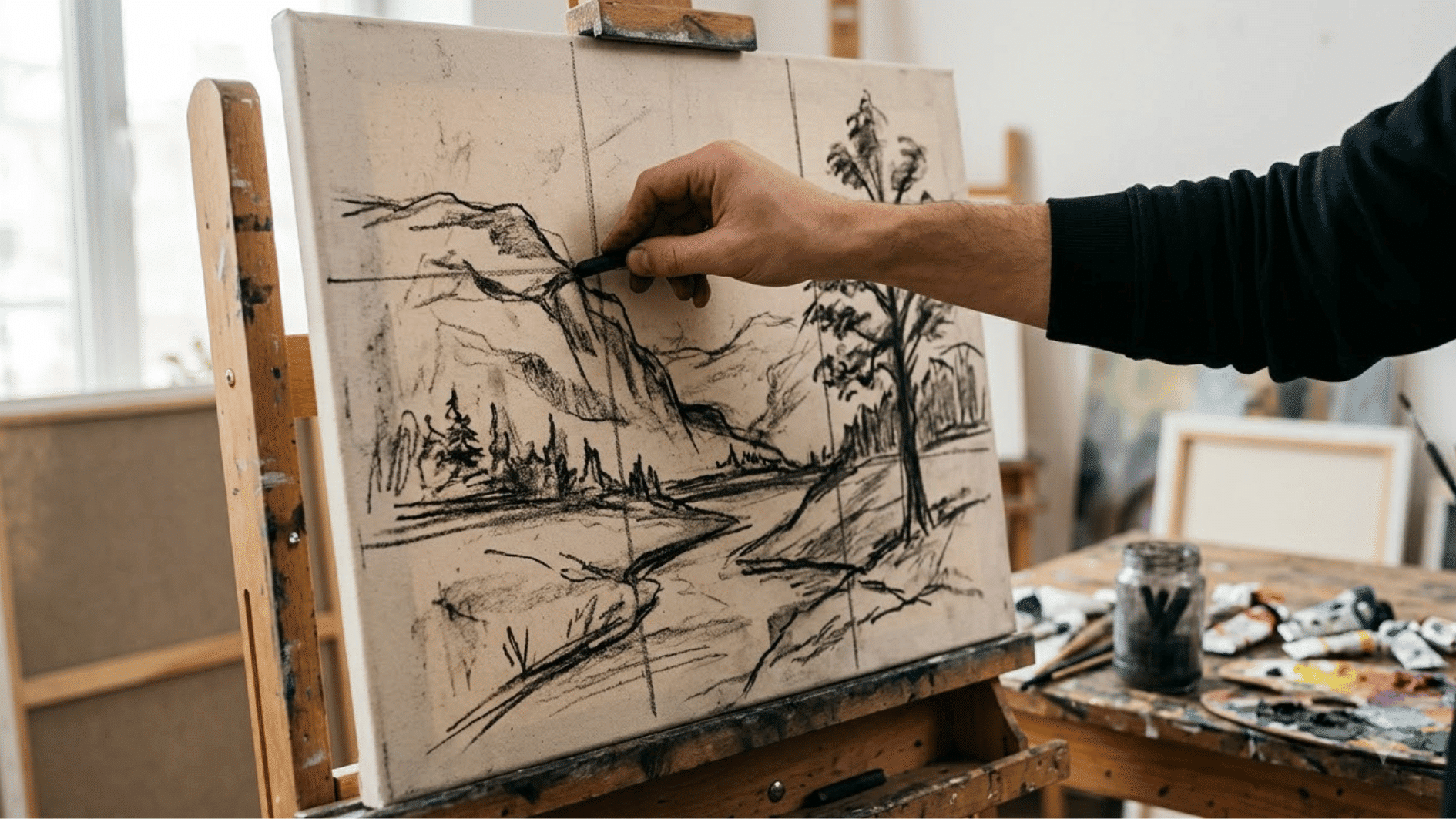
Practice is the best way to learn the rule of thirds. Keep observing, trying new ideas, and using them in your artwork and photos.
- Draw a Grid: Draw a simple 3×3 grid and practice placing your main subject on the lines or where the lines meet instead of putting it in the center.
- Study Real Artwork: Look at famous paintings and photos to see how artists use the rule of thirds to make their work look balanced and interesting.
- Practice with Different Subjects: Try using the rule of thirds when drawing landscapes, people, animals, or everyday objects.
- Try Breaking the Rule: Once you understand the rule of thirds, experiment by placing your subject in the center.
- Practice Before Adding Details: Arrange your subject using the grid first, then add shading, colors, and small details after you’re happy with the composition.
- Look at Your Artwork from a Distance: Step back for a moment and check if your eyes go to the main subject first. If not, adjust its position before finishing.
Wrapping It Up
A good composition can make even a simple drawing feel more engaging. Rule of thirds drawing gives you an easy way to place your subject so the artwork naturally draws attention
Keep practicing with different sketches, and don’t worry about making every composition perfect.
As you gain experience, you’ll develop a better sense of placement and create artwork that feels more confident and visually appealing.
Frequently Asked Questions
Does the Rule of Thirds Work for Abstract Art?
Yes. Even in abstract art, the rule of thirds can help create balance and guide the viewer’s eye.
Is the Rule of Thirds only For Beginners?
No. Beginners use it to learn good composition, but experienced artists use it too.
Can I Use the Rule of Thirds without Drawing a Grid?
Yes, after practicing with a grid for a while, many artists naturally imagine the lines while they work.
Do I Need Special Tools to Use the Rule of Thirds?
Nope! You can lightly sketch the grid lines with a pencil, use a ruler for accuracy, or just estimate the sections by eye once you’ve practiced a bit.