From The Last Supper to The Creation of Adam, some artworks have become symbols of faith, history, and artistic excellence.
Christianity has shaped Western art more than any other single subject. Many famous Christian art that have shaped the art world for centuries.
In this blog, you’ll find famous Christian paintings, learn what makes them so influential, and why they continue to inspire millions around the world.
What Makes a Christian Painting Famous?
A Christian painting becomes famous when it combines strong artistic skill, meaningful biblical storytelling, andlasting cultural influence.
These artworks often depict important events from the Bible, such as the birth, crucifixion, resurrection, and miracles of Jesus Christ, as well as the lives of saints and other biblical figures.
Many famous Christian paintings are also known for introducing new artistic techniques, inspiring generations of artists, or serving as symbols of the Christian faith.
Today, they continue to be admired in museums, churches, and galleries around the world for both their spiritual message and artistic beauty.
Famous Christian Paintings Everyone Should Know
These iconic Christian paintings span centuries of art history, each depicting biblical events, Christian beliefs, and moments that continue to inspire people around the world.
1. The Lamentation
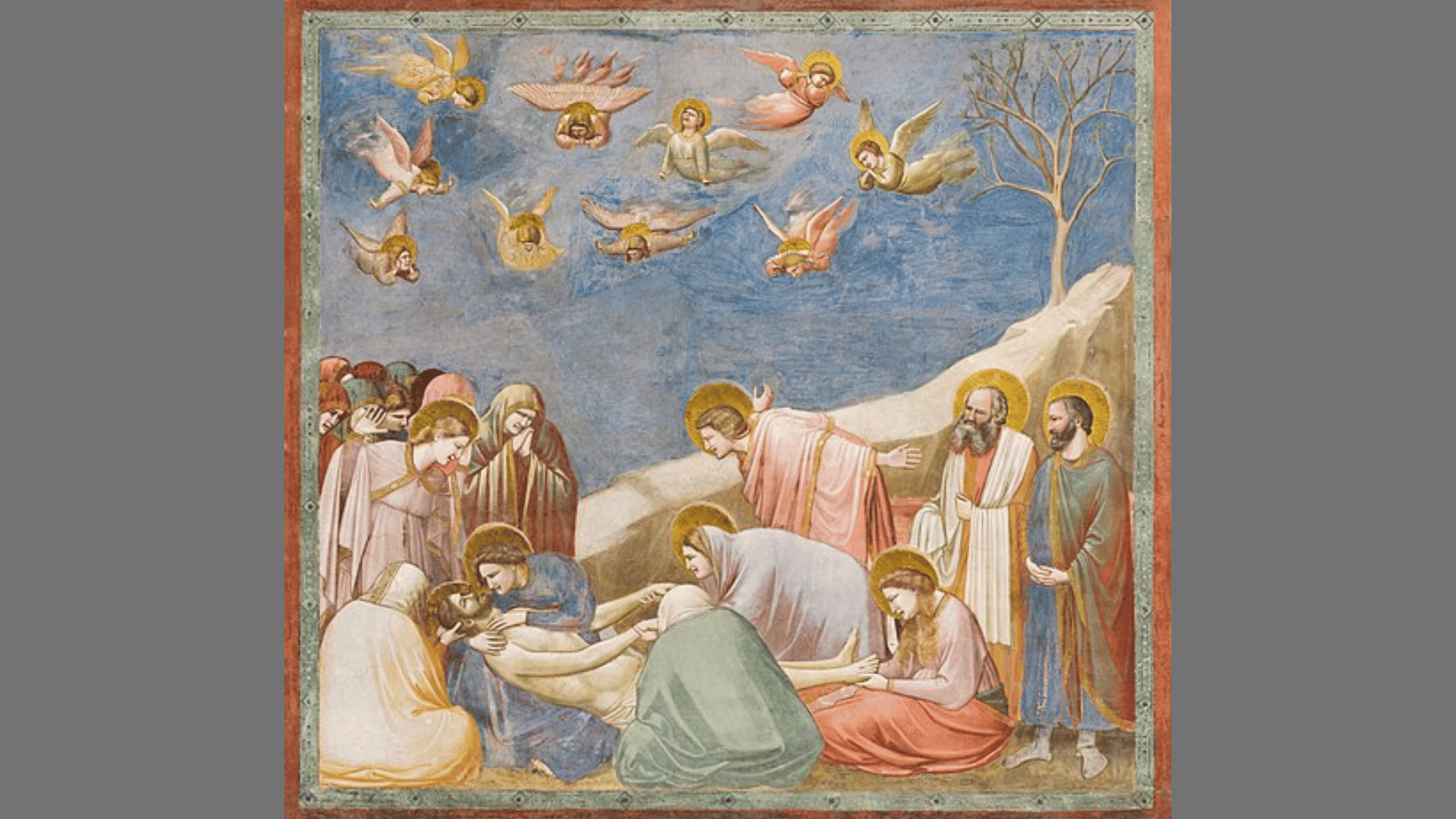
Source – Art Theoria
Long before painters mastered perspective, Italian artist Giotto captured raw human grief on a chapel wall in Padua.
- Artist: Giotto
- Year: c. 1305
- Location: Scrovegni Chapel, Padua, Italy
- Why it’s famous: Depicts Mary mourning Christ after the Crucifixion and is considered a landmark in Western art for its realistic emotion and human figures.
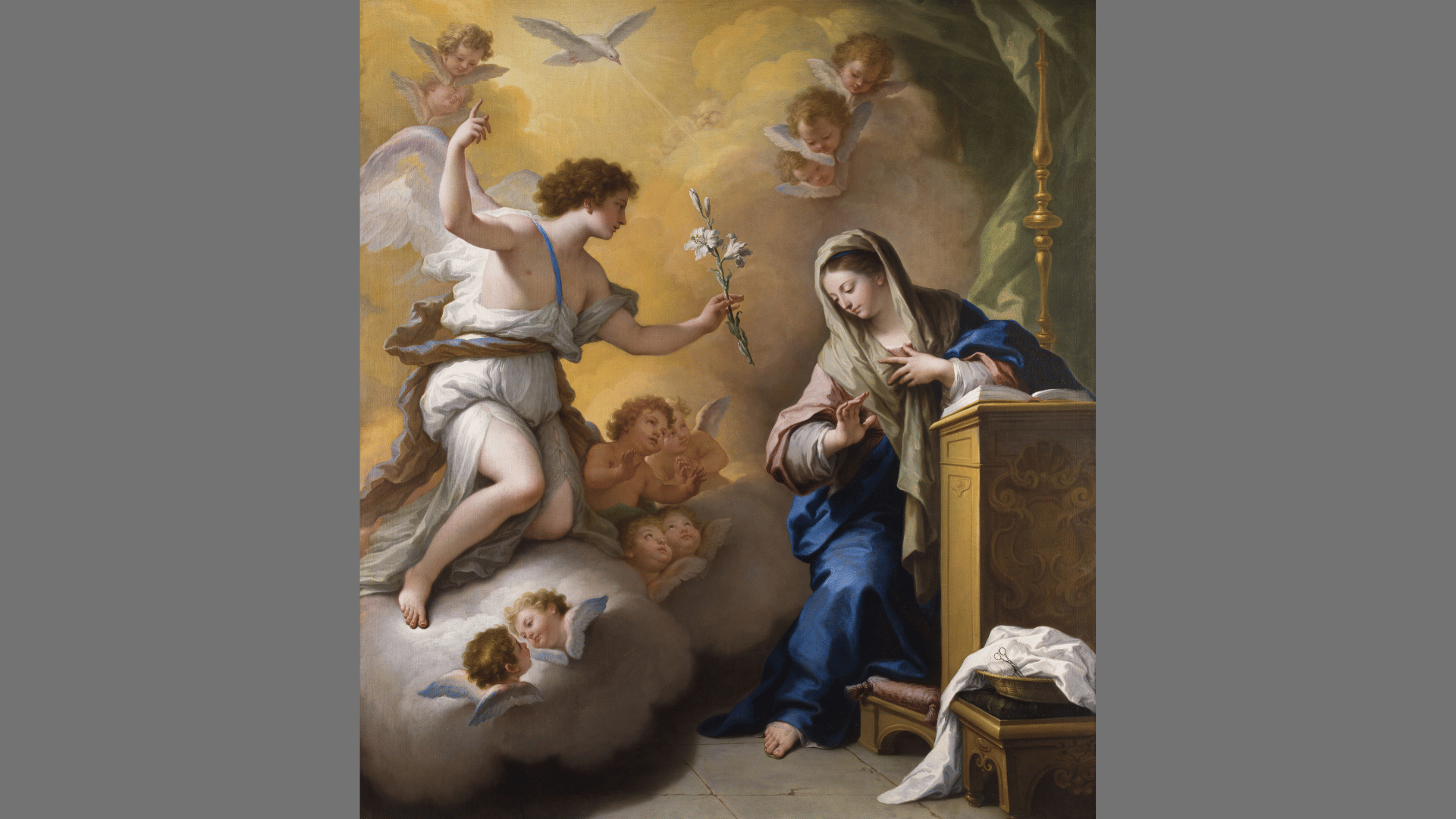
2. Annunciation
Source – St. Louis Art Museum
Fra Angelico turned a single quiet moment, an angel delivering unimaginable news, into one of art’s most serene compositions.
- Artist: Fra Angelico
- Year: c. 1426
- Location: Prado Museum, Madrid, Spain
- Why it’s famous: It shows the Angel Gabriel announcing Jesus’ birth to Mary and has become one of the most influential Annunciation paintings.
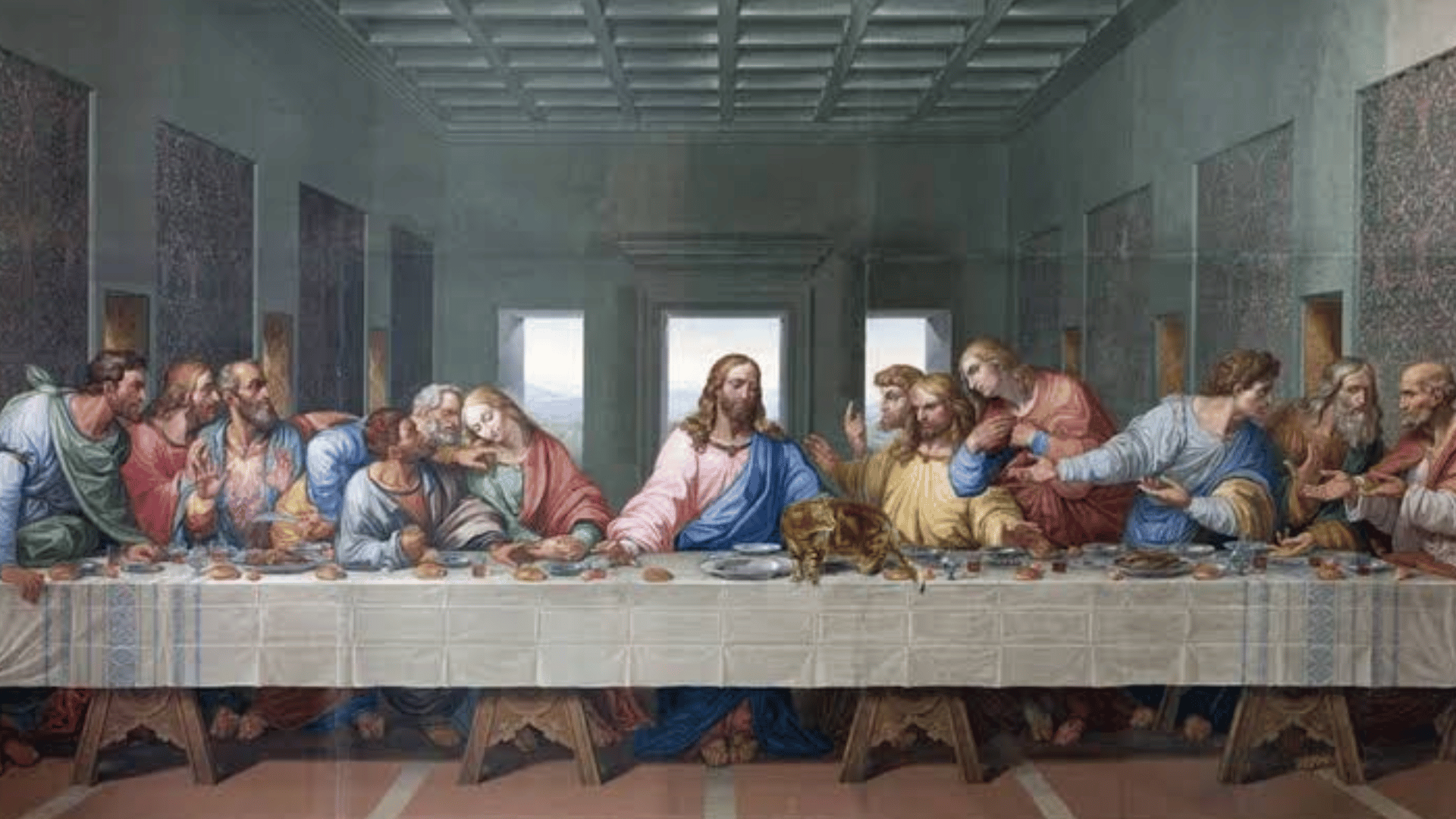
3. The Last Supper
Source – Fat Tire Tours
Leonardo froze the exact second the disciples reacted to shocking news, turning a dining hall wall into a study of human emotion.
- Artist: Leonardo da Vinci
- Year: 1495–1498
- Location: Santa Maria delle Grazie, Milan, Italy
- Why it’s famous: Captures Jesus announcing his betrayal and is celebrated for its dramatic expressions and innovative composition.
The National Gallery of Art has documented the painting’s restoration history and its influence on later artists.
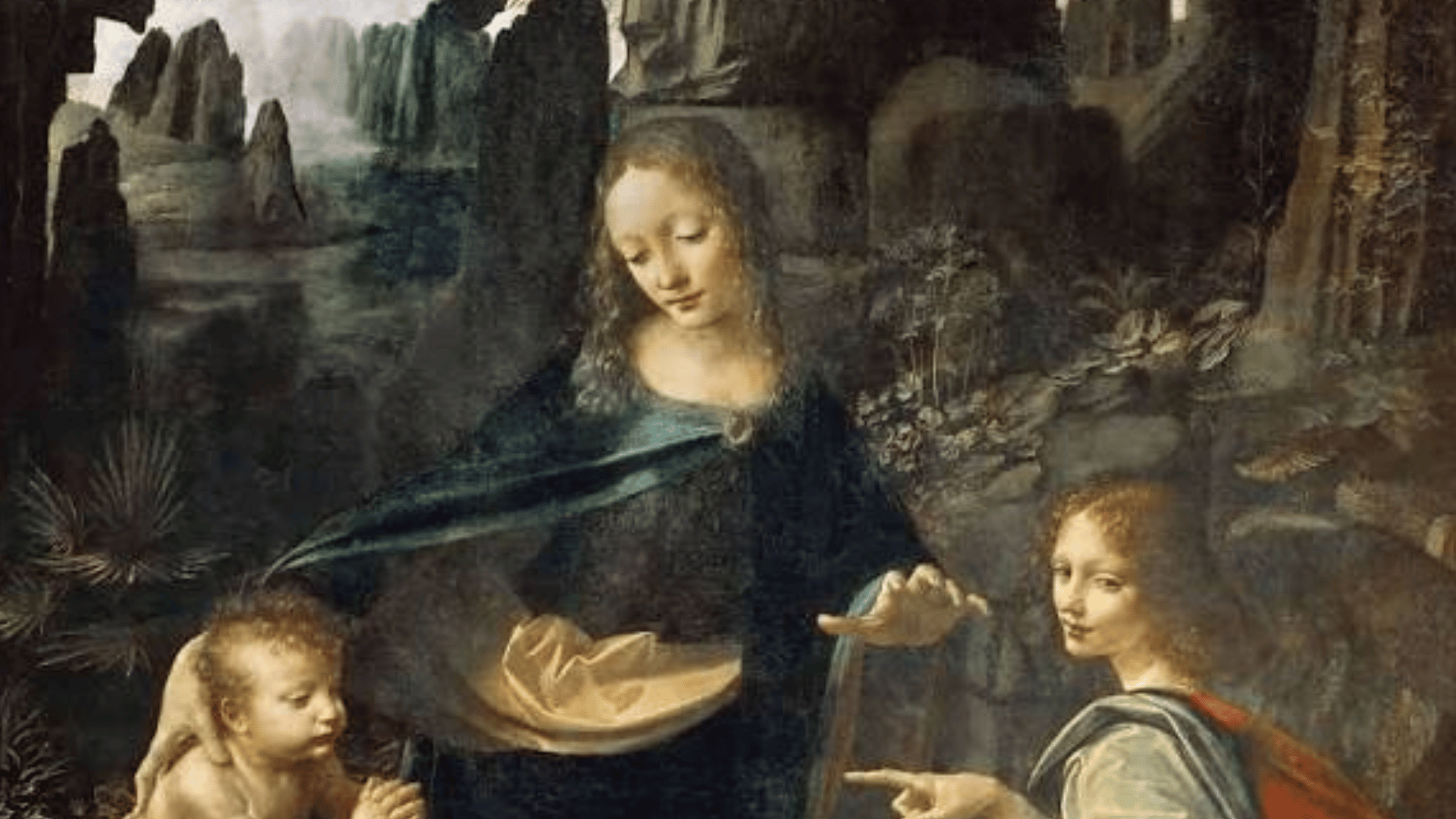
4. The Virgin of the Rocks
Source – BBC
Set inside a shadowy, rocky grotto, this painting shows Leonardo experimenting with light years before it became his signature technique.
- Artist: Leonardo da Vinci
- Year: c. 1483–1486
- Location: Louver Museum, Paris, France
- Why it’s famous: Depicts the Virgin Mary with the infant Jesus and John the Baptist, showcasing Leonardo’s signature sfumato technique.
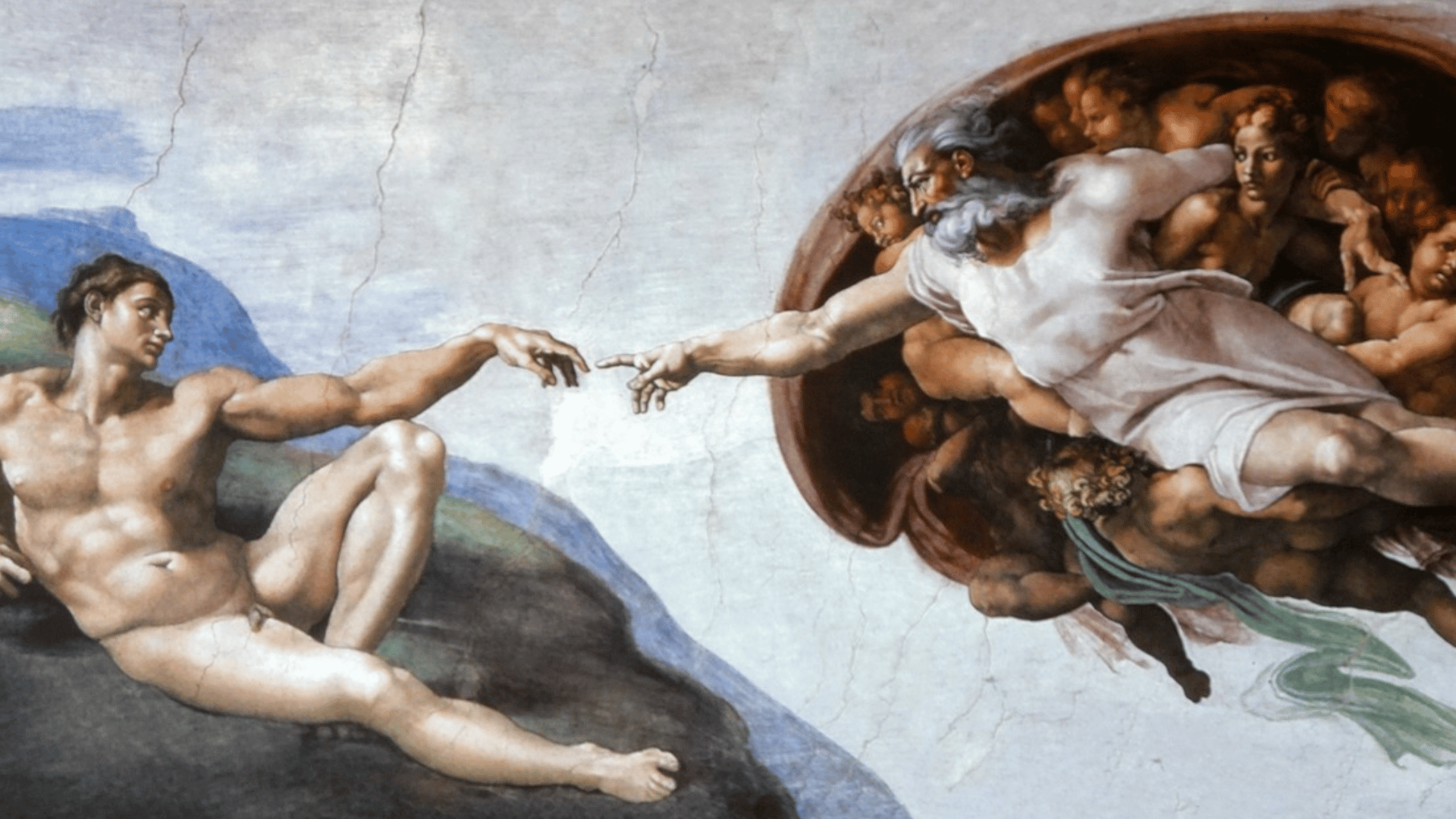
5. The Creation of Adam
Source – Queer Art History
Two outstretched fingers, almost touching, became one of the most reproduced images in art history.
- Artist: Michelangelo
- Year: 1508–1512
- Location: Sistine Chapel, Vatican City
- Why it’s famous: Illustrates God giving life to Adam and features one of the most recognizable images in art history.
A study published through the National Institutes of Health even argues that the cloak surrounding God is shaped like an anatomically accurate human brain.
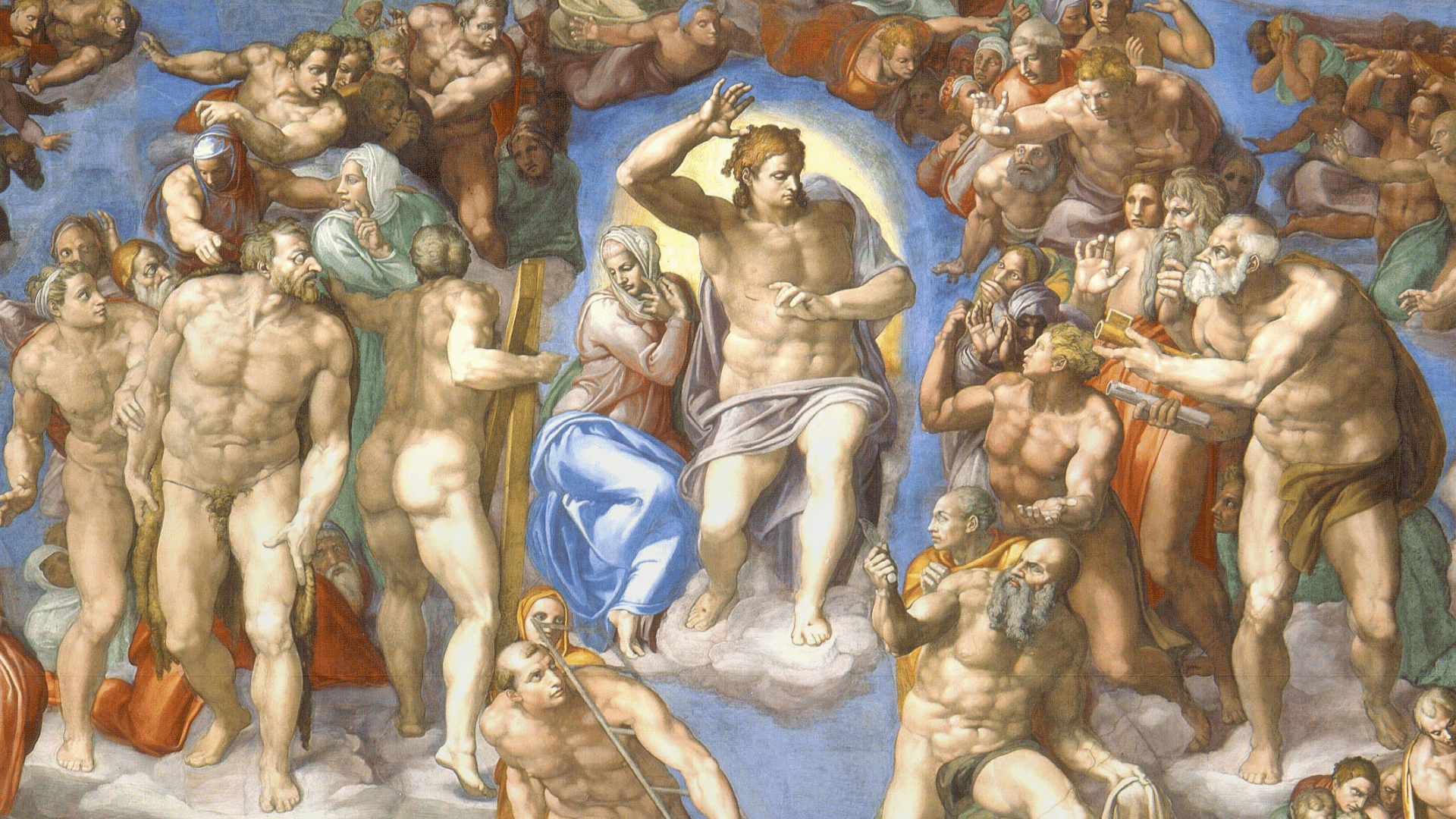
6. The Last Judgment
Source – T’s Italy
Decades after finishing the ceiling, Michelangelo returned to the same chapel to cover an entire wall in judgment and chaos.
- Artist: Michelangelo
- Year: 1536–1541
- Location: Sistine Chapel, Vatican City
- Why it’s famous: Depicts Christ judging souls at the end of time and is renowned for its dramatic composition and hundreds of figures.
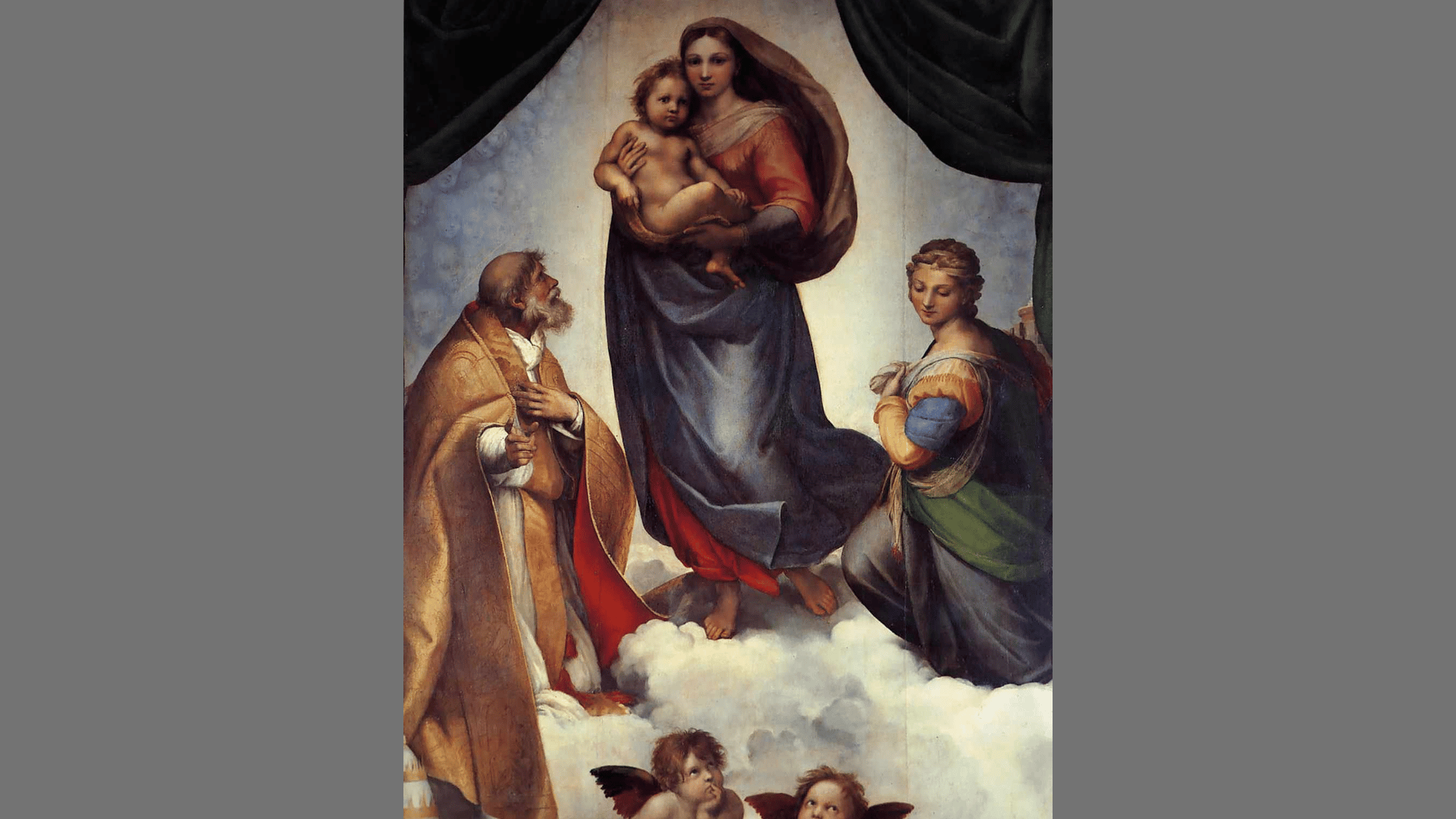
7. The Sistine Madonna
Source – ThoughtCo
Most people couldn’t name this painting, but almost everyone recognizes the two bored little angels resting at the bottom of it.
- Artist: Raphael
- Year: c. 1512
- Location: Old Masters Picture Gallery, Dresden, Germany
- Why it’s famous: Shows the Virgin Mary with the Christ Child and features the world-famous cherubs at the bottom.
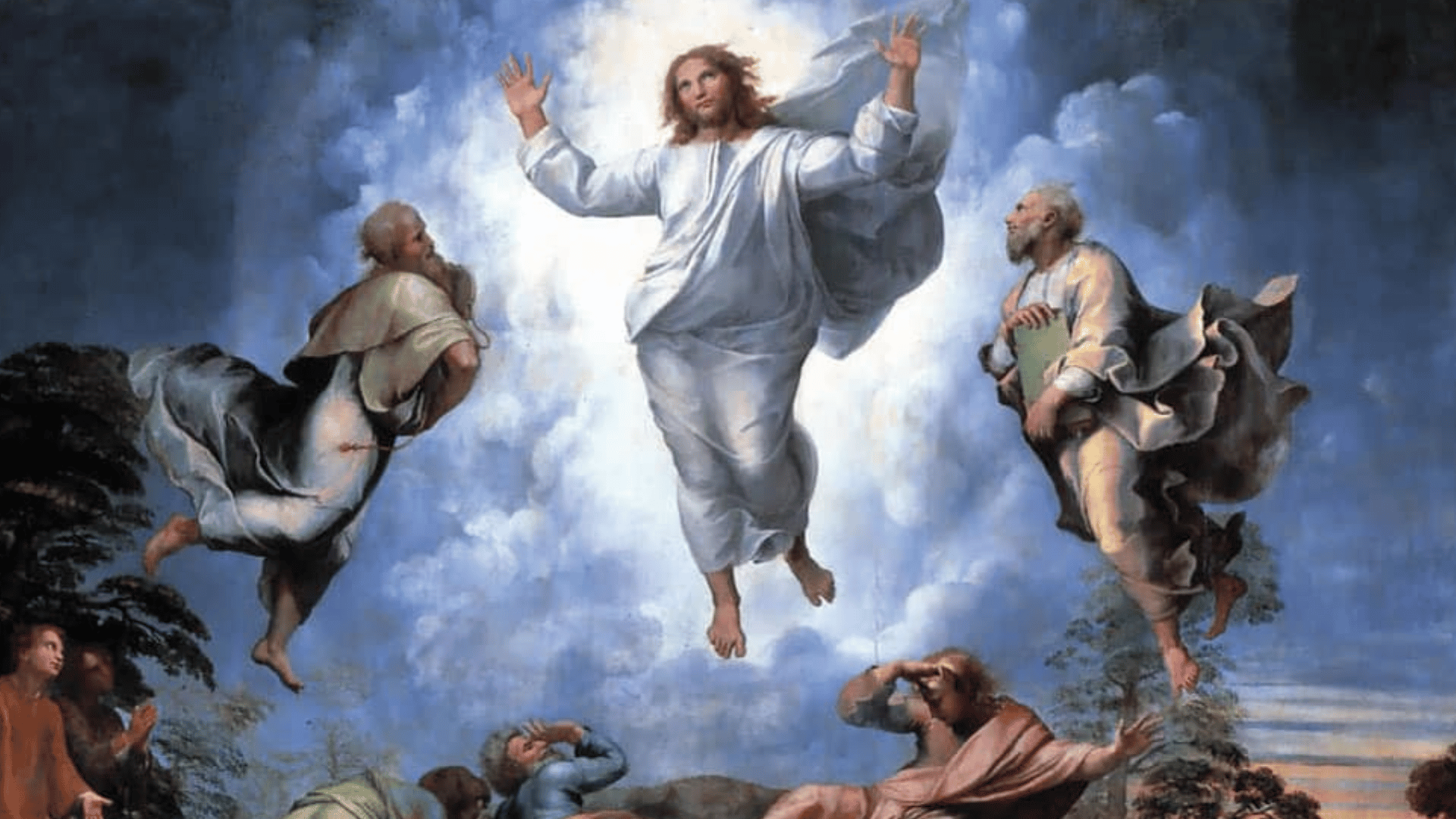
8. The Transfiguration
Source – Our Sunday Visitor Magazine
Raphael’s final painting pairs a glowing miracle above with raw human suffering below, finished just before his death.
- Artist: Raphael
- Year: 1516–1520
- Location: Vatican Museums, Vatican City
- Why it’s famous: Combines Christ’s Transfiguration with the healing of a possessed boy, symbolizing divine glory and human suffering.
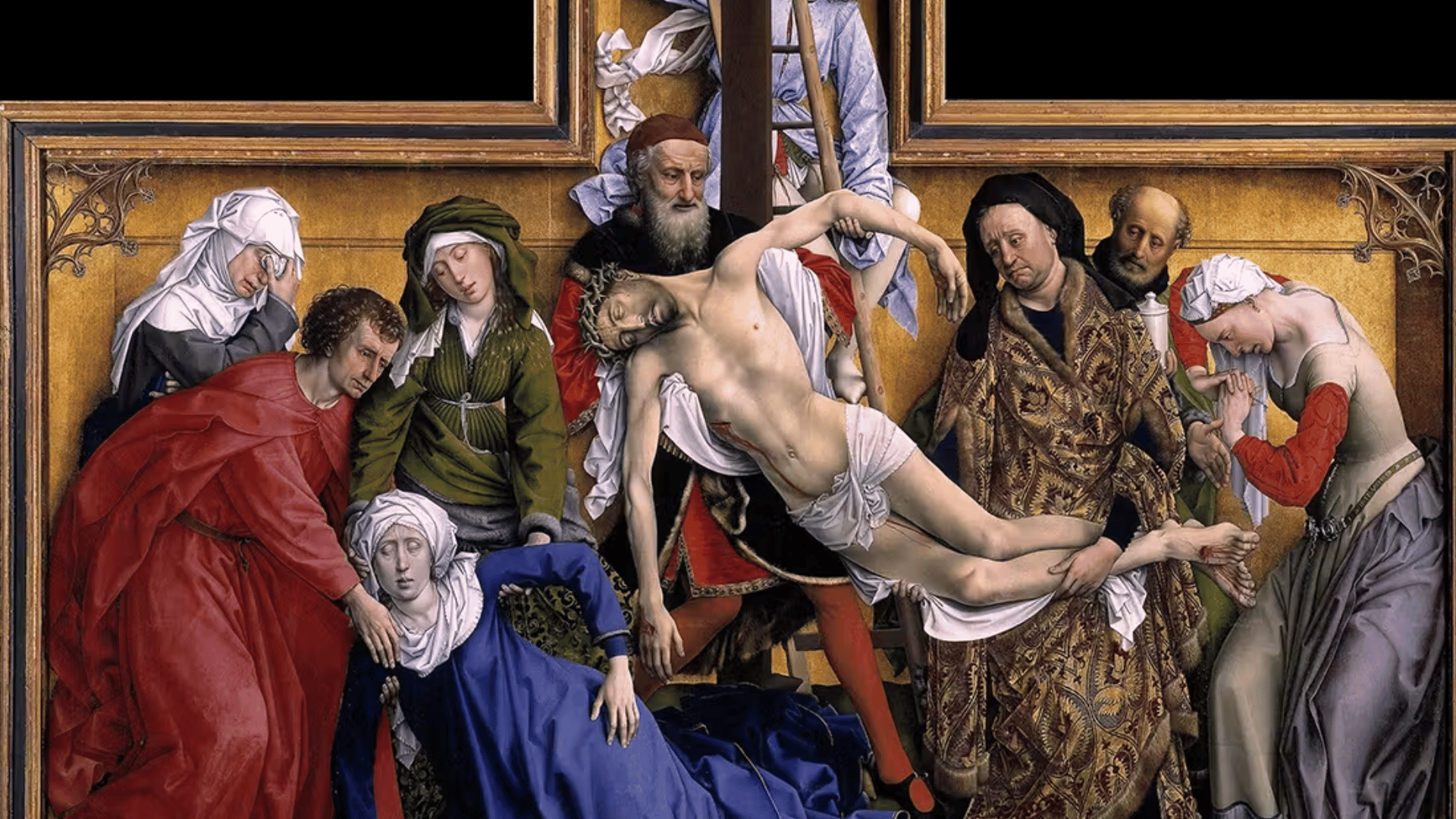
9. The Descent from The Cross
Source – Museum of the Bible
Van der Weyden arranged his figures like a shallow relief carving, folding grief into one continuous, sweeping curve.
- Artist: Rogier Van Der Weyden
- Year: c. 1435
- Location: Prado Museum, Madrid, Spain
- Why It’s Famous: depicts Christ Being Lowered from the Cross and Became One of the Most Influential Flemish Religious Paintings.
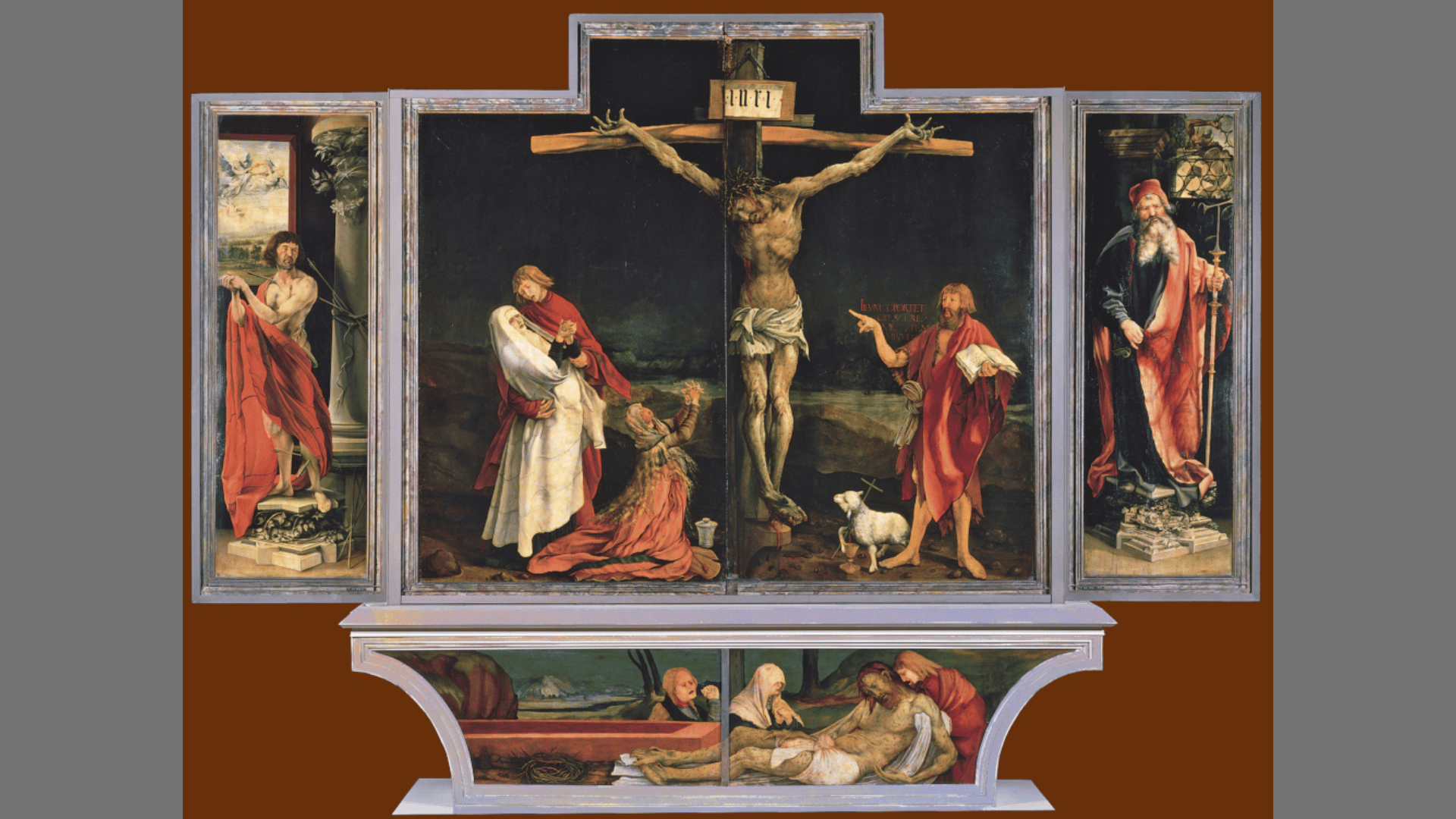
10. Isenheim Altarpiece
Source – Art and the Bible
Painted for a hospital that treated skin disease, this altarpiece mirrored patients’ suffering back at them as a source of comfort.
- Artist: Matthias Grünewald
- Year: 1512–1516
- Location: Musée Unterlinden, Colmar, France
- Why It’s Famous: Known for its powerful Crucifixion scene that offered hope and comfort to hospital patients.
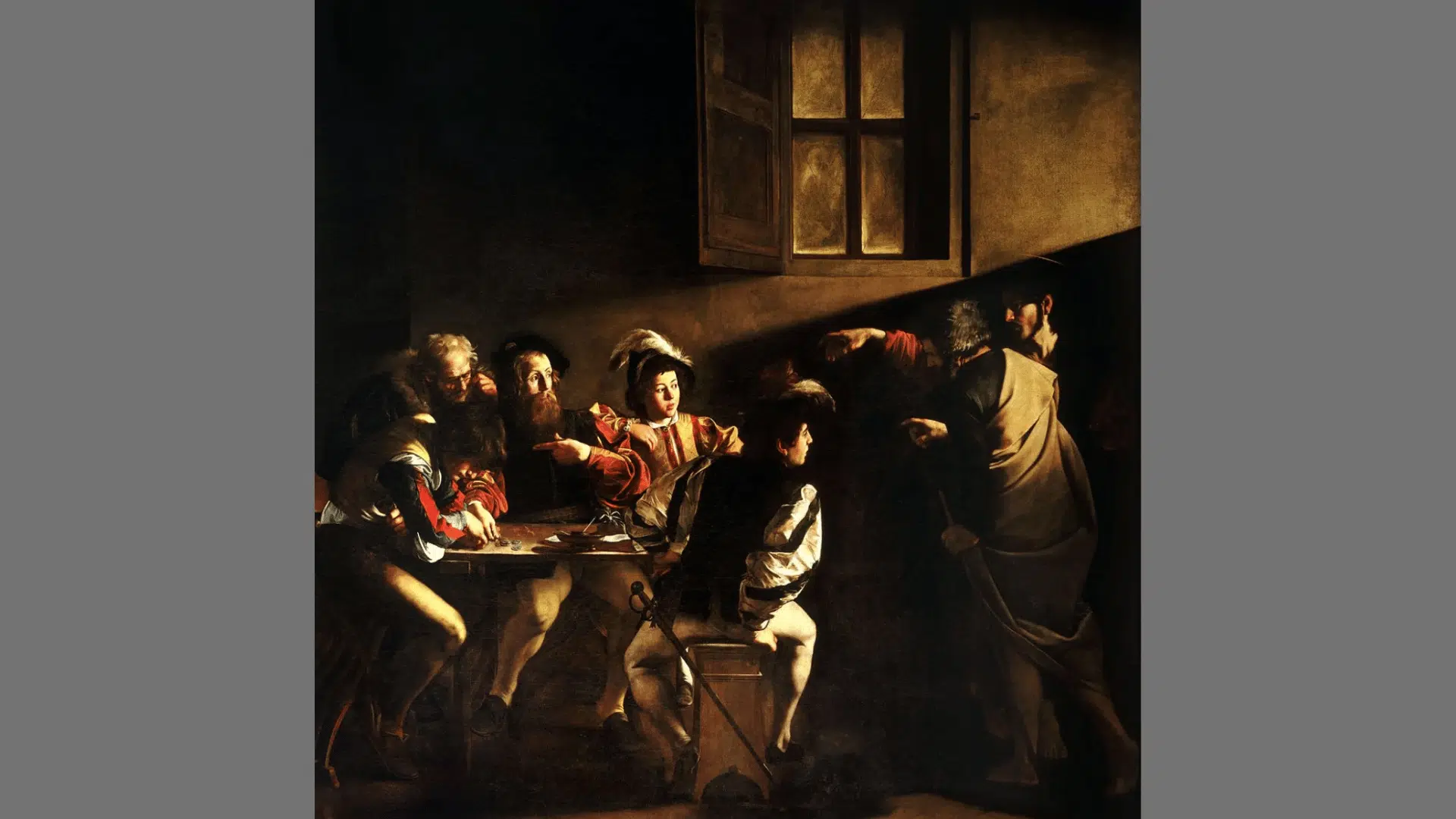
11. The Calling of Saint Matthew
Source – The Catholic Physicist
A single beam of light cutting through a dim tavern is how Caravaggio chose to depict a life-changing call to faith.
- Artist: Caravaggio
- Year: 1599–1600
- Location: San Luigi dei Francesi, Rome, Italy
- Why It’s Famous: Shows Jesus calling Matthew to discipleship and is celebrated for Caravaggio’s dramatic use of light.
The National Gallery of Art has examined how this lighting technique shaped Baroque religious painting.
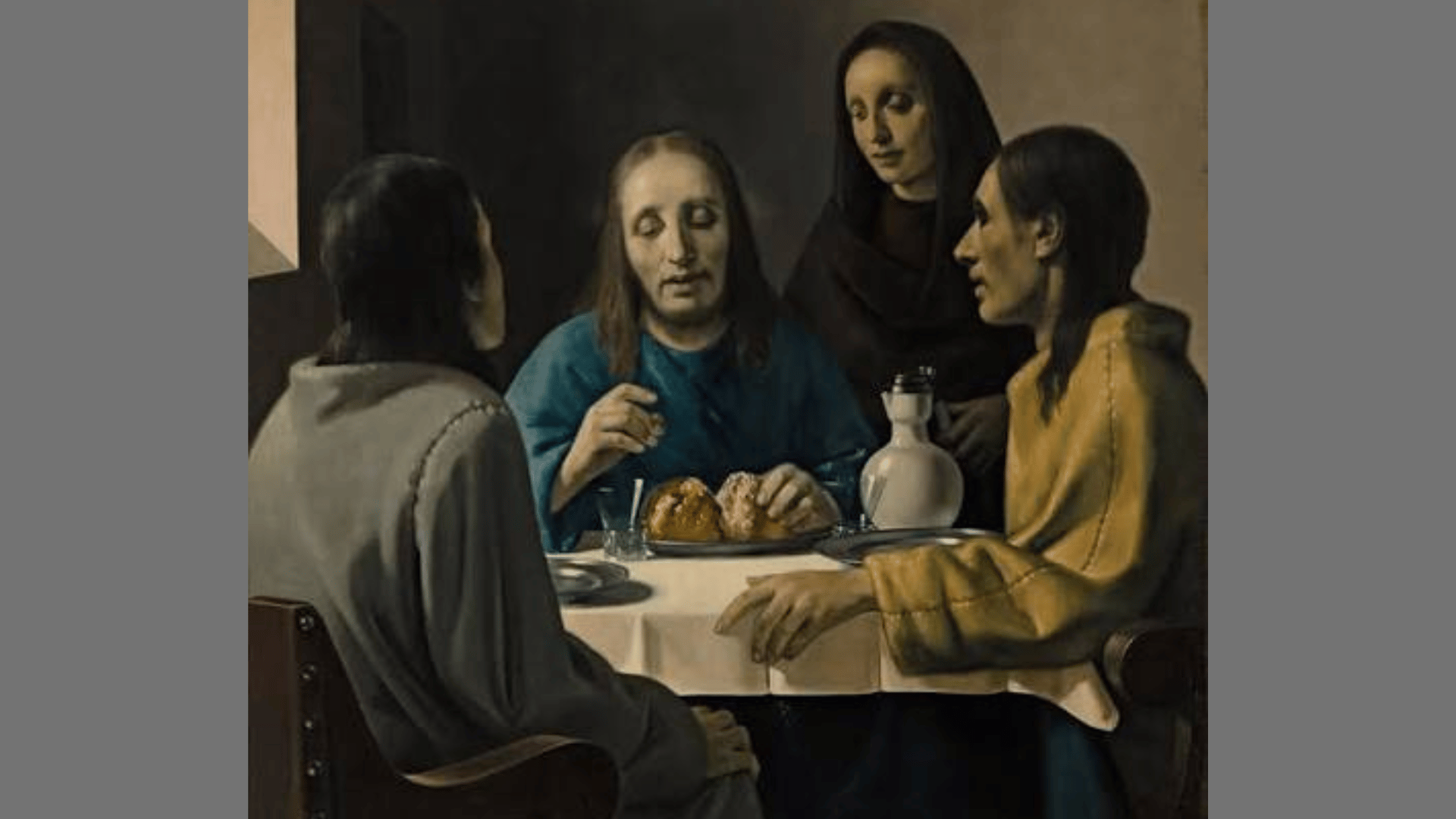
12. The Supper at Emmaus
Source – Art and the Bible
Caravaggio captures the exact instant two travelers realize the stranger sitting at their table is the risen Christ.
- Artist: Caravaggio
- Year: 1601
- Location: National Gallery, London, England
- Why It’s Famous: Depicts the disciples’ recognition of the risen Christ through striking realism and theatrical composition.
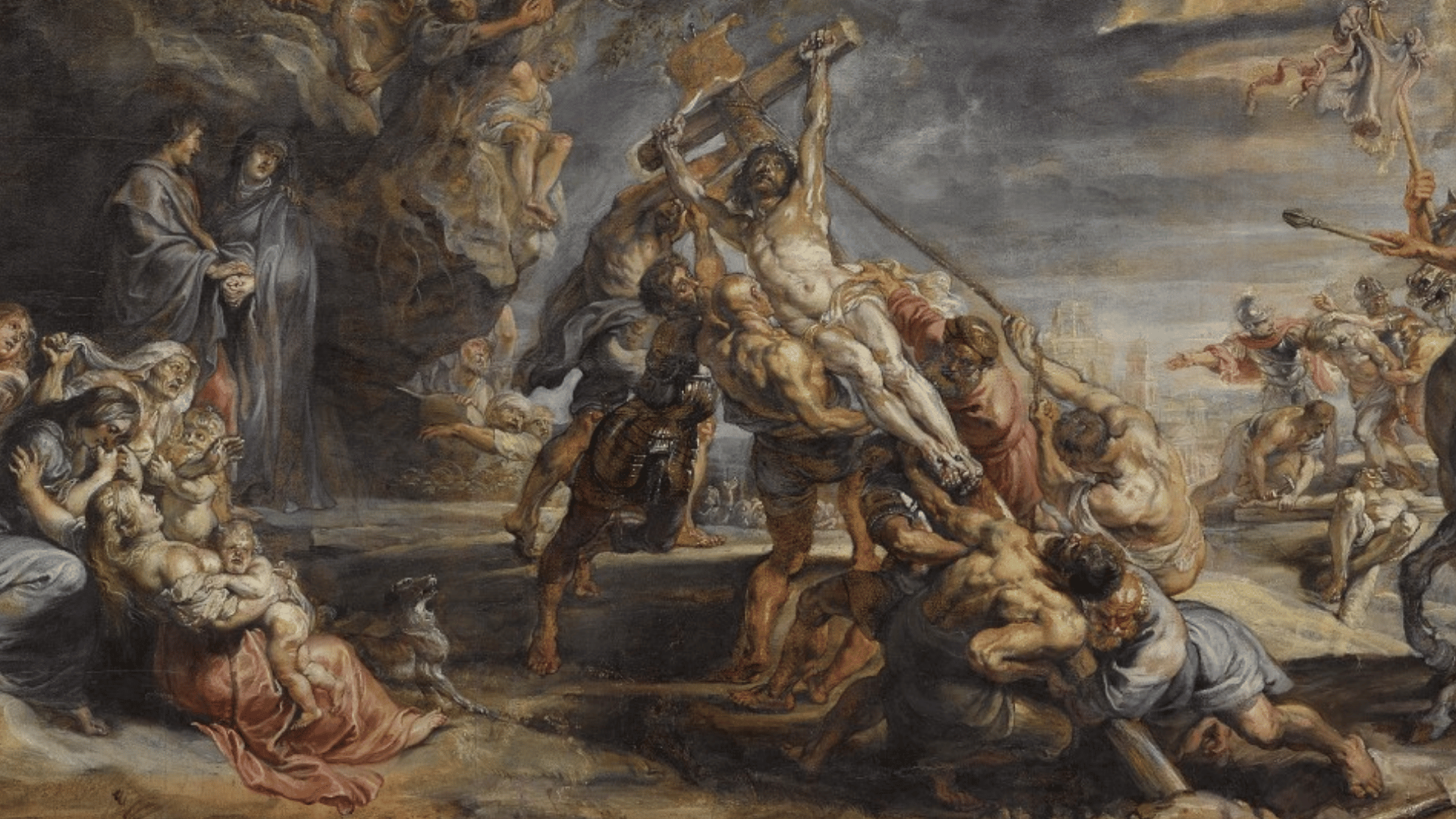
13. The Raising of the Cross
Source – Art Gallery of Ontario
Straining muscles and sharp diagonal lines give this Crucifixion scene an unusual sense of physical effort and weight.
- Artist: Peter Paul Rubens
- Year: 1610–1611
- Location: Cathedral of Our Lady, Antwerp, Belgium
- Why It’s Famous: Portrays Christ’s Crucifixion with dynamic movement, making it a masterpiece of Baroque religious art.
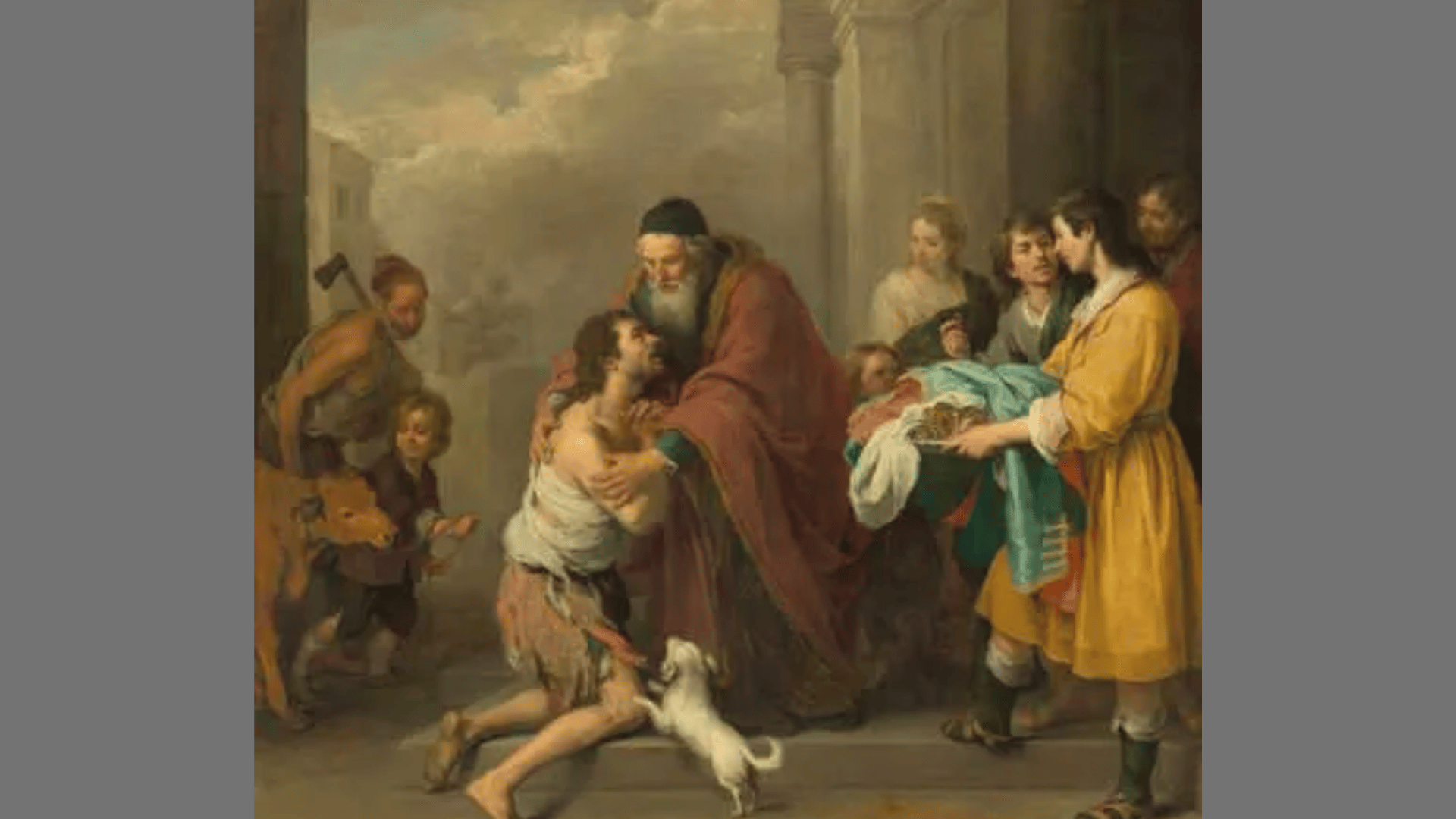
14. The Return of The Prodigal Son
Source – My Catholic Life
Rembrandt spent his final years perfecting this scene of a father’s quiet, wordless forgiveness.
- Artist: Rembrandt
- Year: c. 1668
- Location: Hermitage Museum, St. Petersburg, Russia
- Why It’s Famous: Illustrates the biblical parable of forgiveness with exceptional emotional depth and realism.
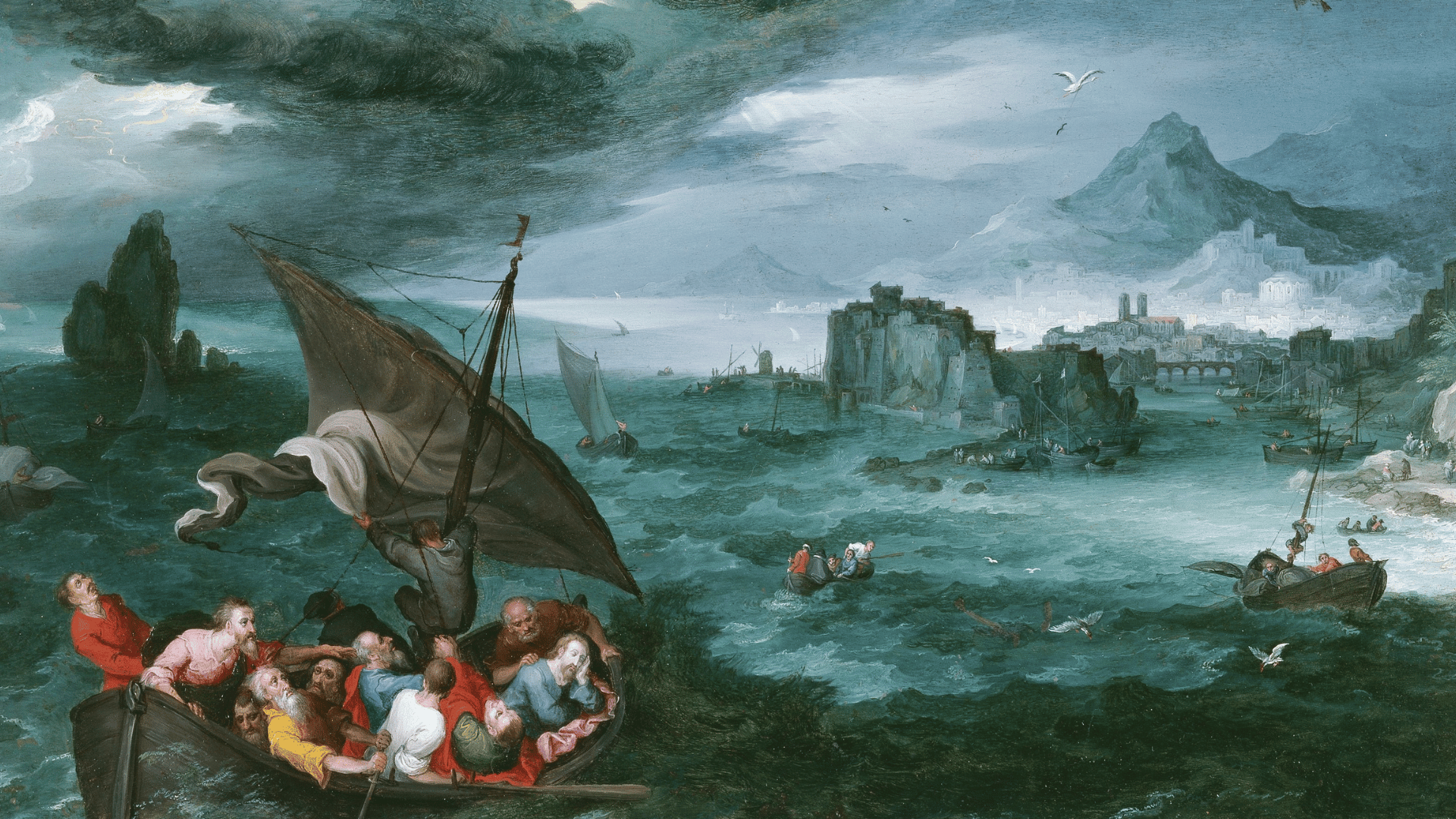
15. Christ in The Storm on The Sea of Galilee
Source – Museo Thyssen
This is the only seascape Rembrandt ever painted, and it later vanished in one of the most infamous art heists in history.
- Artist: Rembrandt
- Year: 1633
- Location: Stolen from the Isabella Stewart Gardner Museum, Boston, USA
- Why It’s Famous: Depicts Jesus calming a storm and is notable as Rembrandt’s only seascape and one of history’s most famous stolen paintings.
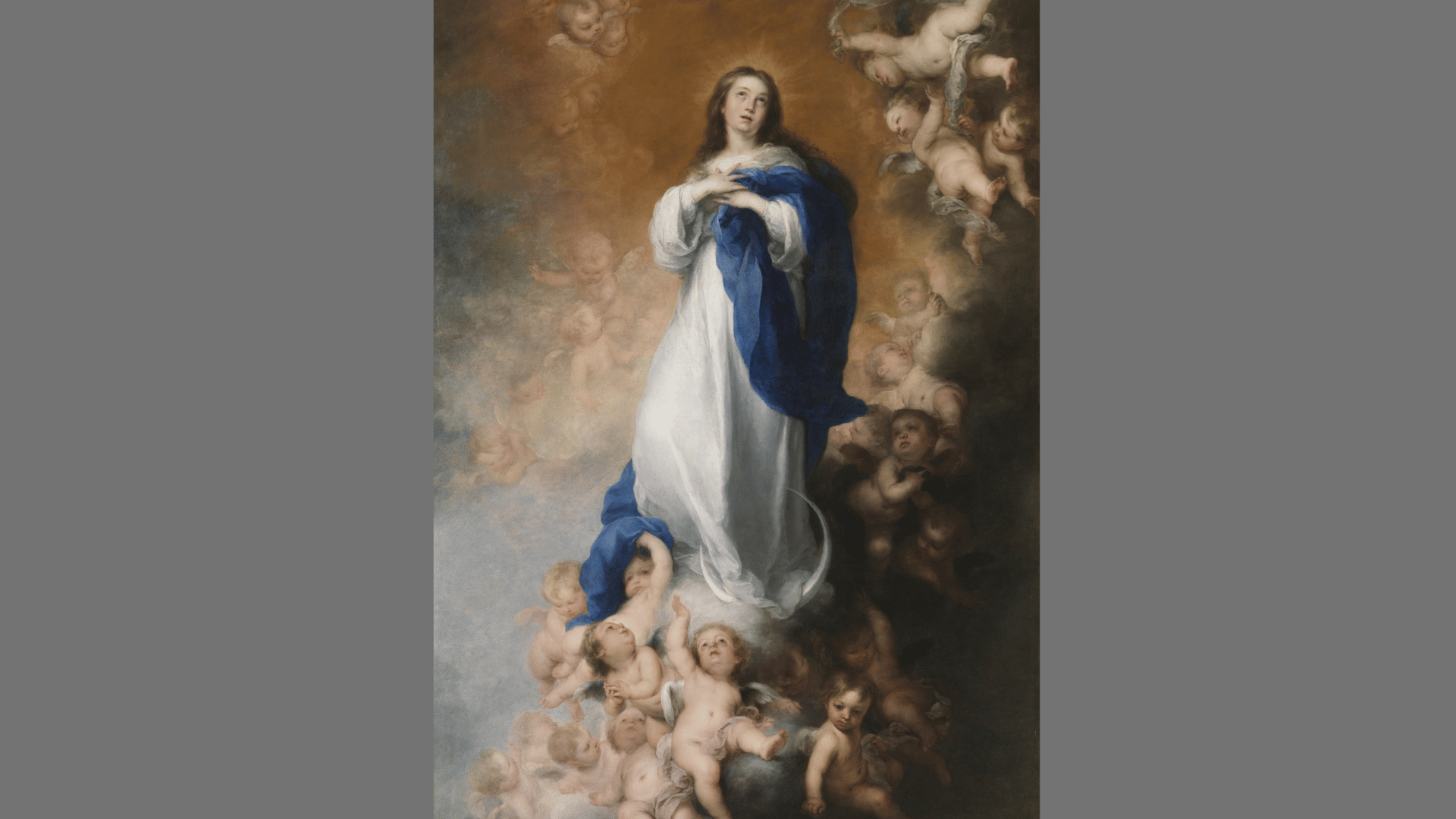
16. The Immaculate Conception of Los Venerables
Source – Museo del Prado
Murillo painted Mary rising on a cloud of cherubs with a softness that made this the most copied version of the subject.
- Artist: Bartolomé Esteban Murillo
- Year: c. 1678
- Location: Prado Museum, Madrid, Spain
- Why It’s Famous: Celebrates the Immaculate Conception with Murillo’s graceful depiction of Mary surrounded by angels.
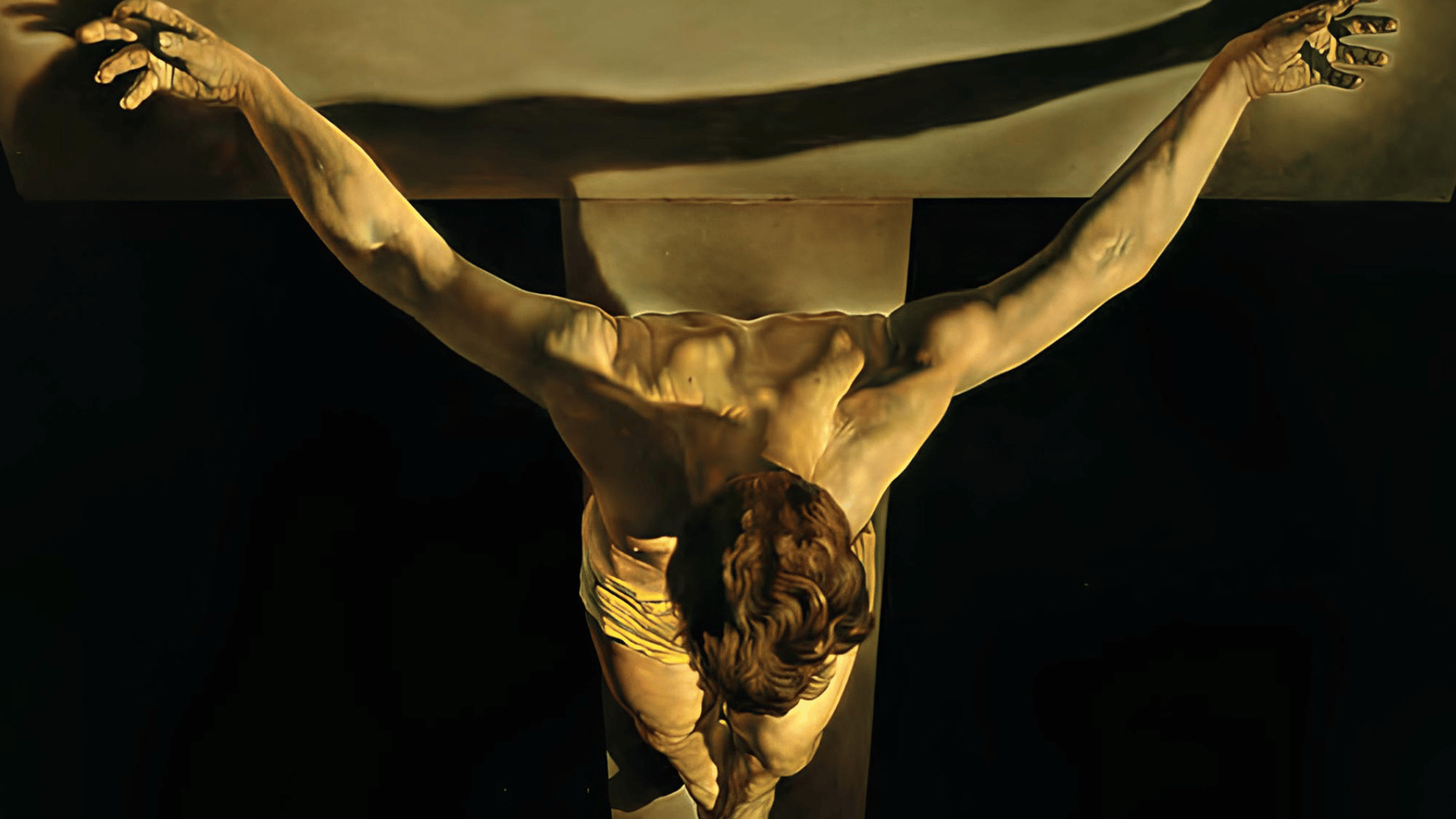
17. Christ of Saint John of The Cross
Source – Conversatio Divina
Salvador Dalí skipped the nails and blood entirely, choosing a dizzying bird’s-eye view that reimagines the Crucifixion from above.
- Artist: Salvador Dalí
- Year: 1951
- Location: Kelvingrove Art Gallery, Glasgow, Scotland
- Why It’s Famous: Presents an unusual overhead view of the Crucifixion, blending Christian symbolism with modern art.
18. The Resurrection
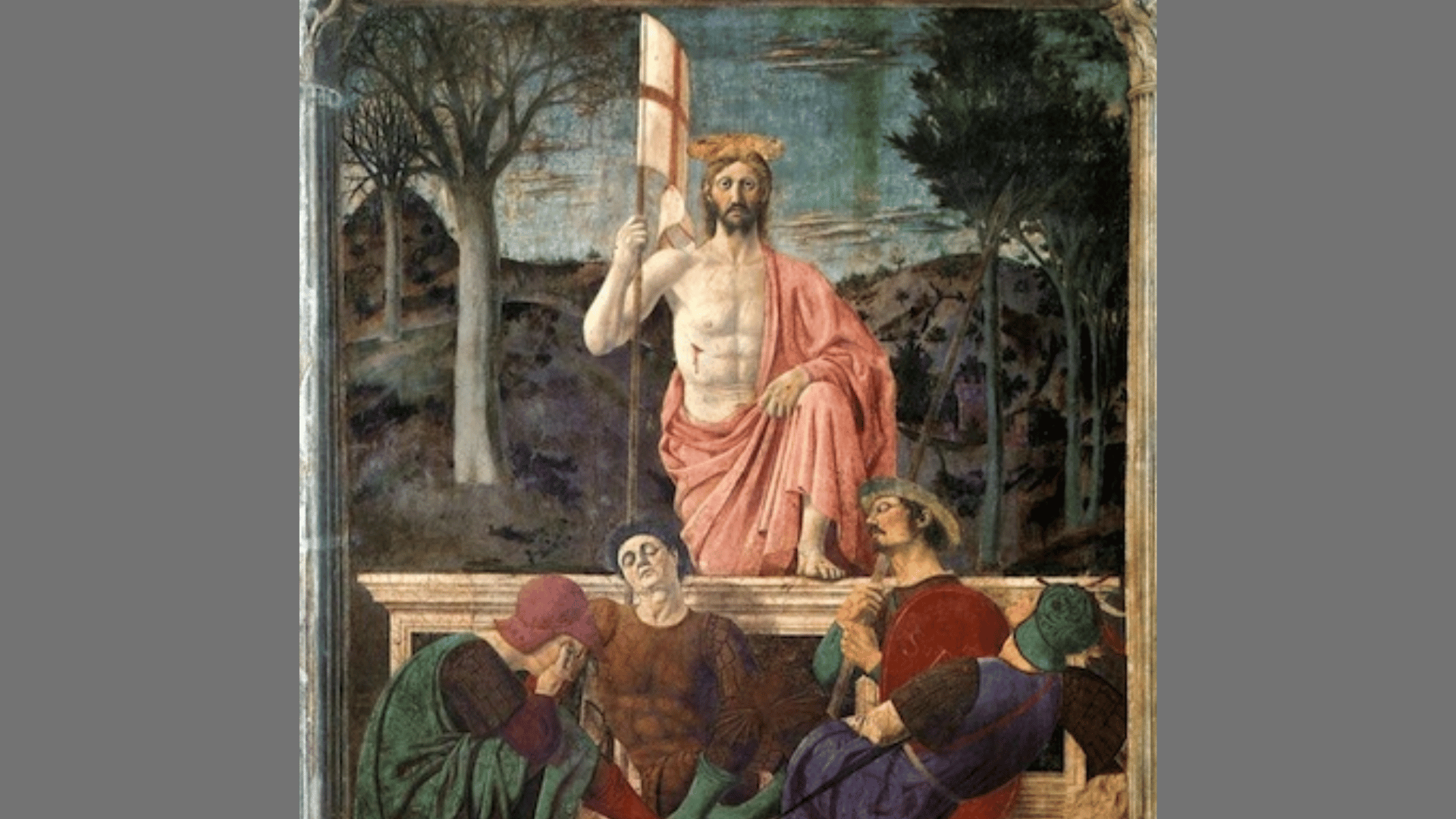
Source – Fine Art Prints on Demand
A stiff, statue-like Christ steps out of his tomb with a calm that feels more monumental than miraculous.
- Artist: Piero della Francesca
- Year: c. 1463
- Location: Museo Civico, Sansepolcro, Italy
- Why It’s Famous: Shows the risen Christ emerging from the tomb and is admired for its balance, symbolism, and serene power.
19. Ecce Homo
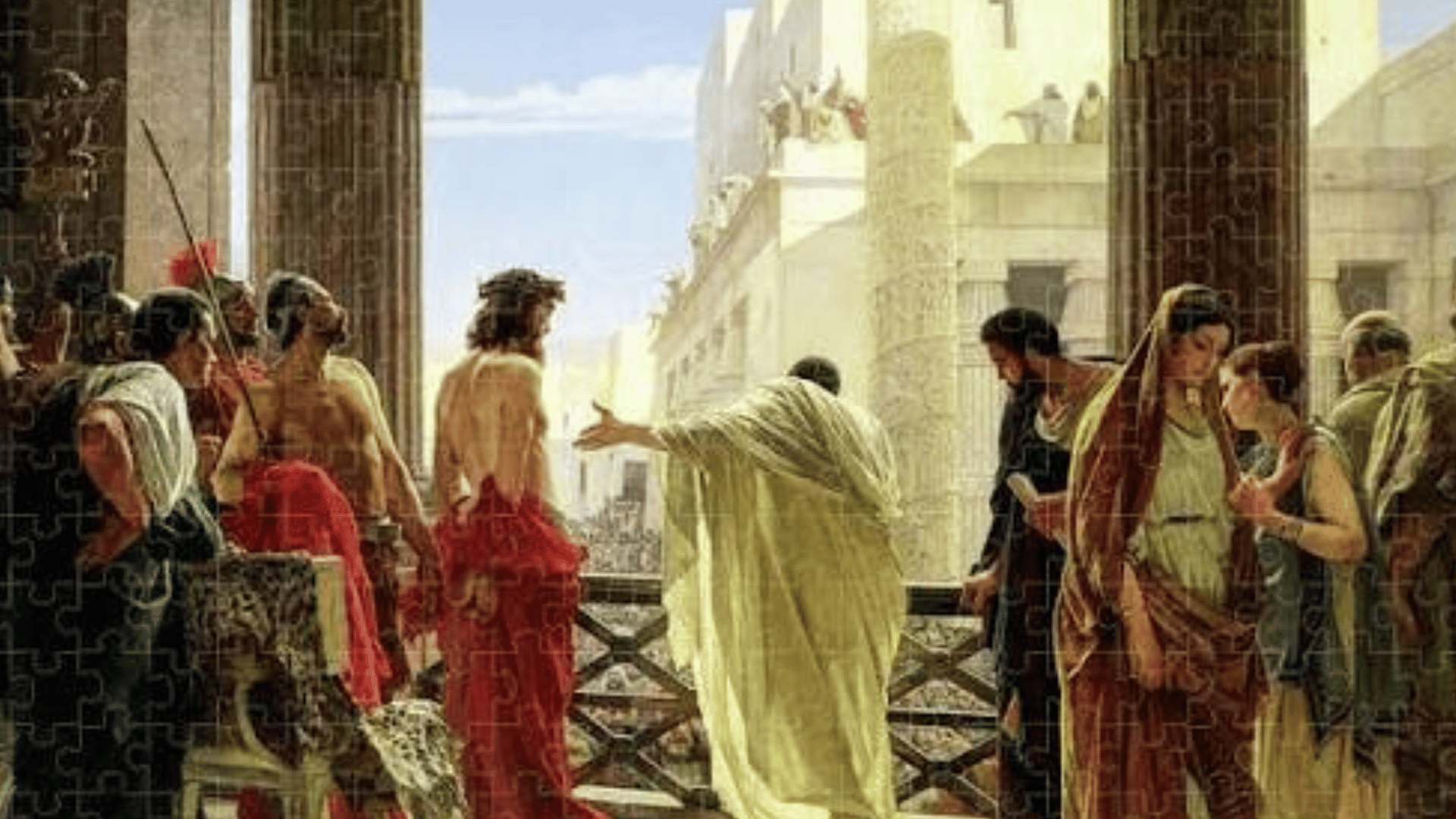
Source – Fine Art America
Instead of showing Christ’s face, Ciseri turns the crowd toward the viewer, so we watch their reactions rather than his.
- Artist: Antonio Ciseri
- Year: 1871
- Location: Galleria d’Arte Moderna, Palazzo Pitti, Florence, Italy
- Why It’s Famous: Depicts Pontius Pilate presenting Christ to the crowd from a unique rear perspective.
20. Christ in The House of His Parents
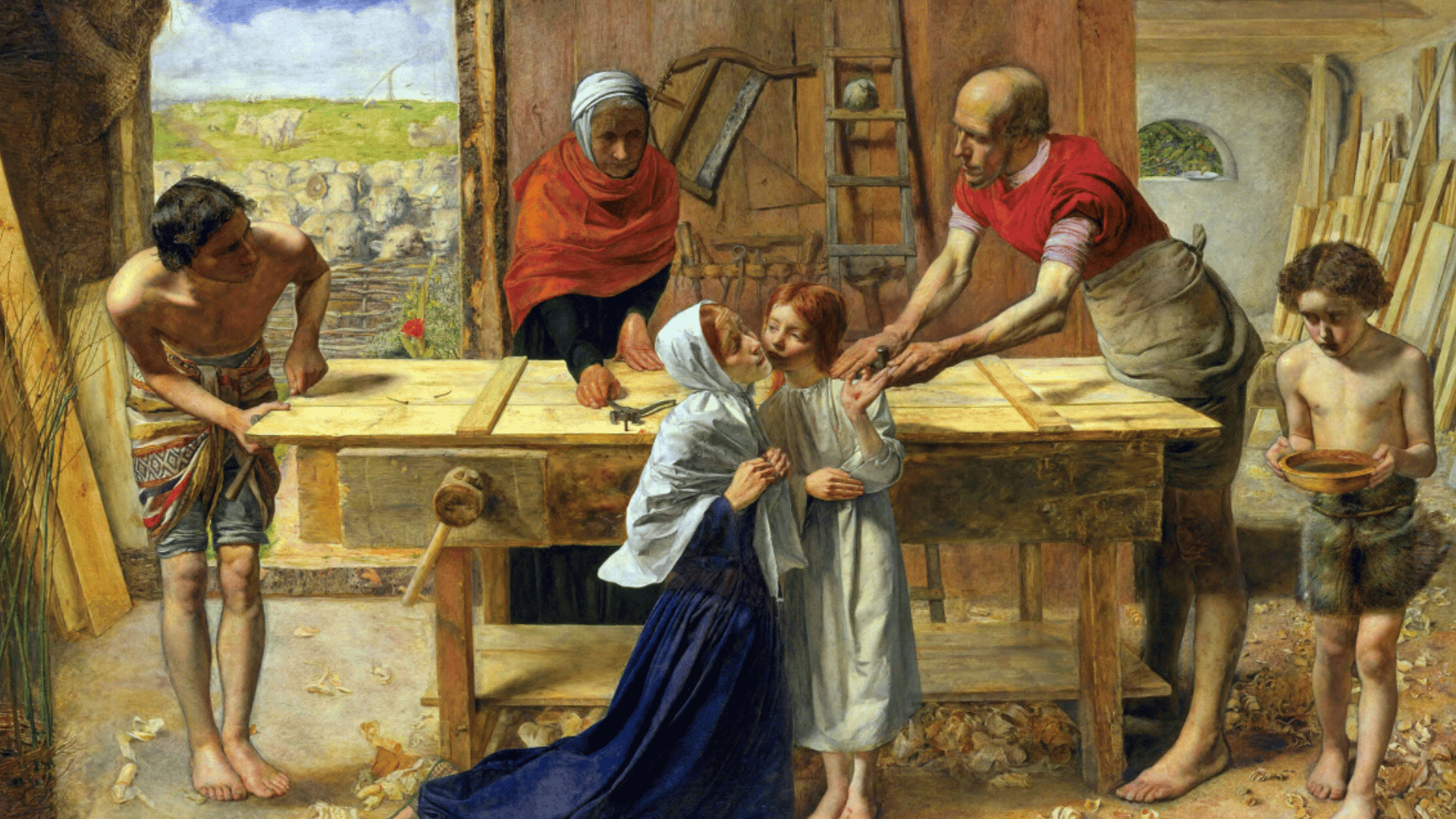
Source – Smarthistory
Millais landed in hot water for depicting the Holy Family as an ordinary, slightly messy working household.
- Artist: John Everett Millais
- Year: 1849–1850
- Location: Tate Britain, London, England
- Why It’s Famous: Shows the Holy Family in an ordinary carpenter’s workshop and sparked controversy for its realism.
21. Pietà
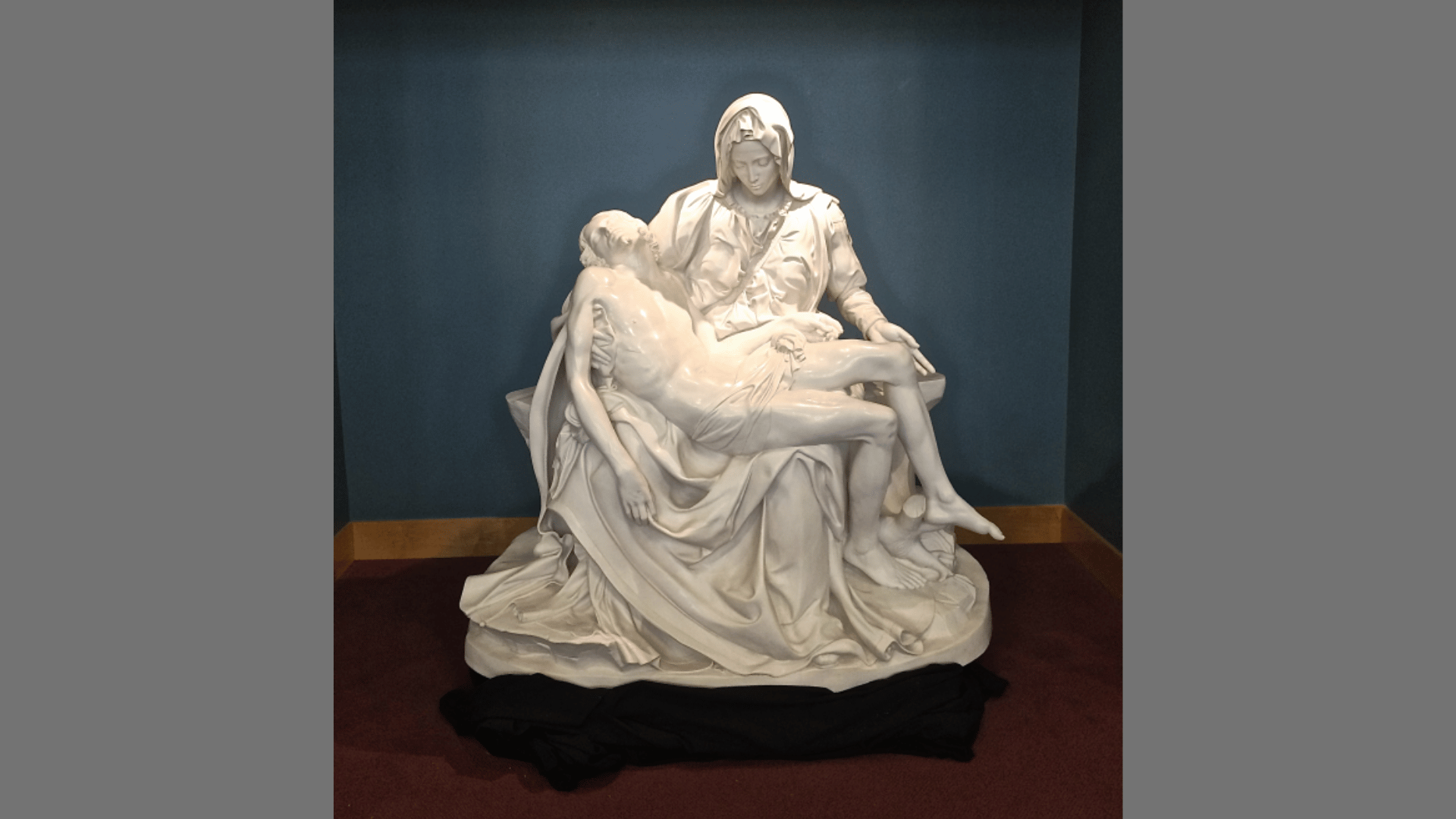
Source – Resurrection Catholic Parish
Michelangelo carved a mother’s grief so smooth and serene that the marble barely looks like stone at all.
- Artist: Michelangelo
- Year: 1498–1499
- Location: St. Peter’s Basilica, Vatican City
- Why It’s Famous: Depicts Mary holding the body of Jesus after the Crucifixion and is regarded as one of the greatest sculptures of the Renaissance.
The National Endowment for the Humanities notes how the sculpture’s serene realism influenced generations of later artists, including Caravaggio.
Famous Christian Paintings by Era
Christian art evolved over centuries, with each artistic period bringing its own style and interpretation to biblical stories.
| Era | Time Period | Key Artists | Defining Style |
|---|---|---|---|
| Renaissance | 1300s to Early 1500s | Giotto, Fra Angelico, Leonardo da Vinci, Michelangelo, Raphael, Piero della Francesca | Realistic figures, natural expressions, and linear perspective brought biblical scenes to life. |
| Baroque | 1600s | Caravaggio, Peter Paul Rubens, Rembrandt, Bartolomé Esteban Murillo | Dramatic lighting, dynamic movement, and emotional storytelling created powerful religious imagery. |
| Modern | 1800s to 1950s | John Everett Millais, Antonio Ciseri, Salvador Dalí | Reimagined Christian themes through realism, fresh perspectives, and modern artistic styles while preserving their spiritual meaning. |
Why Famous Christian Paintings Still Matter Today
Christian paintings continue to inspire millions through their artistic brilliance, biblical storytelling, and lasting cultural influence.
- Preserve Biblical Stories: They visually tell important events from the Bible, making Scripture easier to understand across generations.
- Reflect Christian Faith: These works express themes such as hope, sacrifice, forgiveness, resurrection, and redemption.
- Influence Art History: Many introduced groundbreaking techniques in perspective, composition, light, and realism that shaped Western art.
- Offer Cultural and Historical Value: They provide insight into the religious beliefs, traditions, and societies of different time periods.
- Inspire Spiritual Reflection: Many viewers see these paintings as sources of prayer, meditation, and personal faith.
- Attract Millions of Visitors: Masterpieces in museums, churches, and chapels continue to draw tourists, pilgrims, and art enthusiasts from around the world.
- Inspire Modern Artists: Contemporary painters, illustrators, and designers continue to reinterpret these iconic works.
Conclusion
The world’s famous Christian paintings are more than beautiful works of art. They preserve biblical stories, reflect centuries of faith, and showcase the extraordinary talent of some of history’s greatest artists.
Whether displayed in churches, museums, or galleries, these masterpieces continue to captivate people across cultures and generations.
If you have the chance, seeing these masterpieces in person is an unforgettable experience. Until then, finding them is a great way to appreciate the beauty and legacy of Christian art.
Which famous Christian painting is your favorite, and why? Let us know in the comments.
Frequently Asked Questions
Which Artist Painted the Most Famous Christian Artworks?
Michelangelo appears most often on lists like this one. The Sistine Chapel ceiling, The Last Judgment, and the Pietà are all his.
Can You Buy Prints of Famous Christian Art?
Yes. Most works on this list are in the public domain, so free high-resolution files are available through museum archives. Print shops or museum gift stores can turn them into framed reproductions.
What Is the Oldest Famous Christian Painting?
Giotto’s Lamentation is the oldest painting on this list. He painted it around 1305 in Padua’s Scrovegni Chapel, and it’s one of the earliest works to show real emotion on the figures’ faces.