Huichol art has survived for thousands of years, and it still holds secrets most people have never heard of.
Every element in Huichol art, beads, colors, and symbols, is a message to the spirit world.
This is not decoration. It is a living language, built from ritual, vision, and belief. In this guide, you will find the symbols, techniques, and traditions that make this art form truly one-of-a-kind.
Who Are the Huichol People?
The Huichol, or Wixárika, are an indigenous group from the Sierra Madre mountains of Mexico. Unlike many Native groups, they kept their ancient beliefs and traditions alive for thousands of years.
Their art beautifully preserves cherished traditions, keeping their spirit alive and thriving.
Since they had no written language, they used symbols, colors, and patterns to tell stories, record history, and express prayers, making their art a living spiritual language.
The Spiritual Meaning Behind Huichol Art
Huichol art stands apart because every piece tells a spiritual story, much like traditional cultures that use symbols to express belief systems.
This symbolic storytelling approach can be compared to Nordic traditions, where emotion and atmosphere shape daily life, similar to Scandi Hygge styles.
Both reflect how design is used not just to decorate spaces, but to shape how people feel, live, and connect with their surroundings.
Key Huichol Symbols and Their Meanings
Both Huichol and Scandinavian traditions beautifully incorporate spiritual meanings into their visual designs, enriching each piece with cultural significance.
| SYMBOL | MEANING | CULTURAL SIGNIFICANCE |
|---|---|---|
| Peyote (Hikuri) | Spiritual enlightenment, visions | Used in rituals to connect with gods and ancestors |
| Deer | Messenger, protector | Acts as a guide between the physical and spiritual worlds |
| Corn (Maize) | Life, nourishment | Foundation of survival and sacred identity |
| Sun | Energy, creation | Represents life force and divine power |
| Fire | Transformation, divine presence | Linked to rituals and communication with deities |
| Snake | Rain, fertility | Symbol of earth cycles and renewal |
| Eagle | Power, vision | Represents strength and a higher perspective |
| Flowers | Seasons, growth | Reflect nature’s cycles and beauty |
Huichol Beadwork: Techniques and Materials
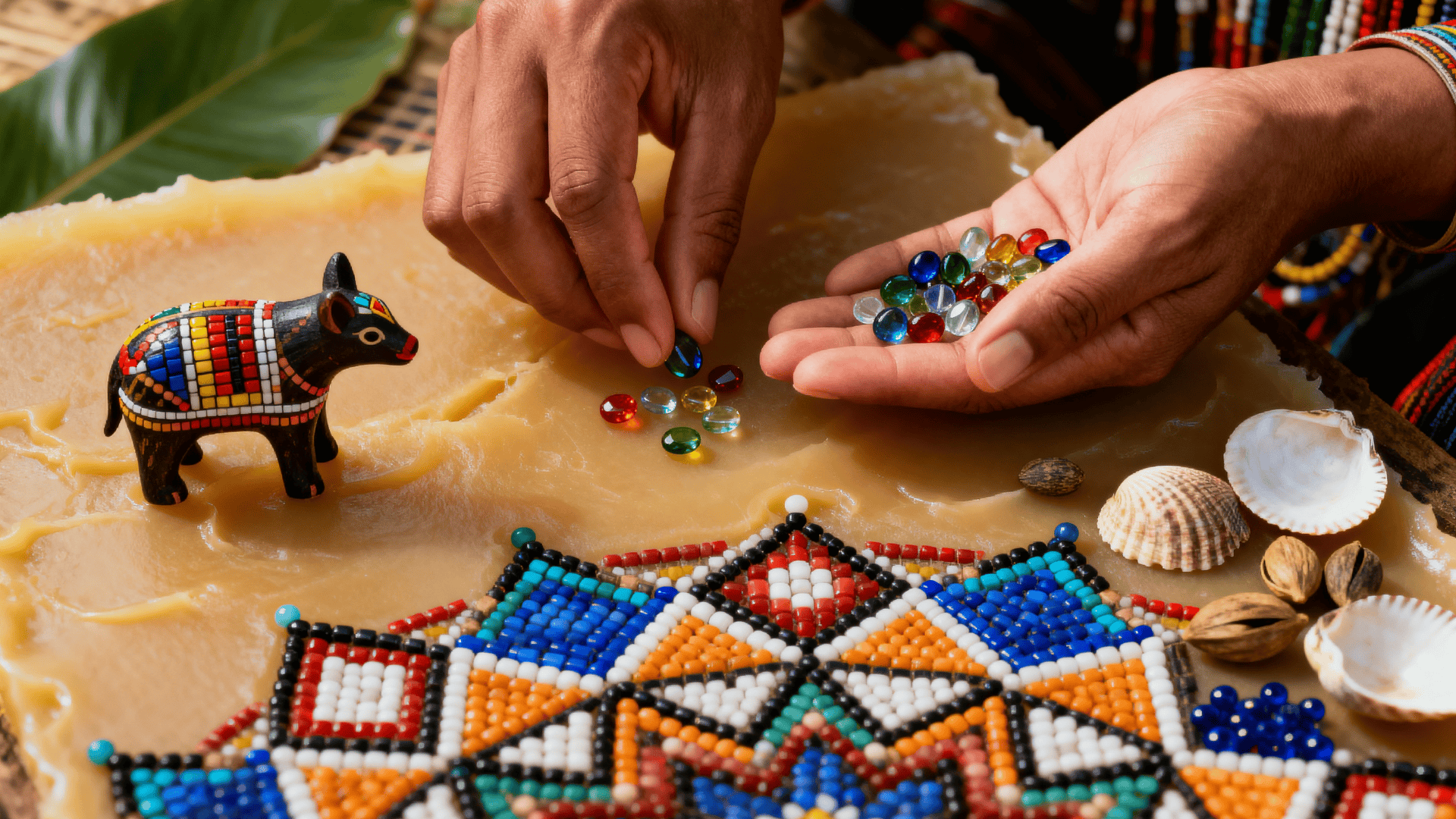
Huichol beadwork is one of the most detailed and labor-intensive art forms in the world. Each piece is built bead by bead, guided by tradition and spiritual purpose.
1. What is Huichol Bead Art (Chaquira)
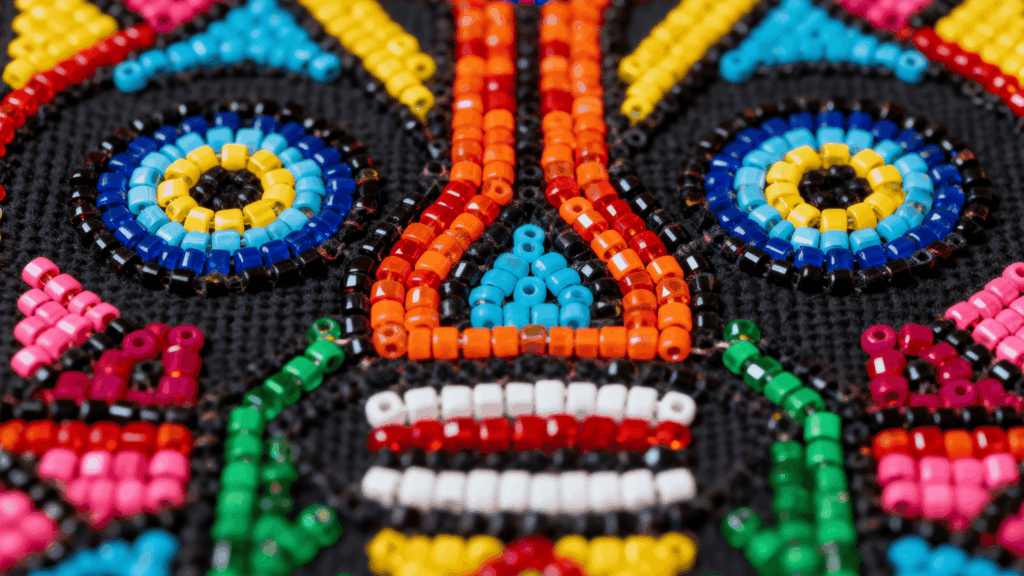
Chaquira is a beautiful craft in which tiny glass beads are pressed into a layer of wax or resin coating an object, creating a stunning decorative effect.
Artists press each bead into place by hand, slowly building patterns that carry deep cultural and spiritual meaning.
2. Traditional Techniques Explained
Two main stitches define Huichol beadwork. The gourd stitch follows the curve of a surface, while the peyote stitch creates a tight, offset grid pattern.
Both of these activities require steady hands and deep focus, making the process calming and almost meditative.
3. Evolution of Materials
Huichol artists originally used natural materials like shells, seeds, and stones to create their work.
Over time, small glass beads became the preferred material, offering greater color and detail while preserving the spiritual traditions in full.
Yarn Paintings and Other Huichol Art Forms
Huichol art is not limited to one medium but spans multiple forms, each rooted in spiritual storytelling and ritual practice. From intricate yarn paintings to symbolic sculptures, these creations serve as visual expressions of visions, prayers, and cultural identity.
What Are Yarn Paintings (Nierika)?
Yarn paintings, known as Nierika, are considered spiritual “vision boards.” They depict sacred stories, dreams, and messages received during rituals, often involving peyote.
Each piece acts as a portal to the divine, capturing visions in vibrant color and symbolic patterns.
Other Common Art Forms
Huichol artists convey their spiritual beliefs through traditional art, each piece with symbolic meaning. These works go beyond decoration, linking to rituals, identity, and storytelling.
| ART FORM | DESCRIPTION | PURPOSE |
|---|---|---|
| Masks | Decorated with beads or yarn, often featuring animals or deities | Used in rituals and ceremonies |
| Animal Sculptures | Wooden figures covered in beads or yarn | Represent spirit animals and protectors |
| Jewelry | Beaded necklaces, bracelets, and earrings | Personal adornment with spiritual meaning |
| Prayer Objects | Small symbolic items used in offerings | Communication with gods and ancestors |
The Role of Tradition in Huichol Art
Huichol art does not exist outside of tradition. Every piece connects back to rituals, ceremonies, and a way of life that has been carefully protected for generations.
- The peyote pilgrimage inspires much of the visionary imagery in their work
- Art is made as an offering to the gods during sacred ceremonies
- Creating art is considered a spiritual act, not just a craft
- Techniques and symbols are passed down from elders to younger generations
- Art serves as a visual storytelling system, recording beliefs and history
Modern Huichol Art: Commercialization vs Authenticity
Authentic Huichol art is distinguished from mass-produced copies by its craftsmanship, materials, and symbolic depth.
| AUTHENTIC HUICHOL ART | MASS-PRODUCED HUICHOL ART |
|---|---|
| Handmade with slight imperfections | Uniform and overly perfect |
| Uses traditional wax, yarn, or beads | Uses synthetic glue and cheap materials |
| Symbols have spiritual meaning | Designs are decorative only |
| Created by Huichol artisans | Produced in factories or workshops |
| Highly detailed and time-intensive | Simplified for quick production |
| Higher price reflects craftsmanship | Lower price for mass appeal |
Why Huichol Art Still Matters Today
Huichol art is not a relic of the past. It is a living tradition that continues to shape culture, inspire artists, and carry ancient wisdom into the modern world.
- Huichol art keeps centuries-old traditions, beliefs, and ceremonies alive.
- It gives younger generations a direct link to their cultural identity.
- Artists worldwide have drawn inspiration from Huichol symbols and techniques.
- Their work is now recognized and celebrated in global art communities.
- Growing demand for authentic pieces has helped support Wixárika communities economically.
Wrapping It Up
Huichol art remains a powerful expression of culture, where every symbol, color, and pattern carries spiritual meaning.
Rooted in tradition yet evolving, it connects generations through storytelling and ritual.
This cultural expression reflects Swedish folk art, where visual design preserves identity and heritage. These art forms demonstrate how creativity encapsulates history, belief, and meaning in every detail.