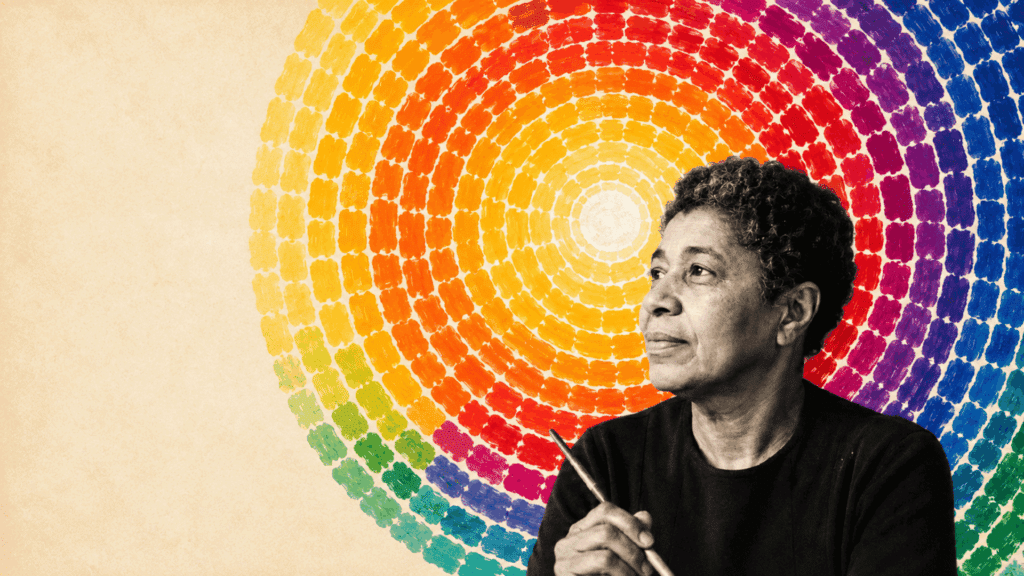
Alma Thomas art does not announce itself loudly. It draws you in slowly, through rings of color that seem to pulse with quiet life, through brushstrokes that feel both ancient and deeply modern.
She painted joy, cosmos, and nature into something almost impossible to name.
Find the story behind one of America’s most quietly powerful artists, and why her work continues to mesmerize decades after it was first created.
Who Was Alma Thomas?
Alma Thomas was a famous African American artist and teacher known for her colorful abstract paintings. She became one of the first Black women to gain national recognition in modern art.
| SECTION | CONTENT |
|---|---|
| Early Life | Born in Georgia in 1891. Moved to Washington, D.C. to escape segregation. |
| Education | First graduate of Howard University’s fine arts program. Studied at Columbia and American University. |
| Teaching Career | Taught art for 35+ years and inspired creativity in students. |
Artistic Style and Inspirations Behind Alma Thomas Art
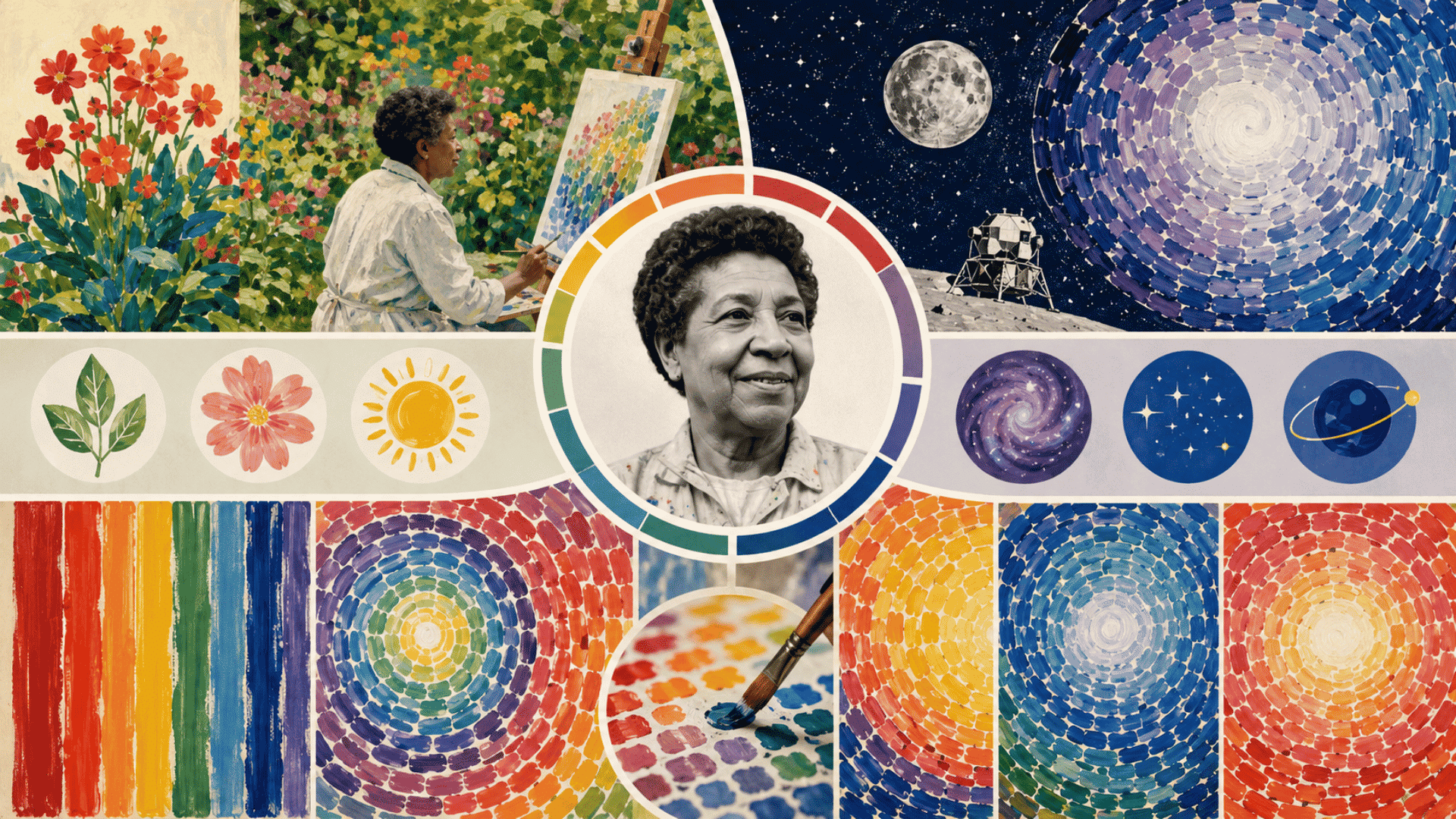
Alma Thomas art changed her late-life retirement into a burst of artistic brilliance, pioneering a lively abstract language rooted in nature, science, and joyful human experience.
1. Transition Into Abstract Art
After retiring from teaching in 1960, Thomas devoted herself fully to painting and developed her now-iconic mosaic-like brushstroke technique, marking a bold creative reinvention in her sixties.
This late bloom proved that artistic genius knows no age limit, as she went on to become one of the most celebrated American abstract painters of the twentieth century.
2. Influence of Nature and Space
Her canvases drew life from gardens, seasonal color, and the cosmos, with the wonder of NASA moon landings translating directly into luminous, otherworldly compositions filled with celestial energy.
She believed the natural world and the universe beyond it were the greatest sources of beauty, and her brush captured that conviction with every stroke.
3. The Washington Color School Connection
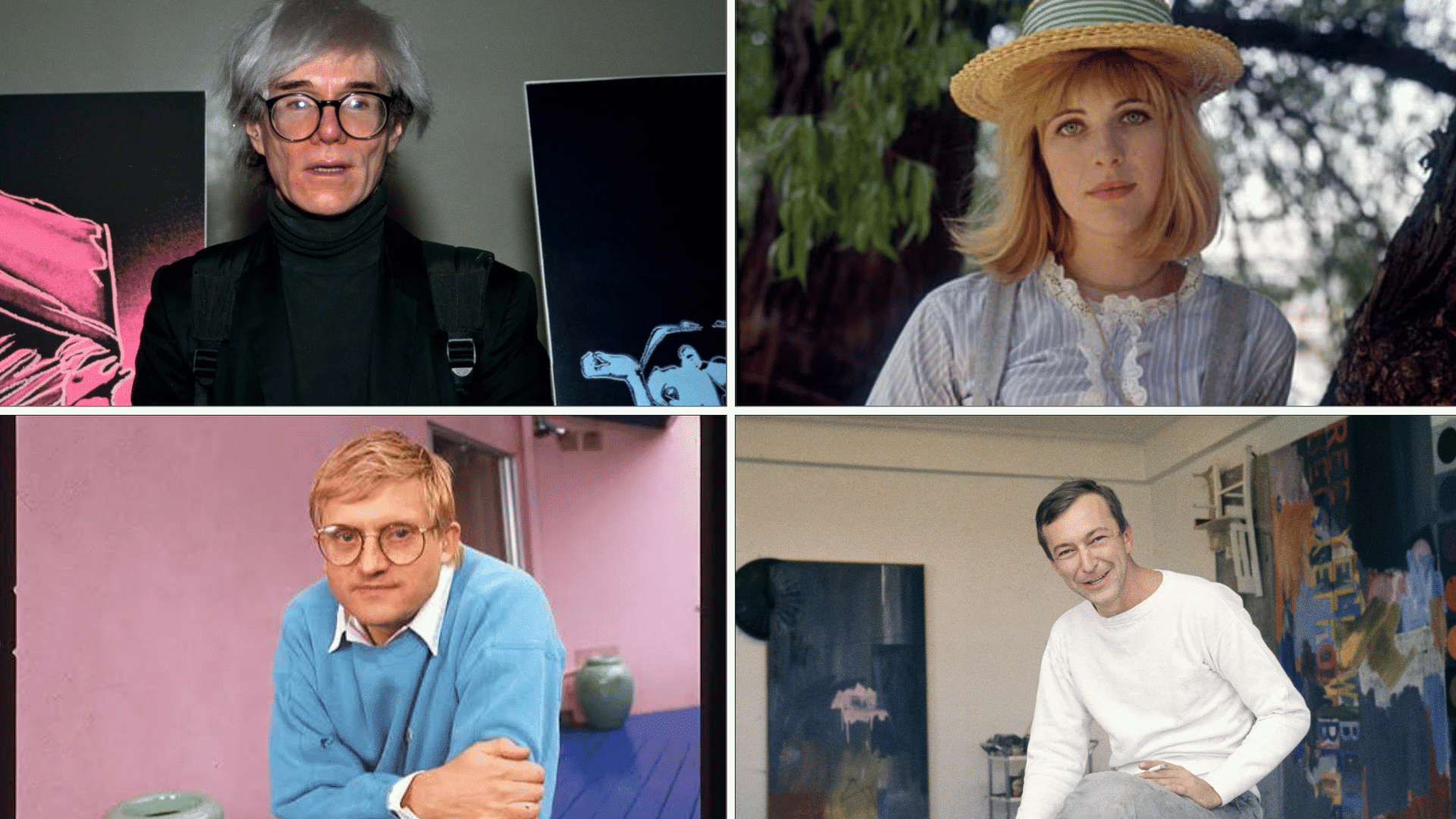
Color Field painting used large, flat, emotive colors to evoke feelings beyond representation. While Morris Louis and Kenneth Noland focused on bold geometric precision, Thomas added a softer, rhythmic pulse.
Her work stood apart through its intimate scale and organic warmth, giving Color Field abstraction a deeply personal and lyrical dimension.
4. Signature Techniques in Alma Thomas’s Art
Short confetti-like brushstrokes, vibrant palettes, and circular repeating patterns defined her hand, with each canvas radiating themes of joy, movement, and an unshakeable optimism about the world.
These techniques came together to create a visual language entirely her own, one that felt simultaneously structured and free, disciplined and exuberantly alive.
Alma Thomas Famous Artwork You Should Know
Alma Thomas left behind a remarkable body of work that spans cosmic wonder and earthly beauty, with each painting offering a window into her fearless use of color, rhythm, and deeply personal vision.
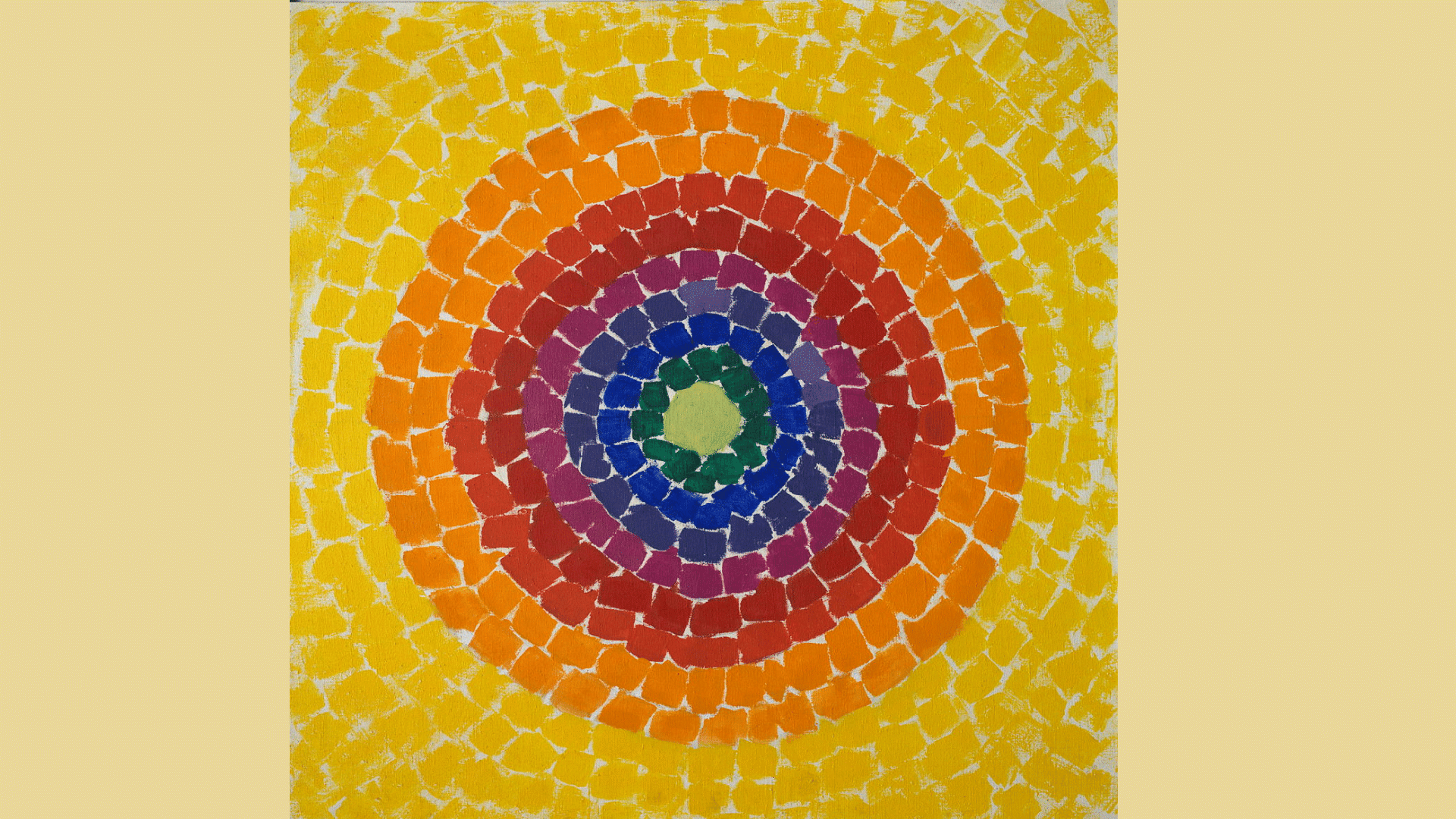
1. Resurrection:1966
Source: WhiteHouseHistory
Resurrection made history as the first painting by a Black woman to be displayed in the White House, a milestone that cemented Thomas’s place in both art history and American cultural memory.
Its bold circular composition and radiant color symbolize renewal and life, reflecting her belief that art could carry profound spiritual and emotional meaning.
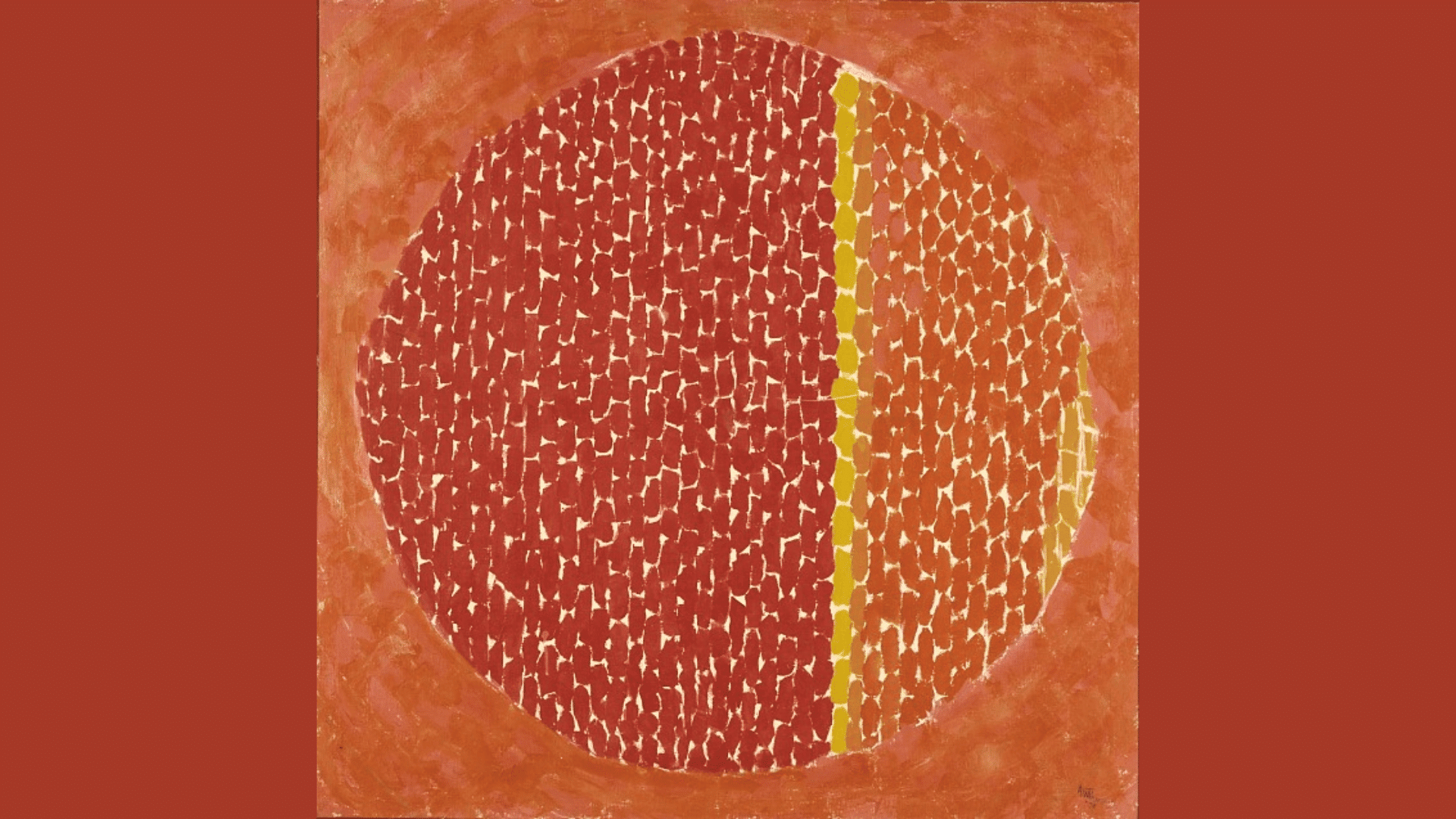
2. Snoopy Sees Earth Wrapped in Sunset:1970
Source: Smithsonian
Inspired by the Apollo space missions, this painting captures the breathtaking view of Earth from beyond its atmosphere, translating the awe of space exploration into swirling bands of warm, luminous color.
Thomas used this work to push her color experimentation further, blending cosmic themes with her signature mosaic strokes to evoke the vastness and beauty of the universe.
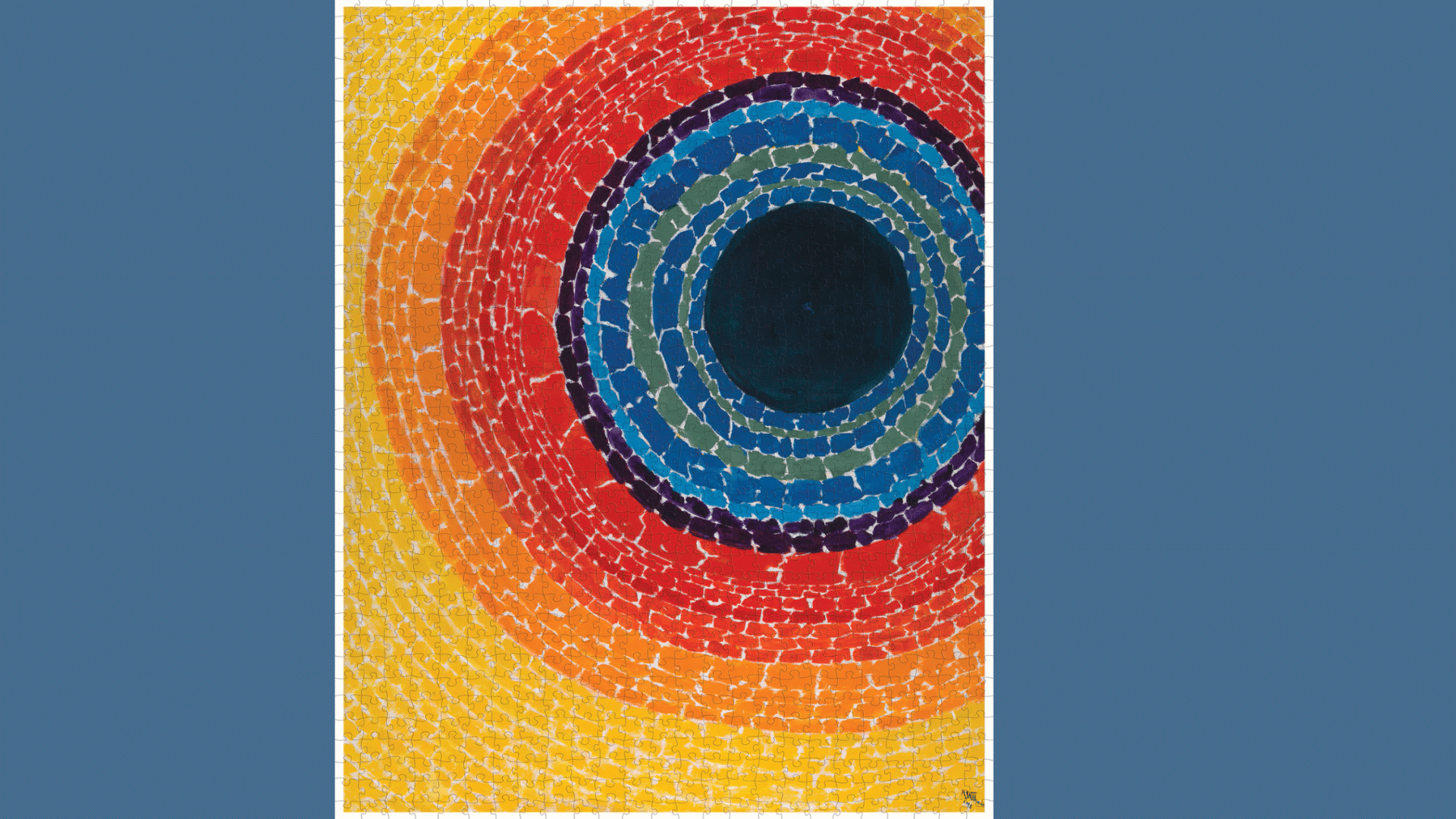
3. The Eclipse:1970
Source: Smithsonian
One of her most celebrated space-inspired works, The Eclipse uses deep, layered tones and rhythmic brushwork to recreate the dramatic interplay of light and shadow during a solar eclipse.
The painting carries a quiet emotional intensity, inviting viewers to sit with the mystery and grandeur of natural celestial events.
4. Mars Dust:1972

Source: Whitney
Mars Dust reflects Thomas’s lifelong fascination with science and the imagination, using richly layered color patterns to evoke the rusty, textured surface of a distant planet.
The work demonstrates how she could change scientific curiosity into pure visual poetry, building depth and atmosphere through her distinctive stacked brushstrokes.
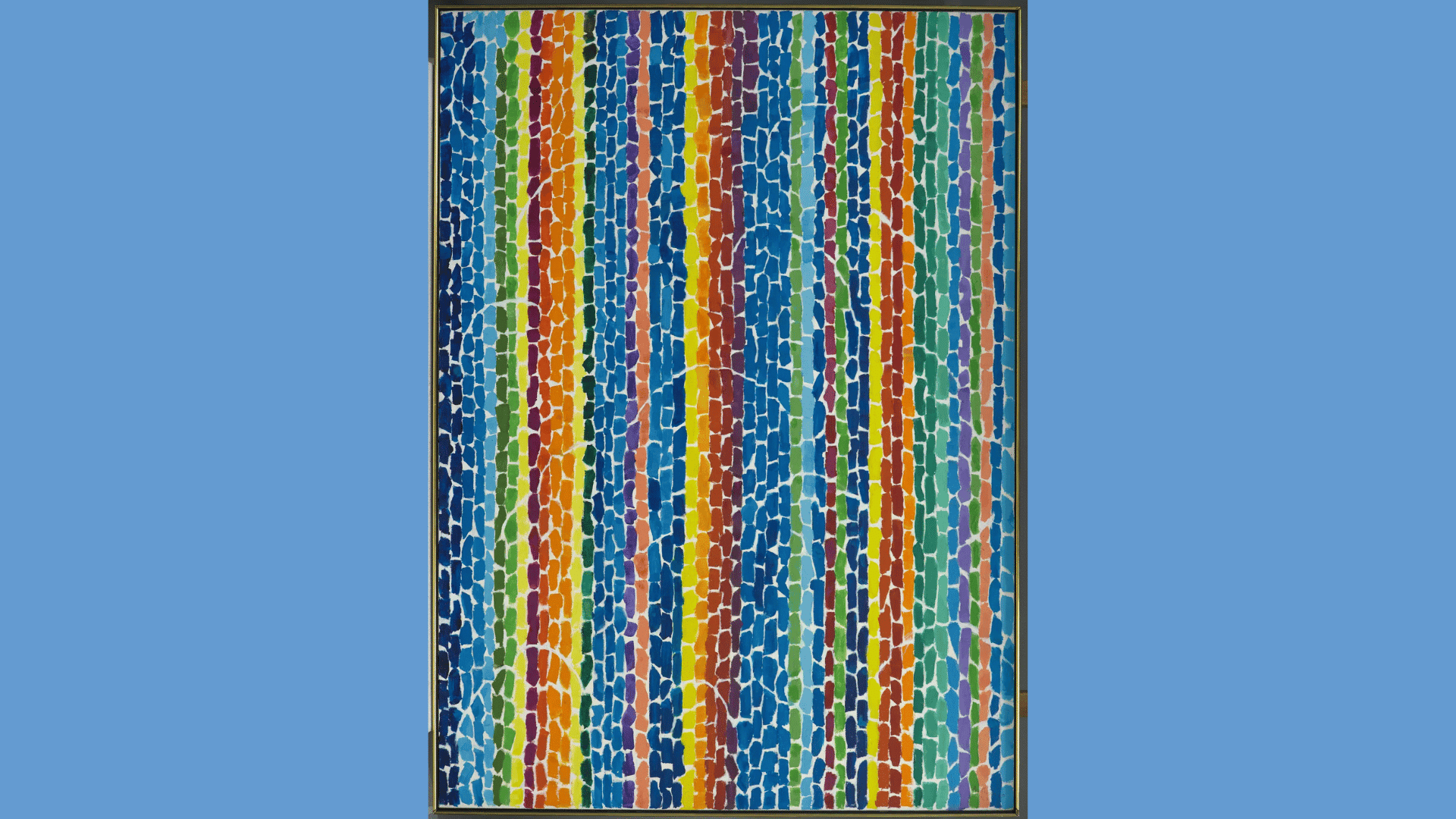
5. Wind, Sunshine, and Flowers:1968
Source: Brooklynmuseum
Rooted in her love of the natural world, this painting pulses with movement and rhythm, capturing the feeling of a garden alive with light and a gentle breeze rather than depicting it literally.
The interplay of warm and cool tones creates a sense of joyful energy that flows across the canvas, almost like a musical score.
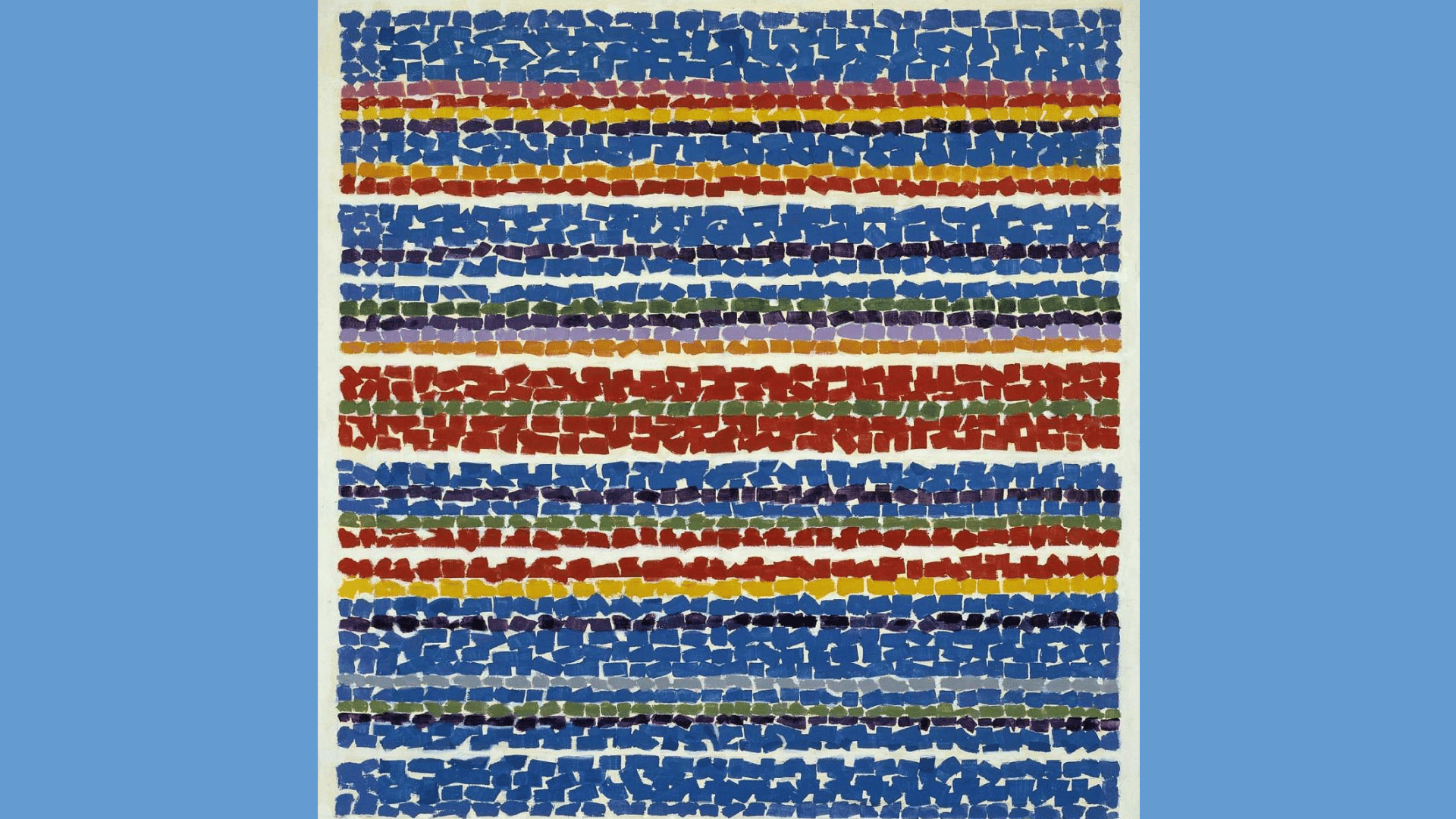
6. Light Blue Nursery:1968
Source: Smithsonian
Among the earliest Alma Thomas works acquired by the Smithsonian, Light Blue Nursery holds a special place in institutional art history, representing the moment her talent gained lasting national recognition.
Its soft, carefully balanced palette and meditative quality continue to make it one of her most quietly iconic and enduring compositions.
Why Alma Thomas’s Art Still Inspires Modern Artists Today?
Alma Thomas art remains highly influential for breaking barriers and inspiring future generations through creativity, innovation, and cultural impact.
- Breaking Barriers: Alma Thomas faced racism and gender discrimination as a Black female artist in the 20th century. She became the first Black woman to have a solo exhibition at the Whitney Museum of American Art.
- Influence on Abstract Art: Her colorful abstract style inspired many contemporary Black artists and female artists working in modern art today.
- Museum Recognition: Her artwork is displayed in major institutions such as the Smithsonian American Art Museum, the National Gallery of Art, and The Met.
- Academic Legacy: Thomas’s work is widely studied in art history and cultural studies for its innovation and historical importance.
- Cultural Representation: She helped expand representation for African American artists in mainstream museums and galleries.
Interesting Facts About Alma Thomas
Alma Thomas’s life and career were filled with inspiring achievements and unique interests that shaped her artwork and legacy.
- She gained national recognition as an artist in her 70s, proving that success can come later in life.
- Thomas loved gardening and music, which influenced the colors and rhythm in her paintings.
- Space exploration and moon missions inspired many of her abstract artworks.
- Her home in Washington, D.C., was later recognized for its historical importance.
- She believed art should inspire beauty, joy, and happiness rather than negativity.
Where to See Alma Thomas Art Today?
Source:Smithsonian
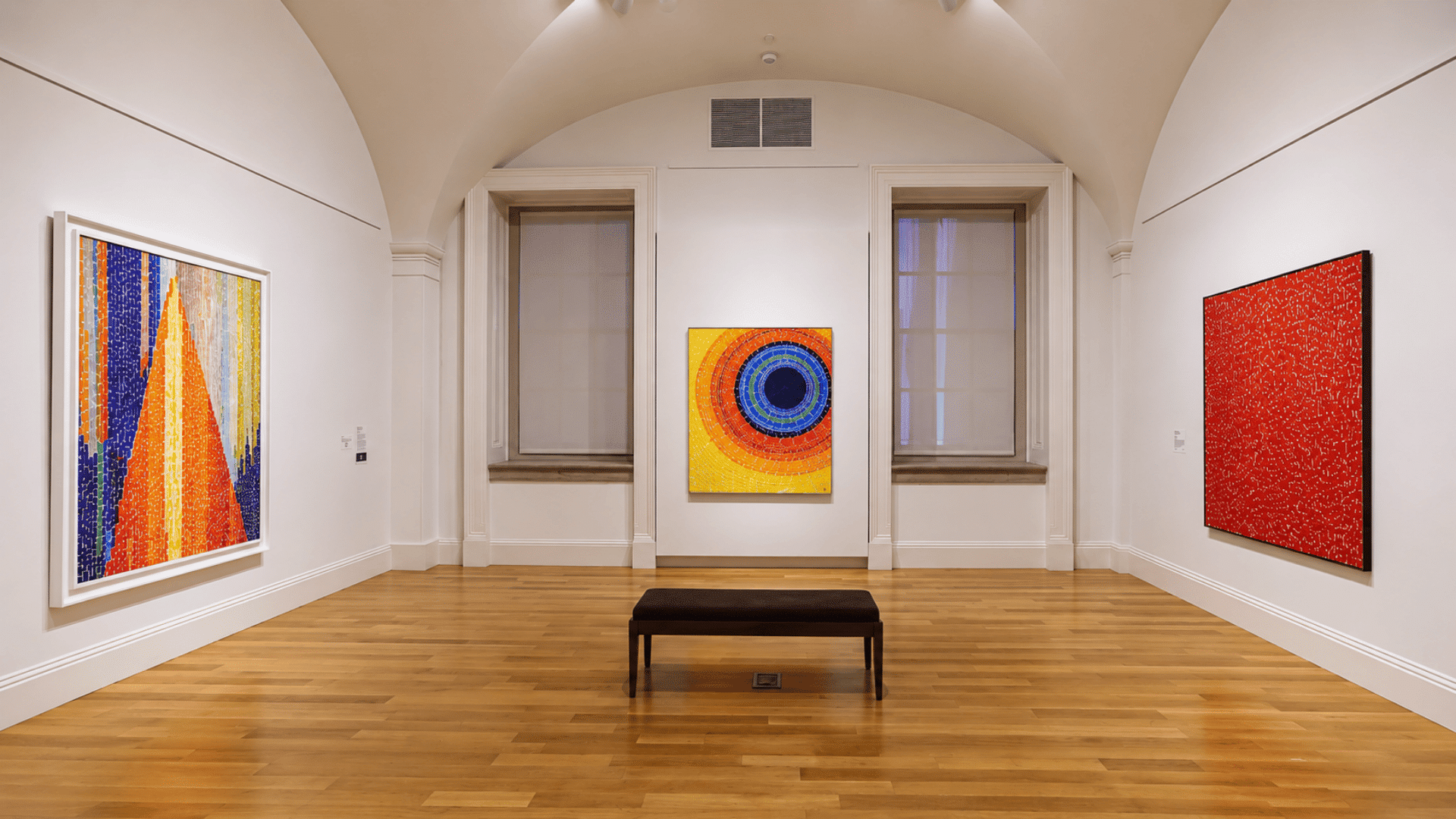
Alma Thomas’s work is now more accessible than ever through museums, exhibitions, and digital platforms that keep her vibrant artistic legacy alive for audiences worldwide.
Smithsonian American Art Museum
Home to the largest public collection of her work, the Smithsonian American Art Museum in Washington, D.C.
It is the single most important destination for anyone wanting to experience the full range of Thomas’s artistic journey across decades of fearless creativity.
National Gallery of Art
The National Gallery of Art holds her paintings within its permanent collection, placing her work alongside the broader story of American art.
Rotating exhibitions have brought her vivid compositions renewed attention, introducing her bold visual language to entirely new audiences each year.
Online Collections and Virtual Galleries
Google Arts and Culture offers high-resolution access to several key works, letting viewers study her brushwork up close from anywhere.
Smithsonian and Met digital archives also host essays and zoomable images that make her paintings richly accessible to global audiences online.
Final BrushStroke
Alma Thomas art reminds us that beauty has no deadline and creativity has no ceiling. Her paintings continue to hang in the world’s greatest museums, inspiring artists and dreamers alike.
If her story moves you, share it, browse her online collections, or visit a museum that displays her work.
Some legacies never fade; they continue to shine brighter and inspire generations through art, culture, creativity, and lasting influence.