Drag your palm across a cracked stone wall, then over a soft wool sweater. The difference registers before any word does.
Texture is one of the seven elements of art, often the last quality people notice after color and subject.
This piece explains the texture definition in art, looks at why the texture element of art changes how a work feels and holds attention, and shows how artists apply it on purpose.
Understanding Texture as An Element of Art
Texture describes how a surface looks or feels, and it’s one of the seven elements of art. Part of it you can touch directly, like the grain in a wood carving or the ridges of thick paint on canvas.
Part of it you only see, since a flat surface can still look rough, worn, or soft without your hand ever confirming it.
That gap between what the eyes read and what the hand would find is the elements of art texture at work. A painted stretch of denim can look coarse from across a room and turn out smooth up close.
Artists use texture to build depth and pull contrast into a piece. Set rough marks against soft ones, and a flat canvas starts to carry weight and space, well before color or subject enters the picture.
Learning Activities for The Texture Element of Art
If you’re a student picking up this concept for the first time or a teacher planning a lesson, these steps break texture in art into pieces you can work through one at a time.
- Touch activity: Hand students a tray of objects such as sandpaper, bark, glass, and cotton, and have them describe each surface out loud before you introduce any vocabulary, an approach echoed in several texture rubbing art projects built around textured surfaces.
- Real artworks: Pull up close-up images of Van Gogh’s brushwork or Rembrandt’s layered portraits and ask students to point out where the paint looks thick or thin.
- Texture collage: Set out fabric scraps, sand, foil, and cardboard, and have students build a small collage using at least three different materials, the same hands-on setup behind these collaborative art collage projects.
- Connect to other elements: Once texture feels clear on its own, show how it works alongside the value element of art, color, and form, since a rough surface catches light and reads color differently than a smooth one does.
Types of Texture in Art
Texture in art falls into two main types: visual and tactile. Each one plays a different role in how an artwork is created and experienced by the viewer.
1. Visual Texture
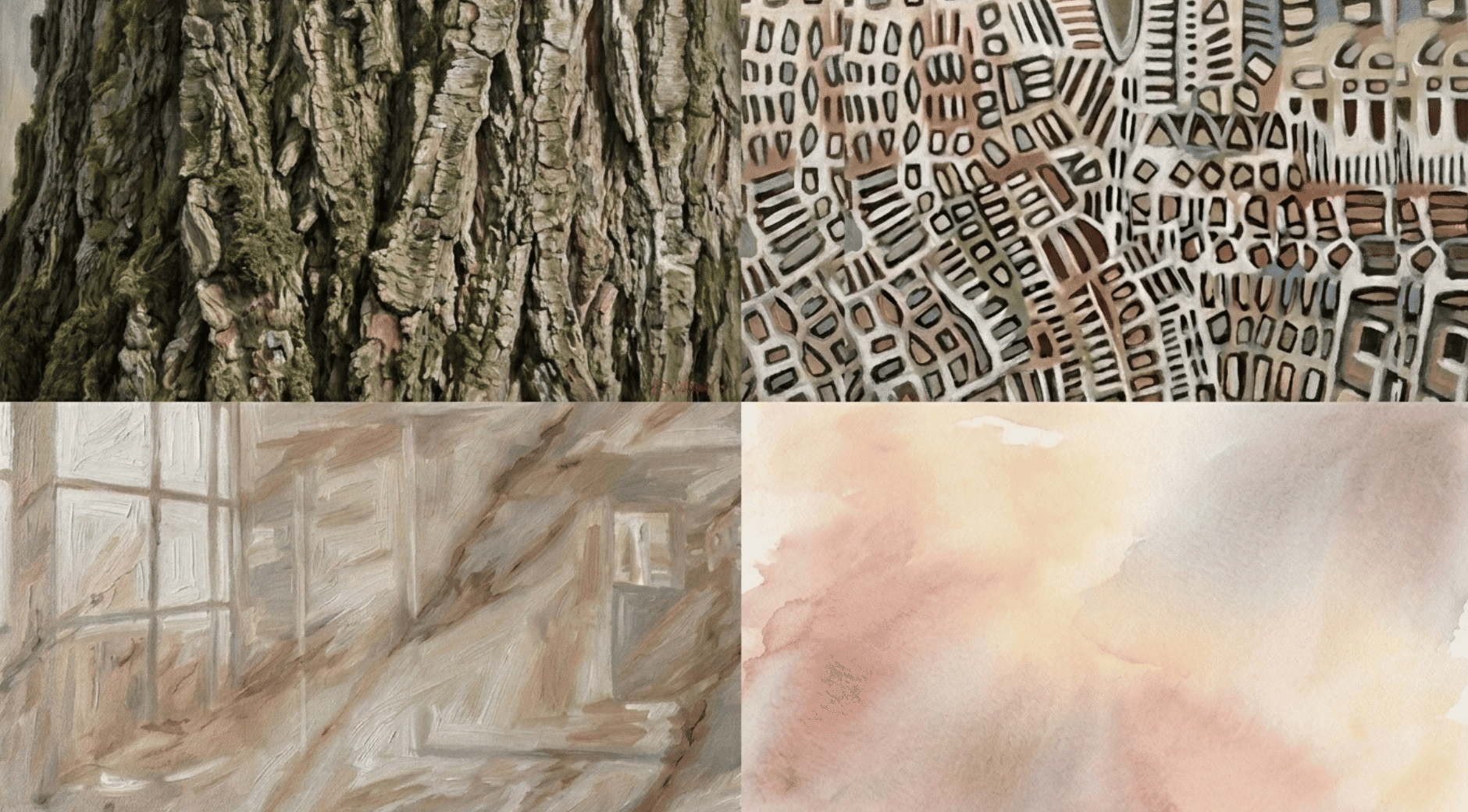
Visual texture is what the eyes perceive as a surface quality, even when the surface itself is completely flat. It comes in two forms.
- Simulated texture: Mimics real surfaces, making a painted rock look rough or fabric look soft.
- Abstract texture: Uses repeated patterns and marks that give a visual sense of texture without representing anything real.
- Smooth Texture: Visual Texture appears in glass-like paint finishes, polished surfaces, and blended color fields.
- Soft Texture: Visual texture is seen in watercolor washes, pastel blending, and delicate brushwork, the exact effect covered in these watercolor techniques for artists.
2. Tactile Texture
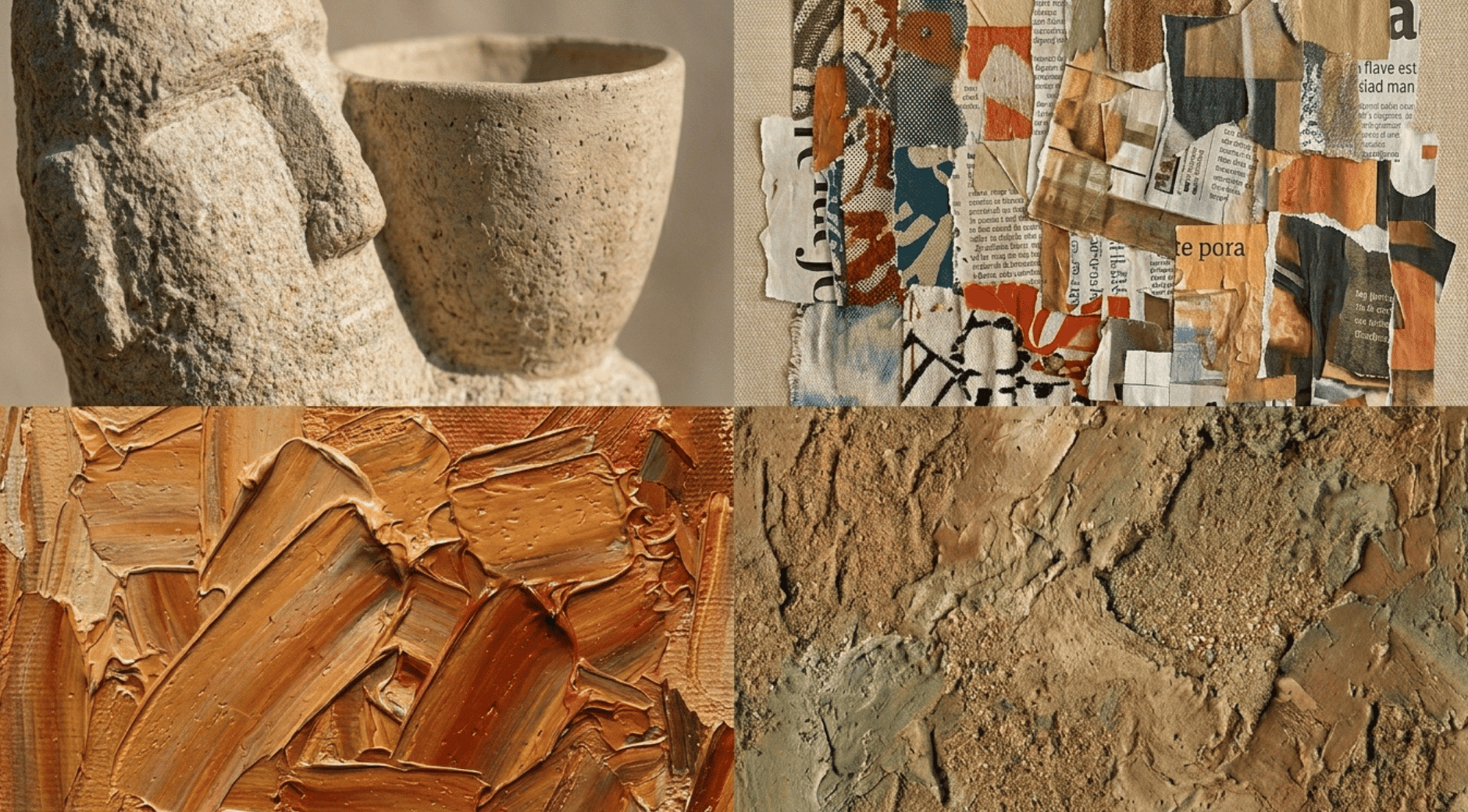
Tactile texture is what you can actually feel with your hands. It also comes in two forms.
- Actual texture is the real, physical surface found in sculptures, pottery, and thick, layered paintings.
- Simulated tactile texture is created through mixed media and collage, where different materials are layered to build a surface you can touch and feel.
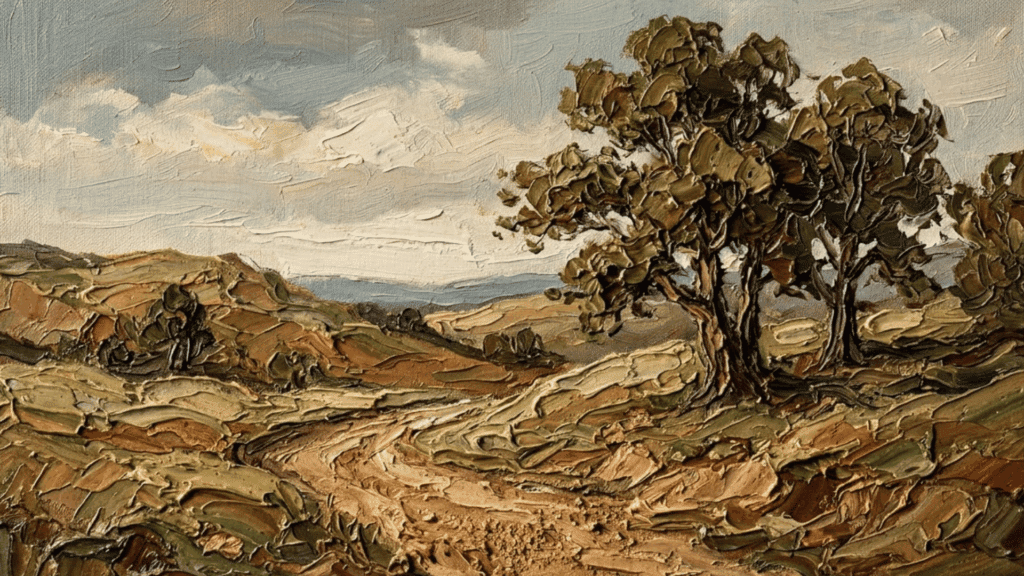
- Impasto: A painting technique in which thick paint is applied to create raised, tactile strokes on a canvas, one of several faux painting texture techniques used to build up a surface.
- Rough and Gritty Texture: Tactile Texture found in works using sand, coarse materials, or heavily worked paint to create an uneven surface.
How Do Artists Use the Texture Element of Art?
Texture is one of the most deliberate choices an artist makes. It is not just about how something looks but about what it communicates to the viewer.
| Reason | How It Works | Example |
|---|---|---|
| Create Depth | Adds contrast and space, making flat surfaces feel 3D | Thick strokes up front, smooth strokes in the background |
| Set the Mood | Shapes the emotional tone of a work | Rough textures feel tense; smooth textures feel calm |
| Draw Attention | Guides the eye to key areas | A textured subject stands out against a smooth background |
| Add Realism & Style | Makes objects lifelike and reflects an artist’s technique | Van Gogh’s swirls, Rembrandt’s layered brushwork |
Texture Across Different Art Forms
Texture shows up differently depending on the art form, but its role remains the same: to add depth, character, and meaning to the work.
- Painting: Artists like Van Gogh built physical texture with thick paint, while watercolor artists create the illusion of texture through layering and brushwork.
- Sculpture: The surface of a sculpture, whether rough stone, smooth marble, or cast metal, directly shapes how the viewer interacts with it.
- Drawing and Printmaking: Cross-hatching, stippling, and contour lines simulate texture on a flat surface without any physical depth.
- Photography: Close-up shots and lighting reveal surface texture in wood, fabric, or skin, adding drama and detail to an image.
Conclusion
Texture is far more than just how something feels. It shapes how we see, interpret, and connect with art across every medium and style.
From visual texture in a painting to tactile texture in a sculpture, understanding this element changes the way you look at art and create it.
Now that you know what the texture element of art truly means, you can spot it everywhere, from a canvas to a classroom.
Pick one artwork you love and look closely at it. Can you identify the texture the artist used and why? That one observation is where your deeper understanding of the element of art, texture, begins.
Frequently Asked Questions
Can Texture Exist in Digital Art?
Yes, digital artists use brushes, filters, and overlays to simulate visual texture, making it just as effective as texture in traditional art.
Is Texture More Important in Some Art Forms than Others?
Texture is most physical in sculpture and ceramics, but equally powerful as a visual tool in painting, drawing, and photography.
How Does Texture Differ from Pattern in Art?
Pattern is the repetition of a shape or design, while texture refers to the surface quality itself; the two are separate elements of art.
Can Texture Affect the Value or Perception of An Artwork?
Yes, rough surfaces scatter light and smooth ones reflect it evenly, directly affecting the tone, depth, and overall feel of a piece.