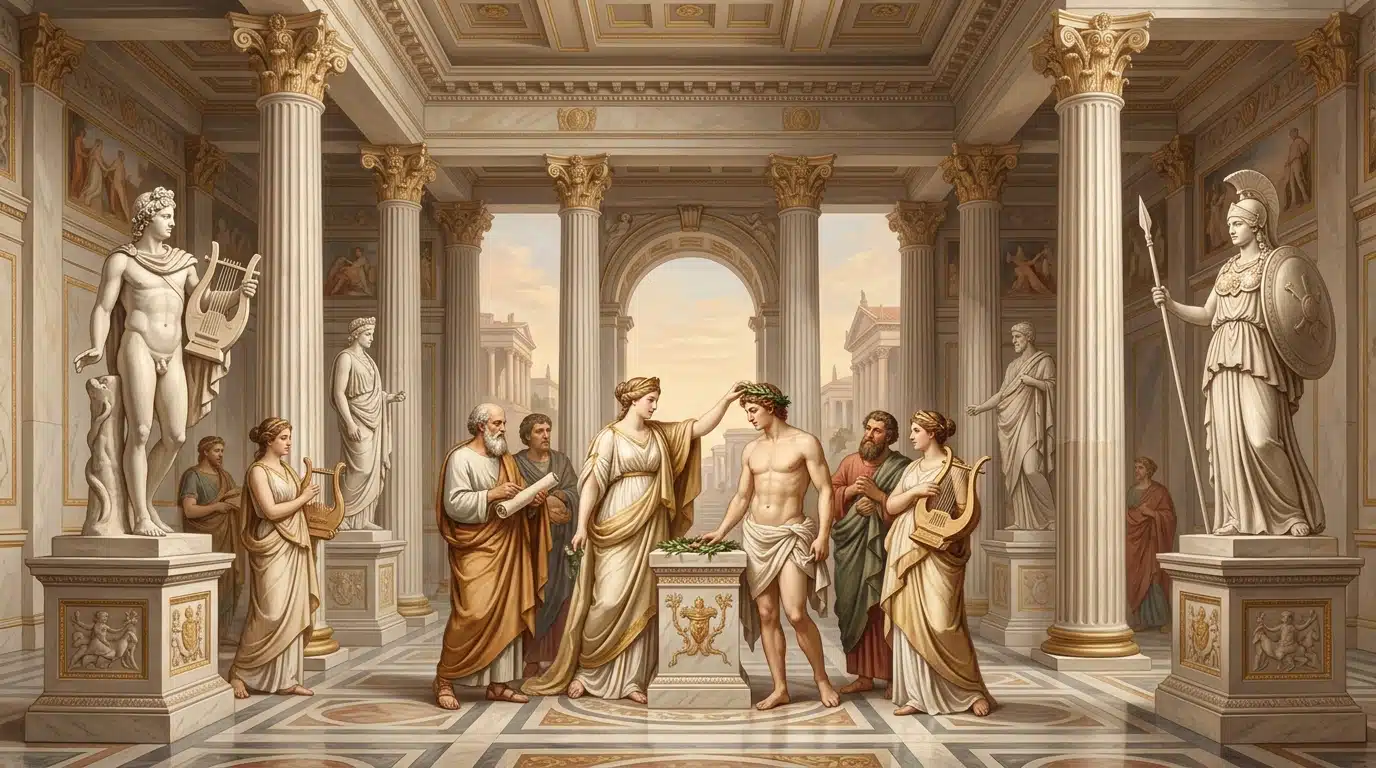

Some of the most famous sculptures in history were not made to be admired behind glass. They were made to intimidate, to worship, to mourn, and to celebrate.
Their builders, their purpose, their meaning, beautifully lost to time.
These are the works that brought the world to a standstill, and kept it there, suspended in quiet, lasting wonder.
Why Sculptures Have Shaped Human History
Not every sculpture earns a place in history. The ones that do share three things: originality, staying power, and the ability to change how other artists think.
For thousands of years, sculptures have told cultural stories, expressed religious beliefs, and reflected the power of whoever commissioned them.
From ancient stone carvings to modern conceptual art, certain works become truly iconic because of their scale, placement, and symbolism. Real greatness is earned one generation at a time.
Famous Sculptures from the Ancient World
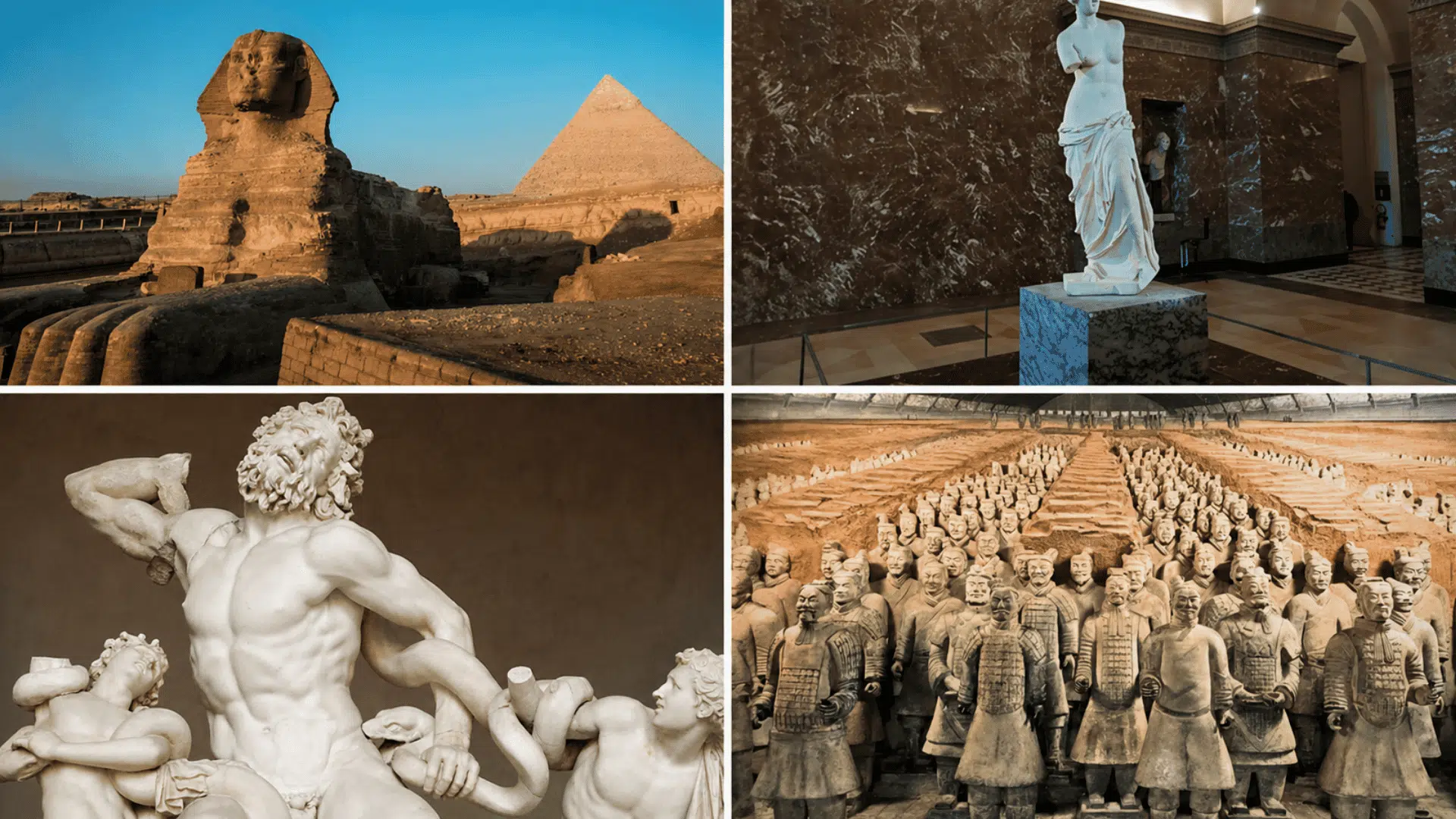
Ancient sculptors worked without modern tools, yet produced works that still define greatness. These six pieces shaped how the world understands the human form, power, and beauty.
1. The Great Sphinx of Giza
Carved from limestone, the Sphinx pairs a lion’s body with a pharaoh’s face. Its true purpose remains a mystery to this day.
Made in: c. 2500 BCE
Where to See It: Giza Plateau, Egypt
2. Statue of Zeus at Olympia
Over forty feet tall and covered in gold and ivory, this wonder of the ancient world was destroyed by fire and survives only in written accounts.
Made in: c. 435 BCE
Where to See It: Lost to history
3. Venus de Milo
This marble figure of Aphrodite has fascinated the world since its discovery in 1820. The mystery of her missing arms keeps the debate alive.
Made in: c. 100 BCE
Where to See It: The Louver, Paris
4. Laocoön and His Sons
Called the icon of human agony in Western art, this marble group stunned Michelangelo when it was unearthed in Rome in 1506.
Made in: c. 35 BCE
Where to See It: Vatican Museums, Rome
5. Terracotta Army
Over 8,000 clay soldiers buried to guard an emperor in the afterlife, discovered by farmers in 1974, and now a UNESCO World Heritage Site.
Made in: c. 210 BCE
Where to See It: Museum of Qin, Xi’an
6. Winged Victory of Samothrace
Headless and armless, this marble Nike still radiates unstoppable forward motion, making it one of the greatest Hellenistic works ever found.
Made in: c. 190 BCE
Where to See It: The Louver, Paris
Famous Renaissance Sculptures
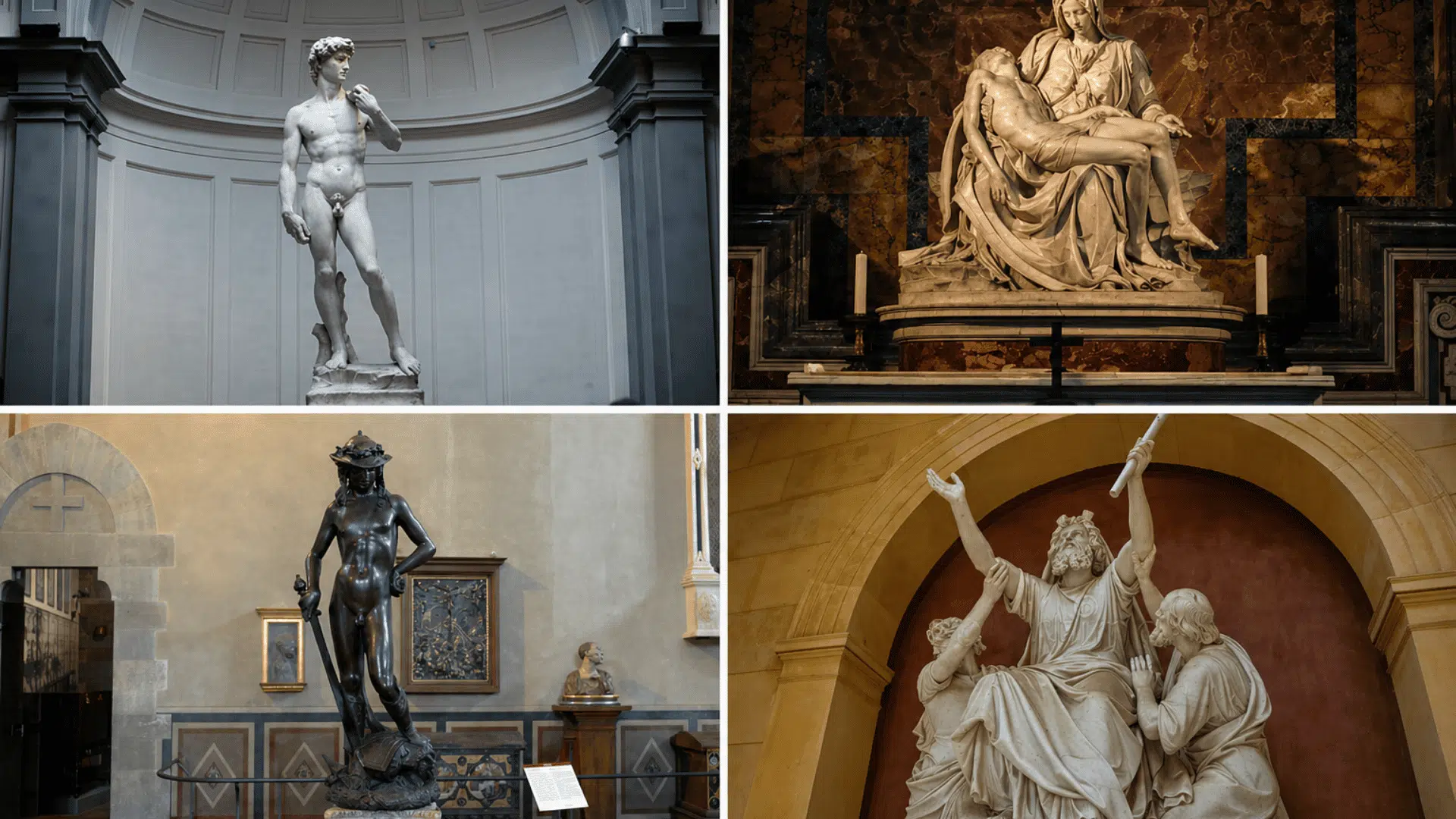
The Renaissance gave sculpture a new soul. Artists stopped copying the past and started chasing something deeper: the truth of the human body, caught in a single moment of stone.
7. Michelangelo’s David
Carved from a single rejected block of marble, this 17-foot figure captures the tension of a young hero bracing for battle, anatomy and all.
Made in: 1501–1504
Where to See It: Galleria dell’Accademia, Florence
8. Michelangelo’s Pietà
The only work Michelangelo ever signed, this piece balances classical beauty with raw human grief in a way no sculptor had managed before.
Made in: 1499
Where to See It: St. Peter’s Basilica, Vatican City
9. Donatello’s Bronze David
The first known free-standing nude statue of the Renaissance, controversial from day one for its androgynous and hard-to-read presence.
Made in: c. 1440
Where to See It: Bargello Museum, Florence
10. Ecstasy of Saint Teresa
Bernini captured the exact moment of a divine vision, using light and carved texture to turn cold marble into something almost breathing.
Made in: 1647–1652
Where to See It: Santa Maria della Vittoria, Rome
11. Michelangelo’s Moses
Created for the tomb of Pope Julius II, this commanding figure was part of a project that consumed more than 40 years of Michelangelo’s life.
Made in: c. 1513–1515
Where to See It: San Pietro in Vincoli, Rome
Famous Sculptures of the Modern Era
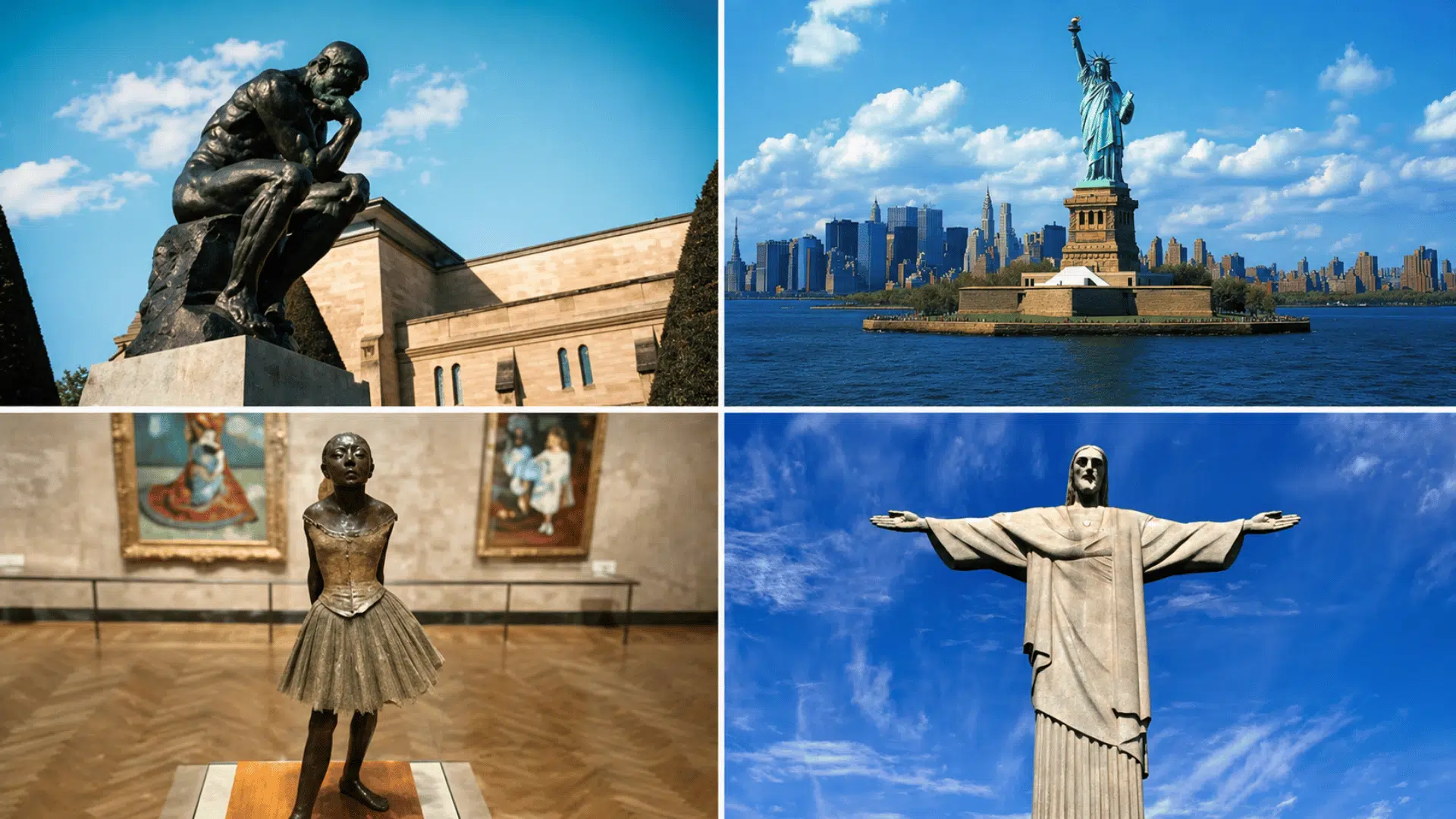
As the world industrialized and shifted, sculpture shifted with it. These works moved beyond kings and gods and turned toward everyday emotion, political symbols, and the human condition.
12. The Thinker
Originally conceived as part of a larger work called The Gates of Hell, this brooding bronze figure became the defining image of human contemplation.
Made in: 1902
Where to See It: Musée Rodin, Paris
13. The Kiss
Few sculptures match its tenderness. This marble embrace became one of the most celebrated compositions in all of Western art.
Made in: 1882
Where to See It: Musée Rodin, Paris
14. Statue of Liberty
A gift from France, designed by Bartholdi and engineered with Gustave Eiffel’s help, depicting Libertas, the Roman goddess of freedom.
Made in: 1886.
Where to See It: Liberty Island, New York
15. Little Dancer of Fourteen Years
The only sculpture Degas exhibited in his lifetime, first made in wax and now known through bronze copies held in collections worldwide.
Made in: c. 1881
Where to See It: Multiple museums worldwide
16. Christ the Redeemer
Standing 98 feet tall with arms stretched wide over Rio de Janeiro, this figure by Paul Landowski is one of the most recognized symbols on earth.
Made in: 1931
Where to See It: Corcovado, Rio de Janeiro
17. The Motherland Calls
Unveiled in 1967, Soviet officials called it the world’s tallest statue at the time, rising 172 feet or 280 feet to the tip of its sword.
Made in: 1967
Where to See It: Mamayev Kurgan, Volgograd
Famous Contemporary Sculptures
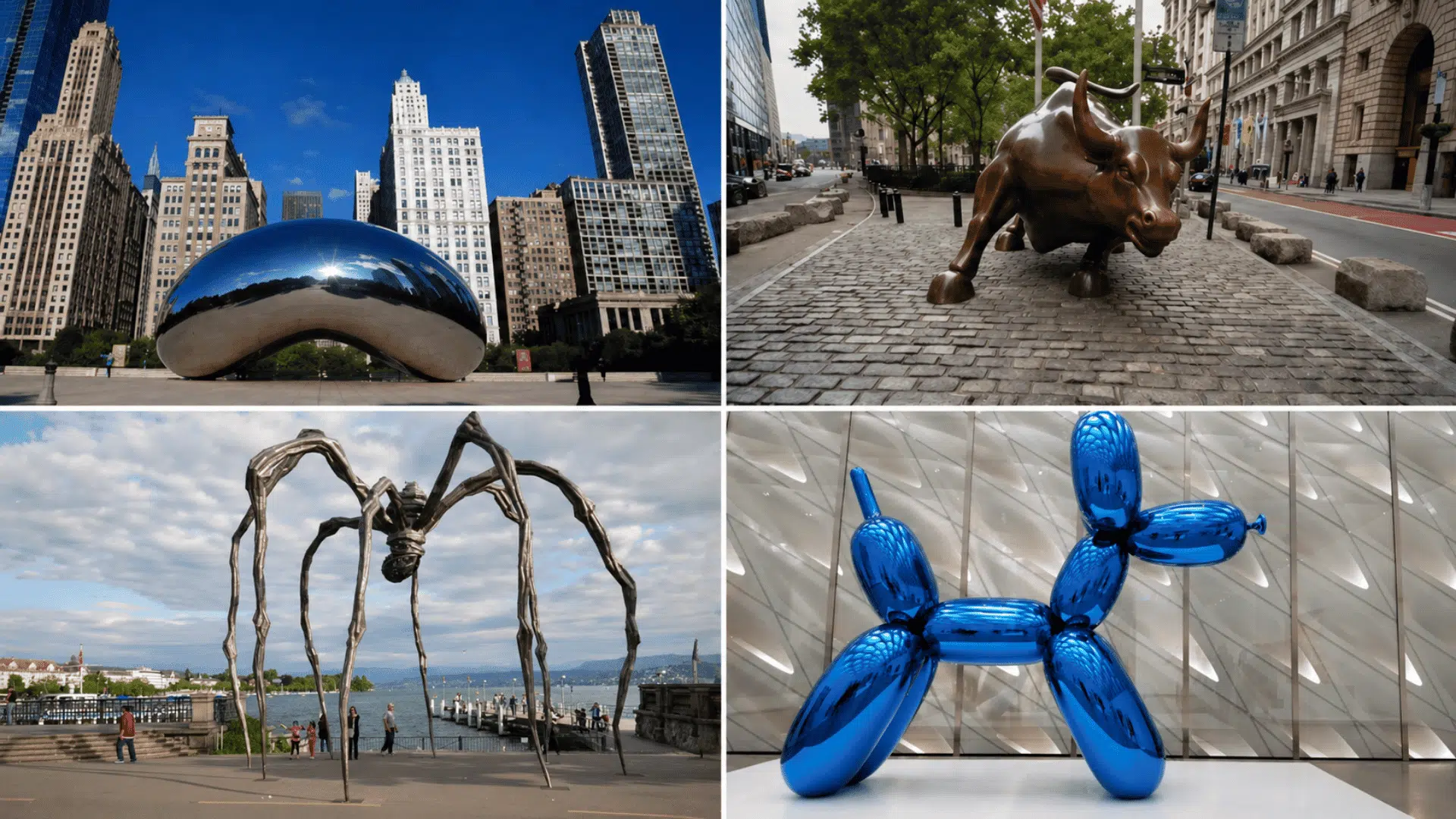
Modern sculpture broke every rule. These works live in public squares, spark arguments, and make millions of people stop and look twice.
18. Cloud Gate (“The Bean”)
This 110-tonne mirror-polished steel form in Chicago’s Millennium Park bends the skyline and the viewer into one seamless reflection.
Made in: 2006
Where to See It: Millennium Park, Chicago
19. Charging Bull
Over 11 feet tall and weighing 7,100 pounds, this bronze bull dropped on Wall Street became the enduring symbol of financial ambition.
Made in: 1989
Where to See It: Bowling Green, New York
20. Spider (Maman)
Louise Bourgeois created one of the most emotionally charged works in contemporary art, an abstract giant that looms and unsettles in equal measure.
Made in: 1999
Where to See It: Multiple locations worldwide
21. Balloon Dog
Jeff Koons turned a party balloon into a high-art statement, forcing a generation to ask where craft ends and concept begins.
Made in: 1994–2000
Where to See It: Multiple collections worldwide
Famous Religious and Monumental Sculptures
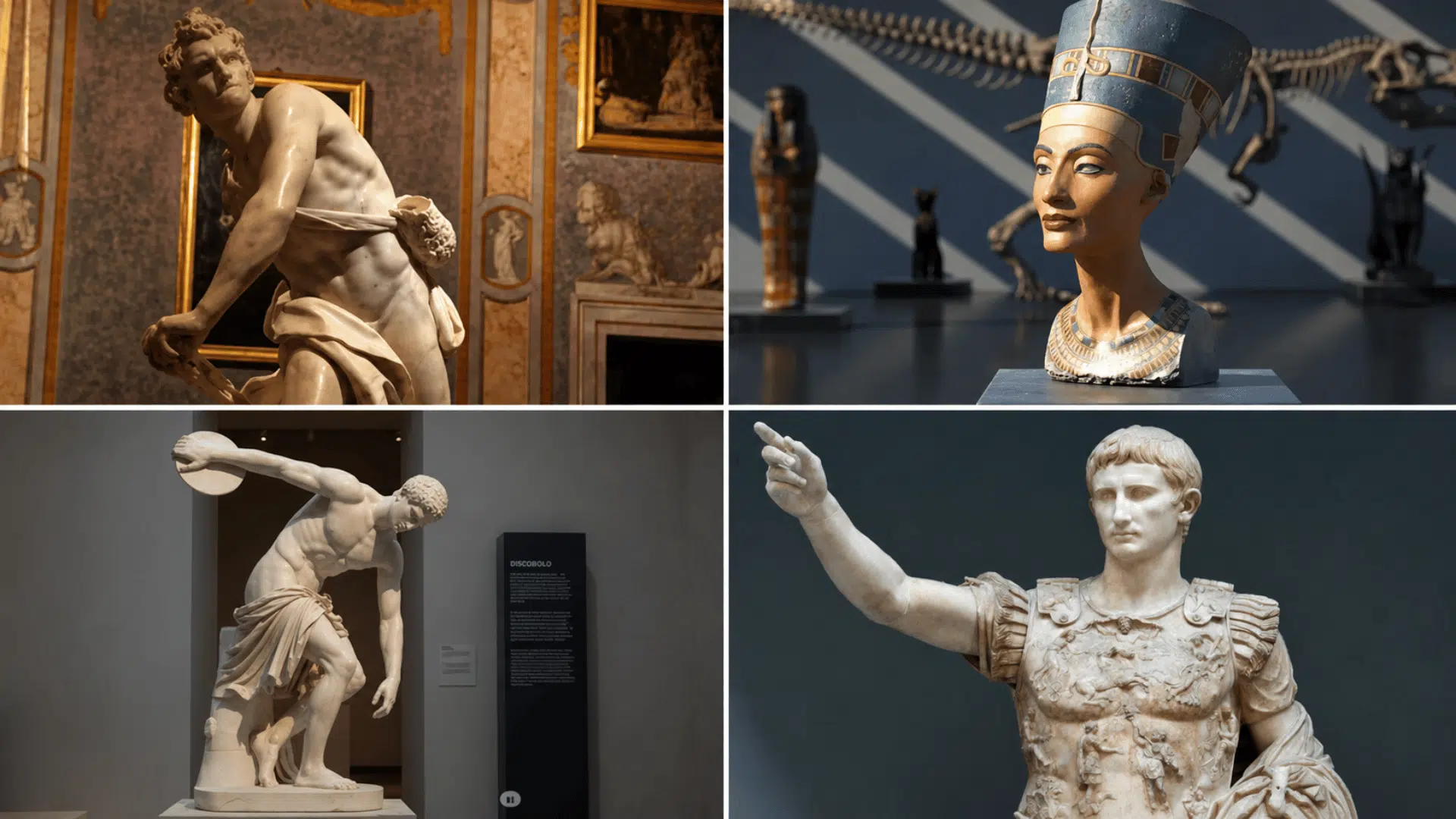
Some sculptures were never meant for museums. Built to inspire awe, mark faith, or claim territory, these works were made to be seen by millions and felt by all.
22. The David of Bernini
Bernini’s David is caught mid-twist, muscles coiled and face set with focus, a world away from Michelangelo’s calm and composed version.
Made in: 1624
Where to See It: Borghese Gallery, Rome
23. Bust of Nefertiti
One of the most copied works of ancient Egypt, this painted limestone portrait captures a queen with an elegance that feels strikingly modern.
Made in: c. 1345 BCE
Where to See It: Neues Museum, Berlin
24. The Discobolus
A Roman copy of a lost Greek bronze, this figure of a discus thrower became the defining image of athletic beauty in the ancient world.
Made in: c. 450 BCE
Where to See It: Palazzo Massimo, Rome
25. Augustus of Prima Porta
This marble portrait of Rome’s first emperor blends political propaganda with idealized beauty, setting the template for imperial sculpture for centuries.
Made in: c. 20 BCE
Where to See It: Vatican Museums, Rome
26. The Lion of Lucerne
Carved directly into a cliff face, this memorial to the Swiss Guards killed during the French Revolution honors them and is described by Mark Twain as the most mournful stone in the world.
Made in: 1821
Where to See It: Lucerne, Switzerland
27. Manneken Pis
Small in size but enormous in fame, this bronze boy has stood at the heart of Brussels since 1619 and become one of Europe’s most visited and most dressed-up landmarks.
Made in: 1619
Where to See It: Brussels, Belgium
Most Famous Sculptors in History
While many sculptors have shaped art history, a few stand out for their lasting influence and global recognition. The table below highlights key figures, their eras, and the works that define their legacy.
| SCULPTOR | ERA | KNOWN FOR | KEY WORK |
|---|---|---|---|
| Michelangelo | Renaissance | Mastery of marble | David |
| Rodin | Modern | Emotional realism | The Thinker |
| Donatello | Renaissance | Early naturalism | David (bronze) |
| Bernini | Baroque | Dramatic movement | Apollo and Daphne |
| Phidias | Ancient | Classical ideals | Statue of Zeus |
| Brâncuși | Modernism | Abstract forms | Bird in Space |
Common Traits of the World’s Greatest Sculptors
The greatest sculptors in history did not just shape stone or metal. They shaped the way every artist after them thought about what sculpture could be and do.
- Technical mastery: This sits at the foundation of every great sculptor’s work. Without it, even the boldest vision falls flat in execution.
- Innovation in material: This separates the good from the legendary. Whether it was bronze, marble, steel, or wax, the greats pushed their chosen medium past its known limits.
- Emotional storytelling: This is what makes a sculpture impossible to walk past. The best works do not just depict a figure; they freeze a feeling in permanent form.
- Influence on future artists: This is the true measure of greatness. A sculptor who changes how the next generation works leaves a legacy no museum can contain.
- Consistency across a body of work: This ties it all together; one great piece can be an accident. A lifetime of great pieces is mastery.
Wrapping It Up
The famous sculptures in history explored here are more than stone, bronze, or steel. They are frozen moments that refused to be forgotten.
Let one of these stop you in person, go find it, and feel what words never could.
Certain things only reveal themselves when you’re standing right in front of them; no screen can hold that.