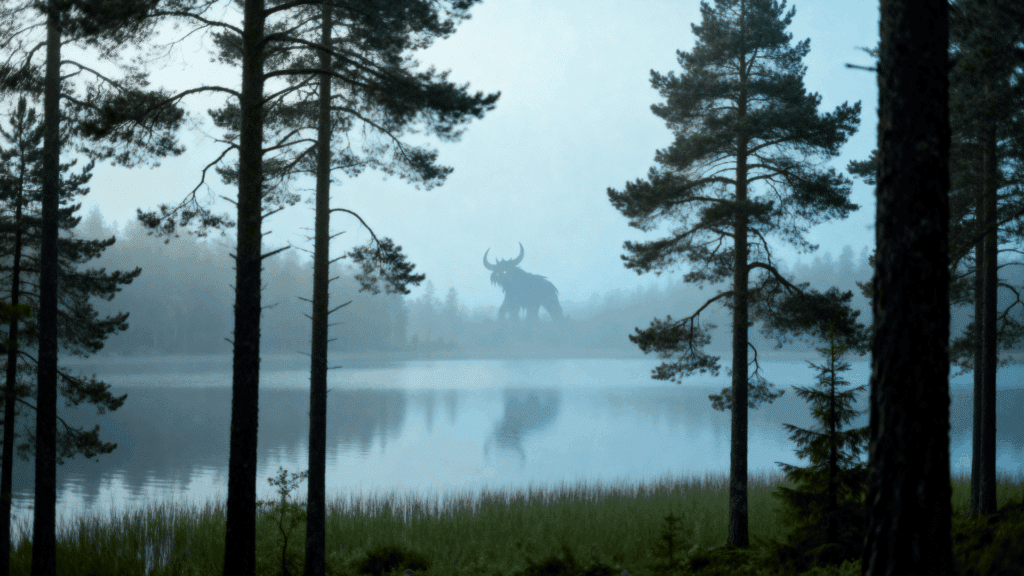
Swedish folklore is a world of shapeshifting water spirits, hollow-backed seductresses, and invisible beings living quietly beside humans.
Rooted in Norse beliefs and shaped by isolation, these myths served as warnings, not just tales.
Something watched from every forest and lake. Swedish folklore makes you question what hides in the dark.
What Is Swedish Folklore? Origins and Cultural Significance
Swedish folklore is filled with spirits and beings that reflect how deeply people once connected with nature and the unknown.
These stories often influenced not only beliefs but also the visual traditions and symbolism found in Swedish culture, especially in folk art motifs that carry mythological meaning.
Many legendary beings, like forest spirits and household protectors, appear in decorative traditions, showing how storytelling and craftsmanship evolved together.
Most Famous Creatures in Swedish Folklore
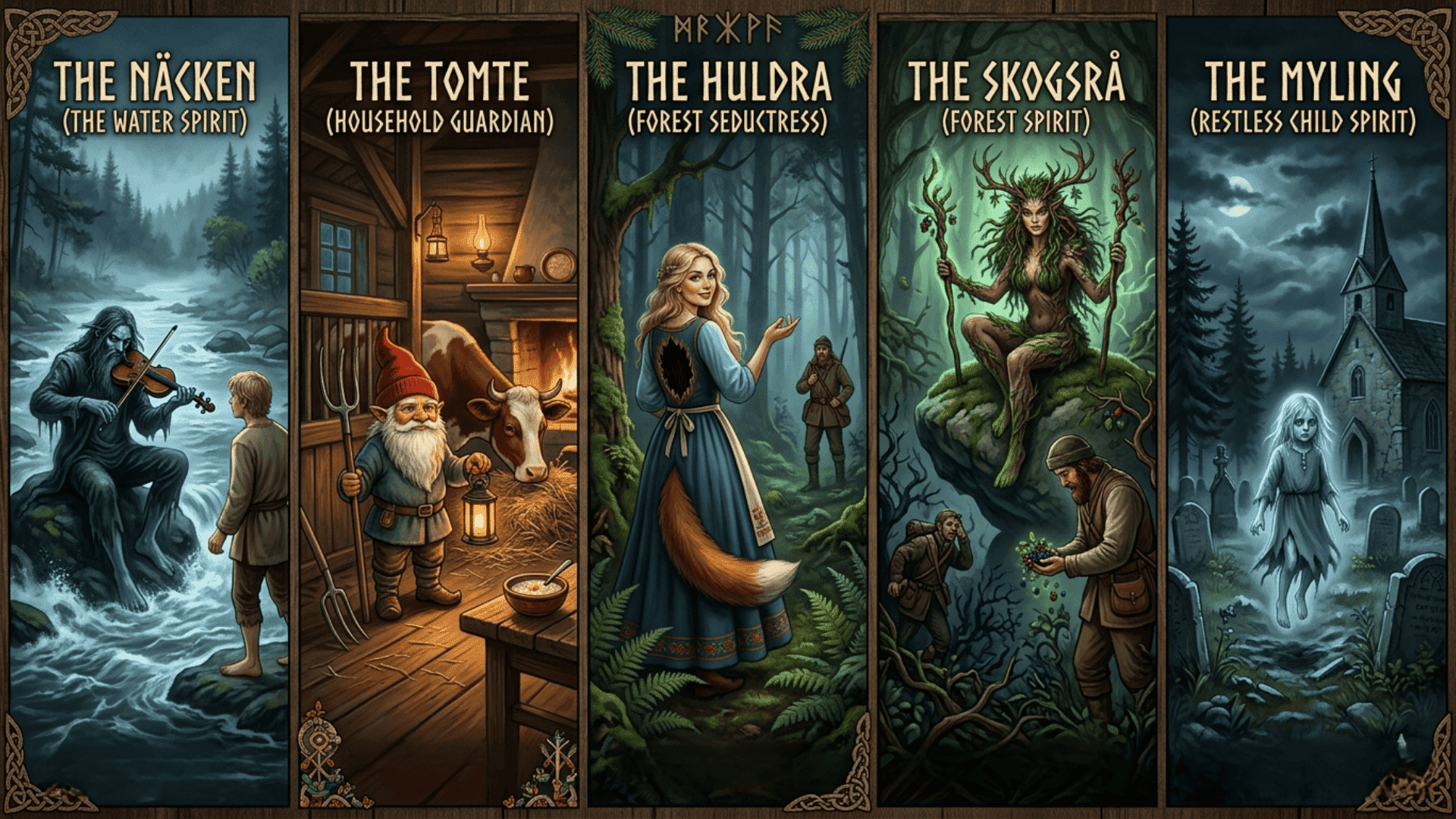
Swedish folklore is filled with powerful spirits and creatures, each tied to nature, morality, and fear. These beings warned people of real dangers while reflecting deep cultural values.
1. The Näcken (The Water Spirit)
The Näcken is a shapeshifting water spirit who plays alluring violin music to lure people into rivers and lakes.
The Näcken lures people into rivers with alluring violin music, a chilling warning to never swim alone.
2. The Tomte (Household Guardian)
The Tomte is a small, protective spirit who guards farms and families in exchange for respect and offerings.
Still a beloved Christmas symbol today, the Tomte would turn mischievous and spoil harvests if ignored or disrespected.
3. The Huldra (Forest Seductress)
The Huldra appears as a stunningly beautiful woman from the front, but her back is hollow like a rotted tree.
She symbolizes deception and the dangers of the wilderness; men who followed her deeper into the forest rarely returned.
4. The Skogsrå (Forest Spirit)
The Skogsrå is a powerful spirit who rules the forest, rewarding respectful hunters and punishing those who show arrogance.
She rewards respectful hunters with luck and punishes the arrogant by leaving them lost forever in the dark forest.
5. The Myling (Restless Child Spirit)
The Myling is the tormented ghost of an unbaptized child, doomed to wander until given a proper burial. This dark creature reflects themes of guilt, secrecy, and social shame.
A dark reminder that abandoning the innocent carries consequences no community could ignore.
Lesser-Known Swedish Folklore Creatures
While creatures like the Tomte and Huldra get most attention, Swedish folklore runs much deeper. These lesser-known beings reveal a richer, darker side of Scandinavian storytelling.
1. The Bäckahäst (River Horse)
The Bäckahäst appears as a beautiful white horse standing calmly by a riverbank, tempting curious children to climb onto its back.
Once mounted, the horse plunges into the water, dragging its rider beneath the surface forever.
2. The Trolls of Sweden
Swedish trolls are far more complex than simple monsters; regional variations gave them unique personalities, powers, and appearances across different parts of the country.
Some were slow and stupid, others dangerously cunning, making every forest feel like it held something different.
3. The Vittra (Hidden People)
The Vittra are invisible beings who live quietly alongside humans, sharing the same land but existing in a parallel world unseen by ordinary eyes.
Disturbing their hidden homes by building or farming in the wrong place would bring serious misfortune.
4. The Draugr Influence in Swedish Lore
The Draugr is an undead creature rooted in Norse mythology, said to guard burial mounds and fiercely protect the treasures within.
Its influence shaped Swedish beliefs about death, the afterlife, and the dangerous consequences of disturbing the dead.
Common Themes in Swedish Folklore
Swedish folklore was never just entertainment; every creature carried a deeper message about how to live, behave, and respect the world around you.
- Forests and water were portrayed as beautiful but deeply dangerous spaces.
- Creatures like the Näcken and Bäckahäst made natural settings feel threatening.
- Stories were deliberately used to shape community behavior and social values.
- Creatures punished greed, dishonesty, arrogance, and neglect of responsibility.
- Respecting nature and spirits brought protection and good fortune; disrespect invited disaster.
Famous Swedish Folktales and Legends
Swedish folktales survived centuries because they did more than frighten; they explained life, human nature, and the consequences of every choice made.
1. The Tale of the Näcken’s Song
A young man hears hauntingly beautiful violin music rising from a nearby river and follows it, drawn deeper toward the water’s edge.
The Näcken uses melody as a trap, proving that beauty can be the most dangerous disguise of all.
2. The Legend of the Huldra’s Curse
A farmer encounters a breathtaking woman at the forest’s edge, her voice soft and her smile impossible to resist.
He follows her deeper into the trees until it is too late, her hollow back revealing that deception always wears the most beautiful face.
3. Stories of the Tomte Protecting Farms
For generations, Swedish farming families left porridge outside on winter nights as an offering to their resident Tomte.
In return, the Tomte watched over livestock and harvests, a classic reminder that loyalty and gratitude are always worth practicing.
Swedish Folklore vs Norse Mythology
A quick comparison helps clarify the often-mixed concepts of Norse mythology and Swedish folklore, especially for readers and search engines.
| ASPECT | NORSE MYTHOLOGY | SWEDISH FOLKLORE |
|---|---|---|
| Gods vs Spirits | Odin, Thor, divine hierarchy | Näcken, trolls, local spirits |
| Belief Type | Structured religion | Rural, evolving stories |
| Confusion | Shared roots, keywords | Blends into Norse themes |
How Swedish Folklore Influences Modern Culture
Swedish folklore never stayed locked in the past; its creatures, themes, and warnings continue shaping festivals, entertainment, and travel experiences around the world today.
- Midsummer celebrations still carry ancient folklore rituals, from flower crowns to dancing around the maypole.
- The Tomte changed into Sweden’s beloved Christmas figure, blending old guardian legends with modern holiday culture.
- Games like Northgard and books like John Ajvide Lindqvist’s fiction draw heavily from Nordic folklore creatures and themes.
- Films and shows like Midsommar brought Swedish folklore’s darker, ritualistic side to global audiences.
- Folklore trails and creature-themed tourism across rural Sweden attract thousands of visitors seeking authentic cultural experiences.
Fun fact: Nordic spaces still reflect old beliefs, where Scandi Hygge styles echo the same balance of simplicity, comfort, and quiet caution found in folklore.
Wrapping It Up
Swedish folklore survived centuries because its creatures and warnings still feel more alive than most modern stories ever will.
Whether the Näcken, Huldra, or Tomte draws you in, Sweden’s folklore never truly dies.
Find deeper, stay curious, and remember that some legends exist for very good reasons, the kind that stay with you long after the story ends.