
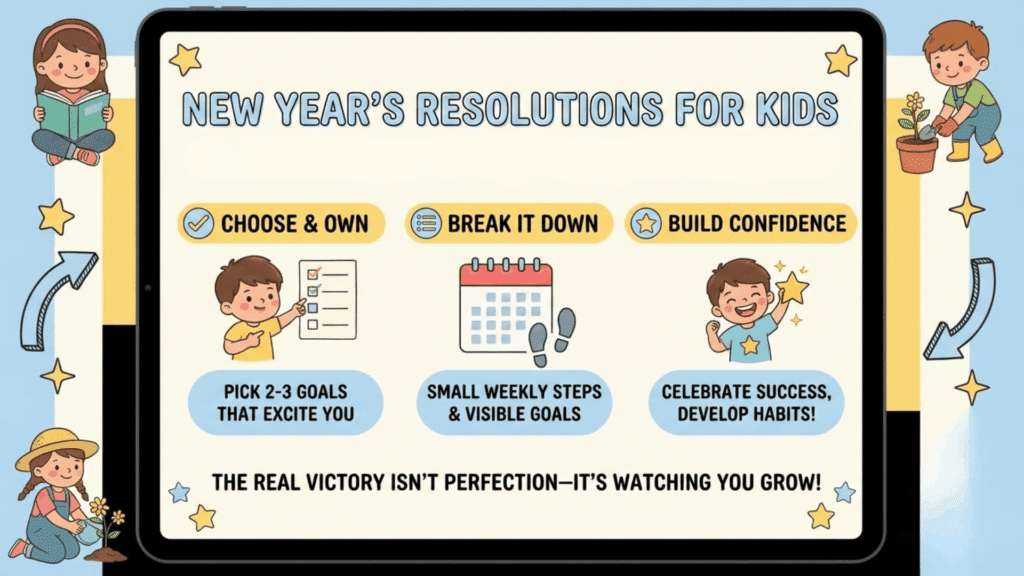
Most kids want to make positive changes when a new year begins, but they often pick goals that feel too big or vague actually to stick with.
Parents struggle to help their children choose resolutions that are meaningful yet realistic for their age and abilities.
This guide offers practical New Year’s resolutions for kids that children can genuinely achieve and maintain throughout the year.
You’ll find age-appropriate goals across four key areas: school and learning habits, healthy routines and self-care, kindness and friendship skills, plus hobbies and creative pursuits.
These aren’t just ideas; they’re proven strategies that help kids build confidence, develop character, and create lasting positive habits that extend far beyond January.
Why New Year’s Resolutions for Kids Matter?
New year’s resolutions teach children essential life skills that extend far beyond the goals themselves.
When kids set personal targets, they learn to identify what matters to them and develop self-awareness about their strengths and areas for growth.
This process builds critical thinking and decision-making abilities that serve them throughout life.
They experience firsthand how daily actions compound into meaningful achievements, building confidence and resilience along the way.
When they work toward their own chosen goals, rather than only following adult instructions, kids develop internal drive and learn to take ownership of their choices.
This sense of agency prepares them for increasing independence as they mature, creating habits of reflection, planning, and personal responsibility that shape their character for years to come.
School and Learning New Year’s Resolutions for Kids
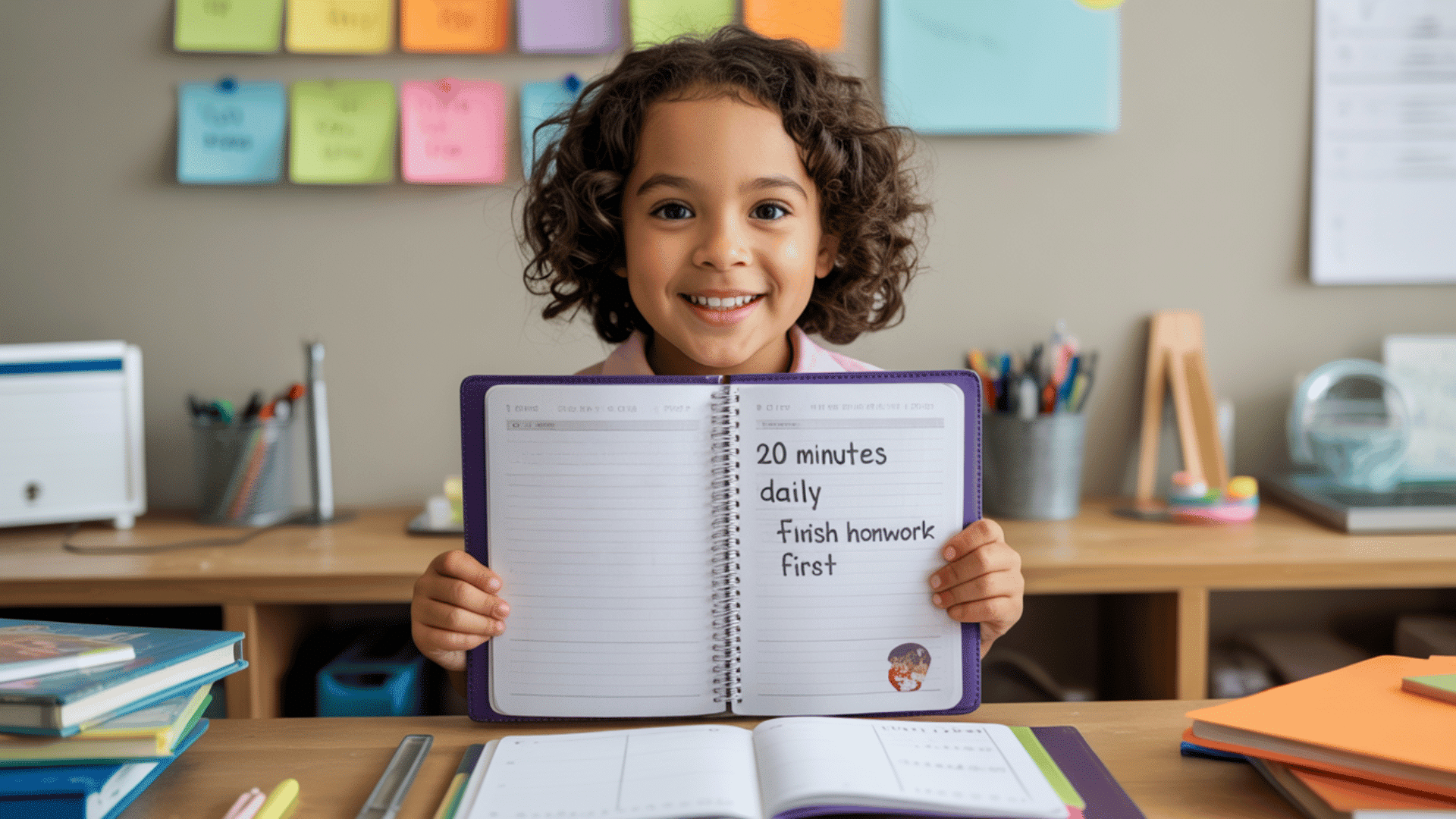
Setting goals for school helps children build strong study habits and develop a love for learning.
These resolutions focus on academic growth, organization, and making education more enjoyable throughout the year.
1. Read for 20 minutes every day. Set aside time each day to read books you enjoy, building vocabulary and imagination while improving reading skills.
2. Complete homework before playtime. Finish all assignments right after school or before dinner to develop responsibility and time management skills.
3. Ask questions in class: raise your hand when something is unclear, showing curiosity and helping yourself understand lessons better.
4. Organize your school supplies weekly. Clean out your backpack, sharpen pencils, and arrange notebooks every Sunday to start each week prepared.
5. Try your best on every assignment. Put genuine effort into each task, focusing on learning rather than just finishing quickly.
6. Create a homework station at home. Set up a quiet, well-lit space with all necessary supplies where you can focus on schoolwork without distractions.
7. learn one new thing each week. Choose a topic that interests you, such as dinosaurs, space, coding, or research, and research it beyond what’s taught in class.
8. Review notes after school, spend 10 minutes going over what you learned that day to reinforce information and prepare for tests.
9. Join a study group or find a study buddy. Work with classmates on homework or test preparation, learning from each other’s strengths.
10. Set weekly academic goals, write down specific targets like “finish the book report outline” or “practice multiplication tables” to track progress.
11. Keep a school planner or calendar. Write down assignments, test dates, and project deadlines to stay organized and avoid last-minute stress.
12. Participate in class discussions, share your ideas and opinions during lessons, building confidence and contributing to a better learning environment for everyone.
Healthy Habits and Self-Care Resolutions
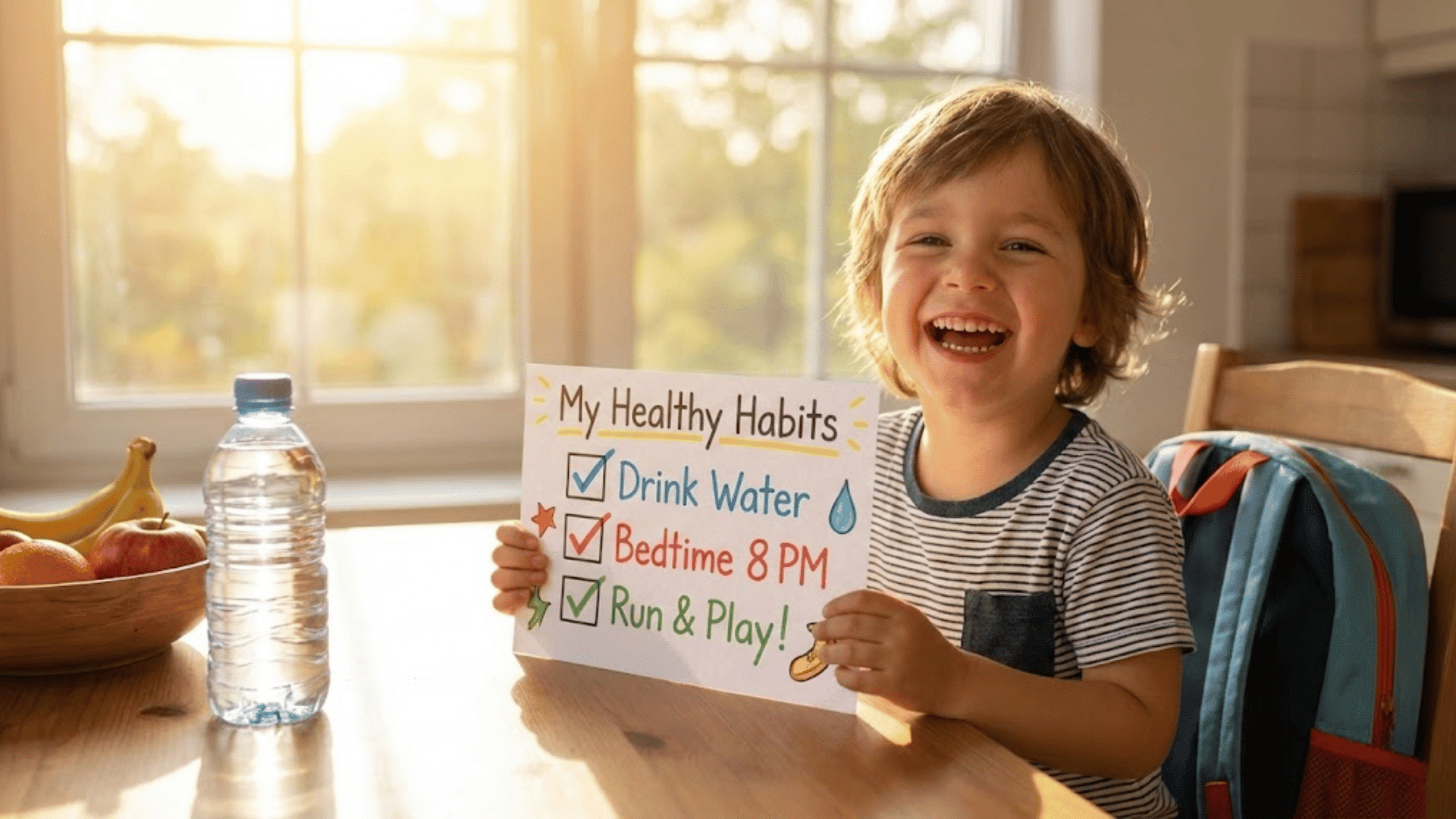
Taking care of your body and mind creates energy for everything else in life. These resolutions encourage children to build routines that support physical health, emotional well-being, and overall happiness.
13. Drink 6-8 glasses of water daily. Keep a water bottle with you and sip throughout the day to stay hydrated, energized, and focused.
14. Go to bed at the same time every night. Establish a consistent bedtime routine to get 9-11 hours of sleep, helping your body and brain recharge.
15. Eat breakfast every morning. Start each day with a nutritious meal, cereal, eggs, fruit, or yogurt to fuel your body and mind for learning.
16. Limit screen time to 2 hours daily. Reduce time spent on tablets, phones, and video games to make room for active play, reading, and family time.
17. Exercise or play outside for 1 hour. Run, bike, swim, or play sports daily to keep your body strong and your mood positive.
18. Practice deep breathing when stressed. Take five slow, deep breaths when feeling anxious or overwhelmed to calm your mind and body.
19. Wash hands before meals and after using the bathroom. Build this simple habit to prevent illness and stay healthy throughout the year.
20. Try a new fruit or vegetable each month. Expand your palate by tasting different healthy foods, making nutrition more interesting and fun.
21. Take breaks during long activities. Step away from homework or screens every 30-45 minutes to stretch, move around, and rest your eyes.
22. Talk about your feelings with someone you trust. Share when you’re sad, frustrated, or worried with a parent, teacher, or friend to process emotions healthily.
Kindness, Manners, and Friendship Resolutions
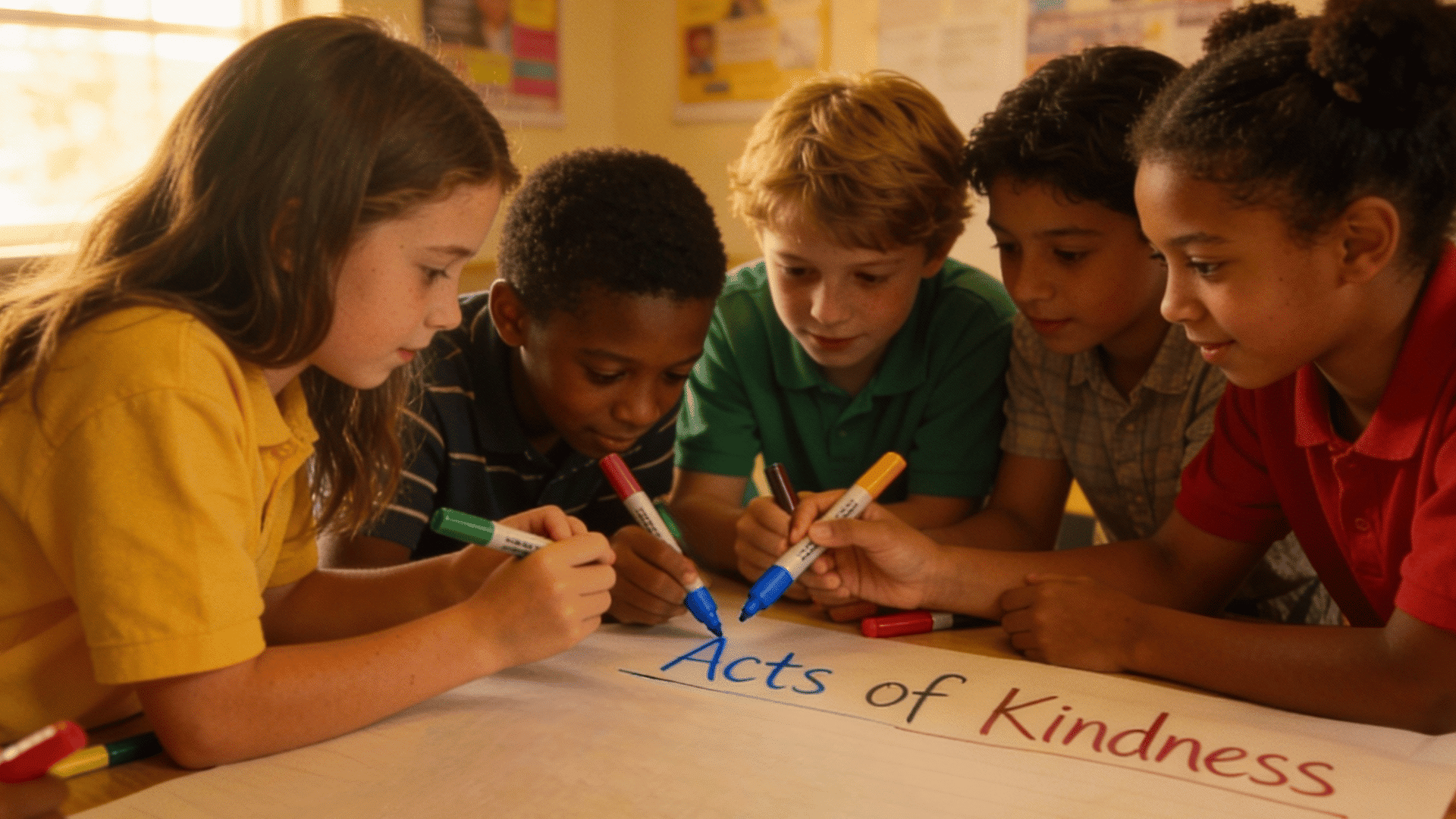
Strong relationships and good character form the foundation of a happy life. These resolutions help children build meaningful connections, show respect, and create positive interactions with everyone around them.
23. Say “please” and “thank you” every time. Use polite words consistently to show appreciation and respect for others’ help and kindness.
24. Invite someone new to play. Reach out to a classmate who seems lonely or left out, making your friend group more welcoming and inclusive.
25. Help with one household chore daily: set the table, feed pets, or tidy your room without being asked to contribute to family life.
26. Give genuine compliments to others. Notice something nice about friends, siblings, or classmates and tell them, “i like your drawing” or “you’re really good at soccer.”
27. Listen without interrupting, let others finish speaking before you respond, showing that their thoughts and feelings matter to you.
28. Apologize when you make a mistake. Say “i’m sorry” sincerely when you hurt someone’s feelings or do something wrong, taking responsibility for your actions.
29. Share toys, snacks, and supplies. Offer to let others use your things, practicing generosity and making playtime more fun for everyone.
30. Stand up for others being teased, tell a trusted adult, or kindly ask bullies to stop when you see someone being mistreated.
31. Write thank-you notes for gifts. Send cards or letters to people who give you presents or help you, expressing gratitude thoughtfully.
32. Make eye contact when talking, look at people’s faces during conversations to show you’re paying attention and care about what they’re saying.
33. Celebrate friends’ successes. Be happy when classmates win awards, score goals, or achieve something special instead of feeling jealous.
Hobbies, Creativity, and Responsibility Related Resolutions
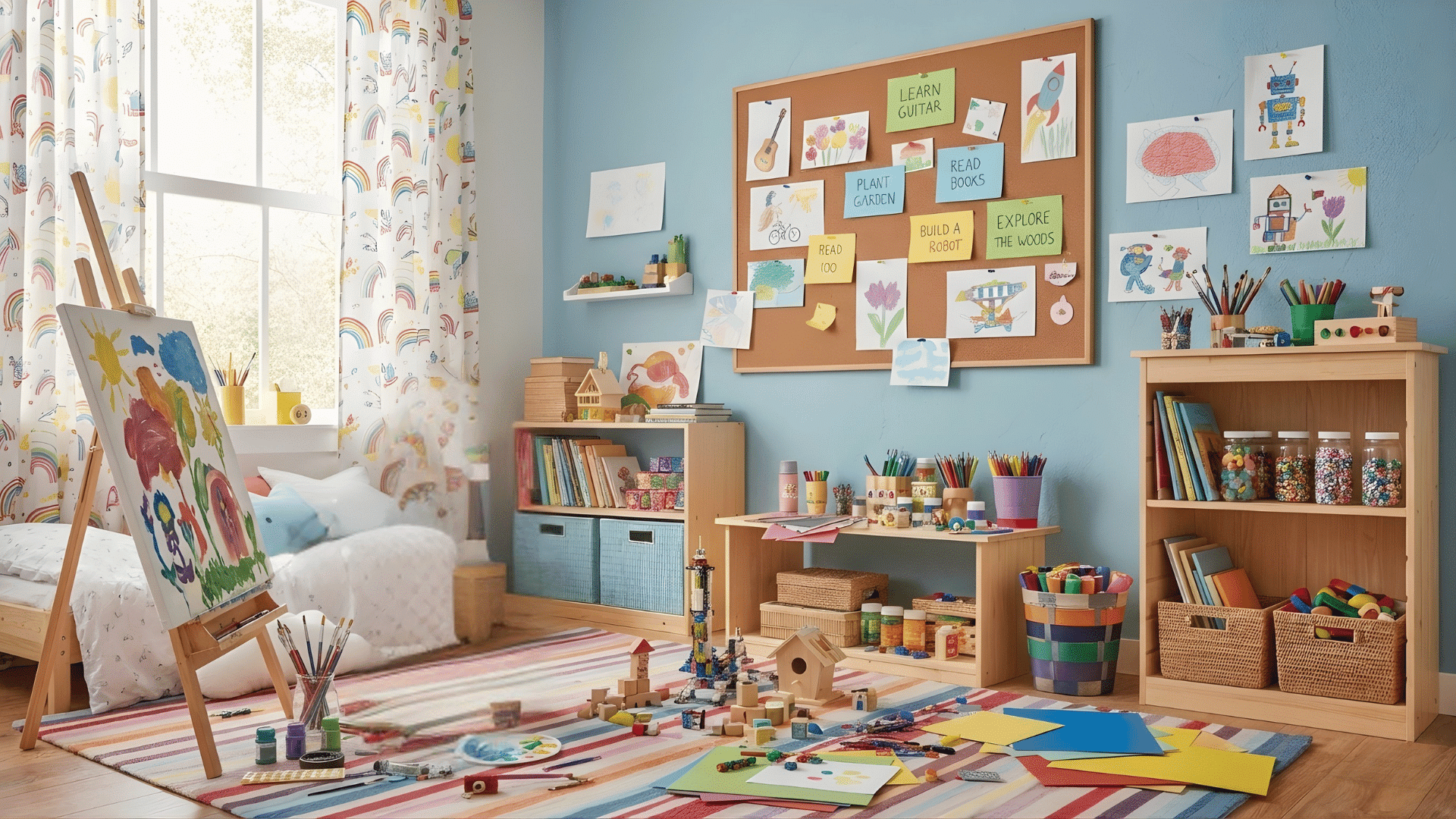
Finding interests and taking on new responsibilities helps children grow into capable, creative individuals.
These resolutions encourage kids to pursue passions, develop skills, and contribute meaningfully to their families and communities.
34. Learn to play a musical instrument, start lessons for piano, guitar, drums, or another instrument, and practice 15-20 minutes daily to build musical skills.
35. Start a collection: gather rocks, stamps, trading cards, or another item that interests you, organizing and learning about each piece.
36. Keep a journal or diary, write about your day, feelings, or ideas for 10 minutes before bed to express yourself and track personal growth.
37. Cook or bake one recipe each month. Help prepare a meal or dessert with a parent, learning kitchen skills, and trying new foods.
38. Build something with your hands. Create art projects, LEGO structures, models, or crafts regularly to develop problem-solving and fine motor skills.
39. Plant and care for a garden: grow flowers, vegetables, or herbs in pots or a garden bed, watering and tending them weekly.
40. Volunteer in your community, participate in food drives, park cleanups, or animal shelter visits with your family to help others and learn about service.
41. Save a portion of allowance or gift money. Put 20-30% of the money you receive into a savings jar or bank account to reach a specific goal.
42. Master a new sport or physical skill, learn to swim, skateboard, do cartwheels, or play a team sport through regular practice and lessons.
43. Create art weekly: draw, paint, sculpt, or make digital art every week to express creativity and develop artistic abilities.
44. Take care of a pet’s needs. Feed, walk, clean up after, or play with your family pet daily to learn about animal care and responsibility.
45. Get to know about nature. Regularly go hiking, visit parks, observe birds, or collect leaves to connect with the outdoors and learn about the environment.
Tips for Parents and Teachers to Keep Resolutions Going
Helping children maintain their resolutions requires consistent support, patience, and creative strategies. Here are practical ways adults can guide kids toward lasting success:
- Break goals into weekly mini-targets, so children see progress quickly and stay motivated
- Create visual tracking charts with stickers or checkmarks that kids can display in their room
- Celebrate small wins immediately instead of waiting for the final goal to be reached
- Set reminders together using phone alarms, sticky notes, or family calendars
- Model your own resolutions and share your progress to show that everyone works on self-improvement
- Check in weekly without pressure by asking, “how’s your resolution going?” in a supportive tone
- Adjust goals if needed. Rather than abandoning them completely when circumstances change
- Connect resolutions to rewards like extra playtime or choosing a weekend activity after consistent effort
- Make it social by involving siblings, classmates, or friends who can work on similar goals together
- Focus on effort over perfection and remind kids that setbacks are standard parts of growth
- Keep supplies visible so materials needed for the resolution are always within easy reach
- Share stories of perseverance from books, movies, or real life to inspire continued commitment
- Build resolutions into daily routines, so they become automatic habits rather than special tasks
- Avoid nagging or criticism. When kids slip up, they instead ask what support they need to get back on track
Wrapping It Up
New Year’s Resolutions for Kids work best when children feel ownership over their goals and see them as exciting challenges rather than obligations.
Write these goals somewhere visible, break them into small weekly steps, and check in regularly with encouragement rather than pressure.
When children experience success with their first few resolutions, they build confidence and self-belief that carries into every area of life.
The real victory isn’t perfection; it’s watching your child develop habits, character, and determination that last far beyond this year.