Pastels have been around for centuries, quietly sitting somewhere between chalk and paint and somehow never getting a proper introduction.
But what are pastels, exactly? Most people guess wrong on the first try. They look like crayons, feel like chalk, and yet they work like nothing else.
Born in Renaissance Europe, pastels were once the favorite tool of court painters who needed rich color fast. And yet, history sort of forgot them for a while.
This blog goes back to where it all started, the origins, the artists, and the roots of one of the most underrated art forms out there.
What are Pastels: The Exact Breakdown
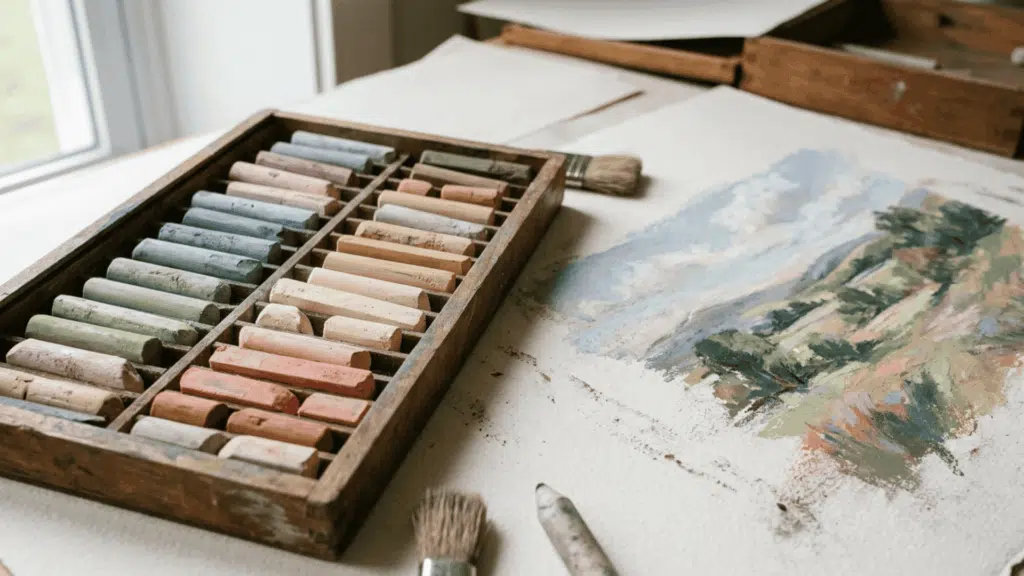
Pastels are a dry art medium made from pure pigment held together with a small amount of binder, typically chalk or gum.
They come in stick or pencil form and are applied directly onto a textured surface, usually paper or board, without the need for water, oil, or any additional medium.
The color comes almost entirely from the pigment itself, which is why pastels tend to produce such strong, immediate results on the surface.
Unlike paint, there is no drying time. What goes onto the paper stays as it is, making pastels one of the most direct and responsive mediums an artist can work with.
They sit somewhere between drawing and painting, which is a big part of what makes them so widely used across different styles and skill levels.
The Origins and History of Pastels as an Art Medium
Source: pastelartists
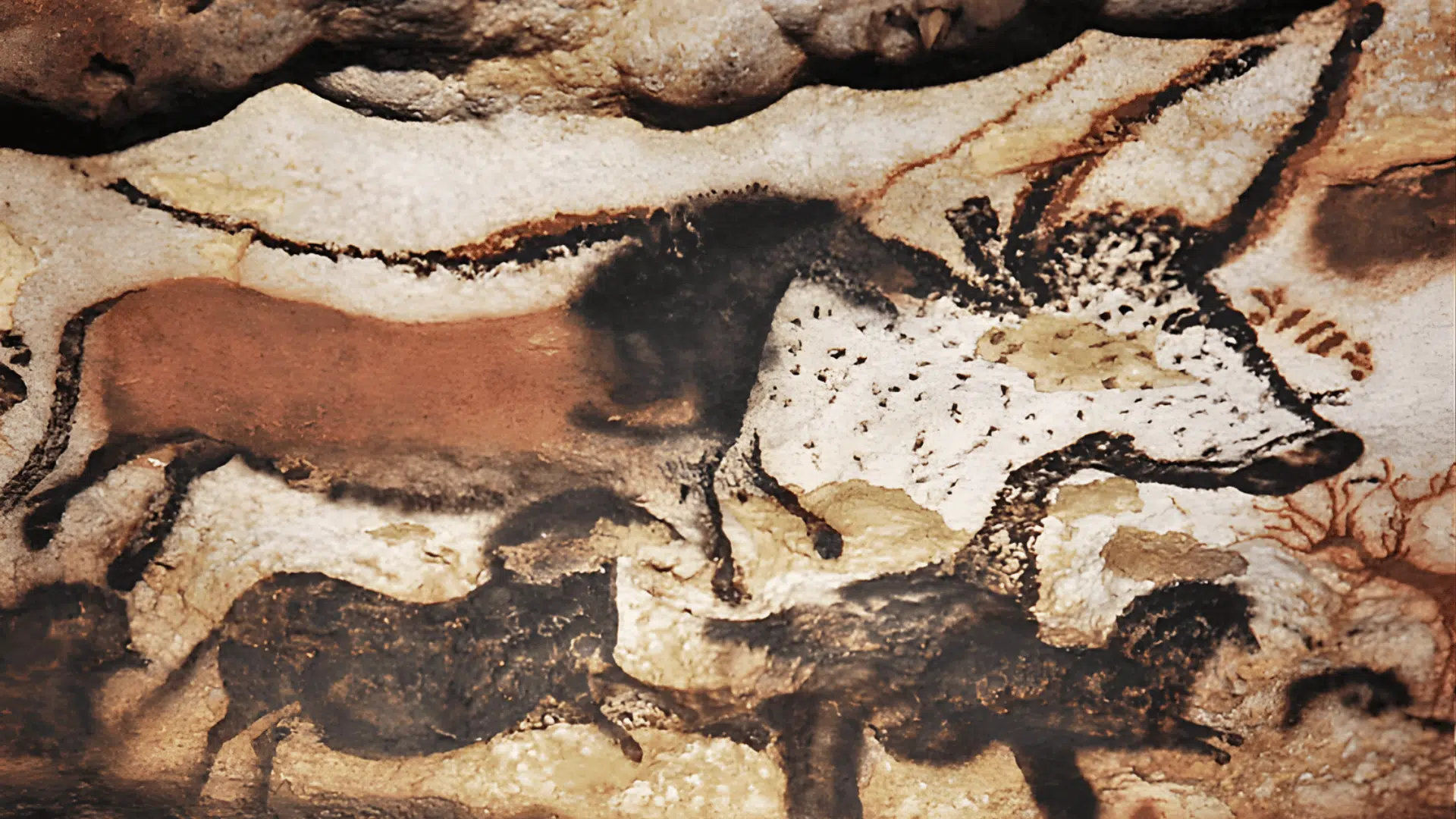
Pastels have been around longer than most people realize. The medium traces back to 16th-century Europe, where artists first began using dry pigment sticks to add color and detail to their drawings.
Leonardo da Vinci is among the earliest known artists to have worked with pastel techniques, though it was in 18th-century France where the medium truly took off.
Artists like Rosalba Carriera and Jean-Baptiste Perronneau brought pastels into high society, using them for formal portraits that rivaled oil paintings in detail and depth.
By the 19th century, Impressionist artists like Edgar Degas pushed pastels even further, treating them as a serious fine art tool rather than a sketching aid.
That shift changed how the art world viewed the medium entirely, and that reputation has held ever since.
Key Benefits of Using Pastels
Pastels offer a direct, flexible approach to color application, making them a practical choice for artists at all skill levels and across a range of subjects.
- Strong Color Output: The pigment sits directly on the surface, producing rich and true-to-tone results without any mixing or dilution needed
- Fast Working Time: Unlike wet mediums, pastels are ready to use immediately, making the process faster and simpler to manage during longer sessions
- Variable Mark-Making: Artists can create both soft blended areas and sharply defined lines using the same stick, giving full control over texture and finish
- Minimal Setup: Types of pastels require little to no preparation, no brushes, palettes, or additional tools needed, making them easy to pick up and start with
- Fits Many Subjects: From portraits to landscapes, pastels adapt well to a wide range of artistic styles and surface types without requiring major adjustments
Types of Pastels
Understanding the different types of pastels helps artists make better choices based on the level of control, texture, and finish they seek in their work.
1. Soft Pastels
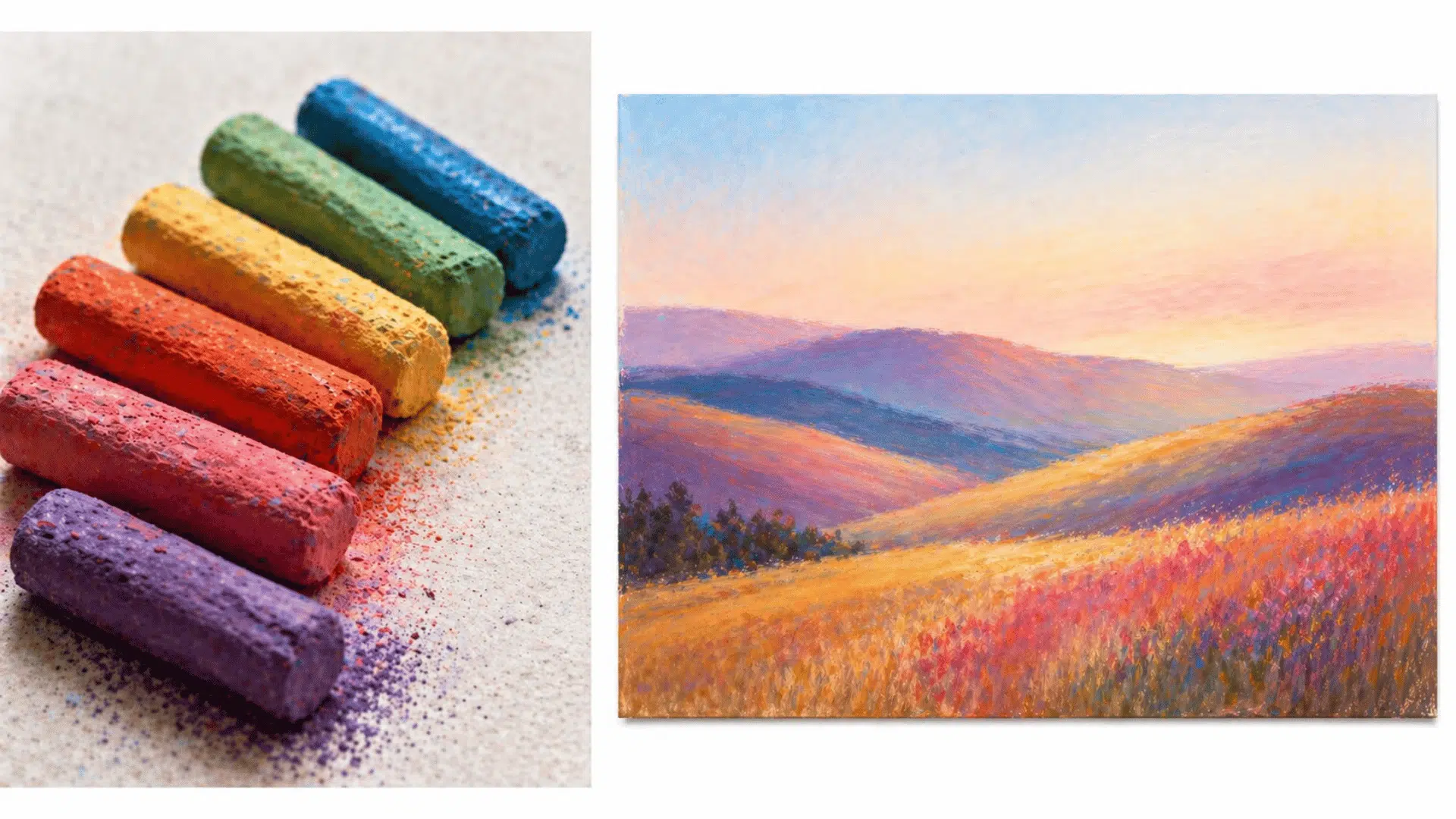
Soft pastels have a high pigment-to-binder ratio, resulting in a smooth, soft powdery texture. This makes them a strong choice for layering broad color areas and creating soft transitions.
Many artists use soft pastels for landscape and portrait work where smooth gradients and rich color coverage are needed.
They also respond well to finger blending, making them accessible for beginners and experienced artists alike.
2. Hard Pastels
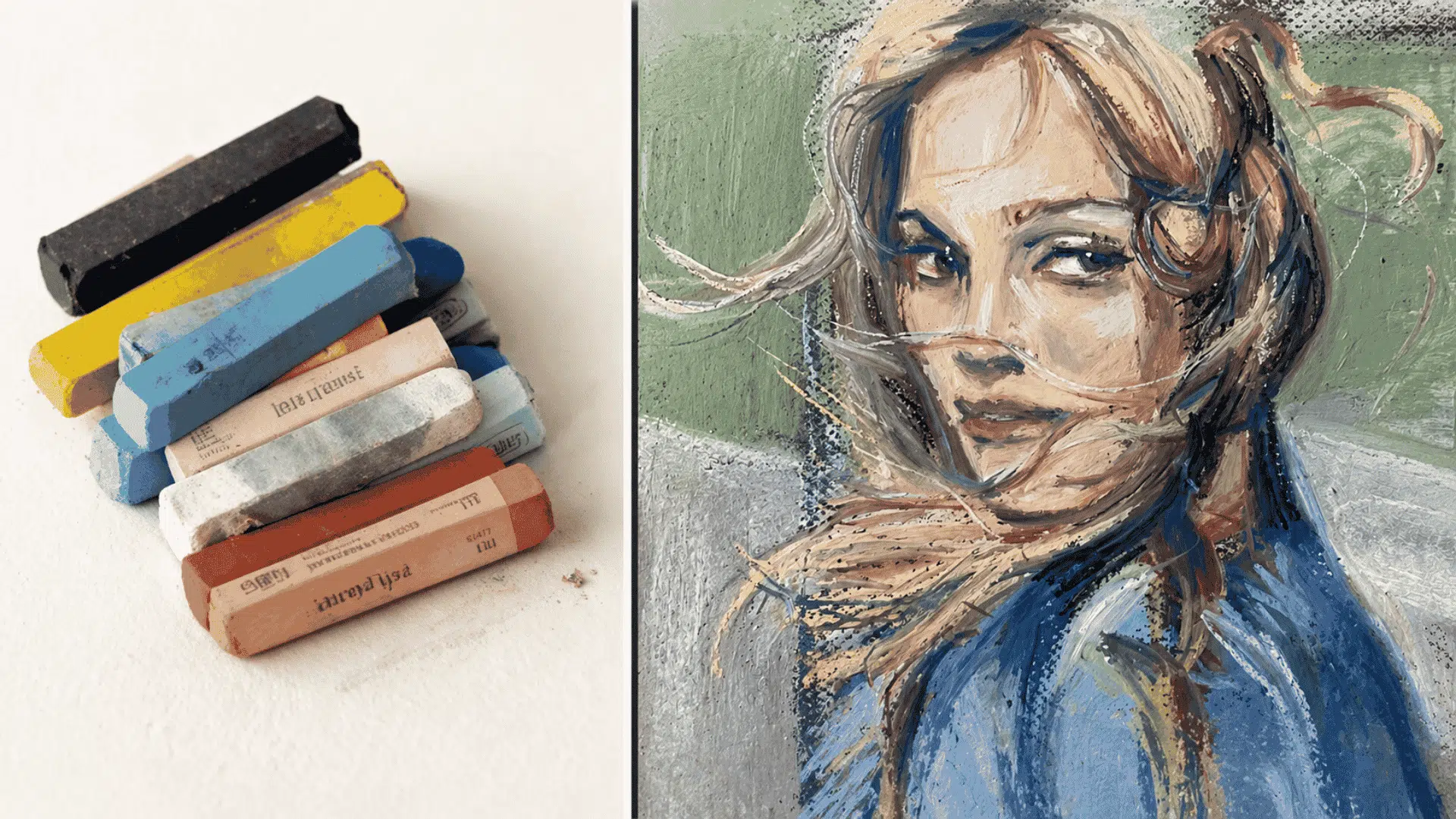
Among the different types of pastels, hard pastels contain more binder, giving them a firmer structure and better control.
They work well for portrait work where defined facial features and precise marks are needed.
Their firm texture also holds up well during the early stages of a composition before softer layers are added.
3. Oil Pastels
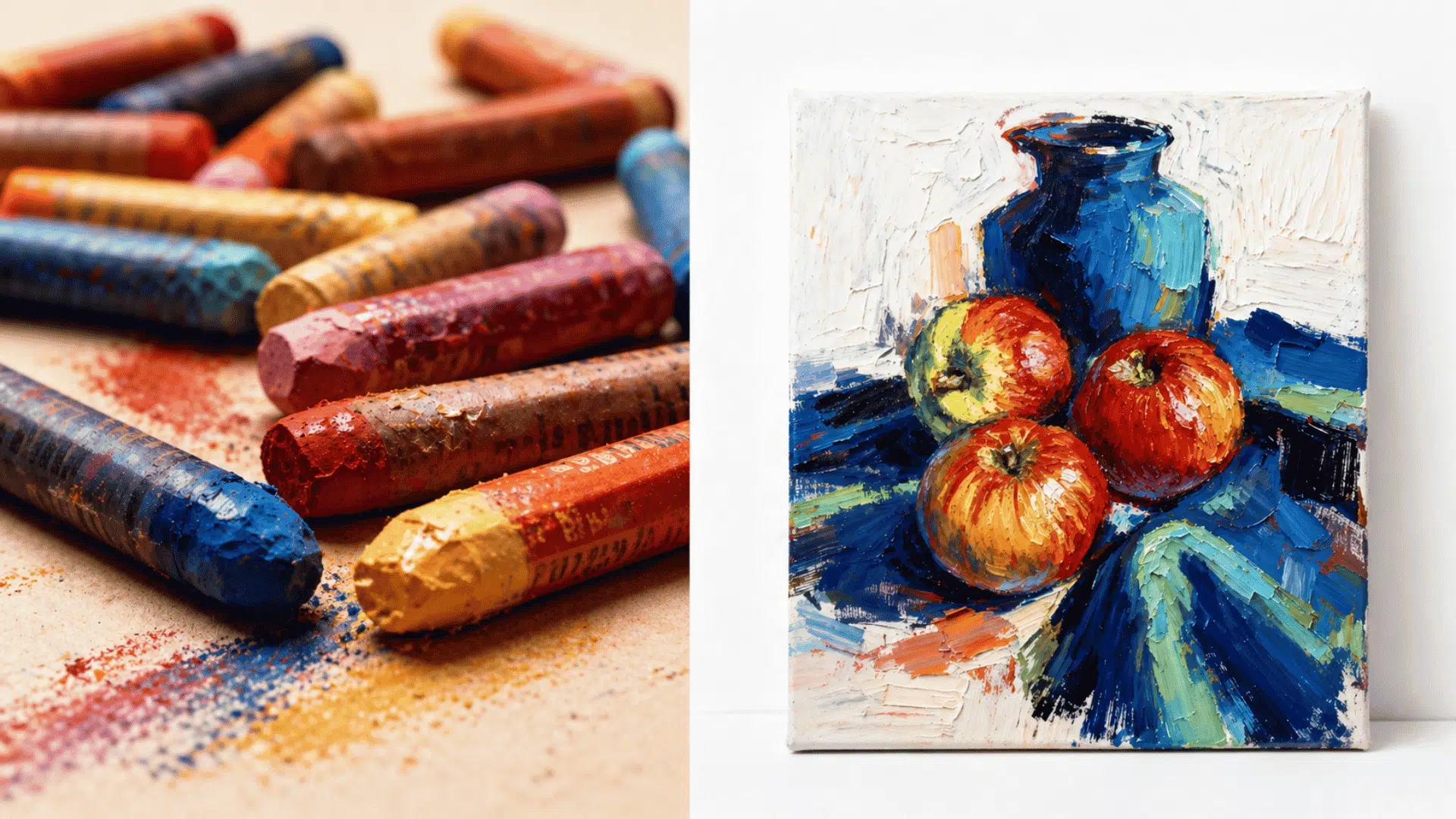
Oil pastels are made with pigment, wax, and oil rather than a dry binder, giving them a thick, creamy texture. They are well-suited for bold strokes and heavily layered work, often used in still life and abstract compositions.
Unlike dry pastels, they do not produce dust and can be worked into with solvents to create painterly effects. This makes them a popular choice for artists who prefer a more hands-on and experimental approach.
4. Pan Pastels
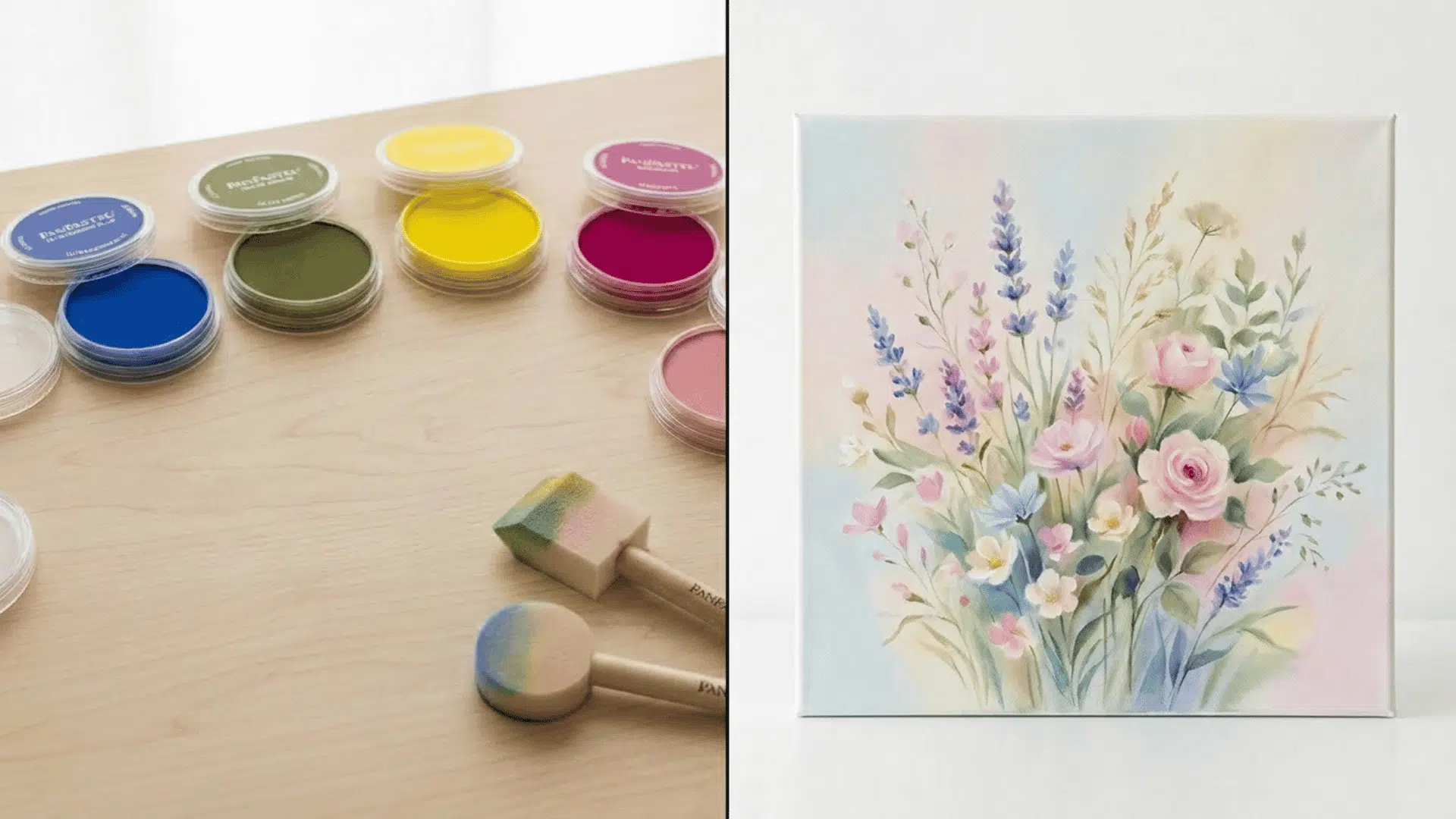
Pan pastels are packed into flat pans and applied with sponge-tipped tools, providing smooth, even coverage across large areas.
They work particularly well for floral and nature paintings where soft, layered color fields are needed.
The sponge applicators give artists steady control over pigment placement, making it easier to build color transitions in petals and natural textures.
They are also among the cleaner formats to work with, since the pan design limits excess pigment falloff.
5. Pastel Pencils
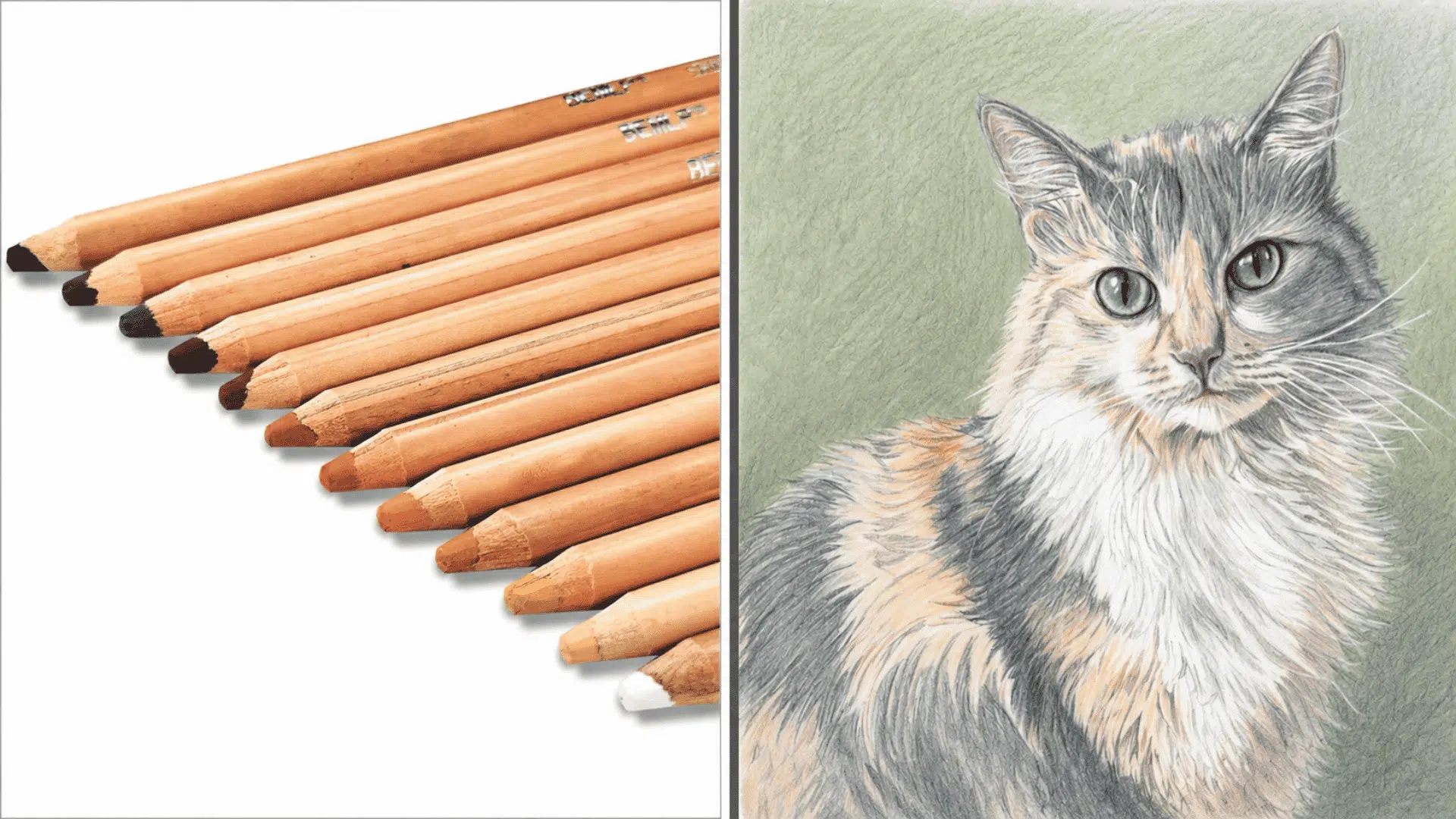
Pastel pencils feature a pastel core in a wooden casing, making them one of the most controlled formats among the types of pastels. They are ideal for fine lines and intricate detail work.
Artists commonly use them for animal and wildlife illustrations where capturing fur, feathers, and fine textures is essential.
The wooden casing also makes them easy to sharpen, ensuring consistent, reliable line quality throughout the work.
How Pastels Compare to Other Dry Media?
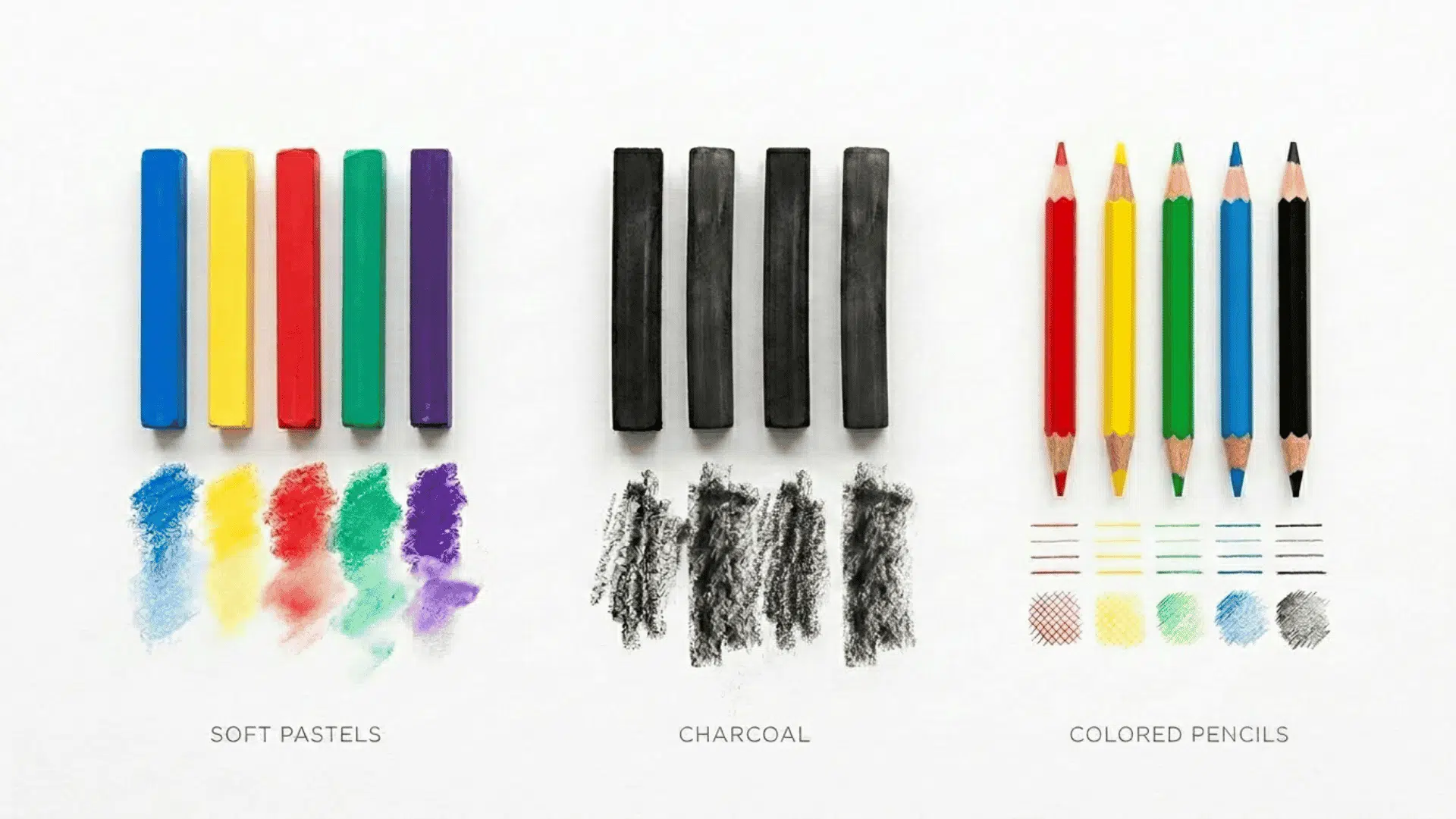
The table below compares pastels with other dry media, helping artists choose the right tool for their work.
| Feature | Pastels | Charcoal | Colored Pencils |
|---|---|---|---|
| Color Intensity | Very high, close to raw pigment | Limited to black, grey, and sienna tones | Moderate, depends on layering |
| Blending Ability | Excellent, smudges and blends easily | Excellent, lifts well with an eraser | Low, requires heavy layering |
| Texture | Chalky or creamy, depending on format | Dusty and gritty | Waxy or firm |
| Mistake Removal | Difficult, pigment can stain paper | Easy, lifts cleanly with a kneaded eraser | Moderate, partially erasable |
| Finished Look | Painterly with rich color depth | Strong contrast with a limited tone range | Detailed and controlled |
| Layering Capacity | High, multiple layers possible | Moderate, surface fills quickly | High, but requires significant pressure |
| Best Used For | Portraits, landscapes, expressive work | Sketching, studies, tonal work | Detailed illustration, fine line work |
Why Artists Choose Pastels as a Primary Medium?

Source: Madame de Pompadour
Pastels are not just a study medium; they have been used to create some of the most refined portrait works in art history.
A strong example is Portrait of Madame de Pompadour by Maurice Quentin de La Tour, a master of pastel portraiture in the 18th century.
In this work, the artist uses pastel to achieve soft skin tones, delicate textures, and rich color depth without the use of oil or heavy layering. The medium allows for precise control while still maintaining a natural, luminous finish.
What makes this important is how pastels bridge the gap between drawing and painting. Artists can build layers, refine details, and create finished works that rival traditional painted portraits.
This is why many artists continue to choose pastels as a primary medium; they offer immediacy, control, and a level of color richness that remains difficult to match.
Tips to Remember When Working with Pastels
Working with pastels becomes much easier when you follow a few practical habits. These tips help you get better results while avoiding common issues early on.
- Build Layers Gradually: Start with light pressure and slowly increase intensity to avoid filling the surface too early
- Control Dust While Working: Tap off excess pigment regularly and keep your workspace clean to maintain clarity in your artwork
- Work from General to Detail: Begin with broad shapes and color blocks before refining smaller details
- Choose the Right Pastel Type: Use soft pastels for blending, hard pastels for structure, and pencils for fine details
- Fix Your Work when Needed: Apply fixative lightly between layers if required, but avoid overuse to preserve color vibrancy
Conclusion
Pastels are a medium that rewards those who take the time to understand them properly.
From their origins in Renaissance-era art to the wide range of types of pastels available today, soft, hard, oil, pan, and pencil formats, each serving a distinct purpose, there is far more to this medium than its surface appearance suggests.
What are pastels at their core? A direct, pigment-driven medium that bridges the gap between drawing and painting without the complexity of wet mediums.
For anyone looking to expand their artistic practice, understanding how pastels work and how to avoid common mistakes is a solid place to start.